
TL;DR:
- Regular plumbing inspections can reduce repair costs by 25 to 30 percent.
- Preventative plumbing involves routine checks to identify issues early and prevent costly emergencies.
- Homeowners in Orange and LA benefit from annual or biennial inspections due to regional water quality and aging infrastructure.
Skipping plumbing inspections feels like saving money until a burst pipe floods your garage at 11 p.m. on a Sunday. Homeowners in Orange County and Los Angeles County face specific plumbing pressures: hard water that accelerates pipe wear, aging infrastructure in established neighborhoods, and local code requirements that change regularly. The good news is that inspections reduce repair costs by 25 to 30 percent through early detection. This article walks you through what preventative plumbing actually means, how it saves real money, and what steps you should take to protect your home before a small issue becomes a very expensive emergency.
Table of Contents
- What is preventative plumbing and why does it matter?
- How preventative plumbing saves money and hassle
- What does preventative plumbing involve for Orange and LA homeowners?
- Common myths and mistakes about preventative plumbing
- Our take: The overlooked value of preventative plumbing
- Ready to protect your home? Next steps for OC/LA homeowners
- Frequently asked questions
Key Takeaways
| Point | Details |
|---|---|
| Major cost savings | Preventative plumbing can cut repair costs by up to 30% in Orange and LA County homes. |
| Fewer emergencies | Routine maintenance prevents up to 85% of plumbing disasters caused by neglect. |
| Better home safety | Early detection protects your home from water damage, mold, and costly code violations. |
| Simple steps | Regular inspections and timely maintenance are straightforward ways to avoid major headaches. |
What is preventative plumbing and why does it matter?
Preventative plumbing is exactly what it sounds like: maintaining and inspecting your system on a regular schedule so you catch problems before they cause damage. It is the opposite of reactive repair, which means you only call a plumber after something breaks. Most homeowners default to the reactive model, simply because plumbing is hidden behind walls and under floors. Out of sight, out of mind is a costly habit.
For OC and LA homeowners specifically, preventative care matters more than in most other regions. Hard water, which is water with high mineral content, is common throughout Southern California. It causes scale buildup inside pipes and water heaters, gradually restricting flow and reducing efficiency. Many older neighborhoods also have galvanized steel or cast iron pipes that are approaching the end of their useful life. On top of that, local building codes get updated regularly, and a plumbing system that was compliant a decade ago might not meet current standards today.
Learning the basics of plumbing maintenance is the foundation every homeowner needs before issues arise. Understanding how your system works helps you recognize early warning signs like slow drains, reduced water pressure, or discolored water.
Key risks of skipping preventative plumbing care include:
- Undetected pipe corrosion leading to sudden leaks or full breaks
- Sewer line buildup that causes sewage backups into the home
- Water heater sediment causing inefficiency and premature failure
- Pressure fluctuations that stress joints and fittings over time
- Code violations discovered only during a home sale inspection
Proactive maintenance prevents up to 85% of emergencies caused by neglect. That single number should change how you think about plumbing care.
Preventing home plumbing hazards through regular attention keeps your family safe and your property value intact.
Pro Tip: Start your preventative plumbing plan with an inspection, not a repair. An inspection tells you the true condition of your system so you can prioritize what actually needs attention rather than guessing.
How preventative plumbing saves money and hassle
The financial case for preventative plumbing is straightforward. Catching a minor pipe issue during an inspection costs a fraction of what emergency repairs cost after a full failure. Regular inspections reduce repair costs by 25 to 30 percent through early detection in Orange and LA County homes. That adds up to hundreds or even thousands of dollars saved over the life of your home.

| Plumbing Issue | Without Regular Inspection | With Regular Inspection |
|---|---|---|
| Minor pipe leak | $800 to $2,500 (water damage + repair) | $150 to $400 (caught early) |
| Sewer line blockage | $3,000 to $10,000 (full backup) | $300 to $700 (drain cleaning) |
| Water heater failure | $1,200 to $3,500 (emergency replacement) | $100 to $250 (flush and tune) |
| Main line break | $5,000 to $15,000+ (excavation + repair) | $500 to $1,500 (liner or patch) |
Beyond direct repair costs, there are other financial benefits that most homeowners overlook. Insurance companies increasingly reward proactive homeowners with lower premiums or fewer claim denials when documented maintenance records exist. When you go to sell your home, a clean plumbing inspection history makes buyers more confident and can support a stronger asking price.
Here is how the savings stack up in a clear sequence:
- Lower repair costs from catching issues while they are still small and manageable
- Fewer surprise emergencies that disrupt your daily life and force expensive after-hours service calls
- Preserved home value because well-maintained plumbing is a documented asset during resale
- Reduced insurance risk since documented maintenance history can support claim validity and rate negotiations
- Extended system lifespan meaning your pipes, water heater, and fixtures last longer before needing full replacement
Exploring annual inspection savings is a smart first step toward building this financial protection into your homeownership plan. And if you want the data behind it, research confirms that regular maintenance cuts repairs by nearly a third for homeowners who stay consistent.
What does preventative plumbing involve for Orange and LA homeowners?
Knowing you need preventative plumbing is one thing. Knowing exactly what it includes helps you have an informed conversation with your plumber and make sure nothing gets skipped.
A complete preventative plumbing plan typically includes these core components:
- Pipe inspections: Checking visible and accessible pipes for corrosion, cracks, and joint integrity
- Drain cleaning: Clearing buildup in kitchen, bathroom, and main sewer lines before clogs form
- Water heater flushing: Removing sediment that reduces efficiency and shortens heater life
- Sewer camera scope: Running a camera through the main line to spot root intrusion, cracks, or buildup
- Pressure checks: Measuring water pressure to ensure it stays within safe operating range (generally 40 to 80 psi)
- Shutoff valve testing: Confirming emergency shutoffs actually work when you need them
Recommended inspection frequency varies by home age. Newer homes can get by with inspections every two years, while older properties benefit from annual visits.
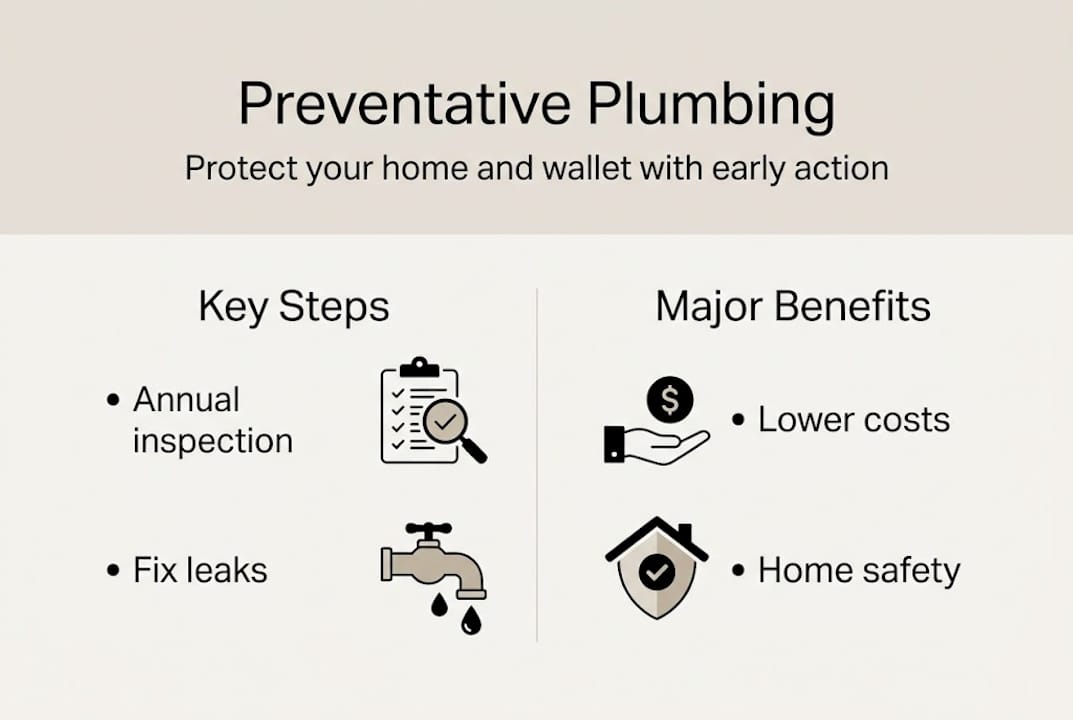
| Home Type | Recommended Frequency | Priority Services |
|---|---|---|
| Newer home (under 20 years) | Every 1 to 2 years | Pressure check, drain cleaning |
| Mid-age home (20 to 40 years) | Annually | Full inspection + camera scope |
| Older home (40+ years) | Annually or biannually | All services, pipe condition focus |
During a typical inspection, your plumber will walk through the home systematically:
- Review accessible plumbing under sinks, around toilets, and at the water heater
- Test water pressure at multiple points and check the pressure regulator
- Run water through all drains and note flow rate or slow drainage
- Inspect the main water shutoff and individual fixture shutoffs
- Perform a sewer camera scope if the home is older or if slow drains are reported
- Provide a written summary of findings with recommended next steps
If you are ready to get started, scheduling a plumbing inspection is simple and sets up your whole prevention plan. For homes with multiple appliances, it also helps to know how to detect appliance leaks early, since appliance connections are a common source of hidden water damage.
Common myths and mistakes about preventative plumbing
Even homeowners who understand the value of preventative plumbing sometimes hold on to beliefs that keep them from acting. These myths can be expensive.
Myth 1: Only old homes need plumbing inspections. New construction is not immune. Builder-grade fixtures and fittings can fail prematurely, and installation errors sometimes go undetected until water damage appears years later. Every home benefits from regular checks.
Myth 2: If nothing seems wrong, nothing is wrong. Plumbing is largely hidden. A slow leak behind a wall can cause significant mold growth and structural damage for months before any visible sign appears. Absence of symptoms is not the same as a healthy system.
Myth 3: Preventative plumbing is a waste of money. The data disagrees. With repair cost reductions of 25 to 30 percent and fewer emergencies through prevention, the math consistently favors maintenance over neglect.
Myth 4: DIY is just as good as professional service. Tightening a visible fitting is fine. But fully assessing pipe condition, testing pressure regulators, and running sewer camera scopes requires professional tools and training. Knowing when to call a professional plumber protects your home and keeps you compliant with local codes.
Common mistakes to avoid:
- Skipping annual checkups because nothing seems broken
- Attempting major drain cleaning with store-bought chemicals, which can damage older pipes
- Ignoring slow drains as minor annoyances rather than early warning signs
- Failing to document inspection history, which matters for insurance and resale purposes
- Delaying recommended repairs after an inspection because costs feel inconvenient
For those managing multiple repair needs, following a structured repair workflow helps you prioritize without getting overwhelmed.
Pro Tip: Investing in a preventative inspection upfront almost always costs less than the first repair it prevents. Think of it as a subscription to peace of mind, not an added expense.
Our take: The overlooked value of preventative plumbing
After working with homeowners across Orange and Los Angeles Counties, we have seen one pattern repeat itself consistently. Most homeowners only think about their plumbing when something goes visibly wrong. The system works quietly for years, and because there is no obvious problem, it never makes the to-do list.
What we know from experience is that hidden plumbing issues do not stay hidden forever. They grow. A hairline crack in a fitting, a slow buildup of scale in a water heater, a small root intrusion in a sewer line. Each one adds up quietly until the cost of ignoring it becomes unavoidable and significantly larger.
The real value of preventative plumbing is not just money saved on individual repairs. It is the confidence that your home is not carrying a hidden liability. Tracking the regular maintenance impact across years shows a consistent pattern: homeowners who inspect regularly spend less, stress less, and face fewer disruptions.
We believe every OC and LA homeowner deserves that peace of mind. And it starts with one scheduled inspection.
Ready to protect your home? Next steps for OC/LA homeowners
You now have a clear picture of what preventative plumbing involves, how much it saves, and what mistakes to avoid. The next step is putting that knowledge to work for your home.

At MDTech Services, we work specifically with homeowners in Orange County and Los Angeles County, and we understand the local conditions that make preventative care essential here. Our licensed technicians provide thorough inspections, clear findings, and honest recommendations without unnecessary upsells. Whether you want to schedule a plumbing inspection or need affordable plumbing repair for an existing issue, we make it easy to get started. Contact us today and protect your home before a small problem becomes a costly one.
Frequently asked questions
How often should preventative plumbing inspections be done in Orange and LA Counties?
For most homes, inspections every 1 to 2 years are sufficient, but annual visits are the smarter choice for older properties or homes with a history of plumbing issues.
Isn’t preventative plumbing just an unnecessary extra cost?
No. Inspections reduce repair costs by 25 to 30 percent and prevent up to 85% of costly emergencies, so they consistently pay for themselves over time.
What parts of my plumbing system get checked in a preventative visit?
A standard visit covers pipes, drains, water heater, main shutoff valves, water pressure, and typically includes a sewer camera scope for older homes.
Is predictive maintenance worth considering over preventative?
Predictive maintenance uses advanced monitoring tools and offers even earlier detection, but it comes with higher upfront costs and is far less common in residential settings than standard preventative care.