
TL;DR:
- Regular plumbing inspections detect early issues saving homeowners thousands in damage costs.
- Inspections ensure compliance with local codes in Orange and Los Angeles Counties.
- Professional methods include pressure tests, camera scoping, and fixture evaluations for accurate assessment.
A small, undetected leak can cost you $150 to fix today or over $5,000 in water damage if left alone. Most homeowners in Orange County and Los Angeles County assume their plumbing is fine because nothing looks broken. That assumption is exactly what leads to flooded floors, failed home sales, and code violations. Scheduled plumbing inspections give you a clear picture of what’s happening inside your walls, under your floors, and along your sewer lines. They protect your family’s safety, keep you compliant with local regulations, and save you real money before problems spiral out of control.
Table of Contents
- What scheduled plumbing inspections reveal in your home
- Local regulations: LA and OC plumbing inspection requirements
- Inspection methods: How professionals assess plumbing safety
- Why sewer lateral inspections matter in Los Angeles County
- The overlooked benefits of plumbing inspections: A homeowner’s real advantage
- Connect with trusted plumbing and appliance services
- Frequently asked questions
Key Takeaways
| Point | Details |
|---|---|
| Prevent costly emergencies | Regular inspections catch leaks and corrosion before repairs become expensive disaster bills. |
| Ensure code compliance | Scheduled inspections help meet California and local plumbing codes, avoiding fines and failed sales. |
| Boost home value | Maintained, inspected plumbing increases resale value and provides peace of mind for buyers. |
| Understand inspection methods | Know what inspectors check—visual, pressure, camera, and fixture tests—to prepare your property. |
What scheduled plumbing inspections reveal in your home
Your plumbing system works quietly behind the scenes, and that silence can be misleading. Pipes corrode, joints loosen, and drains clog long before you notice any signs at the surface. By the time you see water stains on your ceiling or smell something off near the drain, the damage is often already serious.
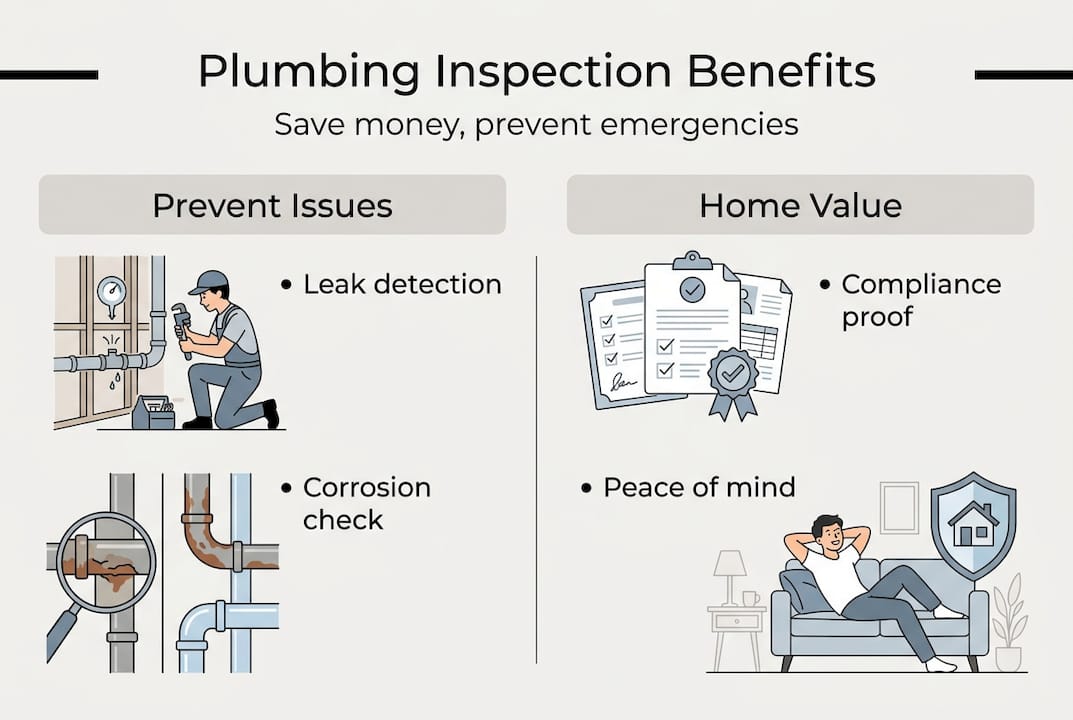
Professional plumbing inspections detect early issues like leaks, corrosion, and sewer problems that prevent costly water damage and emergencies. This is the core reason scheduled inspections matter so much for homeowners who want to prevent costly repairs before they become unavoidable.
Here are the most common hidden issues found during a professional inspection:
- Slow pipe corrosion inside older copper or galvanized steel lines
- Pinhole leaks behind walls or under slabs that go unnoticed for months
- Partial drain blockages caused by grease, mineral buildup, or tree root intrusion
- Faulty shut-off valves that won’t close properly in an emergency
- Water heater sediment buildup reducing efficiency and shortening lifespan
- Loose or degraded pipe fittings at joints and connections
- Improper venting that allows sewer gases to enter living spaces
Each of these problems starts small. A pinhole leak drips slowly for weeks before it saturates insulation and reaches drywall. A partial blockage builds pressure gradually until a pipe bursts. Catching these issues early is the difference between a quick repair call and a major restoration project.
Repair cost reality check: A licensed plumber can fix a minor leak for around $150. That same leak, left undetected for six months, can cause water damage repairs that run $3,000 to $5,000 or more, not counting mold remediation.
Regular inspections also give you documented proof of your plumbing’s condition. This matters when you’re selling your home, filing an insurance claim, or simply planning your maintenance budget. Staying informed about plumbing safety insights helps you make smarter decisions for your home year after year.
Local regulations: LA and OC plumbing inspection requirements
Beyond technical issues, local rules shape what you need to inspect. Here’s how codes in Orange and Los Angeles County affect your home.
California operates under the California Plumbing Code, or CPC, which sets baseline standards for all residential plumbing. But both Los Angeles County and Orange County add their own local amendments on top of those standards. If you’re not tracking both layers, you could face fines or fail an inspection even if your plumbing looks functional.
Inspections ensure compliance with the CPC, including low-flow fixture requirements, seismic strapping for water heaters, and local amendments specific to LA and OC counties. Understanding the plumbing code explained in plain terms helps you know what inspectors are actually looking for.
| Requirement | California Plumbing Code (CPC) | LA/OC Local Amendments |
|---|---|---|
| Low-flow toilets | Max 1.28 gpf required | Enforced on all remodels and new installs |
| Water heater strapping | Seismic strapping required | Double-strap rule in high-seismic zones |
| Pressure regulation | PRV required over 80 psi | Inspectors verify PRV function on-site |
| Backflow prevention | Required on irrigation systems | Local districts may require annual testing |
| Fixture permits | Required for new installations | Permit pull required even for replacements |
Non-compliance isn’t just a paperwork problem. Homeowners who skip required permits or fail to install code-compliant fixtures can face fines and be required to redo work at their own expense. When you sell your home, an unpermitted repair can delay closing or reduce your sale price.
Exploring the full range of plumbing services for homeowners available in your area helps you stay ahead of these requirements rather than scrambling to catch up.
Pro Tip: Before your inspection, create a simple checklist of every fixture, valve, and appliance connected to your plumbing. Note the age and last service date for each item. Inspectors appreciate organized homeowners, and you’re more likely to pass on the first visit.
Inspection methods: How professionals assess plumbing safety
With the rules in mind, how do inspectors actually verify your plumbing and how does this protect you and your property?
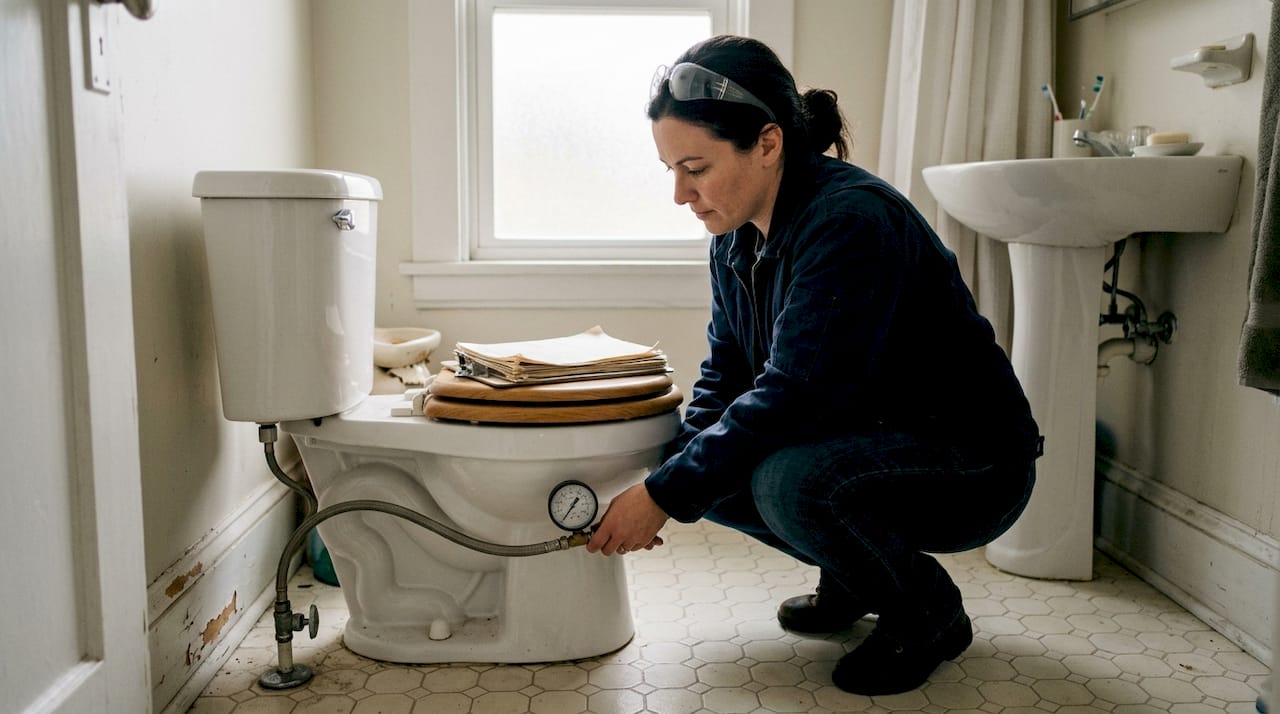
A professional plumbing inspection follows a structured sequence. It’s not a casual walkthrough. Inspectors use specific tools and methods at each stage to confirm that your system is safe, functional, and code-compliant.
Inspection methodologies include visual checks, pressure tests at 100 psi, camera scoping for sewers and drains, fixture operation testing, and a water heater safety review. Here’s how that process typically unfolds:
- Rough-in inspection — Verifies pipe placement, sizing, and slope before walls are closed
- Top-out inspection — Confirms vent stacks and drain lines are properly installed
- Pressure test — Pressurizes the system to 100 psi to identify leaks before fixtures are installed
- Camera scoping — Sends a video camera through sewer and drain lines to spot cracks, root intrusion, or buildup
- Fixture operation check — Tests every faucet, toilet, shower, and shut-off valve for proper function
- Water heater safety review — Checks water heater safety including temperature settings, pressure relief valves, and seismic strapping
| Inspection type | DIY approach | Professional approach |
|---|---|---|
| Leak detection | Visual check only | Pressure test plus camera scoping |
| Sewer condition | Not possible without tools | Full camera inspection of lateral lines |
| Code compliance | Unknown without code knowledge | Verified against CPC and local amendments |
| Water heater check | Visual only | Pressure relief, strapping, and temp verified |
| Documentation | None | Written report with findings and photos |
The difference between a DIY check and a professional inspection is significant. A homeowner can spot an obvious drip, but only a licensed inspector can confirm whether your sewer line has a crack 40 feet from your foundation. Working with professionals who streamline plumbing repair workflow means problems get identified and resolved faster, with less disruption to your daily routine.
Why sewer lateral inspections matter in Los Angeles County
Sewer issues are a different challenge in LA County. Here’s what you’re legally required to inspect and why proactive maintenance matters.
The sewer lateral is the pipe that runs from your home to the public sewer main. In Los Angeles County, this pipe is entirely your responsibility. The county doesn’t maintain it, and if it fails, the repair bill lands on you.
Sewer lateral inspections are required in LA County at the point-of-sale or upon notice from the county. Homeowners are responsible for maintenance to prevent backups. A blocked or cracked lateral can cause raw sewage to back up into your home, which is both a health hazard and an expensive emergency.
Here’s what homeowners in LA County are responsible for:
- Maintaining the full length of the sewer lateral from the house to the public main
- Scheduling an inspection before listing your home for sale
- Responding to county notices requiring inspection or repair within the specified timeframe
- Paying for all repairs to the lateral, including excavation if needed
- Preventing root intrusion by managing trees and landscaping near the sewer line
For more detail on your responsibilities, the LA County sewer maintenance page provides official guidance on what’s required and when.
Pro Tip: If you’re planning to sell your home in LA County, schedule your sewer lateral inspection at least 60 days before listing. This gives you time to address any issues without delaying your closing date or negotiating from a weak position.
Sewer backups don’t give much warning. Knowing how to handle emergency plumbing repairs is useful, but preventing the emergency in the first place is always the better outcome.
The overlooked benefits of plumbing inspections: A homeowner’s real advantage
Most homeowners treat plumbing inspections as a box to check, either for a home sale or after something goes wrong. That reactive mindset costs money and causes unnecessary stress. The homeowners who get the most value from inspections are the ones who schedule them proactively, before any problem appears.
Regular inspections do more than catch leaks. They give you documented proof of your system’s condition, which strengthens your position when negotiating a home sale. Buyers and their agents look for red flags, and a clean inspection report removes one of the biggest ones. It also gives you leverage if a buyer tries to negotiate your price down based on assumed plumbing issues.
There’s also a quieter benefit: peace of mind. Knowing your pipes, water heater, and sewer line are in good shape means you’re not lying awake wondering what’s happening behind your walls.
Inspections detect issues early, saving on emergency repairs and offering lasting peace of mind. That’s a real financial and emotional return on a modest investment. Homeowners who commit to regular inspections consistently find that they reduce repair costs over time, not just once, but year after year. The proactive approach is simply smarter.
Connect with trusted plumbing and appliance services
If this article has made one thing clear, it’s that scheduled plumbing inspections are not optional for homeowners who want to protect their investment. The risks of skipping them are real, and the cost of catching problems early is a fraction of what you’d pay after a disaster.

At MDTech Services, we provide reliable plumbing repair service for homeowners across Orange County and Los Angeles County. Our licensed technicians are experienced in the full range of plumbing services for homeowners, from routine inspections to urgent repairs. We also help you streamline plumbing repair workflow so fixes happen quickly and correctly the first time. Contact us today to schedule your inspection and get ahead of problems before they become emergencies.
Frequently asked questions
What issues can plumbing inspections detect that homeowners might miss?
Professional inspections uncover leaks, corrosion, blockages, and faulty fixtures, often before you see any visible symptoms. These are issues that a standard homeowner walkthrough simply cannot identify without specialized tools.
Do I need a plumbing inspection for code compliance when selling my home?
Yes, inspections help you meet California Plumbing Code requirements and local standards, especially in Orange and LA County where additional amendments apply. Skipping this step can delay your home sale or expose you to fines.
What happens during a plumbing inspection?
Inspectors use visual checks, pressure tests at 100 psi, camera scoping, and fixture testing to verify safety and code compliance. The process results in a written report you can use for repairs, permits, or home sale documentation.
When are sewer lateral inspections required in Los Angeles County?
Sewer lateral inspections are required at the point-of-sale or upon county notice, and homeowners are fully responsible for all repairs and ongoing maintenance of the lateral line.
Recommended
- Annual Plumbing Inspections Save 30% on Repair Costs
- How plumbing protects your home: key safety insights
- Why Schedule Regular HVAC Checks Matters Locally
- Why Regular Plumbing Maintenance Cuts Repairs by 30% in 2026
- How to choose a plumber: essential tips for Thames Valley
- Versicherungscheck für Hausbesitzer Anleitung: Schutz optimieren