
TL;DR:
- Preventing water damage reduces costly repairs, mold growth, and health risks in homes.
- Timely response within 24 to 48 hours is essential to avoid structural and property losses.
Preventing water damage protects your health, your home’s structure, and your finances. Just one inch of water in a typical home can cause up to $25,000 in damage, according to FEMA. Mold can begin growing within 24–48 hours of water intrusion, per IICRC S500 guidance. Your first move right now: locate your main water shutoff valve, and if you can’t stop an active leak, call a licensed technician. Mdtechservices serves homeowners across Orange and Los Angeles Counties for exactly these situations.
Table of Contents
- Why Prevent Water Damage: The Real Stakes for Your Home
- How Quickly Does Water Damage Escalate?
- Where Does Water Damage Most Often Come From?
- Practical Prevention Steps You Can Start Today
- Signs of Hidden Leaks and When to Act Urgently
- When Should You Call a Licensed Technician?
- Prevention Costs vs. Repair Costs: The Financial Case
- What to Do in the First Hour After Water Intrusion
- Key Takeaways
- A Local Perspective on Water Damage in Orange and Los Angeles Counties
- Mdtechservices: Licensed Local Help When You Need It
- Sources and Further Reading
Why Prevent Water Damage: The Real Stakes for Your Home
Water damage is not just a cleanup problem. It creates a chain of consequences that gets more expensive and more dangerous the longer it goes unaddressed.
- Structural damage: Water weakens drywall, wood framing, and subfloors. What starts as a soft spot under your kitchen floor can become a full subfloor replacement.
- Mold and indoor air quality: Mold growth begins within 24–48 hours and can trigger respiratory illness, especially in children and older adults. Black mold is linked to severe health effects.
- Ruined personal property: Flooring, furniture, electronics, and irreplaceable items are often total losses once soaked.
- Electrical hazards: Water near wiring or panels creates shock and fire risk. This is a life-safety issue, not just a repair cost.
- Insurance complications: Insurers routinely deny claims when damage stems from slow, long-term leaks. Neglected maintenance is one of the most common reasons for claim denials.
- Resale and property value: Buyers and inspectors flag water stains, mold, and soft floors immediately. A history of unmitigated water damage can reduce your home’s value or kill a sale.
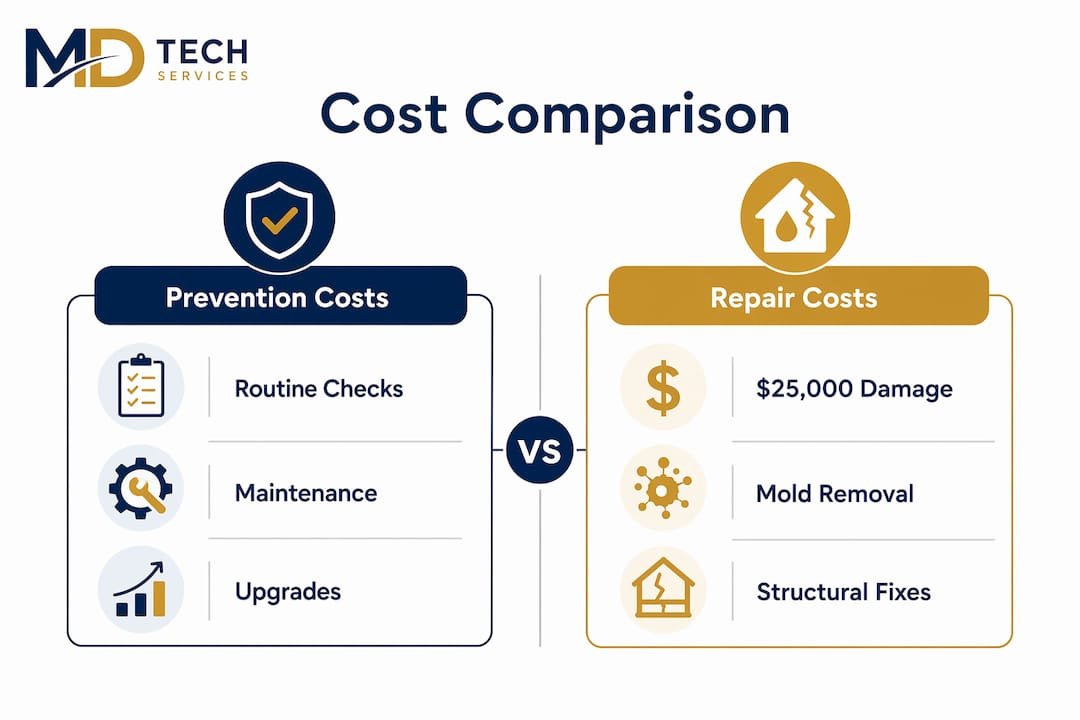
Moderate water damage involving multiple rooms typically incurs restoration costs that can be substantial. Severe losses involving sewage, structural damage, or mold remediation may result in very high expenses. Routine preventive plumbing maintenance costs a fraction of that.
Pro Tip: Check your water bill every month. An unexplained spike, even $10–$20 above normal, is often the first sign of a hidden leak behind a wall or under a slab.
How Quickly Does Water Damage Escalate?
The window for low-cost mitigation is narrow. Here is what happens after water intrudes:
- Hours 0–6: Water spreads through porous materials. Drywall absorbs moisture. Flooring begins to warp. Cleanup at this stage is fastest and cheapest.
- Hours 6–24: Drywall softens and may need replacement. Wood swells. Odors begin. Costs climb.
- Hours 24–48: Mold begins developing on damp surfaces. What was a drying job is now a remediation job.
- 48+ hours: Mold spreads, structural materials degrade, and contamination risk rises. Restoration costs can reach the full $25,000 range FEMA cites for even modest flooding.
Professional water extraction and drying must begin within that 24–48 hour window to prevent mold and limit material loss. Restoration teams use air movers, commercial dehumidifiers, and moisture mapping to confirm all hidden moisture is addressed. Documentation from this process, including moisture readings and daily progress logs, directly supports insurance claims.
Where Does Water Damage Most Often Come From?
Knowing your highest-risk sources lets you prioritize inspections. These are the most common culprits in residential homes:
Appliances and supply lines:
- Washing machine hoses (rubber hoses degrade and burst without warning)
- Dishwasher door seals and water line connections
- Refrigerator ice maker and water dispenser lines
- Water heater tank corrosion or pressure relief valve failure
Plumbing:
- Supply lines under sinks (check for corrosion and moisture on the cabinet floor)
- Toilet wax rings and supply valves
- Sewer backups during heavy rain events
HVAC:
- Condensate drain lines clogged with algae or debris, causing overflow into ceilings and walls
- Drain pan cracks or improper slope
Exterior:
- Roof flashing failures around chimneys, vents, and skylights
- Clogged gutters causing water to back up under roofing or pool at the foundation
- Poor yard grading directing runoff toward the foundation
For appliance-specific leak causes and quick visual checks, a few minutes of inspection twice a year catches most problems before they become losses.
Practical Prevention Steps You Can Start Today
These eight tasks deliver the highest return for the least effort:
- Know your main shutoff valve. Find it, turn it, confirm it works. Every adult in your home should know its location.
- Replace washing machine hoses on schedule. Standard rubber hoses should be replaced every 5 years; braided stainless lines last 8–10 years. A replacement typically costs under $20.
- Install leak sensors. Place them near water heaters, under sinks, behind toilets, and beside appliances. Sensors are relatively affordable; whole-home automatic shutoff systems are a higher investment, and some insurers offer premium discounts for them.
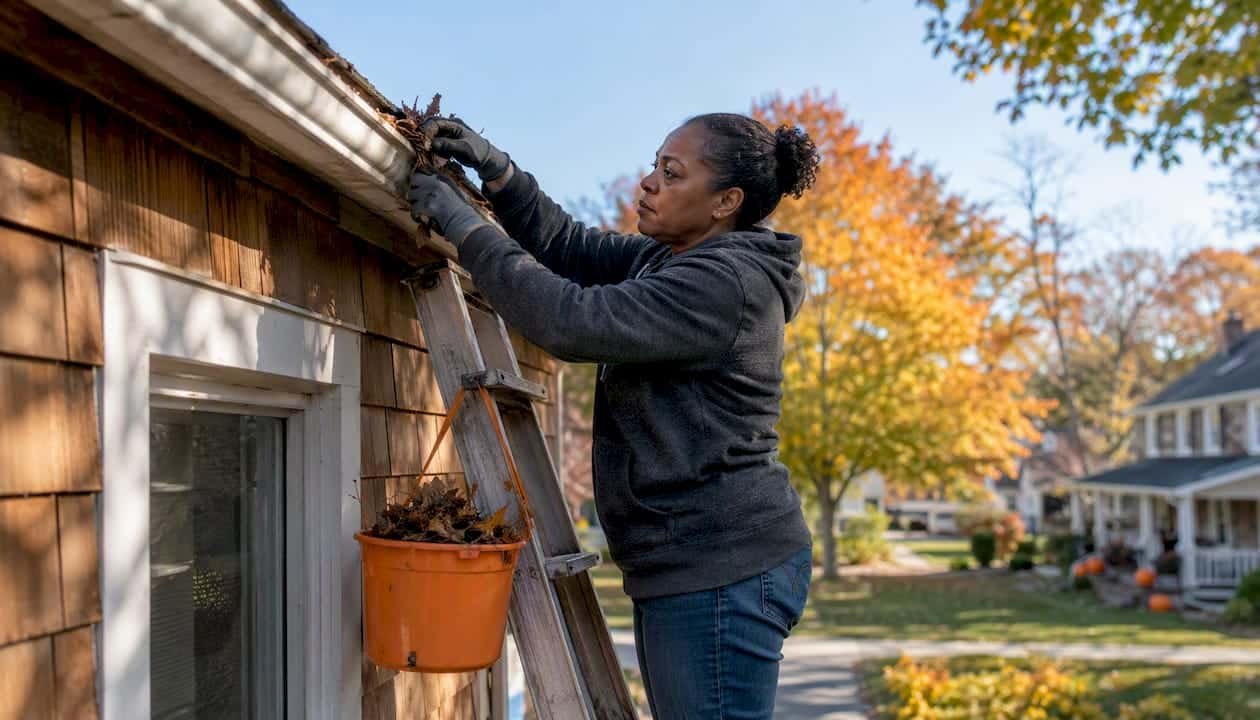
- Clean gutters twice a year. Make sure downspouts direct water at least five feet from your foundation.
- Test your sump pump. Pour water into the pit and confirm the pump activates. Replace the battery backup annually.
- Flush your water heater annually. Sediment buildup accelerates corrosion and shortens tank life.
- Clear HVAC condensate lines. Pour a cup of diluted bleach into the drain line access port each spring to prevent algae clogs.
- Insulate exposed pipes. Pipes in garages, crawl spaces, and exterior walls are vulnerable to temperature swings.
A simple home maintenance schedule keeps these tasks from slipping: monthly water bill review, seasonal gutter cleaning and HVAC check, annual water heater flush and sump pump test, and hose replacement every 5 years.
Pro Tip: Upgrade rubber washing machine hoses to braided stainless steel when you replace them. The cost difference is about $10, and the failure rate is dramatically lower.
Signs of Hidden Leaks and When to Act Urgently
Hidden leaks often announce themselves before they cause visible damage. Watch for:
- Musty or earthy odors in rooms with no obvious moisture source
- Unexplained increases in your water bill
- Soft, spongy, or warped flooring
- Bubbling or peeling paint on walls or ceilings
- Water meter moving when no fixtures are in use
These are the situations that require prompt professional inspection:
- Continuous water meter movement with all fixtures off
- Visible mold growth anywhere in the home
- Ceiling bulges or sagging
- Any moisture near electrical panels, outlets, or wiring
- Sewage odors indicating a backup
If you see any of these, shut off the water at the main valve, avoid electrical circuits in wet areas, photograph everything you can see, and call a licensed technician. Leak detection technology, including moisture meters and thermal imaging, can confirm hidden moisture behind walls before it becomes a structural problem.
Pro Tip: Check your water meter before bed and again first thing in the morning without using any water overnight. If the reading changed, you have a leak somewhere in the system.
When Should You Call a Licensed Technician?
Call a licensed professional for any of the following:
- A leak you cannot locate or stop at the source
- Moisture behind walls, under floors, or in ceilings
- Any work involving gas connections (water heaters, gas appliances)
- Sump pump failure or HVAC condensate backup
- Plumbing work that requires shutting off supply valves or accessing main lines
A licensed technician’s process goes well beyond turning off a valve. Diagnosis includes moisture mapping with calibrated meters and thermal imaging cameras. Mitigation involves water extraction, commercial drying equipment, and daily moisture readings. The technician documents everything, including before-and-after photos and equipment logs, which directly supports your insurance claim.
Ask any technician you hire for:
- Active state license and proof of insurance
- Detailed written estimate before work begins
- Moisture readings with specific numbers, not just visual assessment
- Before-and-after documentation
For common plumbing decisions on what you can handle yourself versus what needs a licensed tech, a clear framework helps you avoid both over-spending and under-responding.
Pro Tip: Ask for a moisture map, not just a verbal report. Calibrated readings create a paper trail that reduces disputes with your insurer if a claim is filed.
Prevention Costs vs. Repair Costs: The Financial Case
The math is straightforward. Routine prevention tasks cost tens to hundreds of dollars. Repairs cost thousands to tens of thousands.
- Washing machine hose replacement: under $20, prevents potential losses in the thousands
- Leak sensor installation: $20–$50 per sensor, can catch a failure before it spreads
- Gutter cleaning: $100–$200 per service call, prevents foundation and roof damage
- Sump pump battery backup: $150–$300, prevents basement flooding during power outages
- Annual HVAC condensate service: included in most maintenance agreements, prevents ceiling and wall damage
FEMA data puts the damage from just one inch of water at up to $25,000. A full prevention routine for a year costs a fraction of a single mid-range claim. Beyond the direct repair costs, regular plumbing checks reduce the likelihood of claim denials by demonstrating that you maintained the property responsibly.
Insurance policies typically cover sudden, accidental damage like a burst pipe. They routinely exclude gradual leaks and damage from deferred maintenance. Documentation of your prevention routine is your best protection if a claim is ever disputed.
What to Do in the First Hour After Water Intrusion
Speed matters. Follow this sequence:
- Stop the source. Shut off the water at the nearest valve or the main shutoff.
- Ensure safety first. If water is near electrical outlets, panels, or appliances, do not enter the area. Turn off power at the breaker if you can do so safely from a dry location.
- Document everything immediately. Photograph all visible water, affected materials, and the source before touching anything.
- Remove valuables and move furniture. Get items off wet flooring to prevent secondary damage.
- Begin safe drying. Open windows if weather permits, run fans, and place towels to absorb standing water on hard surfaces.
- Call a licensed technician or restoration professional. If there is standing water, contamination risk (sewage), or any sign of hidden moisture, professional extraction must begin within 24 hours.
Mold begins developing within 24–48 hours of intrusion. Waiting even one day to call for help can turn a manageable drying job into a full remediation project. Keep your plumbing emergency checklist accessible so you are not searching for steps when water is already spreading.
Key Takeaways
Preventing water damage is the single most cost-effective home protection strategy available to Orange and Los Angeles County homeowners, with routine tasks costing under $300 annually versus potential repair bills that can reach $25,000.
| Point | Details |
|---|---|
| Mold risk starts fast | Mold can begin growing within 24–48 hours of water intrusion, making same-day response critical. |
| One inch, major loss | Just one inch of water in a home can cause up to $25,000 in damage, according to FEMA. |
| Replace hoses on schedule | Standard rubber washing machine hoses should be replaced every 5 years; braided stainless lines every 8–10 years. |
| Sensors and shutoffs pay off | Leak sensors cost $20–$50 each; whole-home shutoff systems run $200–$600 and may reduce insurance premiums. |
| Mdtechservices is your local resource | Licensed appliance, HVAC, and plumbing technicians serving Orange and Los Angeles Counties, available for inspections, repairs, and emergency response. |
A Local Perspective on Water Damage in Orange and Los Angeles Counties
Orange and Los Angeles County homeowners face a specific combination of risks that makes routine prevention more urgent than in many other regions. Coastal humidity accelerates corrosion on supply lines and appliance connections, meaning hoses and fittings degrade faster than the national average suggests. Seasonal storms, particularly in winter and early spring, overwhelm gutters and test foundation grading that may have gone unchecked for years. Multi-family properties and older housing stock in both counties often share plumbing stacks, meaning one unit’s neglected supply line can affect neighbors below.
Three local-aware habits make a real difference here: clean gutters before the rainy season (October is a good target), have your HVAC condensate line cleared annually given the extended cooling season, and check roof flashing after any wind event. Mdtechservices’ licensed technicians understand these regional patterns and provide appliance leak detection specific to OC and LA homes. For landlords and property managers in the area, a scheduled maintenance system is one of the most reliable ways to stay ahead of water-related losses across multiple units.
Mdtechservices: Licensed Local Help When You Need It
When a leak is beyond a DIY fix, or when you want a licensed technician to inspect before a small problem becomes a large one, Mdtechservices is ready to help across Orange and Los Angeles Counties.
Core services relevant to water damage prevention include supply hose replacement, appliance leak diagnosis and repair, water heater service and installation, HVAC condensate line cleaning, and plumbing inspections. Every visit is performed by a licensed technician who provides written documentation, moisture readings when needed, and a clear estimate before any work begins. Booking is straightforward through the Mdtechservices website, and the team responds promptly to both scheduled maintenance and urgent calls.
For appliance-related water concerns, start with the appliance repair service page to see the full scope of what Mdtechservices covers. For HVAC condensate and system issues, the HVAC repair guide explains exactly what a service visit includes. Schedule your inspection today and get ahead of the problem before it becomes a claim.
Sources and Further Reading
These are the primary references used throughout this article. Each one is worth bookmarking if you are preparing documentation for an insurance claim or building a prevention schedule.
- FEMA / Ready.gov homeowner guidance: The source for the $25,000 one-inch-of-water figure and general flood risk guidance for homeowners.
- IICRC S500 / NIH-hosted mold and moisture SOP: The industry standard for the 24–48 hour mold development timeline and professional remediation protocols.
- NFIP / Floodsmart — homeowner protection facts: Practical prevention routines recommended for new and existing homeowners, including gutter maintenance and leak detection.
- PDMSince1885 — washing machine hose replacement schedule: Specific replacement intervals for rubber and braided stainless supply hoses.
- Paul Davis — mold growth timeline and insurance risks: Explains how hidden, long-term leaks lead to claim denials and why professional moisture documentation matters.
- Allied Property Adjusting — residential water damage resources: Covers extraction and drying timelines and the insurer’s expectation that homeowners mitigate promptly.
- AmazingFlash — appliance and plumbing leak prevention: Cost ranges for leak sensors and whole-home shutoff systems, including insurance discount potential.