
TL;DR:
- A plumbing emergency checklist guides you through immediate actions to contain damage, prioritize safety, and contact professionals quickly. Knowing how to shut off water, electricity, and contain water before a plumber arrives can prevent costly repairs and health hazards. Proper documentation and a personalized emergency plan enhance insurance claims and response effectiveness during urgent plumbing crises.
A plumbing emergency checklist is a step-by-step action plan that helps you contain damage, protect your safety, and get professional help fast when urgent plumbing crises strike. Water damage escalates within minutes, so knowing exactly what to do before a licensed plumber arrives is the difference between a manageable repair and a costly restoration. This guide covers every critical step: from shutting off water and electricity to documenting damage for insurance. Keep your main water shutoff location, local emergency plumber contact, and this checklist within reach at all times.
1. Your plumbing emergency checklist: the first steps to take
The first step in any plumbing emergency is to stay calm and assess the situation quickly. Identify which fixture is involved, whether water is actively flowing, and whether it has reached any electrical outlets, switch boxes, or your breaker panel. Water near electricity creates an immediate electrocution risk, and that hazard takes priority over everything else.
Your immediate actions in the first minutes affect total damage far more than how fast a plumber arrives. Shutting off water and isolating electrical circuits early can prevent thousands of dollars in secondary damage. Do not wait for the plumber to make these decisions for you.
Follow this sequence immediately:
- Assess the hazard. Confirm the source of water and check for electrical risks before touching anything wet.
- Shut off the fixture valve. For isolated leaks, turn off the shutoff valve directly under the sink or behind the toilet.
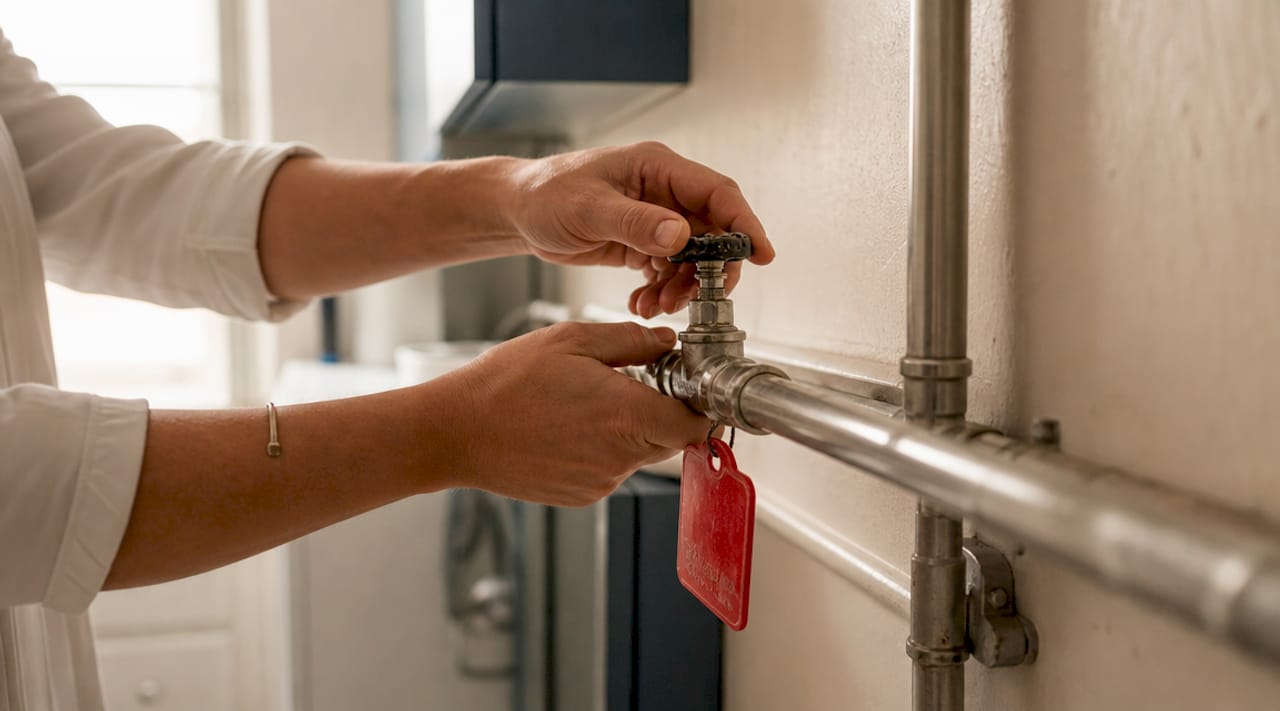
- Shut off the main water supply. If the leak is widespread or you cannot isolate it, turn off the main valve near your water meter or utility area.
- Cut power if needed. If water is near outlets or your electrical panel, switch off the breaker for that zone or the whole home.
- Shut off the water heater. For gas heaters, shut off the gas supply first, then the heater, to prevent overheating. Open drains and spigots afterward to relieve pressure in the pipes.
- Contain the water. Place buckets under active drips, lay towels along water paths, and move furniture or valuables off wet floors.
Pro Tip: Label your main water shutoff valve with a bright tag and show every adult in your household where it is. In a real emergency, you will not have time to search.
2. How to handle burst pipes, overflowing toilets, and sewage backups
Each type of plumbing emergency requires a slightly different response. Treating them all the same wastes time and can make the situation worse.
Burst pipes
- Shut off the main water supply immediately.
- If the pipe is accessible and the break is small, apply pipe repair tape or a two-part epoxy compound as a temporary fix. These products are available at Home Depot and Lowe’s and buy you time until a plumber arrives.
- Open faucets throughout the home to drain remaining water from the pipes and reduce pressure.
- Keep the area ventilated if the pipe is inside a wall cavity, since trapped moisture accelerates mold growth within 24 to 48 hours.
Overflowing toilets
- Remove the tank lid and push the flapper down manually to stop water flow into the bowl.
- Turn off the toilet’s shutoff valve, located at the base of the toilet near the wall.
- Do not flush again under any circumstances. A second flush will push more water and waste onto the floor.
- Contain overflow with old towels and move any rugs or bathroom items out of the wet zone.
Sewage backups
Sewage backups are the most serious type of residential plumbing emergency. Treat sewage as a biohazard and keep all people, especially children and pets, away from the affected area. Cleanup costs for sewage backups range from $2,000 to $10,000 or more, depending on the extent of contamination.
Critical safety rule: Do not attempt to clean up sewage beyond basic containment. Exposure control is the primary goal. Porous materials like drywall, carpet, and wood flooring that contact sewage require professional removal to prevent mold and serious health risks. Call a licensed remediation company alongside your emergency plumber.
- Avoid using any drains or toilets in the home until the backup is cleared.
- Turn off the water supply to prevent additional flow into the system.
- Document everything with photos before any cleanup begins.
3. When and how to call a professional emergency plumber
Not every plumbing problem is a true emergency. True plumbing emergencies include active flooding, sewage exposure, suspected gas leaks, or complete loss of water to critical fixtures. A dripping faucet or slow drain can wait for normal business hours. A burst pipe or sewage backup cannot.
Before you call, prepare a short triage log. This takes under one minute and dramatically improves the dispatcher’s ability to send the right technician with the right equipment.
Your triage log should include:
- Which fixture started the problem and when it began
- Whether water is still flowing or has been shut off
- Any electrical or gas risks you have identified
- Steps already taken (water off, power off, temporary patch applied)
- Any unusual smells, particularly sulfur or sewage odors
A one-minute triage log for dispatchers increases precision and reduces return visits by ensuring plumbers arrive prepared for specific hazards. When you call, give your address first, then the emergency type, then your triage details. Ask for a confirmed ETA and the technician’s name.
Pro Tip: Save a 24/7 emergency plumber’s number in your phone before you ever need it. Searching for emergency plumbers near you during an active flood adds critical minutes to your response time.
Keep the plumber’s contact information visible on your refrigerator or in a home emergency binder alongside your insurance policy number and water shutoff location.
4. How to document plumbing emergency damage for insurance
Insurance companies rely heavily on photo and video evidence, and timely documentation is critical to a successful claim. Start documenting as soon as the immediate safety hazards are under control. Do not wait for the plumber or adjuster to arrive.
Follow this documentation sequence:
- Photograph the source. Capture the broken pipe, overflowing fixture, or backup point from multiple angles before any cleanup begins.
- Record water spread. Video the full extent of water on floors, walls, and ceilings. Walk through every affected room.
- Capture waterline marks. These marks on walls and furniture establish the maximum water level and are key evidence for adjusters.
- Document damaged items. Photograph furniture, appliances, electronics, and personal property. Note brand names, model numbers, and serial numbers for appliances.
- Keep all receipts. Save receipts for emergency supplies like buckets, towels, fans, and any temporary repair materials you purchase.
- Log the timeline. Write down when the emergency started, when you shut off water and power, and when you called for help. A written timeline supports your claim and helps your plumber understand the sequence of events.
Store photos and videos in a cloud service like Google Photos or iCloud immediately so they are not lost if your phone is damaged. Email a summary of the timeline and your insurance policy number to yourself as a backup record.
Key takeaways
A plumbing emergency checklist works because shutting off water and electricity in the first minutes limits damage more than any other single action you can take.
| Point | Details |
|---|---|
| Shut off water first | Locate your main shutoff valve before an emergency and act within the first two minutes. |
| Match response to emergency type | Burst pipes, toilet overflows, and sewage backups each require different containment steps. |
| Prepare a triage log before calling | A one-minute log of fixture, timing, and hazards gets the right plumber to you faster. |
| Document damage immediately | Photos and video taken before cleanup are the foundation of a successful insurance claim. |
| Treat sewage as a biohazard | Keep people away and call professional remediation services. Do not attempt DIY cleanup. |
What we have learned from real plumbing emergencies
The homeowners who handle plumbing emergencies best are not the ones who know the most about pipes. They are the ones who stay calm and know their home. Every time we respond to an urgent call at Mdtechservices, the outcome is noticeably better when the homeowner has already shut off the water and moved valuables off the floor. Those two actions alone can cut the total repair cost significantly.
What most people overlook is the value of knowing your home’s plumbing layout before anything goes wrong. Walk your home once and find the main shutoff valve, the individual fixture valves, and your breaker panel. That five-minute exercise is worth more than any emergency kit you could buy.
We also see homeowners hesitate to cut power when water is near electrical fixtures because they are not sure if it is necessary. When in doubt, shut it off. Water and electricity together create a life-threatening hazard, and restoring power takes minutes once the area is dry. The risk is never worth the convenience.
The best plumbing emergency plan is a personalized one. Write down your shutoff locations, your plumber’s number, and your insurance policy number on a single card and post it somewhere visible. That card, combined with this checklist, gives you a real plan instead of a panic response.
— MDTECH
Get professional plumbing help when it matters most
When a plumbing crisis hits, having a trusted professional on call makes all the difference. Mdtechservices serves homeowners across Orange County and Los Angeles County with licensed, responsive plumbing and repair services available when you need them most.

Use this emergency plumbing repair guide to prepare your household before an emergency strikes. For ongoing home protection, Mdtechservices also covers routine plumbing maintenance to reduce the risk of emergencies before they start. Whether you need urgent repairs or want to verify a licensed plumber’s credentials, Mdtechservices is ready to help you protect your home with confidence.
FAQ
What is the first thing to do in a plumbing emergency?
Stay calm, identify the source of the problem, and check for electrical hazards near water. Then shut off the nearest fixture valve or the main water supply immediately.
Where is the main water shutoff valve in a home?
The main shutoff valve is typically located near the water meter, in a utility room, basement, or on an exterior wall. Locate it before an emergency so you can act within seconds.
When should I call an emergency plumber vs. wait until morning?
Call an emergency plumber for active flooding, sewage backups, suspected gas leaks, or loss of water to critical fixtures. Slow drips and minor leaks that are fully contained can wait for normal business hours.
How do I document plumbing damage for an insurance claim?
Photograph and video the source, water spread, waterline marks, and all damaged items before any cleanup begins. Store files in a cloud service and keep a written timeline of events.
Is sewage backup dangerous to clean up yourself?
Yes. Sewage is a biohazard and porous materials it contacts require professional removal to prevent mold and health risks. Contain the area, keep people away, and call a licensed remediation company.