
A pilot light is a small, continuously burning gas flame that serves as the ignition source for the main burner in gas appliances. When your furnace kicks on or your water heater starts heating, that tiny flame is what triggers the larger burner to fire. Understanding how it works, and what to do when it goes out, is one of the most practical things you can know as a homeowner.
Where you’ll find pilot lights:
- Gas furnaces (typically behind a lower access panel)
- Gas water heaters (near the base, behind a small cover)
- Gas fireplaces (in the burner tray or log set area)
- Older gas ovens and ranges (under the oven floor or in the broiler drawer)
The safety point: A pilot light doesn’t work alone. It operates alongside a safety device called a thermocouple or thermopile that automatically shuts off the gas supply if the flame goes out, preventing unburned gas from building up in your home. If you ever smell gas, don’t attempt a relight. Leave the area immediately and call your gas utility or 911 from outside.
Table of Contents
- Which appliances use a pilot light, and where do you find it?
- How does a pilot light work?
- Why does a pilot light keep going out?
- How to safely relight a pilot light
- Safety features and energy trade-offs you should know
- When should you call a licensed technician?
- Key Takeaways
- The honest take on pilot lights and when to get help
- Mdtechservices can handle your pilot light repair
- Useful sources for further reading
Which appliances use a pilot light, and where do you find it?
Pilot lights are most common in gas appliances manufactured before the mid-1990s, though some newer models still use them. Here’s where to look:
- Gas furnace: Behind the lower front access panel, near the burner assembly.
- Gas water heater: At the base of the unit, behind a small metal cover or viewing window.
- Gas fireplace: Inside the firebox, near the log set or burner pan. The pilot assembly is usually visible once the decorative front is removed.
- Older gas oven/range: Either under the oven floor (lift it up) or in the broiler compartment below the oven.
- Some gas clothes dryers: Near the burner housing at the back or bottom of the unit.
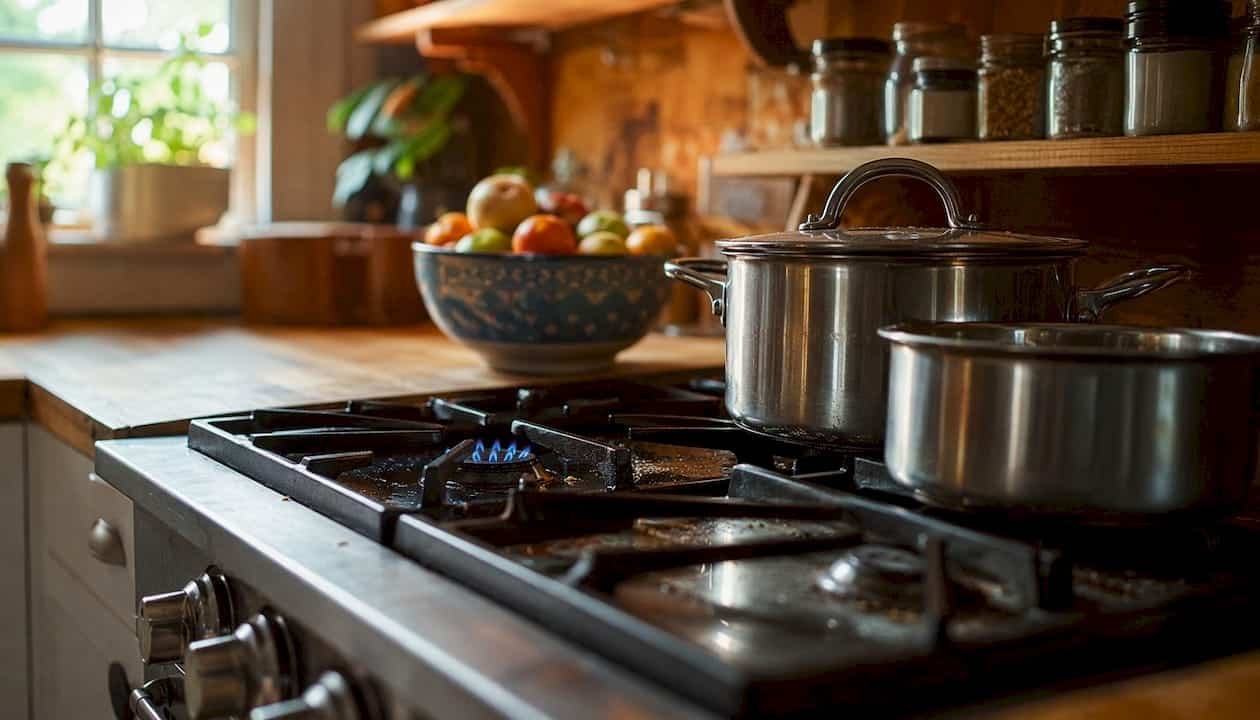
Pro Tip: Before opening any access panel, check your appliance’s owner’s manual. It will show you the exact pilot location and often includes a diagram of the control knob settings. A healthy pilot flame burns steady and blue, sometimes with a small yellow tip. A weak, orange, or flickering flame is a sign something needs attention.
How does a pilot light work?
The pilot light assembly has four main parts, and each one has a specific job. Together, they create a closed-loop safety system.
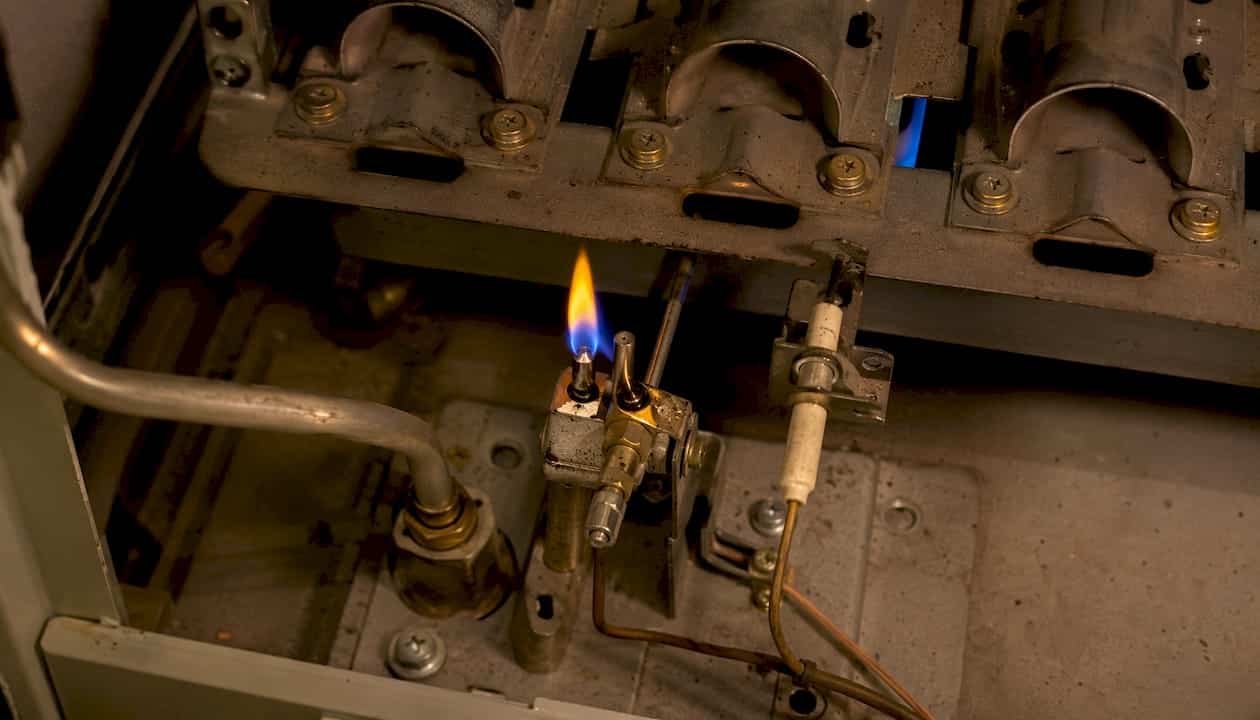
| Component | Function | What can fail |
|---|---|---|
| Pilot tube/orifice | Delivers a small, steady flow of gas to the pilot flame | Clogs from dirt, spider webs, or mineral deposits |
| Pilot flame | Burns continuously to ignite the main burner on demand | Extinguished by drafts, dirt, or gas supply issues |
| Thermocouple/thermopile | Senses heat from the flame and generates a small electrical current | Degrades over time; misalignment stops current generation |
| Gas control valve | Stays open only when the thermocouple sends current; closes if flame goes out | Wears out; may fail to open or close properly |
The thermocouple is the safety linchpin of this system. As long as the pilot flame heats it, the sensor generates enough current to hold the gas valve open. The moment the flame goes out, the thermocouple cools, the current stops, and the valve closes automatically. No gas flows. That automatic shutoff is what prevents a dangerous buildup of unburned gas in your home.
A thermopile works on the same principle but generates more current, making it common in gas fireplaces where it also powers the remote-control system.
Why does a pilot light keep going out?
Several things can cause a pilot to go out, and most of them are straightforward once you know what to look for.
Common causes:
- Drafts: Air movement from nearby vents, open doors, or gaps in the appliance cabinet can blow out the flame.
- Clogged pilot orifice: Dirt, dust, or spider webs in the tube restrict gas flow. Spiders are attracted to the mercaptan added to natural gas and often nest in pilot tubes when appliances sit unused.
- Faulty or misaligned thermocouple: If the sensor isn’t positioned directly in the flame, or if it has degraded with age, it won’t generate enough current to hold the valve open.
- Low gas pressure: A supply issue at the meter or regulator reduces flow to the pilot.
- Aging components: Older appliances may have worn gas valves or brittle pilot tubes.
Safe homeowner checks:
- Look for obvious drafts near the appliance and seal gaps if possible. Weatherproofing doors and vents near your gas appliances, as covered in this door winterizing guide, can reduce draft-related outages.
- Visually inspect the pilot orifice for visible debris (don’t probe it yourself).
- Confirm your gas supply is on at the meter and shutoff valve.
- Check whether the thermocouple tip sits directly in the pilot flame.
Gas smell? Stop everything. If you detect a gas odor, do not attempt any inspection or relight. Leave the house, leave the door open, and call your gas utility or 911 from a safe distance. Review our gas leak safety guide before returning.
Pro Tip: A pilot that lights but won’t stay lit after you release the control knob almost always points to the thermocouple, not the gas supply. That’s a low-cost part, but replacing it correctly requires a technician in most cases.
How to safely relight a pilot light
If there’s no gas odor and you’ve confirmed the gas supply is on, relighting is usually straightforward. Follow these steps carefully.
- Turn the control knob to “Off” and wait at least 5 minutes. This 5–10 minute wait is the industry-standard period to let any residual gas disperse before you introduce a flame.
- Locate the pilot assembly using your owner’s manual or the diagram on the appliance label.
- Turn the control knob to “Pilot.” On some appliances, you’ll press and hold the knob or a separate red button.
- Light the pilot using a long-reach lighter or a fireplace match. Hold the flame directly at the pilot orifice.
- Hold the control for 30–60 seconds. This is the step most homeowners rush. The thermocouple needs time to heat up before it can generate enough current to hold the valve open; holding for the longer recommended time improves success.
- Release the control slowly and watch the flame. A steady blue flame means success. Turn the knob to your desired setting.
If the pilot won’t stay lit after two or three properly timed attempts, stop. Continued attempts won’t fix a mechanical failure, and they can be counterproductive. A weak or sputtering flame after relighting usually means a clogged orifice. A flame that lights but dies the moment you release the knob points to a thermocouple problem. Both situations call for a technician.
Pro Tip: Keep a long-reach lighter near your furnace or water heater. Trying to light a pilot with a short match is awkward and increases the chance of burning your hand or rushing the hold time.
Safety features and energy trade-offs you should know
How safety devices protect your home
- Thermocouple/thermopile: Cuts gas flow within seconds of flame loss, preventing unburned gas accumulation.
- 100% shutoff gas valves: Found on most modern appliances; the valve stays fully closed until the thermocouple confirms the pilot is lit.
- Oxygen depletion sensors (ODS): Common on unvented gas fireplaces; shuts the unit off if oxygen levels in the room drop too low.
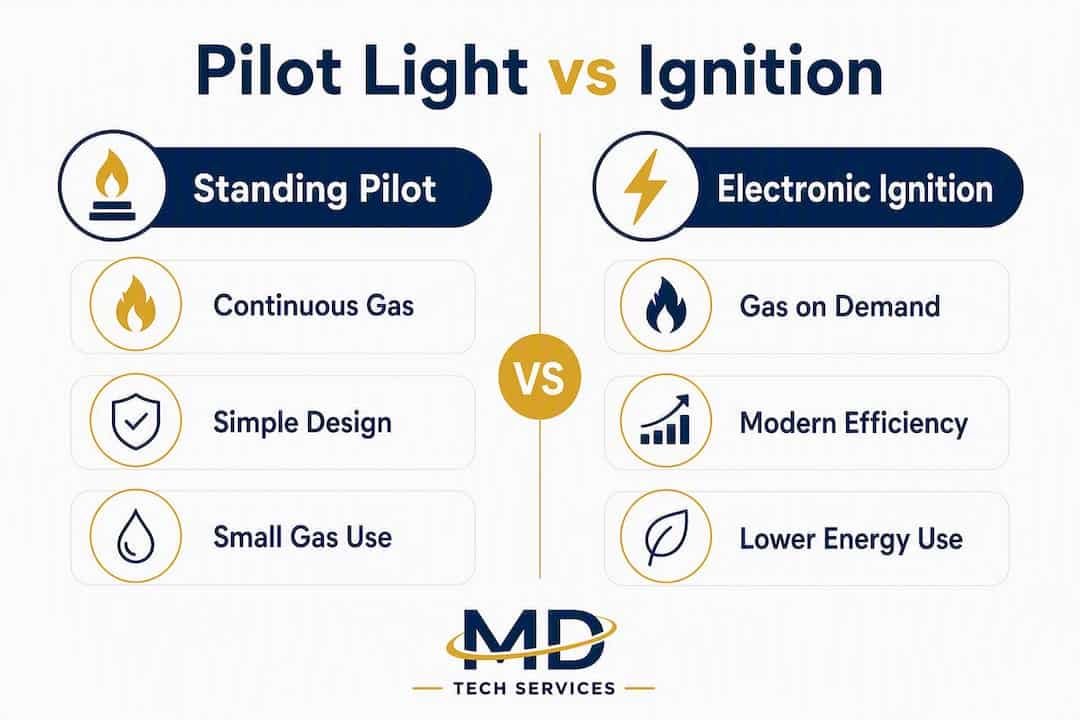
Standing pilot vs. electronic ignition
| Feature | Standing pilot | Electronic ignition |
|---|---|---|
| Energy use | Burns gas continuously | Uses gas only on demand |
| Reliability | Simple; no electrical dependency | Requires power; can fail in outages |
| Maintenance | Pilot tube cleaning; thermocouple checks | Igniter and sensor checks |
| Typical appliance age | Pre-1990s to mid-1990s | Mid-1990s to present |
Standing pilots use only a small amount of gas per day, often just pennies’ worth. Turning one off to save fuel can actually invite problems: insects nest in idle pilot tubes, and moisture builds up inside the appliance without the gentle heat the pilot provides. Unless you’re shutting the appliance down for an extended period or planning an upgrade to electronic ignition, leaving the pilot lit is usually the practical choice.
Pro Tip: If your appliance is more than 15 years old and you’re already dealing with pilot issues, ask your technician about converting to electronic ignition. The long-term reliability gain often outweighs the upfront cost.
When should you call a licensed technician?
Some pilot issues are safe for homeowners to handle. Others are clear signals to put down the lighter and pick up the phone.
Call a technician when:
- The pilot goes out repeatedly despite correct relighting procedures.
- You smell gas at any point during or after the process.
- You see visible corrosion, rust, or physical damage on the pilot assembly or gas line.
- The pilot orifice appears blocked and you can’t clear it safely.
- The appliance is 10–15 years old and showing multiple symptoms.
- The thermocouple has been replaced before and the problem has returned.
What a technician will do on arrival:
- Perform a visual safety check of the appliance and gas connections.
- Test gas pressure at the appliance to confirm adequate supply.
- Inspect and clean the pilot orifice and burner assembly.
- Test the thermocouple output with a multimeter and replace it if output is below spec.
- Check the gas control valve for proper operation.
- Explain whether a repair, component replacement, or ignition-system upgrade makes the most sense for your appliance’s age and condition.
Thermocouple replacement is one of the lower-cost repairs in appliance service. Labor time for a straightforward relight or thermocouple swap is typically under an hour. More involved work, like a gas valve replacement or ignition conversion, takes longer and costs more. Have your appliance’s make, model number, and a brief description of recent symptoms ready when you book. That information helps the technician arrive prepared and keeps the visit efficient. For signs that a broader appliance issue may be at play, our appliance failure guide covers what to watch for.
Key Takeaways
A pilot light is a continuously burning gas flame with a built-in safety shutoff: if the flame goes out, the thermocouple cuts the gas supply automatically, and relighting is safe only when there is no gas odor present.
| Point | Details |
|---|---|
| What a pilot light does | Ignites the main burner in gas appliances; found in furnaces, water heaters, fireplaces, and older ovens. |
| Safety shutoff mechanism | The thermocouple cuts gas flow automatically when the pilot flame goes out, preventing gas buildup. |
| Safe relighting steps | Turn off gas, wait 5–10 minutes, set to “Pilot,” light, and hold the control for 30–60 seconds. |
| When to stop and call a pro | Repeated outages, gas odor, visible corrosion, or a pilot that lights but won’t stay lit signal a technician visit. |
| Mdtechservices | Licensed technicians in Orange and Los Angeles counties handle pilot relights, thermocouple replacement, and ignition upgrades. |
The honest take on pilot lights and when to get help
Most pilot light problems are not emergencies. A pilot that goes out once after a windy night is usually just a draft issue. A pilot that keeps going out, or one that lights and immediately dies, is telling you something mechanical has worn out, and that’s a different situation entirely.
The part homeowners most often underestimate is the thermocouple. It’s a small, inexpensive component, but when it fails or drifts out of position, no amount of relighting will fix the underlying problem. Recognizing that distinction early saves time, frustration, and the risk of repeated gas exposure from failed relight attempts.
Relighting a pilot yourself is reasonable when conditions are safe and the steps are followed carefully. But there’s no value in repeating the same procedure three or four times when the appliance is clearly not responding. Calling a licensed technician at that point isn’t giving up. It’s the right call, and it usually results in a faster, more permanent fix than continued DIY attempts.
Mdtechservices can handle your pilot light repair
When a pilot light problem goes beyond a simple relight, Mdtechservices is ready to help. Our licensed technicians serve homeowners across Orange County and Los Angeles County, handling everything from thermocouple replacement and pilot orifice cleaning to full appliance repair and ignition system upgrades. We give you a transparent estimate before any work begins, and we’ll tell you honestly whether a repair makes sense or whether an upgrade is the better investment for your appliance’s age.
For furnace pilot issues, our team also covers HVAC repair across both counties. Book an appointment online or call us directly to schedule a same-day or next-day visit. Have your appliance model number and a quick description of what’s happening ready, and we’ll take it from there.
Useful sources for further reading
- InterNACHI Pilot Lights: Home inspection standards and technical guidance on pilot light assemblies, thermocouple function, and common failure points.
- Pilot Light — Wikipedia: A clear overview of how standing pilots work and the transition to electronic ignition in modern appliances.
- Your appliance owner’s manual: The single most reliable source for your specific model’s pilot location, control settings, and manufacturer-recommended relighting procedure. Check the manufacturer’s website if you’ve lost the paper copy.
- Your local gas utility: Most utilities publish safety guidance and maintain 24-hour emergency lines. Their number is on your monthly bill and is the right call any time you smell gas.
- Mdtechservices pilot light failure guide: Covers causes, safe fixes, and when to schedule a professional inspection for pilot and ignition issues.
This article is general information for homeowners and is not a substitute for professional advice. Always confirm procedures with your appliance manufacturer and consult a licensed technician for your specific situation.