
TL;DR:
- Proper vent piping in homes ensures efficient draining, prevents sewer gas entry, and protects trap seals. California codes specify vent pipe height, placement, and materials to maintain system safety and performance. Regular inspections and maintenance are essential to prevent odors, slow drains, and costly repairs caused by venting issues.
Vent piping sits behind your walls and above your roof, doing a job most homeowners never think about until something goes wrong. In Orange County and Los Angeles County homes, improper vent piping can cause slow drains, persistent sewer odors, and appliance problems that are expensive to fix and easy to misdiagnose. This guide covers what vent piping actually does, how California code shapes its design, the real benefits of getting it right, and the warning signs every homeowner should recognize before small issues become serious repairs.
Table of Contents
- What is vent piping and why does it matter?
- How vent piping works in California homes
- Benefits of proper vent piping for plumbing and appliances
- Common vent piping issues and how to prevent them
- Maintaining vent piping: Inspection and homeowner action steps
- What most homeowners get wrong about vent piping
- Connect with trusted pros for vent piping and appliance safety
- Frequently asked questions
Key Takeaways
| Point | Details |
|---|---|
| Vent piping basics | Vent piping is essential for safe plumbing and appliance operation, keeping harmful gases out of your home. |
| California code matters | State regulations require vent pipes to terminate at specific heights and distances for maximum safety. |
| Preventing vent issues | Regular inspections and maintenance help avoid common vent piping problems that can affect health and comfort. |
| Partner with professionals | Home service providers play a critical role in maintaining vent piping and protecting your investment. |
What is vent piping and why does it matter?
Vent piping is a key part of your home’s Drain-Waste-Vent (DWV) system. The DWV system handles three jobs at once: draining wastewater away from fixtures, moving solid waste to the sewer or septic system, and venting air through dedicated pipes so the drain lines work correctly. Most homeowners understand drains. Far fewer realize that without proper venting, those drains would work poorly or fail entirely.
Every sink, toilet, and shower in your home connects to a trap, which is a curved section of pipe that holds water. That standing water blocks sewer gas from flowing back into your living space. Vent pipes keep air pressure balanced so water stays in the trap where it belongs. Without that air balance, negative pressure can siphon the water right out of the trap, leaving you exposed to harmful sewer gases including hydrogen sulfide and methane.
Here is what proper vent piping protects in your home:
- Trap seals: Keeps water in the P-trap so sewer gas cannot enter rooms
- Drain flow: Allows wastewater to move freely without air locks
- Indoor air quality: Prevents odors and toxic gases from reaching living areas
- Appliance performance: Gas appliances and water-using appliances work better when venting is correct
- Pipe longevity: Reduces pressure surges that cause wear on fittings and connections
As noted in California plumbing standards, vent pipes protect trap seals and manage sewer gas as a core function of the DWV system. This is not optional or secondary. It is foundational to how your plumbing system works.
“Most plumbing complaints that seem like drain problems are actually vent problems. If air cannot move freely through the system, water cannot drain properly. It’s that direct.” This is a reality our licensed technicians see in the field regularly.
If you want to build a clearer picture of your home’s systems, reviewing plumbing terms explained is a solid starting point. A proper HVAC vent inspection also reveals how venting connects across your home’s major systems.
How vent piping works in California homes
Understanding the design and code requirements helps you know what to look for and what to ask a professional. In California, vent pipe installation follows the California Plumbing Code, which sets specific rules about height, placement, and separation from windows and doors.
California code requires that vent pipes terminate 6 inches above the roof surface at minimum. When the vent opening is within 10 feet horizontally of a window, door, or air intake that is less than 2 feet above the vent, the vent must be placed higher to prevent exhaust gases from re-entering the building. These rules exist because sewer gas can travel, and improperly placed terminations put your family at real risk.
| Requirement | California code standard |
|---|---|
| Minimum height above roof | 6 inches |
| Horizontal separation from windows/doors | 10 feet (when less than 2 feet vertical distance) |
| Minimum vent pipe diameter | Typically 1.5 to 3 inches depending on fixture |
| Pipe material | ABS, PVC, or cast iron per code |
Here is a step-by-step look at how air moves through a properly installed vent system:
- A fixture like a sink drains and wastewater moves down through the drain pipe toward the main stack.
- As water flows down, it creates a slight negative pressure behind it.
- Air enters through the vent pipe at the roof, equalizing pressure in the drain line.
- The trap stays full of water because negative pressure cannot pull it out.
- Waste moves efficiently to the main sewer line without gurgling, odors, or backups.
This process happens constantly and silently when the system works correctly. When it does not work correctly, you notice it quickly. Gurgling sounds, slow drains, and sewer smells are all signs that air is not moving through the system as designed.
For specific questions about how venting connects to gas appliances, gas appliance venting safety provides practical guidance relevant to Southern California homes. You can also review a roof vent pipe overview to see how different vent configurations look in practice.
Pro Tip: During any home inspection or service visit, ask the technician to confirm that all vent terminations meet current California code height and separation requirements. This takes only a few minutes and can save you from serious problems later.
Benefits of proper vent piping for plumbing and appliances
Correct vent piping does more than satisfy code requirements. It creates real, measurable improvements in your daily comfort, your appliances’ performance, and your long-term repair costs. Homeowners who invest in proper vent piping installation and maintenance consistently see better outcomes across every system connected to their plumbing.
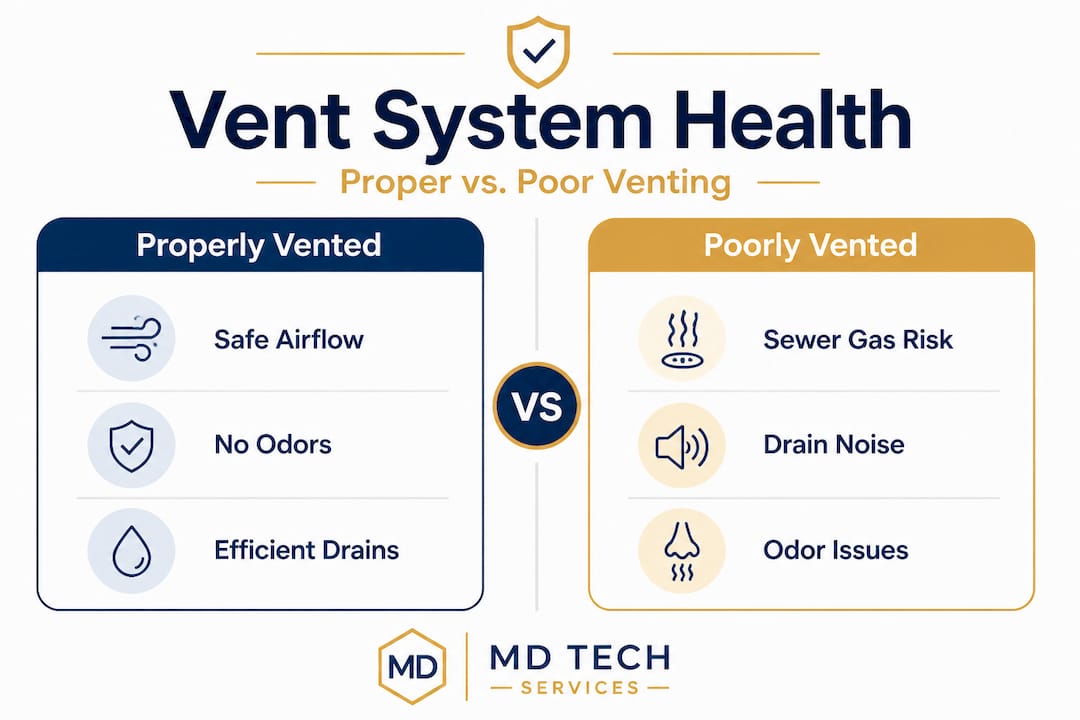
| Category | Properly vented system | Poorly vented system |
|---|---|---|
| Drain performance | Fast, quiet, consistent flow | Slow, gurgling, irregular |
| Sewer gas exposure | Blocked by intact trap seals | Risk of gas entering living spaces |
| Appliance efficiency | Consistent performance | Irregular operation, increased wear |
| Indoor air quality | Clean and odor-free | Odors, potential gas exposure |
| Annual repair costs | Lower over time | Higher, more frequent repairs |
| Code compliance | Fully compliant | Risk of violations and liability |
The health benefits deserve special attention. Vent pipes manage sewer gas and protect trap seals, both of which are essential for a healthy living environment. Sewer gas is not just unpleasant. At elevated concentrations, hydrogen sulfide causes headaches, nausea, and in extreme cases more serious health effects. Keeping trap seals intact is your primary defense.
Benefits of a correctly maintained vent system include:
- Better indoor air quality by blocking sewer gas at every fixture
- Longer appliance lifespan because water pressure and flow stay consistent
- Fewer emergency plumbing calls since most drain problems trace back to venting
- Lower energy use when appliances operate at designed efficiency
- Peace of mind knowing your system meets California code
For deeper context on how your plumbing system protects your home, plumbing safety insights covers the connections clearly. Understanding home efficiency ventilation also shows how vent piping connects to the broader picture of home health and energy performance. Proper attic ventilation plays a related role, and learning how ventilation can boost energy and prevent mold reinforces why these systems deserve regular attention.
Common vent piping issues and how to prevent them
Even well-installed vent systems can develop problems over time. Southern California homes face specific challenges including heat expansion, occasional freeze events in higher elevations, and older pipe materials that degrade. Knowing the warning signs helps you act early before small issues grow into major repairs.
Watch for these signs of vent pipe trouble:
- Slow drains in one or multiple fixtures without an obvious clog
- Gurgling sounds from toilets or sinks after flushing or draining
- Sewer smells near fixtures, especially in bathrooms or kitchens
- Bubbling in the toilet when another fixture drains
- Water backing up into fixtures that share a common drain line
- Dry or evaporated trap seals in rarely used fixtures
Improper vent pipe termination risks exposing your home to sewer gas, especially when pipes are not installed at the required heights or distances from openings. This is one of the most common code violations found in older Orange County and Los Angeles County homes, particularly in properties that have been remodeled without proper permits.
Health risks from poor venting include more than odors. Prolonged sewer gas exposure in enclosed spaces can cause respiratory irritation and other symptoms that are easy to attribute to other causes. The utility room ventilation dangers documented by inspectors reinforce how serious poor ventilation risk can be in real homes.
Studies on residential plumbing service calls indicate that a significant portion of drain and odor complaints, often estimated at 30 to 40 percent, trace back to venting deficiencies rather than clogs or broken pipes. This matters because homeowners often pay for drain cleaning repeatedly without addressing the actual cause.
Pro Tip: Annual professional inspections are your most effective prevention tool. One inspection per year costs far less than even a single emergency repair call, and it catches developing problems before they require major work.
For practical guidance, reviewing common plumbing issues, plumbing maintenance basics, and vent repair tips gives you a clear picture of what to monitor and when to call a professional.
Maintaining vent piping: Inspection and homeowner action steps
Routine care keeps your vent piping system performing reliably and extends its service life. While professional inspections are essential, there are also practical steps you can take on your own to stay ahead of problems.
Follow these steps for basic homeowner vent pipe maintenance:
- Check all drains quarterly. If any fixture is draining slowly without a visible clog, log it as a possible venting concern.
- Run water in rarely used fixtures. Guest bathrooms, utility sinks, and floor drains need occasional use to keep trap seals wet and effective.
- Inspect the visible vent pipe at the roof line. Look for debris, bird nests, or damage around the pipe opening. A blocked vent acts the same as a missing vent.
- Note any recurring sewer odors. If smells appear and disappear without explanation, that pattern often points to a failing trap seal or vent issue.
- Schedule a licensed plumber for an annual system check. A professional can use a camera to inspect internal pipe conditions and verify code compliance throughout the system.
California code makes clear that vent pipes require regular inspection to confirm they continue meeting state standards and protecting your plumbing system. This is not about passing inspections. It is about keeping your home safe and functional year after year.
Professional service providers bring tools and experience that go well beyond what a homeowner can assess visually. They identify issues inside walls, under floors, and at connections that are not visible during a basic walkthrough. Scheduling plumbing inspections consistently saves money by catching issues early. Learning how annual plumbing inspections save money and how regular plumbing maintenance cuts repairs demonstrates the real financial value of staying proactive.
Pro Tip: Set a calendar reminder every fall to schedule your annual plumbing and vent inspection. Fall is a good time because it comes before any winter weather and gives you time to address repairs before the holiday season when your home’s systems face heavier use.
What most homeowners get wrong about vent piping
Here is the honest truth we see from our team’s experience working in homes across Orange County and Los Angeles County. Most homeowners think vent piping is a compliance issue, something the plumber deals with when a permit is required, and then it’s done. That thinking leads directly to missed maintenance, undetected problems, and real costs down the line.
Vent piping is not a one-time installation concern. It is an active system that affects the performance of your drains, the health of your indoor air, and the efficiency of your appliances every single day. When venting degrades or gets partially blocked, nothing announces it loudly. Drains get a little slower. Odors come and go. Appliances seem slightly off but nothing breaks dramatically. Homeowners adjust to the symptoms and assume the system is fine.
The deeper reality is that these subtle signs represent your home telling you something is wrong. A gurgling toilet is not a minor annoyance. It is evidence of air pressure imbalance in a system designed to run silently. A faint sewer smell that only shows up occasionally is not a cleaning problem. It is a trap seal failure waiting to worsen.
We also see homeowners focus entirely on drain cleaning as the fix for slow drainage, when the actual solution is venting correction. Clearing a drain that is slow because of a vent problem provides temporary relief at best. Within weeks or months, the symptom returns because the cause was never addressed.
The takeaway: treat vent piping as an active part of your plumbing home safety plan, not an afterthought. Inspect it regularly, address symptoms promptly, and work with licensed professionals who understand the full DWV system, not just the visible pipes under the sink.
Connect with trusted pros for vent piping and appliance safety
If this article has shown you anything, it’s that vent piping connects to nearly every part of your home’s comfort, safety, and appliance performance. Getting it right is not complicated when you have the right team supporting you.

MDTech Services works with homeowners across Orange County and Los Angeles County to inspect, repair, and upgrade plumbing and appliance systems, including vent piping that meets California code. Our licensed technicians understand the full scope of residential DWV systems and bring the same reliability to every service call. Whether you need a thorough inspection, a targeted repair, or a full system review, we make the process straightforward and stress-free. Explore our plumbing services guide to see what we cover, or go directly to our plumbing repair service page to request an appointment. We are ready to help you protect your home.
Frequently asked questions
What does vent piping do in home plumbing?
Vent piping lets air flow through drain pipes, preventing sewer gases from entering your home and maintaining safe trap seals. As California plumbing standards confirm, vent pipes manage sewer gas and protect trap seals as core system functions.
How high should a vent pipe be above a roof in California?
California code requires vent pipes to end at least 6 inches above the roof surface, and vent pipe termination height requirements also address separation distances from nearby windows and doors.
What are signs of vent pipe issues?
Slow drainage, gurgling sounds from fixtures, recurring sewer smells, and bubbling in toilets after flushing are all common indicators of vent piping trouble that warrants a professional inspection.
How often should vent piping be inspected?
Vent pipes should be inspected annually to maintain code compliance and catch problems early, as regular vent inspections are essential for protecting your home’s plumbing system under California standards.
Can improper venting affect appliances?
Yes, poor venting can cause water-using and gas appliances to operate inefficiently, increase wear and repair frequency, and in cases involving gas appliances, create health risks from improper combustion gas management.