
TL;DR:
- A dryer that tumbles without heat is usually caused by a failed thermal fuse, a burnt heating element, or failed gas valve coils. Fixing the root cause, especially cleaning the vent, prevents repeated failures and saves money. Testing components with a multimeter ensures accurate diagnosis before replacing parts.
A dryer that tumbles but produces no heat is defined by one root cause: a critical heating component has failed or airflow is so restricted that the dryer’s safety system shut heat down. About 80% of dryer heating failures trace back to three parts: a blown thermal fuse, a burnt heating element in electric models, or failed gas valve coils in gas models. Knowing which one failed is the entire game. Diagnosis typically takes 15 minutes with a basic multimeter, and most repairs cost well under $50 in parts. This guide walks you through every common dryer heating issue, from the simplest electrical reset to the point where you need a licensed technician.
Why is my dryer not heating? The thermal fuse explained
The thermal fuse is a one-time safety device built into your dryer to prevent fires. It trips at roughly 196°F–250°F depending on the model, and once it blows, it does not reset. The drum keeps spinning because the motor runs on a separate circuit, but no heat reaches your clothes.
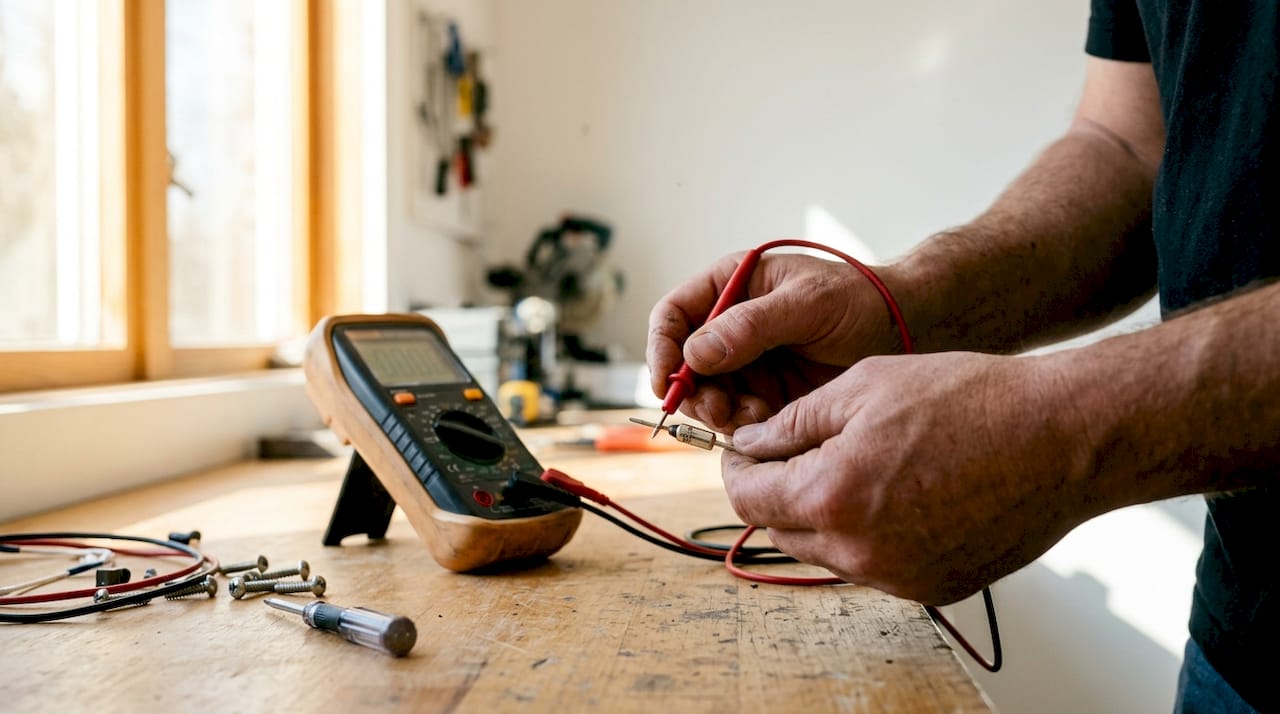
The thermal fuse accounts for roughly 40% of no-heat cases. That makes it the single most likely culprit when your dryer stops getting hot. The fuse itself costs about $15 and mounts on the blower housing or near the heating element, depending on your model.
Here is what causes the fuse to blow in the first place:
- Clogged dryer vent: Lint buildup blocks exhaust airflow, trapping heat inside the drum until temperatures spike.
- Crushed or kinked vent hose: A flexible duct pinched behind the dryer restricts airflow just as badly as a lint clog.
- Overloaded drum: Running oversized loads forces the dryer to work longer, raising internal temperatures.
- Faulty cycling thermostat: A thermostat that fails to cycle off lets heat build unchecked until the fuse trips.
Replacing the fuse without cleaning the vent causes the new fuse to blow again within days. The vent is the root problem. Fix it first, then replace the fuse.
Pro Tip: Before replacing a blown thermal fuse, disconnect the vent hose and run the dryer for one cycle with the hose detached. If heat returns, the vent is your real problem. Clean or replace the vent duct before installing the new fuse.
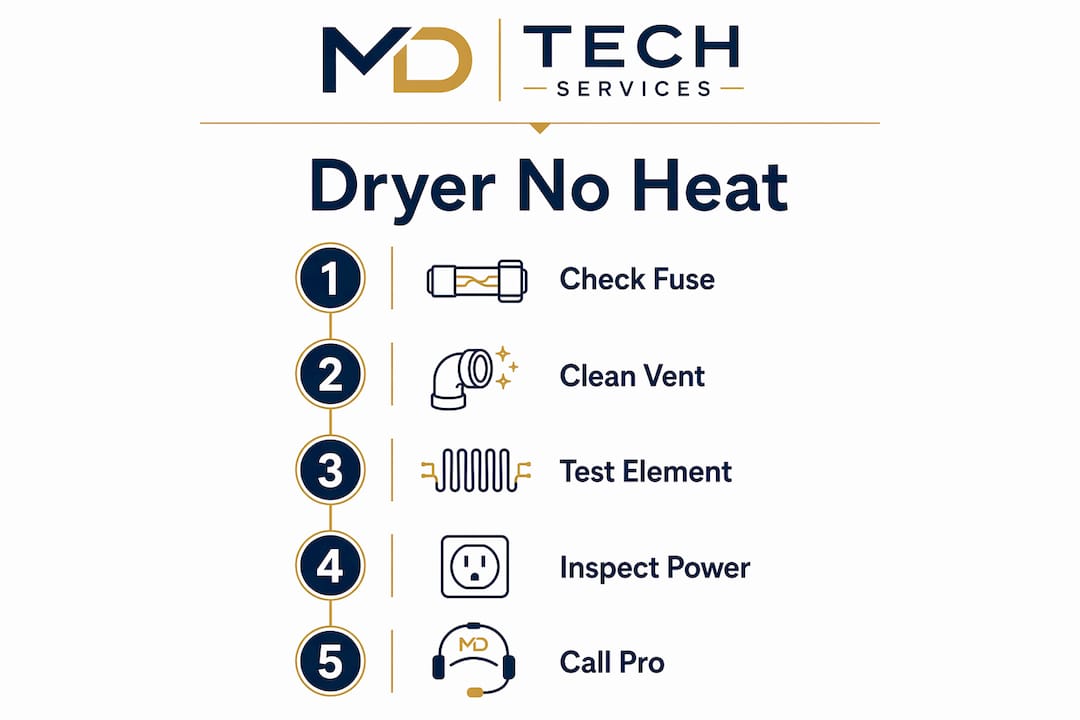
A full dryer vent cleaning guide covers the tools and steps needed to clear a blocked duct safely. Skipping this step is the most common and most expensive mistake homeowners make.
How to test a heating element in an electric dryer
The heating element is a coiled wire that glows red and heats the air flowing into the drum. When it burns out, the dryer runs cold. Testing it takes about ten minutes and requires only a multimeter set to the ohms (resistance) setting.
Follow these steps in order:
- Unplug the dryer. Never test electrical components with power connected. This is non-negotiable.
- Access the element. On most electric dryers, the heating element sits in a metal housing at the back or bottom of the unit. Remove the rear panel or lower front panel to reach it.
- Disconnect the element leads. Pull the wire connectors off both terminals before testing.
- Set your multimeter to ohms. Touch one probe to each terminal on the element.
- Read the result. A healthy element reads 10–50 ohms. An open circuit reading (infinity or “OL” on the display) means the element is burnt out and needs replacement.
- Inspect visually. A burnt element often shows a visible break in the coil wire or black scorch marks on the housing.
Pro Tip: If your multimeter shows continuity but the element reads near the high end of the range (close to 50 ohms), the element is weakening. It still works but will fail soon. Replacing it now saves a second service call.
Testing before buying parts is the right order of operations. Many homeowners replace the thermal fuse first, then discover the element was the actual failure. A $15 multimeter prevents that mistake. For safe component access, the dryer installation steps guide explains how to open common dryer models without damaging panels.

What causes a gas dryer to stop producing heat?
Gas dryers heat differently from electric models. Instead of a resistance coil, they use an igniter, a set of gas valve coils, and a flame sensor to produce heat. When gas valve coils fail, the igniter glows orange as expected, but the gas valve never opens. No gas means no flame, and no flame means no heat.
This is the detail that trips up most homeowners: seeing the igniter glow and assuming everything is fine. The glow only proves the igniter works. It says nothing about the valve coils.
Key facts about gas dryer heating failures:
- Igniter failure: The igniter stops glowing entirely. The drum runs but the burner never lights.
- Gas valve coil failure: The igniter glows but extinguishes quickly without igniting gas. This is the most common gas dryer no-heat symptom.
- Flame sensor (radiant sensor) failure: The sensor incorrectly signals that the burner is lit, cutting power to the igniter prematurely.
- Replace coils as a set: Gas valve coil kits should be replaced together, not individually. Coils degrade at similar rates, so replacing one while leaving the others means a repeat failure within weeks.
Gas dryer repairs carry a higher safety threshold than electric repairs. In many regions, gas appliance work requires a licensed technician by law. Even where it is not legally required, working on gas valves without proper training creates real risk of gas leaks. If you are not certain of your skill level, call a professional before touching the gas supply line.
Could an electrical supply problem cause no heat?
Electric dryers run on a 240V circuit built from two separate 120V legs. The drum motor operates on one 120V leg. The heating element requires both legs combined at 240V. If one leg of the 240V supply trips or loses contact, the drum spins normally while the heating element gets zero power.
This situation confuses homeowners because the dryer appears to work. The drum turns, the timer counts down, and clothes come out damp and cold. The fix is often as simple as resetting the breaker correctly.
| Symptom | Likely cause | First step |
|---|---|---|
| Drum spins, no heat | One 240V leg tripped | Reset breaker fully off then on |
| No drum, no heat | Full power loss | Check both breaker legs and outlet |
| Drum spins, weak heat | Partial voltage drop | Test outlet voltage with multimeter |
| Breaker trips repeatedly | Short circuit in element | Test element resistance before resetting |
Checking the breaker visually is not reliable. Breaker handles can appear in the “on” position even after a partial trip. The correct method is to push the breaker fully to the “off” position first, then flip it firmly back to “on.” If the breaker trips again immediately, stop. A repeatedly tripping breaker signals a short circuit in the dryer itself, and replacing parts without fixing the short will not solve the problem.
Pro Tip: Use a multimeter or a plug-in outlet tester to confirm your dryer outlet delivers the full 240V before replacing any heating components. A weak outlet reading means the problem is in your home’s wiring, not the dryer.
How does airflow restriction cause repeated heating failures?
Restricted airflow is the hidden driver behind most repeat dryer heating failures. Two-cycle drying and a burning smell are the two clearest warning signs that your vent is blocked before the thermal fuse blows. Most homeowners ignore both signs until the dryer stops heating entirely.
Here is why airflow matters so much:
- Heat has nowhere to go: A blocked vent traps hot, moist air inside the drum. Internal temperatures climb until the thermal fuse trips.
- Moisture stays in clothes: Restricted exhaust means wet air recirculates instead of venting outside. Clothes take two full cycles to dry.
- Burning smell signals lint contact: Lint accumulating near the heating element or in the vent duct can scorch or ignite.
- Kinked flexible duct is as bad as a clog: A plastic or foil accordion duct crushed behind the dryer blocks airflow even when the duct is clean.
- Airflow problems mimic electrical failures: A dryer that heats weakly or intermittently often has a partial vent blockage, not a failing element.
Cleaning dryer vents once a year prevents the majority of thermal fuse failures. Rigid metal duct is safer and more flow-efficient than flexible foil duct. If your vent run exceeds 25 feet or includes multiple bends, airflow resistance increases significantly and cleaning frequency should increase as well.
Pro Tip: After cleaning the vent, hold your hand near the exterior vent cap while the dryer runs. You should feel strong, steady airflow. Weak or intermittent airflow means the duct still has a restriction or the blower wheel is clogged with lint.
Key Takeaways
A dryer that tumbles without heat almost always fails due to a blown thermal fuse, a burnt heating element, or failed gas valve coils, and fixing the root cause (usually a blocked vent) prevents the same failure from repeating.
| Point | Details |
|---|---|
| Thermal fuse is the top cause | It accounts for roughly 40% of no-heat cases and costs about $15 to replace. |
| Clean the vent before replacing parts | Replacing the fuse without clearing the vent causes the new fuse to blow again quickly. |
| Test before you buy | A multimeter reading of 10–50 ohms confirms a healthy heating element; infinity means replace it. |
| Gas dryer coils fail as a set | Replace the full gas valve coil kit, not individual coils, to prevent repeat failures. |
| Electrical supply check comes first | A tripped 240V leg makes the drum spin with no heat; reset the breaker fully before replacing parts. |
What I have learned after years of dryer repairs
After working on dryers across Orange County and Los Angeles County, the pattern I see most often is this: a homeowner replaces the thermal fuse, the dryer heats for two weeks, and then the fuse blows again. The vent was never cleaned. That cycle repeats until someone finally clears the duct, and the dryer runs fine for years afterward.
The second most common mistake is confusing electric and gas dryer symptoms. Identifying symptom patterns correctly before ordering parts saves real money. An electric dryer with a glowing igniter does not exist. A gas dryer with a burnt coil wire looks nothing like a failed heating element. Getting the diagnosis right the first time is worth the extra ten minutes.
My honest advice on gas dryers: do not open the gas valve assembly yourself unless you are trained and licensed. The risk is not worth the savings. Gas safety at home is not a gray area. For electric dryers, testing the element and fuse with a multimeter is well within reach for most homeowners who are comfortable working with unplugged appliances.
The dryers that last longest belong to homeowners who clean the vent every year, use rigid metal duct instead of foil accordion duct, and call a technician the moment they smell burning. Preventive habits cost almost nothing. Repeat repairs cost real money.
— MDTECH
Mdtechservices is ready to help with your dryer repair
When a dryer stops heating and the fix goes beyond a simple breaker reset, Mdtechservices is the team Orange County and Los Angeles County homeowners call. Our licensed technicians diagnose both electric and gas dryer heating failures accurately the first time, so you are not paying for guessed parts.

Whether you need a thermal fuse replaced, a heating element tested, or a full professional appliance repair assessment, Mdtechservices delivers fast, reliable service with transparent pricing. You can also use our homeowner repair guide to work through the diagnosis yourself before booking. Call us or book online to get your dryer heating again without delay.
FAQ
Why does my dryer run but produce no heat?
The drum motor runs on 120V while the heating element requires the full 240V supply. A blown thermal fuse, burnt heating element, or tripped circuit breaker leg cuts heat while leaving the drum running.
How do I know if my thermal fuse is blown?
Test it with a multimeter set to continuity. A blown thermal fuse shows no continuity (open circuit). The fuse does not reset and must be replaced after a single trip.
Can a clogged vent cause my dryer to stop heating?
A blocked vent traps heat inside the dryer until the thermal fuse trips as a safety measure. Clearing the vent is required before replacing the fuse to prevent the new fuse from blowing again.
Is it safe to repair a gas dryer myself?
Testing and replacing the igniter is within DIY range for experienced homeowners, but gas valve coil and supply line work carries serious safety risk. In many areas, gas appliance repairs legally require a licensed technician.
What ohm reading means my heating element is good?
A resistance reading of 10–50 ohms confirms the heating element has continuity and is functional. An infinity or “OL” reading means the element is burnt out and needs replacement.