
TL;DR:
- A dishwasher that won’t drain usually results from a clogged filter or a blocked drain hose. Most issues can be fixed by inspecting and cleaning the filter, sump, and drain connections before considering professional repair.
A dishwasher that won’t drain is defined as a failure of the appliance to expel wash water through the drain system after a cycle completes. The most common causes are clogged mesh filters, debris in the sump area, kinked drain hoses, and blocked garbage disposal connections. You will typically notice standing water at the bottom of the tub, a foul smell from stagnant water, or dishes that come out still dirty. The good news is that most dishwasher drainage problems are fixable without calling a technician, as long as you know where to look. This guide walks you through every cause and fix in plain language.
Why is my dishwasher not draining?
Dishwasher drainage failure almost always comes down to a physical blockage or an installation error. Common debris that causes these blockages includes food particles, broken glass, seeds, toothpicks, and plastic labels from jars. Each of these items can lodge in the filter, sump, or drain hose and stop water from moving out of the tub.
Here are the primary causes grouped by location:
- Clogged mesh filter. The filter sits at the bottom of the dishwasher tub and catches food debris. When it gets packed with residue, water cannot pass through to the drain pump.
- Debris in the sump area. The sump is the basin beneath the filter where water collects before the pump pushes it out. Small items like seeds or broken glass can jam the pump impeller directly.
- Kinked or crushed drain hose. The drain hose runs from the pump to the sink drain or garbage disposal. A kinked drain hose blocks water flow completely, and the kink is often hidden behind the dishwasher or under the cabinet.
- Garbage disposal blockage. The dishwasher drain hose typically connects to the garbage disposal inlet. If the disposal is full of food waste, water backs up into the dishwasher tub.
- Knockout plug not removed. On new garbage disposal installations, a plastic knockout plug seals the dishwasher inlet port. If an installer forgets to remove it, water has nowhere to go.
- No high loop or air gap. Without a high loop or air gap fitting in the drain hose routing, dirty sink water can siphon back into the dishwasher, creating the appearance of a drainage failure.
Pro Tip: If your dishwasher started backing up right after a new garbage disposal was installed, check the knockout plug first. It takes two minutes to remove and solves the problem immediately.
The distinction between a minor clog and a pump failure matters. A clog produces standing water but the machine still runs quietly. A pump failure often produces unusual sounds or complete silence during the drain cycle. Start with the simplest causes before assuming the pump is dead.
How can you fix a clogged dishwasher filter?
Cleaning the filter is the first step in any dishwasher drain troubleshooting process. Regular filter cleaning resolves the majority of drainage complaints because most homeowners never clean this component at all.
Follow these steps to clean the filter safely:
- Remove the bottom rack. Pull it out completely so you have clear access to the tub floor.
- Locate the filter assembly. Most filters sit in the back corner of the tub floor and twist counterclockwise to unlock. Check your owner’s manual if you cannot find it.
- Lift out the filter. Some models have a two-piece assembly: a coarse upper filter and a fine mesh lower filter. Remove both.
- Rinse under warm running water. Hold the filter under the faucet and use a soft brush or cloth to remove debris. Avoid abrasive pads because they tear the fine mesh and create gaps that let debris reach the pump.
- Inspect the sump opening. With the filter removed, shine a flashlight into the sump cavity. Look for seeds, glass shards, or plastic pieces sitting on the pump cover. Use needle-nose pliers or tweezers to remove anything you see.
- Reinstall the filter. Twist it clockwise until it locks. A loose filter lets debris bypass it and reach the pump.
- Run a short cycle. Check whether water drains fully. If it does, the filter was the problem.
Pro Tip: Clean the filter once a month if you run the dishwasher daily. Monthly cleaning takes under five minutes and prevents the buildup that causes most drainage calls.
The sump area deserves extra attention. A single cherry pit or a folded plastic label can jam the impeller and stop drainage even when the filter looks clean. Always check the sump after removing the filter, not just the filter itself.

How to inspect the drain hose and garbage disposal connection
The drain hose and disposal connection are the second most common source of dishwasher draining problems. A methodical inspection from the filter to the hose to the disposal saves time and avoids unnecessary plumbing disassembly.
Drain hose inspection checklist:
- Pull the dishwasher forward slightly or open the cabinet under the sink to view the full hose run.
- Look for sharp bends, pinch points where the hose is pressed against the cabinet wall, or areas where the hose sags below the connection point.
- Straighten and secure any kinked sections using a zip tie or a hose bracket to hold the hose in place.
- Check both ends of the hose for blockages. Disconnect the hose at the disposal or sink drain end and blow through it. Resistance means a blockage is present.
High loop vs. air gap: what you need to know
| Configuration | How it works | Best for |
|---|---|---|
| High loop | Hose is secured near the top of the cabinet before dropping to the drain | Most residential installs |
| Air gap fitting | A physical device mounted on the countertop breaks the drain line | Required by code in some states |
| No loop (incorrect) | Hose runs straight from pump to drain | Causes backflow and drainage failure |
A high loop or air gap prevents dirty sink water from siphoning back into the dishwasher tub. Without one, the dishwasher may appear to drain but then refill with gray water from the sink. This is one of the most misdiagnosed dishwasher drainage issues because the machine technically drains but the tub never stays empty.
Garbage disposal connection steps:
- Run the disposal for 30 seconds before starting a dishwasher cycle. A clear disposal removes the most common drain blockage point in under a minute.
- If the disposal is new, locate the dishwasher inlet port on the side of the disposal body. Insert a screwdriver and tap firmly to punch out the knockout plug. Remove the plug fragment before reattaching the hose.
- Check the sink drain itself. A slow sink drain creates back pressure that prevents the dishwasher from draining fully. Clear the sink drain first if it is sluggish.
For a deeper look at proper installation practices that prevent these issues, the dishwasher installation guide from Mdtechservices covers hose routing and disposal connections in detail.
What are signs of pump problems and electrical issues?
When cleaning the filter and inspecting the hose does not fix the problem, the drain pump or electrical system is likely at fault. Sound analysis is the fastest way to narrow down the cause without opening the machine.
Listen during the drain cycle and match what you hear:
- Steady humming with no water movement. This indicates a jammed pump impeller. Something is physically blocking the impeller from spinning. The motor is running but cannot move water.
- Complete silence during the drain phase. This points to a dead pump motor or an electrical failure. The motor is not receiving power or has burned out entirely.
- Gurgling sounds from the sink. This suggests the drain hose connection at the sink is partially blocked, not a pump issue.
- Clicking or grinding. Debris is likely caught in the impeller. This is a physical blockage, not an electrical fault.
Older dishwashers also use a drain solenoid valve to open the drain path. If the solenoid fails, the drain valve stays closed and water cannot exit even when the pump runs. This is a less common failure but worth checking on machines that are more than ten years old.
Manufacturer error codes provide the clearest diagnosis. Most modern dishwashers display a code on the control panel when a drain fault is detected. Check your owner’s manual for the specific code meaning. A drain error code combined with a humming sound almost always confirms a jammed impeller. A drain error code combined with silence points to the motor or a wiring fault.
Knowing when to stop DIY work protects both you and the appliance. If the pump motor has failed, the drain solenoid is faulty, or you find burned wiring, those repairs require a licensed technician. You can review signs of appliance failure to help you decide when professional help is the right call.
Key Takeaways
A dishwasher that won’t drain is almost always caused by a clogged filter, blocked drain hose, or a garbage disposal issue that you can inspect and fix in a logical sequence before calling for professional repair.
| Point | Details |
|---|---|
| Start with the filter | Clean the mesh filter first; it causes the majority of drainage failures. |
| Inspect the sump | Remove debris from the sump cavity after cleaning the filter to protect the pump impeller. |
| Check the drain hose | Straighten kinked hoses and secure them with a bracket to prevent recurring blockages. |
| Verify the disposal connection | Run the disposal before each cycle and confirm the knockout plug was removed on new installs. |
| Know when to call a pro | Silence during the drain cycle or error codes pointing to motor failure require a licensed technician. |
What I have learned from years of dishwasher drainage calls
After handling appliance repair calls across Orange County and Los Angeles County, the pattern is consistent. Homeowners spend hours searching online and trying random fixes when the answer is almost always in the first place they should look: the filter. The filter is the most neglected component in any dishwasher, and it causes the most problems.
The second most common mistake is ignoring the high loop. Homeowners replace pumps, buy new dishwashers, and call plumbers, all because the drain hose was routed incorrectly during the original installation. A hose that sags below the sink connection point will always cause water to back up. It costs nothing to fix and takes ten minutes with a zip tie.
The garbage disposal knockout plug is the one that surprises people most. A brand-new dishwasher that never drains from day one almost always has this problem. The installer forgot to punch out the plug. It happens more often than you would expect, and it is a completely avoidable error.
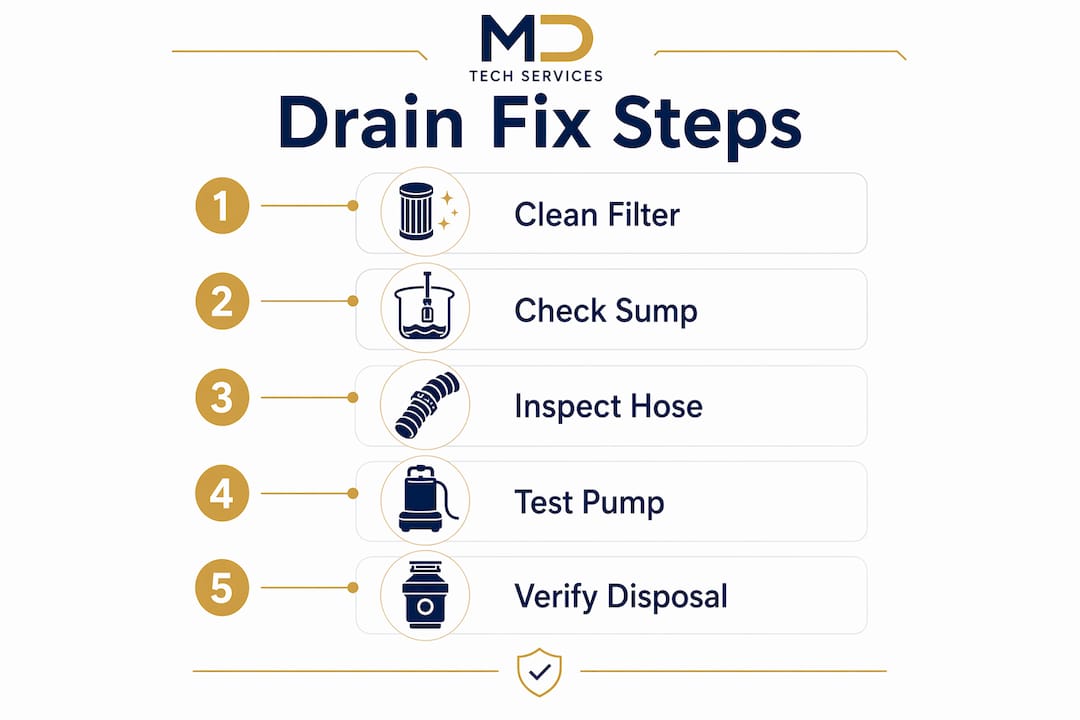
My honest advice: work through the filter, sump, hose, and disposal in that order before assuming the pump is bad. That sequence resolves the problem in the vast majority of cases. If you reach the end of that checklist and the machine still won’t drain, the pump or electrical system needs professional attention. There is no shame in stopping there. Attempting pump or wiring repairs without the right tools and training creates bigger problems than the original drainage issue.
— MDTECH
Mdtechservices can resolve your dishwasher drainage problem
When DIY troubleshooting reaches its limit, Mdtechservices is ready to help. Our licensed technicians serve homeowners across Orange County and Los Angeles County with fast, reliable dishwasher repair services, including pump replacement, drain hose correction, and garbage disposal connection repairs.

We handle the full range of drainage issues, from simple filter clogs to failed pump motors and faulty solenoid valves. Every repair comes with a professional inspection so you know exactly what caused the problem and how to prevent it from happening again. If you want to understand the full scope of what professional appliance repair covers, our service page breaks it down clearly. Book an appointment online or call us directly to get your dishwasher draining properly again.
FAQ
Why is my dishwasher not draining after a cycle?
The most common cause is a clogged mesh filter or debris in the sump area blocking the drain pump. Clean the filter first, then inspect the sump for small objects like seeds or glass before checking the drain hose.
How do I fix a dishwasher that won’t drain?
Start by removing and cleaning the filter, then check the sump, inspect the drain hose for kinks, and run the garbage disposal to clear the connection point. This sequence resolves most dishwasher drainage problems without professional help.
Can a garbage disposal cause dishwasher draining problems?
Yes. A full or blocked garbage disposal creates back pressure that prevents the dishwasher from draining. On new installations, a forgotten knockout plug in the disposal inlet will block drainage completely.
What does a humming sound mean during the drain cycle?
A steady hum with no water movement indicates a jammed pump impeller. An object is physically blocking the impeller from spinning. Complete silence during the drain phase points to a motor or electrical failure instead.
How often should I clean my dishwasher filter to prevent drainage issues?
Clean the filter once a month if you run the dishwasher daily. Regular cleaning removes the food debris buildup that causes the majority of dishwasher drainage complaints.