
A silent refrigerator or a washing machine that refuses to run can throw your entire Orange County or Los Angeles County household into chaos. Every homeowner knows how quickly life slows down when major appliances simply will not start. It turns out these breakdowns usually trace back to a handful of core causes, with research pinpointing problems like faulty control panels, compressors, motors, thermostats, and integrated component design flaws as the main culprits. Knowing what’s behind your appliance issues gives you the edge in deciding when a simple check might work and when expert repair help is needed.
Table of Contents
- Core Causes Of Appliance Failure
- Electrical Problems And Power Interruptions
- Component Failures And Wear Over Time
- Safety Features And Lockout Mechanisms
- User Error, Settings, And Installation Mistakes
- When To Call A Local Repair Professional
Key Takeaways
| Point | Details |
|---|---|
| Common Failure Causes | Wear and tear, corrosion, and design flaws are significant reasons for appliance failures. Proper maintenance and awareness can mitigate these issues. |
| Electrical Issues | Check power supply before assuming an appliance is broken; power interruptions and overloaded circuits are common causes of failure. |
| Importance of Professional Help | Complex electronic failures and safety issues require trained technicians for safe and effective repairs. DIY attempts may worsen the problem. |
| User Error | Misconfigured settings can lead to an appliance not starting; consult the manual and verify installation to avoid unnecessary service calls. |
Core Causes of Appliance Failure
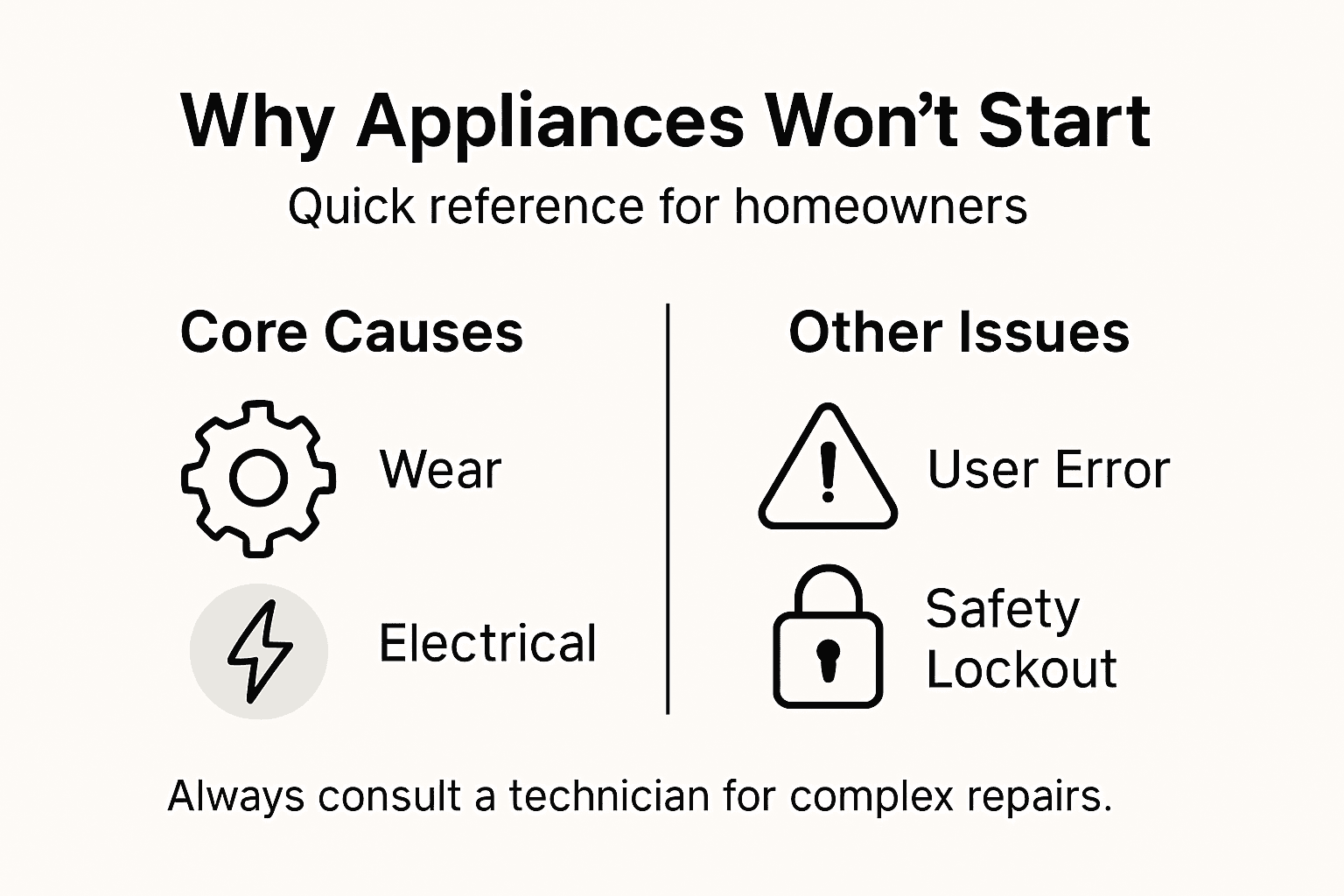
When your refrigerator, washing machine, or dishwasher refuses to start, it’s rarely a complete mystery. Appliance failures in Orange County and Los Angeles County homes typically trace back to a handful of predictable culprits. Understanding what causes these breakdowns helps you recognize when a quick fix might solve the problem versus when you need professional repair help. Research analyzing over 381,000 appliances purchased between 2008 and 2018 shows that faulty control panels, compressors, motors, thermostats, and integrated component design flaws rank among the most common failure points. These aren’t random accidents. They’re the result of how appliances are built, used, and maintained over time.
Three primary mechanisms drive most appliance failures. First, wear and tear gradually degrades internal components as they cycle repeatedly through normal operation. A compressor in your refrigerator compresses gas thousands of times yearly. A washing machine motor rotates through countless wash cycles. Year after year, this constant movement creates stress on materials, bearings, and seals. Second, fatigue, corrosion, and mechanical stress compound these issues, especially in Southern California’s coastal humidity and temperature fluctuations. Metal components rust, electrical connections corrode, and plastic parts become brittle. Third, design and manufacturing limitations sometimes mean certain brands or models have inherent weak points. When manufacturers integrate multiple functions into a single control board or use proprietary parts that fail after just a few years, replacing the entire board becomes your only option, even if only one circuit has stopped working.
The timing of failures often reveals the underlying cause. If an appliance worked fine for years and suddenly stops, you’re likely dealing with wear or corrosion. If it breaks within the first year or two, manufacturing defects or design flaws are more probable. In Orange and Los Angeles County homes, environmental factors accelerate corrosion. Salt air near coastal areas, temperature swings, and humidity speed up deterioration of electrical components and metal parts. The mineral content in local water also affects machines like dishwashers and washing machines, leaving deposits that restrict water flow and strain motors.
Pro tip: Document when failures occur and what the appliance was doing at the moment it stopped. This information helps MDTech Services technicians quickly pinpoint whether the issue is electrical, mechanical, or water-related, saving you time and repair costs.
Here’s an at-a-glance comparison of common appliance failure causes and what they typically signal:
| Failure Cause | Typical Symptoms | Likely Underlying Issue | Best Next Step |
|---|---|---|---|
| Wear and tear | Sudden stop after years | Aging mechanical components | Inspect for replacement |
| Corrosion | Erratic operation | Electrical or metal damage | Check for rust/corrosion |
| Design flaw | Fails within 2 years | Manufacturing or design limit | Consider warranty/recall |
Electrical Problems and Power Interruptions
Your appliance sits silent on the kitchen counter or in the laundry room. You flip the switch. Nothing happens. Before you assume the appliance itself is broken, check the power supply. Electrical problems and interruptions are often the simplest culprits behind appliances that won’t start, yet homeowners frequently overlook them in favor of assuming internal mechanical failure. Power delivery issues range from temporary outages to faulty circuits to damaged cords. In Orange and Los Angeles County, where power demand fluctuates with seasonal heat waves and infrastructure sometimes struggles to keep pace, understanding electrical failures can save you hundreds in unnecessary repair calls.
Power interruptions averaging over five hours annually affect appliance operation across the United States, and your region is no exception. Weather events, grid maintenance, and occasional infrastructure failures knock out power to neighborhoods without warning. When electricity goes out, your refrigerator stops cooling, your washer halts mid-cycle, and your dishwasher freezes. The appliance itself remains perfectly functional. Power returns, and everything resumes working. But if the power surge that accompanies restoration is extreme, it can damage sensitive electronics inside the appliance, preventing restart even after power stabilizes.
Beyond outages, household electrical problems create startup failures too. Overloaded circuits happen when you plug too many high-draw appliances into the same outlet or circuit. A heavy-duty dishwasher running while you’re charging multiple devices and running your microwave can exceed circuit capacity, tripping the breaker and cutting power to the appliance. Damaged power cords and deteriorating connections introduce resistance, reducing voltage delivery to the appliance motor or control board until it can no longer function. Extension cords pose their own risks. Using an undersized or overly long extension cord creates voltage drop, meaning the appliance receives less power than it needs to start. Improper use of extension cords and damaged electrical equipment creates fire hazards alongside operational failures. Loose outlet connections, corroded terminals, and worn plugs all disrupt power flow.
The Los Angeles and Orange County environment accelerates electrical degradation. Coastal salt spray, temperature swings from scorching summer days to cooler evenings, and dust accumulation all corrode metal connectors and terminals. Moisture in garages or basements causes oxidation on electrical contacts. You might think an appliance won’t start because the motor failed, when reality is that the outlet serving it has developed a loose connection that no longer reliably delivers electricity.
Pro tip: Before calling for repairs, test the outlet itself by plugging in a lamp or phone charger to confirm electricity is reaching it, then check the appliance’s power cord for visible damage like cracks, burns, or exposed wiring.
Component Failures and Wear Over Time
Every appliance in your home contains dozens of moving parts, electronic sensors, and mechanical components working in concert. A refrigerator compressor cycles on and off thousands of times yearly. A washing machine motor spins through hundreds of wash cycles. A dishwasher pump pushes water through spray arms millions of times. Over months and years, this relentless repetition takes a toll. Components wear down, materials fatigue, and electronic sensors lose sensitivity. This is simply the reality of appliance ownership in Orange and Los Angeles County. The question isn’t whether wear will happen, but when critical components will fail and whether fixing them makes financial sense.
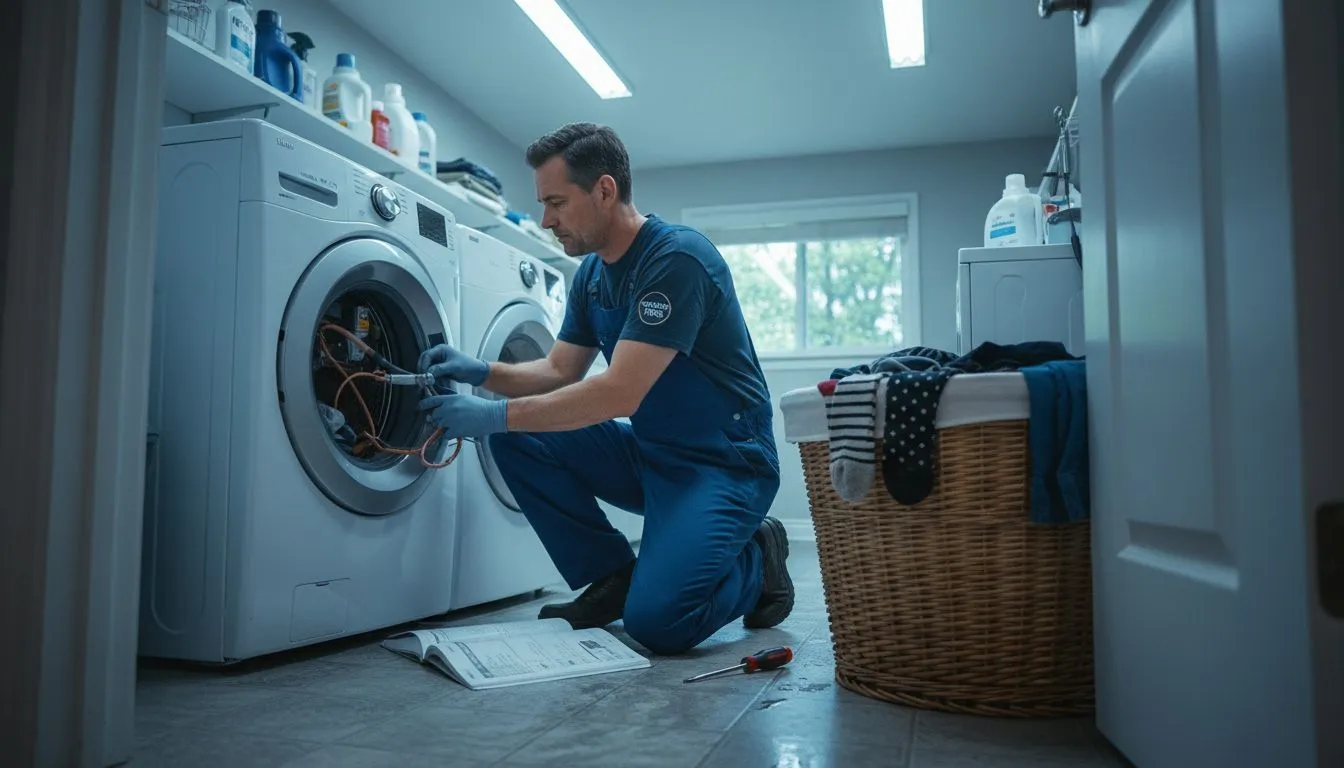
Modern appliances face a particular vulnerability that older models didn’t. Integrated circuit boards and molded parts require complete replacement when a single component fails, driving repair costs skyward. Your grandmother’s refrigerator had individual components that could be swapped out independently. Today’s models combine multiple functions into a single control board. If one capacitor fails, the entire board must be replaced. If one transistor burns out, you’re looking at a bill that might approach the cost of a new appliance. This design philosophy makes modern appliances faster to manufacture but far more expensive to repair when wear strikes.
Specific components fail predictably based on age and usage. Compressors in refrigerators and air conditioners typically last 10 to 15 years before internal wear renders them unable to pump refrigerant. Motors in washers, dryers, and dishwashers eventually lose their starting torque as bearings wear and windings accumulate heat damage. Thermal switches and sensors become less responsive as they age, causing appliances to misread temperature or forget to turn off. Door seals and gaskets deteriorate from constant stretching and contact with moisture and detergent residue. Failing compressors, motors, switches, sensors, and electronic panels represent the leading causes of appliance shutdown. The frustrating part is that wear happens silently. Your dishwasher works fine for seven years, then suddenly won’t drain properly. Your washing machine runs normally for a decade, then refuses to spin. The failure seems abrupt, but the degradation happened gradually all along.
The Southern California climate accelerates this wear cycle. Heat waves stress cooling systems relentlessly. Hard water mineral deposits accumulate inside washers and dishwashers, forcing motors to work harder. Salt-laden air corrodes electrical connectors and sensor contacts. Seasonal temperature swings cause metal parts to expand and contract repeatedly, eventually working loose or cracking. A refrigerator that might last 15 years in a mild climate may only reach 12 years in Orange County’s demanding conditions.
Pro tip: Keep detailed maintenance records noting when you clean filters, descale water lines, and service components, as this documentation helps MDTech Services technicians understand how hard your appliance has worked and predict which parts are near failure.
Safety Features and Lockout Mechanisms
Appliances contain hazardous energy sources. Your refrigerator holds electrical current that could electrocute you. Your dishwasher pressurizes water and heats it to scalding temperatures. Your washing machine stores mechanical energy in spinning drums and tensioned springs. When an appliance won’t start, your instinct might be to tinker with it yourself, remove covers, or attempt quick fixes. Stop. These safety features and lockout mechanisms exist specifically to prevent you from accidentally energizing dangerous components while troubleshooting or repairs are underway. Understanding how they work protects you and ensures proper service when professionals like MDTech Services technicians step in.
Lockout and tagout mechanisms are the foundation of appliance safety during maintenance. Lockout/tagout systems require authorized personnel to apply locks or tags to energy isolating devices, preventing the appliance from starting unexpectedly while work is in progress. When a technician arrives to service your refrigerator, they will shut off power at the outlet, then apply a lock or tag to that outlet to ensure electricity cannot be restored while they work inside the unit. This isn’t bureaucratic overkill. It’s the difference between a safe repair and a catastrophic shock or burn injury. Modern appliances incorporate multiple safety layers. Door interlocks prevent the drum from spinning while the door is open. Water temperature limiters prevent scalding. Electrical circuits include fuses or breakers designed to cut power instantly if dangerous current surges occur.
When an appliance won’t start, these safety systems sometimes activate intentionally. Your dishwasher might refuse to cycle if its door latch doesn’t fully engage, because the interlock won’t allow water pressurization without a secure seal. Your washing machine might lock the drum if it senses an imbalance that could cause injury or damage. Your oven might disable heating if the door sensor malfunctions. These aren’t failures. They’re safety features working as designed. Improper procedures or absent lockout mechanisms during maintenance raise the risk of accidental energization and serious injury. Homeowners who bypass or disable these protections to “test” an appliance expose themselves to electrocution, burns, or crushing injuries.
In Orange and Los Angeles County, where residents often attempt DIY repairs due to the high cost of living and service calls, ignoring lockout mechanisms is surprisingly common. You might disable a door interlock on your dryer to test the motor. You might remove a safety switch from your washing machine to see if power is reaching it. These actions feel innocent but eliminate the very protection designed to keep you safe. Licensed technicians like those at MDTech Services understand lockout/tagout requirements and apply them correctly, ensuring repairs happen safely without exposing you to hazards.
Pro tip: Never bypass, remove, or tamper with safety switches, door interlocks, or lockout tags on appliances, even for testing purposes; if you need to diagnose an issue, contact a licensed technician who can safely isolate hazardous energy sources.
User Error, Settings, and Installation Mistakes
Sometimes the appliance isn’t broken at all. Sometimes you just need to read the manual. This might sound harsh, but user error accounts for a surprising number of no-start situations. A new refrigerator arrives at your Orange County home. The installer connects it, plugs it in, and leaves. You expect it to start cooling immediately. It doesn’t. The compressor never engages. You call for service, convinced something is defective. The technician arrives, flips a switch on the back panel labeled “power delay,” and walks away. That switch exists because refrigerators need time after installation to allow refrigerant to settle before the compressor can safely run. Misunderstanding this simple setting just cost you a service call.
Settings and configuration issues plague modern appliances because they pack so many features into a single machine. Your dishwasher has delay start, temperature boost, soil level detection, and eco modes. Your washing machine offers pre-soak, water temperature selection, spin speed control, and fabric-specific cycles. Your oven displays a time, temperature setting, and mode selector. If any of these settings is wrong, the appliance won’t function as expected. Incorrect user settings or installation misconfigurations can cause appliances to fail to start or operate properly. A washing machine set to delay start sits idle for hours, appearing broken when actually it’s working precisely as programmed. A dishwasher set to a soil level too light for the actual load never adequately cleans, making you think it’s failed. An oven that won’t heat might simply be in a demonstration mode that display technicians activate for showroom models.
Installation mistakes compound these issues. A new appliance requires proper setup to function safely and effectively. Water lines must be connected to the correct hot and cold inlets. Drain hoses must be positioned at the correct height to allow proper drainage. Gas lines must be purged of air and tested for leaks. Electrical connections must match your home’s voltage and amperage capacity. When installers rush or skip steps, problems emerge days or weeks later. Your new refrigerator installed with the wrong water line connection will never produce ice. Your new gas range won’t ignite if the gas line wasn’t properly bled of air during installation. Your new electric dryer won’t heat if the 240 volt connection wasn’t made correctly. These aren’t component failures or design flaws. They’re installation oversights that preventative inspection catches immediately.
In Orange and Los Angeles County, where many households receive appliances from big box retailers with installation services of varying quality, installation mistakes are common. One installer might spend 45 minutes ensuring everything is perfect. Another might spend 15 minutes and skip the manual verification steps. You bear the consequences later. Before assuming your appliance is broken, consult the manual’s startup section. Check every setting. Verify that water lines are connected correctly. Confirm that gas valves are open. Test outlet power with another device. Many apparent failures resolve within minutes once you understand the appliance’s actual configuration.
Pro tip: Keep the appliance manual in an accessible location and take photos of the installation setup for reference; this documentation helps MDTech Services quickly rule out user error and identify actual mechanical or electrical problems.
When to Call a Local Repair Professional
You’ve checked the power outlet. You’ve verified the settings are correct. You’ve waited for the delay start timer to expire. The appliance still won’t start. At this point, the decision becomes clear: call a professional. Knowing when to stop troubleshooting and contact a licensed technician separates smart homeowners from those who waste time and money on failed DIY attempts. In Orange and Los Angeles County, where appliance repair costs can climb quickly, understanding which problems demand professional expertise helps you avoid compounding damage through amateur fixes.
Three categories of appliance failures absolutely require professional intervention. First, complex electronic failures involving circuit boards, sensor malfunctions, or control systems demand specialized diagnostic equipment that homeowners don’t possess. Your washing machine’s control board might display error codes that seem cryptic but contain exact failure descriptions when decoded with proper tools. Your refrigerator’s electronic temperature sensor might be failing, but diagnosing this requires testing circuits with multimeters and understanding complex electrical systems. Second, major component replacements like compressors, motors, or sealed systems require technical knowledge and specialized tools. Removing a refrigerator compressor involves evacuating refrigerant using EPA certified equipment, a procedure homeowners cannot legally perform without certification. Third, complex electronic failures and major component replacement should be handled by professional technicians who have specialized tools and knowledge. Attempting these repairs yourself risks permanent damage, voids manufacturer warranties, and creates safety hazards.
Safety concerns provide another clear trigger for professional service. If you smell gas near your range or water heater, stop immediately and contact a professional. Gas leaks require specialized detection equipment and safe repair procedures. If you notice burning smells, sparks, or signs of electrical arcing inside an appliance, disconnect it and call for service. If an appliance won’t start after you’ve noticed water pooling underneath it or visible corrosion on electrical connections, professional diagnosis is essential. Appliance failures requiring disassembly, electrical energy control, or that pose safety risks demand professional technicians who follow proper safety protocols. Homeowners attempting electrical work on appliances without training risk electrocution. Attempting mechanical repairs without proper lockout procedures risk crushing injuries.
Time is another practical consideration. You might eventually figure out why your dishwasher won’t start through trial and error. You might spend six hours researching, troubleshooting, and testing. A licensed technician from MDTech Services arrives, performs systematic diagnostics, and identifies the problem in 30 minutes. For the cost difference between your time investment and a service call, the professional option often wins. Modern appliances are increasingly complex, with interlinked electronic and mechanical systems that interact in ways that baffle homeowners but are straightforward to trained technicians. Your refrigerator’s ice maker failure might stem from a clogged water line, a faulty valve, a defective sensor, or a control board malfunction. A professional narrows this down methodically while you guess.
Pro tip: When calling a local repair professional, have your appliance’s model number ready and describe exactly what happened before it stopped starting, including any sounds, smells, or warning lights that appeared.
Use this reference table to determine when a repair professional should be contacted:
| Situation | Why Professional Help Needed | Risk of DIY Repair |
|---|---|---|
| Circuit board error codes | Requires special diagnostic tools | May worsen electronics, void warranty |
| Compressor or sealed system issues | Needs specialized equipment/certification | Can cause refrigerant leaks, legal concerns |
| Gas leaks, sparks, or burning smell | Safety protocols and detection tools | Serious injury, fire, or exposure risk |
Expert Help for Appliances That Won’t Start Saves You Time and Money
Struggling with an appliance that suddenly refuses to start can be frustrating and stressful. Whether it is an electrical problem, component failure, or a tricky safety lockout making your refrigerator, dishwasher, or washing machine unresponsive, you should not risk unsafe DIY fixes or waste hours troubleshooting. Recognizing issues like worn motors, faulty control boards, or installation errors is one thing but resolving them quickly and safely takes professional experience.

Trust the licensed technicians at MDTech Services to diagnose and repair your home appliances promptly in Orange County and Los Angeles County. We specialize in major appliance repair, from compressors to circuit boards, offering reliable, safety-focused solutions that protect your home and extend the life of your appliances. Save time and avoid costly mistakes by booking an appointment online today at https://mdtechservices.com. For homeowners needing precise, expert assistance with appliance startup issues, our knowledgeable team is here to help every step of the way.
Frequently Asked Questions
What are common reasons my appliance won’t start?
Most appliances may not start due to electrical issues, wear and tear, user error, or safety lockout mechanisms. Issues with power supply, faulty circuits, or damaged cords are frequent culprits.
How can I troubleshoot my appliance that won’t start?
Start by checking the power outlet for any outages or damage, ensuring the appliance’s settings are correct, and looking for delays or safety features that may prevent operation. Document any unusual symptoms to help with diagnostics.
When should I call a professional for appliance repairs?
You should call a professional if there are complex electronic failures, major component replacements, or safety concerns such as gas leaks or burning smells. Attempting these repairs yourself can lead to further damage or safety risks.
What should I do if I suspect a power issue with my appliance?
Test the outlet by plugging in another device to confirm it’s working. Check for tripped breakers or damaged power cords. If issues persist, consult a licensed technician for a thorough diagnosis.
Recommended
- 7 Step-by-Step Appliance Maintenance Tips for Homeowners
- Dishwasher repair or Installation Garbage disposal repair or Installation Airgap repair pump repair Fixing Dishwashers, Garbage Disposals, and More! – MDTech Services
- Stove Gas Oven Range Cooktop repair Ignitor Gas leak Fixing Kitchen Appliances: Repairing and Igniting Gas Leaks in Stove, Oven, and Range Cooktop – MDTech Services
- 7 Key Questions to Ask Appliance Technicians Before Hiring