
When you’re ready to bake dinner and discover your oven isn’t heating, frustration sets in fast. Over 70% of oven repair calls involve heating failures, making this one of the most common appliance problems homeowners face. This guide breaks down the real causes behind electric and gas oven heating issues, walks you through safe troubleshooting steps, and helps you decide when professional repair is your best move to restore kitchen functionality quickly.
Table of Contents
- Common Causes Of Electric Oven Heating Problems
- Gas Oven Heating Failures: Igniters, Thermostats, And Safety Devices
- Safety Precautions And Initial Troubleshooting Steps Before Repair
- How To Decide When To Call A Professional Oven Repair Service
- Reliable Oven Repair Services In Orange And Los Angeles Counties
- FAQ
Key takeaways
| Point | Details |
|---|---|
| Electric ovens fail primarily from broken heating elements | Visible damage like blistering or cracking signals element replacement needs. |
| Gas ovens stop heating due to weak igniters or thermostat issues | An igniter glowing over a minute without ignition indicates weakness. |
| Safety checks prevent hazards during troubleshooting | Always disconnect power or gas before inspecting any oven components. |
| Professional repair ensures safety and faster resolution | Complex electrical or gas repairs require licensed technician expertise. |
Common causes of electric oven heating problems
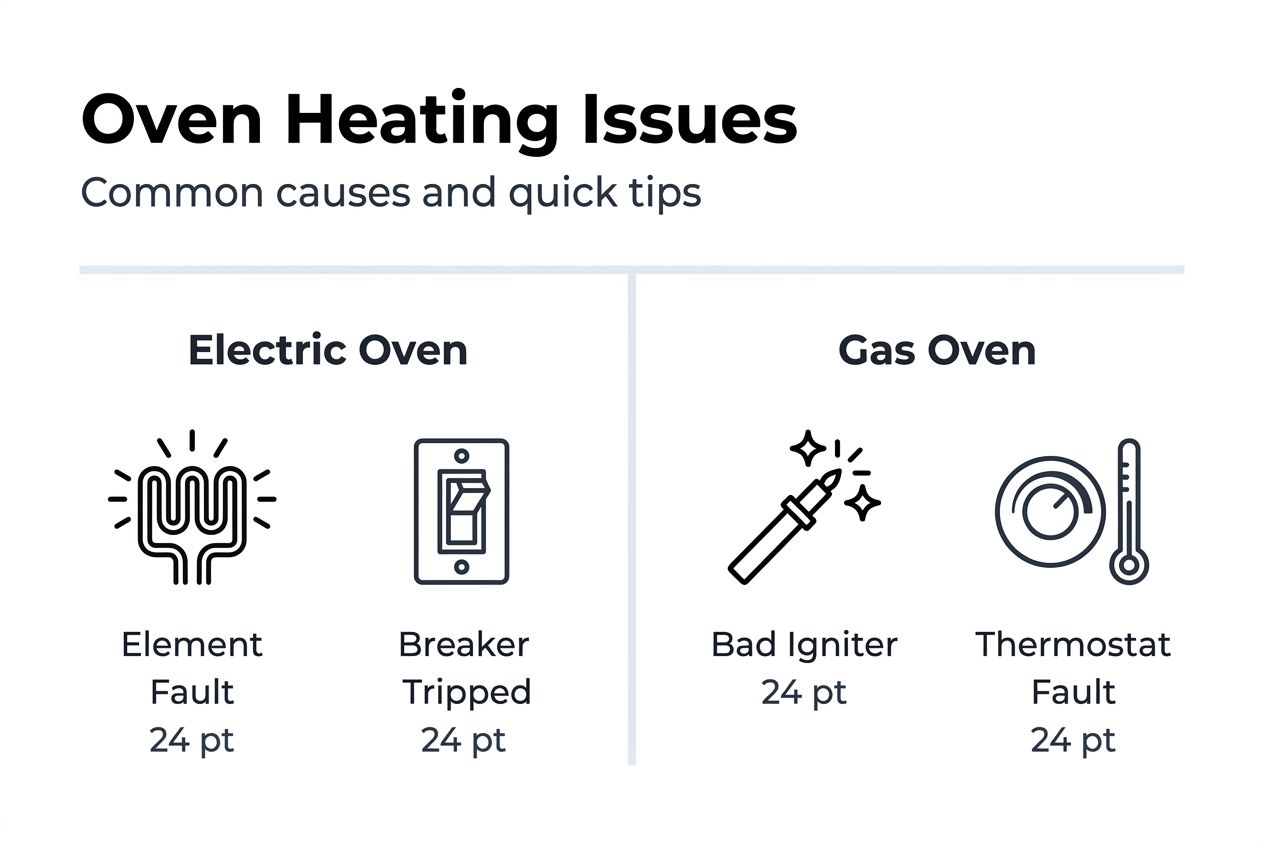
The most frequent cause of heating issues in electric ovens is failure of the bake or broil elements. These metal coils heat up when electricity flows through them, and when they fail, your oven simply can’t generate heat. You’ll notice visible signs like blistering, cracking, or complete breaks in the element surface.
Uneven cooking is another telltale symptom. If cookies burn on one side while staying raw on the other, your heating element likely has weak spots or partial failure. Faulty oven elements are a primary cause of heating issues, requiring inspection and often replacement to restore proper function.
Power supply problems can mimic element failure. Your oven might have lights working perfectly while producing zero heat because the heating circuit uses different electrical pathways than the control panel. Check these potential issues:
- Tripped circuit breakers in your home’s electrical panel
- Blown fuses specific to the oven circuit
- Loose electrical connections at the wall outlet
- Damaged power cord from years of heat exposure
Always unplug your oven completely before inspecting heating elements. Even with the oven switched off, live electrical current can flow through components. Inspect elements only when the oven has cooled for at least an hour to prevent burns.
Pro Tip: Take a photo of wire connections before disconnecting anything during inspection. This reference makes reassembly foolproof and prevents accidental miswiring that could damage your oven or create safety hazards.
If you’ve checked power supplies and your appliance won’t start, element failure becomes the likely culprit. Testing elements requires a multimeter set to measure resistance, but visible damage often confirms replacement needs without electrical testing.
Gas oven heating failures: igniters, thermostats, and safety devices
A weak or failing hot surface igniter is a common cause of no heat in gas ovens. The igniter’s job is to heat up enough to open the gas valve and ignite the gas. When it weakens with age, it glows but never gets hot enough to trigger gas flow. You’ll see it glowing orange or yellow for over a minute without hearing the whoosh of gas ignition.
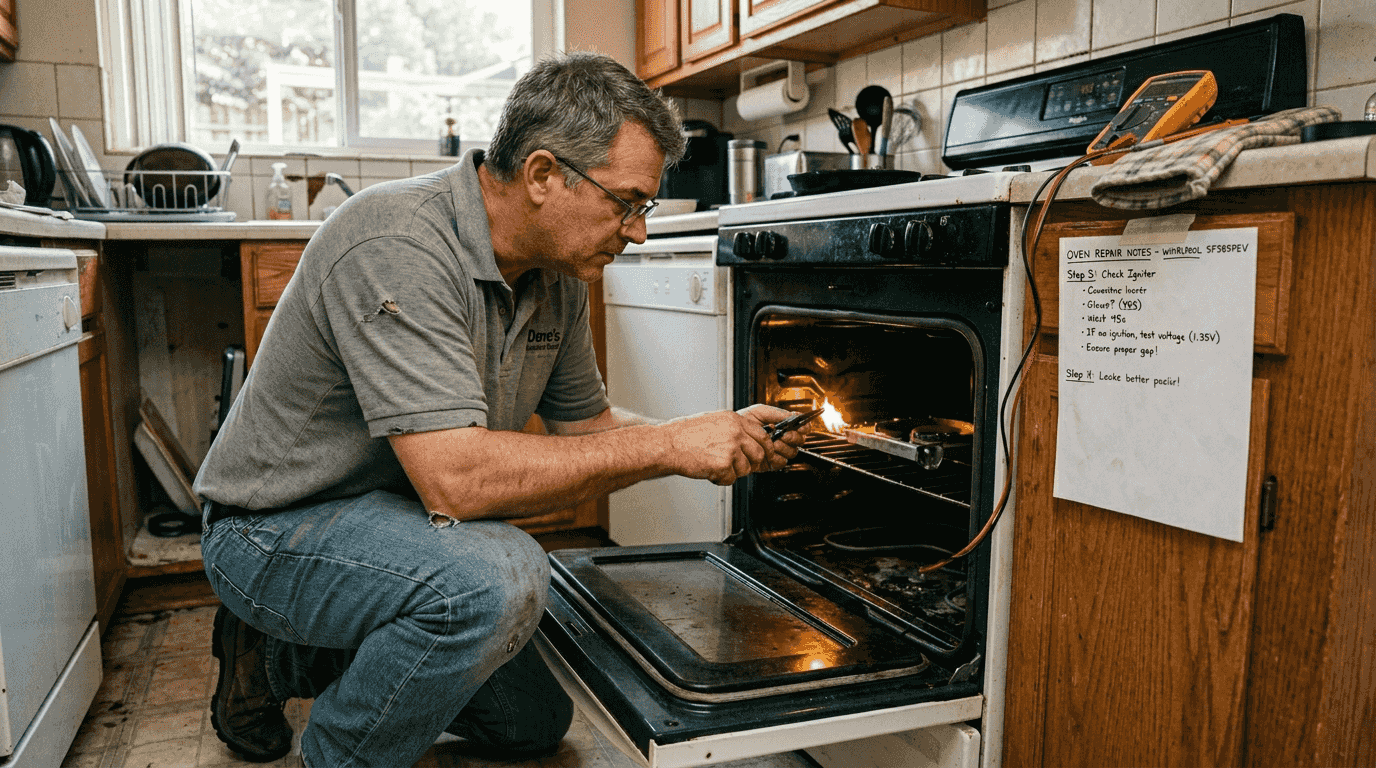
Faulty thermostats create a different problem. The thermostat controls voltage supply to the igniter based on your temperature setting. When it fails, the igniter receives no power at all, preventing any heating cycle from starting. This leaves your oven completely cold with no visible igniter glow.
The oven control board, safety valve, and wire connections can cause heating failures. Burnt or corroded wiring prevents electrical signals from reaching critical components. Loose connections create intermittent heating where the oven works sometimes but fails unpredictably. The control board acts as the oven’s brain, and when it malfunctions, it may send incorrect signals or none at all.
Safety devices add another layer of complexity. Thermal fuses protect your home by cutting power if the oven overheats beyond safe limits. Once blown, these fuses don’t reset automatically and require replacement. Gas safety valves prevent gas flow unless the igniter reaches proper temperature, ensuring gas never flows without ignition capability.
Follow this diagnostic sequence for gas ovens:
- Observe igniter behavior when you turn the oven on
- Note whether it glows and for how long before shutting off
- Listen for clicking sounds indicating control board activity
- Check for any error codes on digital displays
- Inspect visible wiring for burn marks or damage
Pro Tip: If you smell gas at any point during troubleshooting, immediately turn off the gas supply at the wall shutoff valve, open windows, evacuate your home, and call your gas company from outside. Never attempt to locate gas leaks yourself or use open flames to test for leaks.
For specific issues with igniters or gas flow, gas oven igniter repair tips provide detailed guidance on safe diagnosis and when professional service becomes necessary.
Safety precautions and initial troubleshooting steps before repair
Always unplug electric ovens or shut off gas and power before repair attempts. This single step prevents electrical shock, burns from energized components, and accidental gas ignition during inspection. For gas ovens, locate the gas shutoff valve behind or beside your oven and turn it perpendicular to the gas line.
Electric oven safety requires these specific steps:
- Switch off the oven at the control panel
- Unplug the power cord from the wall outlet completely
- If hardwired, turn off the dedicated circuit breaker
- Test the oven controls to confirm no power flows
- Wait at least one hour for all components to cool
Circuit breakers and fuses deserve immediate attention. A tripped breaker indicates an electrical problem that caused the safety device to activate. Simply resetting it without investigating why it tripped can lead to repeated failures or fire hazards. Check your electrical panel for any breakers in the middle position between on and off, which indicates a trip.
Thermal fuse testing requires a multimeter if you’re comfortable with basic electrical diagnostics. Set the multimeter to continuity mode and touch probes to each fuse terminal. A continuous beep or zero resistance reading means the fuse works properly. No beep or infinite resistance indicates a blown fuse needing replacement.
Avoid burns by respecting residual heat. Oven elements and interior surfaces retain dangerous heat levels for 60 to 90 minutes after shutdown. Touch testing components risks serious burns even when the oven feels only warm to a quick touch.
- Never bypass safety devices or thermal fuses to make the oven work temporarily
- Keep a fire extinguisher rated for electrical and grease fires in your kitchen
- Don’t use water on electrical fires; use baking soda for small grease fires
- Schedule professional appliance safety inspections annually for older ovens
Pro Tip: Document your troubleshooting with photos and notes about what you observe. This information helps professional technicians diagnose problems faster when you call for service, potentially reducing repair time and costs.
Recognizing signs of faulty appliances early prevents minor issues from becoming major safety hazards or expensive repairs. Strange smells, unusual sounds, or inconsistent performance all warrant immediate attention.
How to decide when to call a professional oven repair service
Simple troubleshooting tasks remain safely within homeowner capability. Resetting tripped breakers, checking power cords for damage, and verifying gas supply valves are open require no special expertise. These quick checks solve many heating problems without professional intervention.
Diagnosing burnt wiring demands electrical knowledge most homeowners lack. Wiring problems often hide behind panels requiring removal, and working with live circuits poses serious shock risks. Similarly, replacing igniters involves gas system components where improper installation could cause gas leaks or carbon monoxide production.
DIY element replacement seems straightforward but carries hidden challenges. Elements connect to high voltage terminals requiring precise installation to prevent arcing or short circuits. Wrong element types for your specific oven model won’t fit properly or may draw incorrect amperage, damaging the control board.
| Factor | DIY Approach | Professional Repair |
|---|---|---|
| Safety | Electrical shock and gas leak risks without training | Licensed technicians follow safety protocols |
| Diagnosis accuracy | Limited to visible problems and basic checks | Specialized tools detect hidden failures |
| Time investment | Hours researching plus trial and error | Typically fixed in single service call |
| Warranty protection | Voids manufacturer warranties on new ovens | Maintains warranty coverage with authorized service |
| Parts sourcing | Hunting for correct OEM parts online | Direct access to manufacturer parts inventory |
Professional repair ensures safety through proper training and equipment. Technicians carry meters to test voltage, gas pressure gauges to verify correct flow, and manufacturer specific diagnostic tools unavailable to consumers. They also understand how different oven systems interact, preventing fixes that solve one problem while creating another.
Warranty protection matters more than many homeowners realize. Most oven manufacturers void warranties if unauthorized individuals attempt repairs, even simple ones. One DIY mistake could cost you thousands in coverage for unrelated future failures.
Long term cost savings favor professional service for complex repairs. A $150 service call beats buying wrong parts multiple times, damaging additional components through incorrect diagnosis, or worst case, causing a house fire from improper electrical work. Time value adds up too when DIY attempts stretch across multiple weekends.
Pro Tip: Get quotes from at least two repair services before committing. Reputable companies provide free estimates and explain exactly what’s wrong before starting work. Avoid services that insist on charging diagnostic fees before even looking at your oven.
For reliable oven repair services backed by licensed technicians, professional diagnosis eliminates guesswork and restores your kitchen to full functionality safely.
Reliable oven repair services in Orange and Los Angeles Counties
Faced with a non heating oven after reading through common causes and troubleshooting steps, you need trusted local experts who understand both the technical side and the urgency of restoring your kitchen. MDTech Services specializes in residential appliance repair across Orange County and Los Angeles County, bringing licensed technicians directly to your home for fast, safe oven repairs.

Whether your electric oven needs element replacement or your gas oven requires igniter service, professional repair minimizes downtime and eliminates safety risks. Our team handles everything from diagnostic testing to parts replacement, ensuring your oven heats properly and meets all safety standards. Access our appliance troubleshooting guide for additional self help resources, or review our comprehensive home appliance repair guide for maintenance tips. Schedule convenient oven repair services today and get back to cooking with confidence.
FAQ
How can I tell if my oven’s heating element is faulty?
Look for visible damage like cracks, blisters, or breaks in the metal coil. Uneven cooking where food browns inconsistently also signals element problems. A failing element may not glow red when the oven is on, or it might glow in spots while staying dark in others.
What should I check first if my electric oven is not heating?
Verify the oven is plugged in completely and the circuit breaker hasn’t tripped. Check if oven lights and displays work, which confirms partial power. Once the oven cools, inspect heating elements for any visible cracks or damage. These quick checks often reveal simple fixes before calling for appliance won’t start fixes.
Why is my gas oven igniter glowing but not producing heat?
If the igniter glows orange or yellow for over a minute without burner ignition, it’s too weak to open the gas valve. Weak igniters draw insufficient current to trigger gas flow even though they appear to work. This component failure requires gas oven igniter repair or replacement to restore heating.
Is it safe to repair my oven myself?
Simple tasks like checking breakers or inspecting for visible damage are safe with proper precautions. Avoid electrical repairs involving wiring or gas system work without professional training. DIY attempts on complex components risk electric shock, gas leaks, or voiding warranties. Following appliance safety inspection guidelines helps you know your limits and when to call professionals.