
TL;DR:
- Indoor air pollution levels are 2-5 times higher than outdoor air, impacting health. Proper, controlled ventilation removes pollutants, controls humidity, and improves HVAC efficiency. Regular system maintenance and appropriate filters are essential, especially in wildfire-prone areas like Orange County and Los Angeles.
Indoor air pollution is a problem most Orange County and Los Angeles homeowners never see coming. You might assume your home is a safe space, but indoor pollutant levels are 2-5 times higher than what you’d breathe outside, and Americans spend roughly 90% of their time indoors. That gap between perception and reality is exactly why ventilation deserves serious attention. Proper ventilation removes harmful contaminants, controls humidity, and helps your HVAC system run more efficiently. This guide breaks down what ventilation actually does, what happens when it’s neglected, and what practical steps you can take right now.
Table of Contents
- What proper ventilation really does in your home
- Health risks: What happens when ventilation is ignored
- Ventilation and HVAC: Boosting efficiency and preventing costly problems
- Ventilation in action: Solutions for Orange County and LA homes
- Why most homeowners underestimate ventilation—and what actually works
- Expert help for every home ventilation and HVAC challenge
- Frequently asked questions
Key Takeaways
| Point | Details |
|---|---|
| Indoor air is often worse | Most homes have higher pollutant levels inside than outdoors, especially if sealed for energy efficiency. |
| Ventilation protects health | Proper systems reduce short- and long-term risks like asthma, allergies, and more serious diseases. |
| Boosts energy efficiency | Balanced ventilation lowers energy costs, prevents mold, and keeps your HVAC equipment running smoothly. |
| Local needs matter | Orange County and LA homes face unique risks from wildfires and state codes, so tailored solutions are essential. |
| Pro help pays off | Expert maintenance and upgrades ensure safe, code-compliant, and efficient ventilation for your home. |
What proper ventilation really does in your home
Many homeowners assume that a tightly sealed, energy-efficient home is automatically a healthy one. In reality, the opposite is often true. Modern construction techniques seal homes so well that pollutants have nowhere to go. Without a reliable way to exchange stale indoor air for fresh outdoor air, contaminants build up steadily over time.
Ventilation works by diluting and removing harmful substances before they reach dangerous concentrations. According to the EPA Indoor Air Quality Factsheet, proper airflow removes VOCs (volatile organic compounds), particulate matter, radon, carbon monoxide, mold spores, and biological contaminants. Each of these has a different source inside your home.
Common pollutants ventilation removes:
- VOCs: Released by paints, cleaning products, furniture, and flooring
- Particulate matter (PM2.5): From cooking, candles, and outdoor pollution entering through gaps
- Carbon monoxide: From gas appliances, water heaters, and attached garages
- Radon: A naturally occurring gas that seeps up from soil beneath your home
- Mold spores: Generated wherever moisture accumulates without adequate airflow
- Biological contaminants: Dust mites, pet dander, and bacteria
There are two main approaches to ventilation: natural and mechanical. Natural ventilation relies on wind pressure and temperature differences to move air through gaps, windows, and vents. Mechanical ventilation uses fans, ducts, and HVAC equipment to actively control airflow. The comparison below shows why relying solely on natural infiltration falls short.
| Feature | Natural infiltration | Mechanical ventilation |
|---|---|---|
| Consistency | Varies with weather | Controlled and reliable |
| Pollutant removal | Unpredictable | Targeted and measurable |
| Code compliance | Often insufficient | Meets Title 24 and ASHRAE standards |
| Energy efficiency | Uncontrolled air loss | Optimized with HRVs/ERVs |
Reviewing a solid ventilation standards guide can help you understand what your home actually needs. You should also consider HVAC’s impact on air quality when planning any upgrades.
Pro Tip: Run your kitchen exhaust fan every time you cook, not just when something is burning. Cooking is one of the top sources of indoor PM2.5, and a few minutes of fan use can clear the air significantly.
Health risks: What happens when ventilation is ignored
Poor ventilation does not just make your home feel stuffy. It creates real, measurable health consequences that show up in your body over time.

Short-term effects are often the first warning signs. You or your family members may experience eye and throat irritation, persistent headaches, dizziness, or unusual fatigue, especially after spending extended time indoors. These symptoms are easy to dismiss as stress or seasonal illness, but they frequently trace back to air quality.
Long-term exposure is where the stakes get much higher. Chronic respiratory diseases, asthma flare-ups, cardiovascular problems, and even elevated cancer risk from prolonged VOC or radon exposure are all linked to inadequate ventilation. Children, elderly residents, and anyone with existing respiratory or immune conditions face the greatest risk.
Indoor air pollution ranks as a top 5 environmental health risk according to the EPA, placing it alongside outdoor smog and contaminated water as a serious public health concern.
Symptoms and conditions linked to poor ventilation:
- Headaches and dizziness after time spent indoors
- Worsening asthma or allergy symptoms
- Chronic fatigue without a clear medical cause
- Respiratory infections that recur frequently
- Skin and eye irritation
- Long-term: increased risk of lung disease and certain cancers
| Pollutant | Associated health effect |
|---|---|
| Radon | Lung cancer (second leading cause after smoking) |
| VOCs | Liver damage, nervous system effects, cancer risk |
| Carbon monoxide | Headaches, unconsciousness, death at high levels |
| Mold spores | Asthma, allergic reactions, respiratory infections |
| PM2.5 | Heart disease, lung inflammation, reduced lung function |
Expert note: The health effects of poor indoor air quality are cumulative. A home that feels fine today can be quietly affecting your family’s long-term health, particularly if filtration and airflow have not been assessed recently.
Upgrading to MERV13 filtration is one of the most effective steps you can take to reduce particulate exposure. You should also address moisture control to prevent mold growth before it becomes a structural and health problem.
Ventilation and HVAC: Boosting efficiency and preventing costly problems
Proper ventilation is not just a health issue. It directly affects how well your HVAC system performs and how much you spend on energy every month.
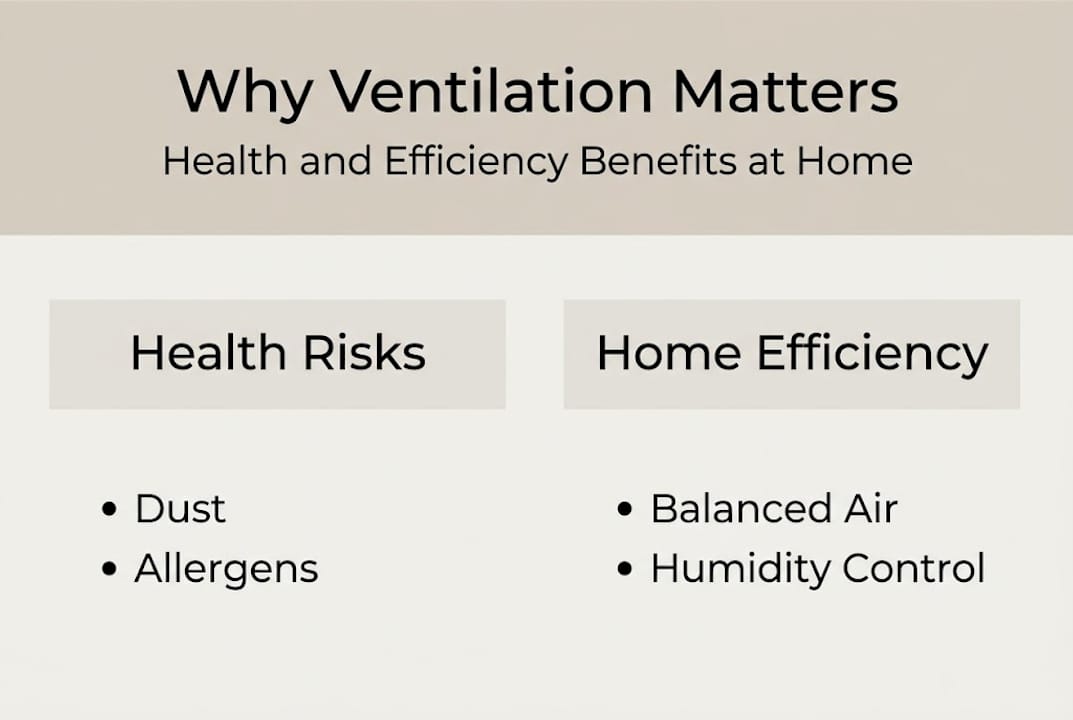
When airflow is unbalanced, your home develops pressure differences that cause drafts, doors that slam on their own, and rooms that never seem to reach the right temperature. Your HVAC system works harder to compensate, which shortens its lifespan and raises your utility bills. Balanced ventilation removes that strain.
Humidity control is another major factor. Keeping your indoor relative humidity (RH) between 30% and 50% prevents mold from taking hold and protects your walls, flooring, and HVAC components from moisture damage. In Southern California, where temperatures swing and wildfire season affects outdoor air, maintaining that range requires active management, not just open windows.
Heat recovery ventilators (HRVs) and energy recovery ventilators (ERVs) are two technologies that deliver fresh air without throwing away conditioned air. They transfer heat or moisture between outgoing and incoming air streams, so you get ventilation without the energy penalty. Pairing these with high-MERV filters gives you both cleaner air and lower operating costs.
Demand-controlled ventilation with static pressure reset can cut fan energy use by 47%, which is a significant saving on a system that runs year-round.
HVAC upgrades that maximize ventilation benefits:
- Install MERV 13 or higher filters to capture fine particles
- Add an HRV or ERV to exchange air without losing conditioned energy
- Use a programmable or smart thermostat to control ventilation schedules
- Seal and insulate ductwork to prevent conditioned air loss
- Install CO and radon detectors to monitor air safety continuously
Pro Tip: Have a licensed technician inspect your ducts for leaks at least every two years. Leaky ducts can waste 20-30% of your conditioned air before it ever reaches the living space, which means you’re paying for comfort you’re not getting.
For more practical guidance, review these energy-saving HVAC tips and learn how HVAC drainage affects overall system performance.
Ventilation in action: Solutions for Orange County and LA homes
Homeowners in Orange County and Los Angeles face ventilation challenges that most national guides don’t fully address. Wildfire smoke, strict Title 24 energy codes, and high-rise airflow dynamics all create unique situations that require local knowledge.
Wildfires are a recurring reality in this region. What many homeowners don’t realize is that indoor VOCs can spike after wildfire smoke clears, as toxic compounds off-gas from materials that absorbed smoke during the event. Closing windows and running your HVAC on recirculate with a MERV 13 or higher filter is the right move during active smoke events. After the fire is out, a portable HEPA air purifier can help clear residual contaminants.
High-rise residents face a different challenge called the stack effect, where pressure differences between floors pull air from lower levels to upper ones, carrying pollutants with it. Standard window ventilation cannot address this reliably.
Expert recommendation: During poor air quality events, keep your HVAC running in recirculation mode with a high-quality filter rather than bringing in outdoor air. This keeps indoor pollutant levels lower than outdoor conditions while maintaining comfort.
Steps to improve ventilation in a typical OC/LA home:
- Test your indoor air quality with a certified monitor or professional assessment
- Upgrade HVAC filters to MERV 13 or higher before wildfire season
- Install a portable HEPA unit in bedrooms and main living areas
- Ask your HVAC technician about HRV or ERV installation for year-round air exchange
- Request a Title 24 compliance check to confirm your system meets current California code
- Seal ductwork and check for leaks during every annual service visit
Pro Tip: Ask your HVAC provider specifically about Title 24 compliance during your next service call. California no longer allows natural infiltration to count toward ventilation requirements, so mechanical systems must be properly sized and functioning.
Use this HVAC checklist for ductwork to prepare before your next service visit.
Why most homeowners underestimate ventilation—and what actually works
There’s a common belief that more fresh air is always better. It’s an understandable instinct, but it’s too simple. Higher ventilation rates improve health outcomes but also increase energy costs, and California’s mechanical ventilation mandates mean that simply cracking a window no longer satisfies code requirements.
We’ve seen homeowners invest in expensive air purifiers while their ductwork leaks conditioned air into the attic. We’ve also seen well-intentioned DIY filter upgrades that restrict airflow so much they damage the HVAC blower motor. The real answer is balance: the right amount of ventilation, with the right equipment, maintained on a regular schedule.
What actually works for busy homeowners is a combination of annual professional inspections, smart thermostat controls that schedule ventilation during optimal outdoor air quality windows, and prompt repairs when something is off. Even a well-designed system will develop mold or declining filter performance without expert oversight. Get the full ventilation guide to understand the complete picture before making any changes.
Expert help for every home ventilation and HVAC challenge
Understanding ventilation is the first step. Acting on it with the right professional support is what actually protects your home and your family’s health.

At MDTech Services, our licensed technicians assess, maintain, and upgrade ventilation and HVAC systems for homeowners across Orange County and Los Angeles County. Whether you need a filter upgrade, duct sealing, an HRV installation, or a full HVAC repair service, we bring the expertise to get it done right. We also understand why timely HVAC repairs matter before problems escalate. From ventilation assessments to modern appliance repair, our team is ready to help you schedule a home evaluation today.
Frequently asked questions
How often should homeowners in Orange County and Los Angeles check their ventilation systems?
HVAC and ventilation systems should be inspected and serviced at least once a year, and more frequently after wildfire events, major renovations, or if anyone in the home has respiratory health concerns. Regular maintenance prevents mold growth and Legionella risks in stagnant systems.
What filters are best for removing wildfire smoke and VOCs indoors?
MERV 13 or higher HVAC filters combined with portable HEPA air purifiers are the recommended approach for smoke and VOC removal. Indoor VOCs can be higher after a wildfire event than during it, so filtration should continue well after smoke clears.
Why isn’t opening windows enough for proper home ventilation?
Open windows cannot deliver consistent, controlled air exchange or meet California’s building and health code requirements. California mandates mechanical ventilation over natural infiltration, meaning a properly installed and maintained mechanical system is required.
How does ventilation impact HVAC efficiency and energy bills?
Smart ventilation strategies like demand-controlled ventilation and HRVs/ERVs can cut HVAC fan energy use by 47% while maintaining comfort and healthy air quality throughout your home.