
Warm California breezes should not come with the worry of poor indoor air quality, yet many Orange County and Los Angeles County homes face invisible threats every day. With Americans spending about 90% of their time indoors, households unknowingly breathe in pollutants and allergens that HVAC systems are designed to manage. This guide helps you understand how smart HVAC choices protect your family’s health and maximize energy efficiency for clean air and peace of mind.
Table of Contents
- Understanding HVAC and Indoor Air Quality
- Types of HVAC Systems and Filtration Methods
- How HVAC Improves Allergen Control and Ventilation
- Common HVAC Mistakes That Harm Air Quality
- Optimizing HVAC for Healthier Efficient Homes
Key Takeaways
| Point | Details |
|---|---|
| HVAC System Importance | HVAC systems are essential for maintaining indoor air quality, especially given that Americans spend about 90% of their time indoors. |
| Filter Quality Matters | Higher MERV ratings enhance filtration efficiency—users should check and replace filters regularly for optimal performance. |
| Common HVAC Mistakes | Typical oversights, like neglecting filter replacements and blocking vents, can harm air quality and system efficiency. |
| Optimizing for Health and Efficiency | Well-maintained HVAC systems provide cleaner air and reduce energy costs simultaneously; consider professional assessments for optimization. |
Understanding HVAC and Indoor Air Quality
Your HVAC system does far more than keep your home comfortable during California’s hot summers and mild winters. It plays a crucial role in controlling what you and your family actually breathe every single day.
Here’s the reality: Americans spend about 90% of their time indoors, and the air inside your Orange County or Los Angeles County home can be significantly more polluted than the outdoor air you’re trying to escape. Your HVAC system is the primary defense against this.
How Your HVAC System Protects Air Quality
Your system works through three main mechanisms:
- Filtration – Traps particles like dust, pollen, and pet dander before they circulate through your rooms
- Ventilation – Brings in fresh outdoor air while removing stale, contaminated indoor air
- Humidity control – Maintains moisture levels that prevent mold growth and reduce allergen activity
Without proper HVAC function, contaminants accumulate rapidly. Indoor air pollutants originate from multiple sources:
- Building materials and insulation
- Cleaning products and chemicals
- Pet dander and dead skin cells
- Mold and moisture
- Combustion appliances
Indoor air pollutants like secondhand smoke, mold, and pet dander significantly impact health, comfort, and well-being for all household members.
The Filter’s Critical Role
Your HVAC filter is not just a convenience—it’s your frontline defense. Filter quality matters tremendously. MERV ratings (Minimum Efficiency Reporting Values) determine what size particles your filter catches:
- MERV 6-8 – Basic filtration for general dust and larger particles
- MERV 10-12 – Better protection for homes with pets or mild allergies
- MERV 13+ – High-efficiency filtration for allergy-prone households
In Orange and Los Angeles County, where seasonal pollen from vegetation peaks in spring and early summer, many homeowners benefit from higher MERV ratings. However, higher ratings require more frequent changes and proper airflow management.
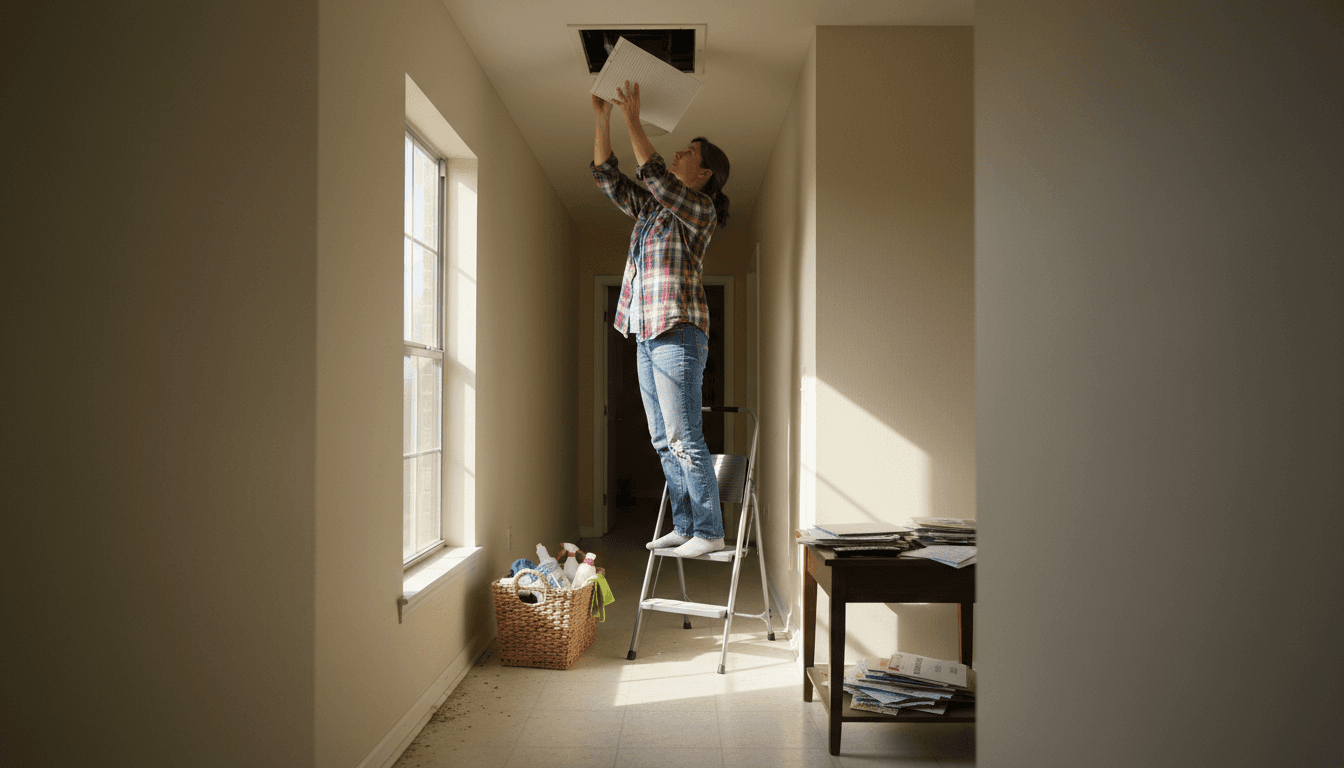
Pro tip: Check your filter monthly and replace it every 30-90 days, depending on household activity and pet presence—more frequent changes mean cleaner air and better system efficiency.
Types of HVAC Systems and Filtration Methods
Not all HVAC systems are created equal, and neither are their air filtration capabilities. The system installed in your Orange County or Los Angeles County home determines how effectively it removes pollutants from the air you breathe.
Understanding your system type helps you make informed decisions about upgrades, maintenance, and filter choices. Different configurations offer varying levels of air quality control.
Common HVAC System Types
Most residential homes use one of these primary system configurations:
- Central air systems – Cool or heat your entire home through ductwork, filtering all air in one location
- Heat pump systems – Reverse the refrigeration cycle to both heat and cool, improving year-round efficiency
- Split systems – Separate indoor and outdoor units offering more flexibility and zone control
- Ductless mini-split systems – Individual wall units in specific rooms without requiring extensive ductwork
Each system type interacts differently with filtration. A properly functioning central system filters air more uniformly throughout your home compared to room-by-room alternatives.
Compare how different HVAC systems impact air quality and efficiency:
| System Type | Air Quality Impact | Energy Efficiency | Upgrade Potential |
|---|---|---|---|
| Central Air | Uniform filtration | Moderate | High (smart controls) |
| Heat Pump | Low pollutant output | Very high | Easy to modernize |
| Split System | Zoned filtration | High | Flexible upgrades |
| Ductless Mini-Split | Room-specific control | Moderate to high | Ideal for smaller spaces |
Filtration Technology Matters
Your filter does the heavy lifting. Not all filters perform equally, and effectiveness depends on three factors:
- Airflow – Your system must push sufficient air through the filter without restriction
- Filter technology – Different materials trap different particle sizes and pollutants
- Proper installation – Filters installed incorrectly bypass contaminants entirely
Filtration and air cleaning technologies remove airborne contaminants from indoor and outdoor sources, working alongside ventilation and source control to reduce exposure.
Common filtration options include:
- Mechanical filters – Trap particles through fiber layers
- Electrostatic filters – Charge particles to attract them to collector plates
- HEPA filters – Capture 99.97% of particles 0.3 microns and larger
- Activated carbon filters – Remove odors and some gases
Choosing the Right Filter for Your Home
Your household needs determine the best filter choice. Families with allergies, pets, or respiratory concerns benefit from higher MERV ratings and specialized technologies. In Southern California’s dusty, pollen-heavy environment, especially during spring months, many homeowners find MERV 11-13 filters provide optimal balance between filtration and airflow.
Higher MERV ratings improve air quality but may require system modifications to maintain proper airflow and prevent strain on your equipment.
Cheaper fiberglass filters (MERV 1-4) offer minimal protection and need monthly replacement. Pleated or electrostatic filters (MERV 5-13) provide better value and longer service life.
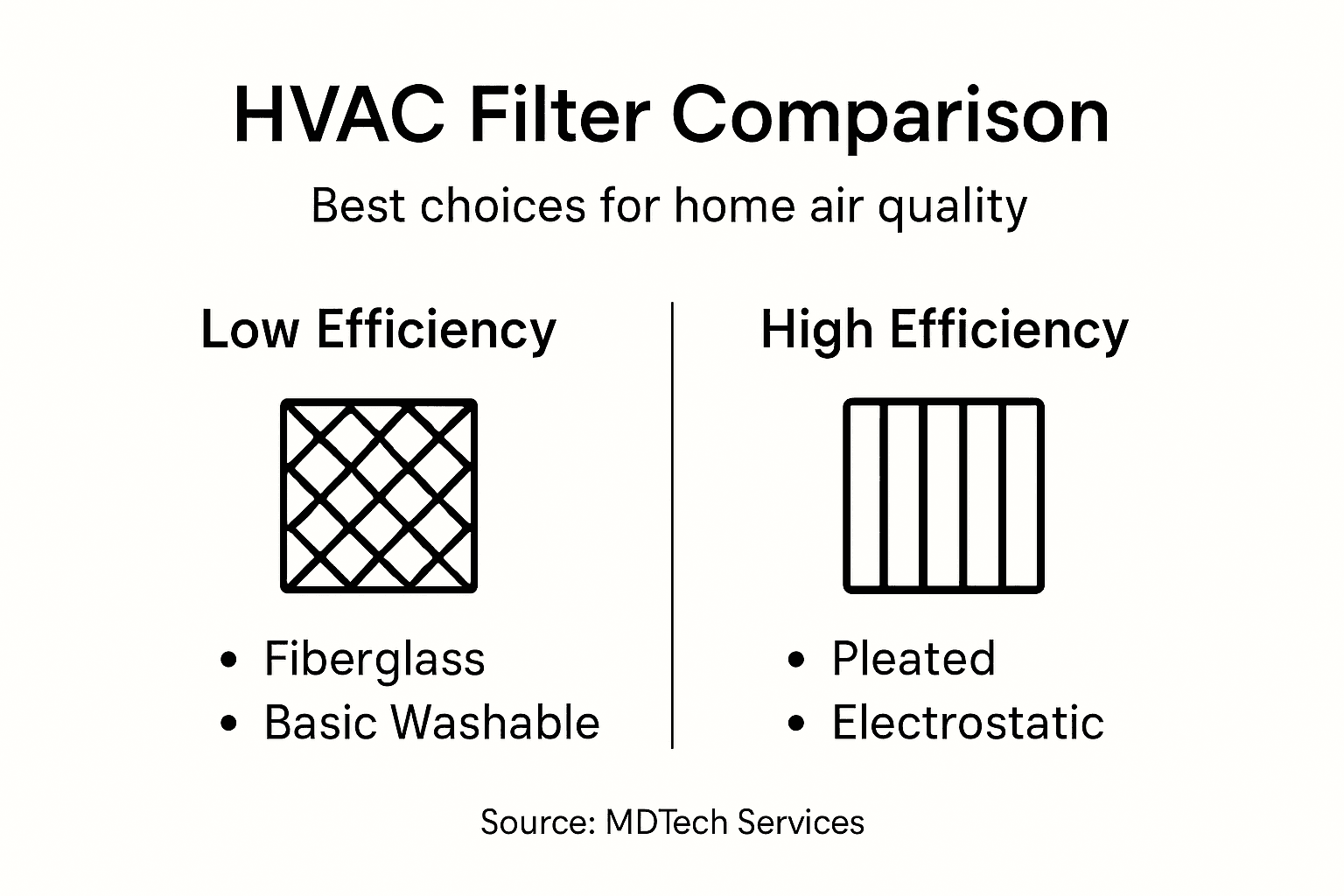
Here’s a quick guide to HVAC filter options and their ideal uses:
| Filter Type | Efficiency Level | Best For | Replacement Interval |
|---|---|---|---|
| Fiberglass (MERV 1-4) | Low | Basic dust removal | Monthly |
| Pleated (MERV 5-13) | Moderate to High | Allergies, pets, pollen | 30-90 days |
| HEPA | Very High | Allergy-prone homes | As specified |
| Activated Carbon | Moderate | Odor/gas reduction | As specified |
Pro tip: Ask MDTech Services about your specific system’s filter compatibility when scheduling maintenance—using the wrong filter rating can reduce efficiency or damage your equipment.
How HVAC Improves Allergen Control and Ventilation
If you or your family members suffer from allergies, your HVAC system is one of your best allies. Beyond just temperature control, it actively removes the particles and allergens that trigger sneezing, itching, and respiratory issues.
Allergy season in Orange and Los Angeles County can be brutal. Pollen counts spike in spring, and without proper HVAC function, you’re essentially inviting outdoor allergens indoors.
Filtering Out Allergens
Your HVAC system traps allergens before they circulate through your home. The filtration process removes:
- Pollen from trees, grasses, and flowers
- Pet dander and hair
- Dust mites and their droppings
- Mold spores
- Outdoor pollution particles
As air passes through your filter, these particles get caught while clean air flows back into your rooms. The quality of your filter determines how many allergens actually get removed. A MERV 11 filter captures far more pet dander than a basic MERV 5 filter.
The Humidity Connection
Proper humidity control between 30-60% reduces mold growth and dust mite populations, two major indoor allergen sources. Your HVAC system manages moisture through:
- Air conditioning during warm months (dehumidification)
- Proper ventilation cycling
- Return air balancing
Dust mites thrive in humid environments above 60%. When humidity drops below 50%, they die off naturally. Mold requires moisture to grow, so HVAC dehumidification directly prevents both allergen sources.
Ventilation Strategies
Two ventilation methods complement your filtration:
- Spot ventilation – Exhaust fans in bathrooms and kitchens remove moisture and odors at the source
- Dilution ventilation – Whole-home air exchange cycles fresh outdoor air through your system while exhausting stale indoor air
These approaches work together with filtration to create multiple layers of allergen protection.
A properly maintained HVAC system with appropriate ventilation reduces allergen-related health risks more effectively than filters alone.
Without ventilation, allergens and moisture accumulate indoors. With it, your system continuously refreshes the air and removes contaminants.
Pro tip: Run your HVAC system continuously during high pollen days instead of just when cooling is needed—constant filtration removes more allergens than intermittent operation.
Common HVAC Mistakes That Harm Air Quality
Your HVAC system can only work as well as you maintain it. Even small oversights create air quality problems that accumulate over time, turning your home into an allergen and pollutant trap.
Most homeowners make the same mistakes without realizing the damage. Understanding these pitfalls helps you protect your family’s health.
Neglecting Filter Replacement
This is the most common mistake. Many homeowners forget about filters for months or even years, thinking they work forever.
They do not. A clogged filter restricts airflow and stops trapping new particles. Your system compensates by working harder, reducing efficiency while air quality plummets.
You should check your filter monthly and replace it every 30-90 days depending on household factors. Homes with pets, smokers, or allergy sufferers need more frequent replacements.
Using the Wrong Filter Rating
Cost temptation leads many people to buy cheap fiberglass filters rated MERV 1-4. These remove almost nothing.
Other homeowners buy filters too high in MERV rating (14+) without checking equipment compatibility. Overly restrictive filters strain your system and create pressure drops that damage components.
Match your filter to your system’s specifications. A MERV 11 or 13 filter works well for most Orange County homes without causing airflow problems.
Blocking Vents and Returns
Furniture, curtains, or storage items blocking supply vents or return grills disrupt airflow balance. Your system can’t circulate air effectively, leaving dead zones where allergens and moisture accumulate.
Keep all vents and grills clear of obstructions. This maintains proper air distribution and filtration effectiveness.
Ignoring System Commissioning
Signs your HVAC needs repair include uneven temperature distribution, weak airflow, and humidity issues—often caused by improper installation or lack of system balancing. New installations require professional commissioning to set airflow rates and duct pressure correctly.
Without commissioning, your system operates inefficiently and fails to remove contaminants properly.
Cutting Ventilation to Save Energy
Reducing ventilation rates to cut energy costs backfires. Poor indoor air quality results from inadequate ventilation that fails to dilute contaminants, creating buildup of moisture, odors, and pollutants.
Proper ventilation and energy efficiency work together, not against each other. Well-maintained systems balance both.
Skipping HVAC maintenance to save money costs far more in health impacts, emergency repairs, and wasted energy.
Common maintenance oversights include:
- Not cleaning ducts and equipment
- Neglecting combustion appliance venting
- Forgetting carbon monoxide detector batteries
- Avoiding professional inspections
Pro tip: Schedule professional HVAC maintenance twice yearly—spring and fall—before high-use seasons to catch problems early and keep your air quality at its best.
Optimizing HVAC for Healthier Efficient Homes
The best HVAC systems deliver both clean air and low energy bills. You don’t have to choose between health and savings—optimization achieves both simultaneously.
Most homeowners treat HVAC efficiency and air quality as separate concerns. Modern systems prove they work together when properly managed.
The Dual Benefit Approach
Optimized HVAC systems use less energy while removing more pollutants. This happens because well-maintained systems operate at peak performance instead of working harder to compensate for neglect.
Your system’s efficiency directly impacts air quality. An inefficient system cycles on and off erratically, failing to filter air consistently. A properly tuned system runs at optimal intervals, filtering continuously without wasting energy.
Combustion Appliance Management
Proper maintenance of combustion appliances like gas stoves, water heaters, and furnaces reduces dangerous pollutants while improving efficiency. Gas combustion produces nitrogen dioxide and carbon monoxide if venting fails.
Your optimization strategy should include:
- Annual furnace inspections by licensed professionals
- Carbon monoxide detector installation and battery replacement
- Kitchen exhaust hood operation during cooking
- Proper venting of all fuel-burning equipment
These steps eliminate hidden pollutants while ensuring your heating system runs safely and efficiently.
Smart HVAC Control Systems
Newer homes benefit from advanced optimization technologies. Model predictive control systems coordinate heating and ventilation to minimize energy use while maintaining comfort and air quality.
These intelligent systems adjust operation based on occupancy, outdoor conditions, and indoor air quality readings. Real-time data allows continuous optimization that homeowners cannot achieve manually.
If you’re not ready for smart systems, focus on manual optimization:
- Set thermostats to consistent temperatures instead of frequent adjustments
- Run ventilation on schedules, not just when heating or cooling
- Keep filters clean and use appropriate MERV ratings
- Maintain unobstructed vents and returns
Energy Efficiency Without Compromising Air Quality
Cutting costs by reducing ventilation seems smart until pollutants accumulate. True efficiency means operating your system intelligently.
Optimized HVAC systems reduce energy consumption by over 7% while improving thermal comfort and indoor air quality simultaneously.
Electric heat pump systems offer particular advantages over traditional gas furnaces. They heat and cool efficiently without combustion pollutants, improving both air quality and energy performance in Orange and Los Angeles County homes.
Consider upgrading if your system is over 15 years old. Newer technology pays for itself through lower utility bills while delivering cleaner air.
Pro tip: Schedule a professional HVAC assessment to identify optimization opportunities specific to your home—small improvements like duct sealing or thermostat programming can yield surprising energy and air quality gains.
Enhance Your Home’s Air Quality with Expert HVAC Services
If you are concerned about maintaining clean and healthy indoor air while keeping your HVAC system running smoothly in Orange County or Los Angeles County, you are not alone. The article highlights how proper filtration, ventilation, and humidity control are essential to reduce allergens and pollutants that affect your family’s wellbeing. At MDTech Services, we understand these unique challenges and offer professional HVAC repair and maintenance solutions tailored to your home’s specific needs.

Take control of your indoor air today by trusting our licensed technicians to optimize your HVAC system for both performance and air quality. Don’t wait for clogged filters or airflow issues to compromise your comfort and health. Visit us at MDTech Services to schedule your expert HVAC inspection and service. Together, we can help you breathe easier with safer and more efficient heating and cooling systems.
Frequently Asked Questions
How does my HVAC system improve indoor air quality?
Your HVAC system enhances indoor air quality through filtration, ventilation, and humidity control, which helps remove pollutants like dust, pollen, and allergens from your home.
What is the importance of changing HVAC filters regularly?
Changing your HVAC filters regularly, ideally every 30-90 days, ensures optimal airflow and filtration efficiency, improving air quality and system performance while reducing allergens.
What type of HVAC filter should I use for allergy management?
For better allergy management, filters with MERV ratings of 11-13 are recommended, as they effectively capture smaller particles like pet dander and pollen, improving overall air quality.
Can an HVAC system help reduce humidity levels indoors?
Yes, an HVAC system can control humidity levels by utilizing air conditioning to dehumidify the air, which helps prevent mold growth and reduces allergens associated with high humidity.