
Warm afternoons in Orange and Los Angeles County often mean running your HVAC system nonstop, but many homeowners overlook simple steps that keep equipment running smoothly and reduce energy bills. When air filters and vents become clogged or neglected, your system works harder than it should, straining components and raising costs. By focusing on proactive maintenance like regularly inspecting and replacing your air filters, you can help your HVAC operate efficiently, save money, and enjoy cleaner, healthier indoor air.
Table of Contents
- Step 1: Inspect Air Filters And Replace If Needed
- Step 2: Clean Vents And Ensure Airflow Is Clear
- Step 3: Seal Leaks In Ducts And Connections
- Step 4: Test Thermostat For Accurate Operation
- Step 5: Schedule Professional HVAC Maintenance
Quick Summary
| Key Point | Explanation |
|---|---|
| 1. Regularly Replace Air Filters | Check and replace filters every 1-3 months to improve HVAC efficiency and indoor air quality. |
| 2. Clean Vents Biannually | Clean air vents at least twice a year to ensure proper airflow and reduce allergens in your home. |
| 3. Seal Duct Leaks | Inspect and seal ducts as needed to prevent energy loss and improve HVAC performance. |
| 4. Test Thermostat Seasonally | Verify your thermostat’s accuracy and settings each season to maintain efficient heating and cooling. |
| 5. Schedule Professional Maintenance | Schedule HVAC maintenance twice a year to identify issues early and extend your system’s lifespan. |
Step 1: Inspect air filters and replace if needed
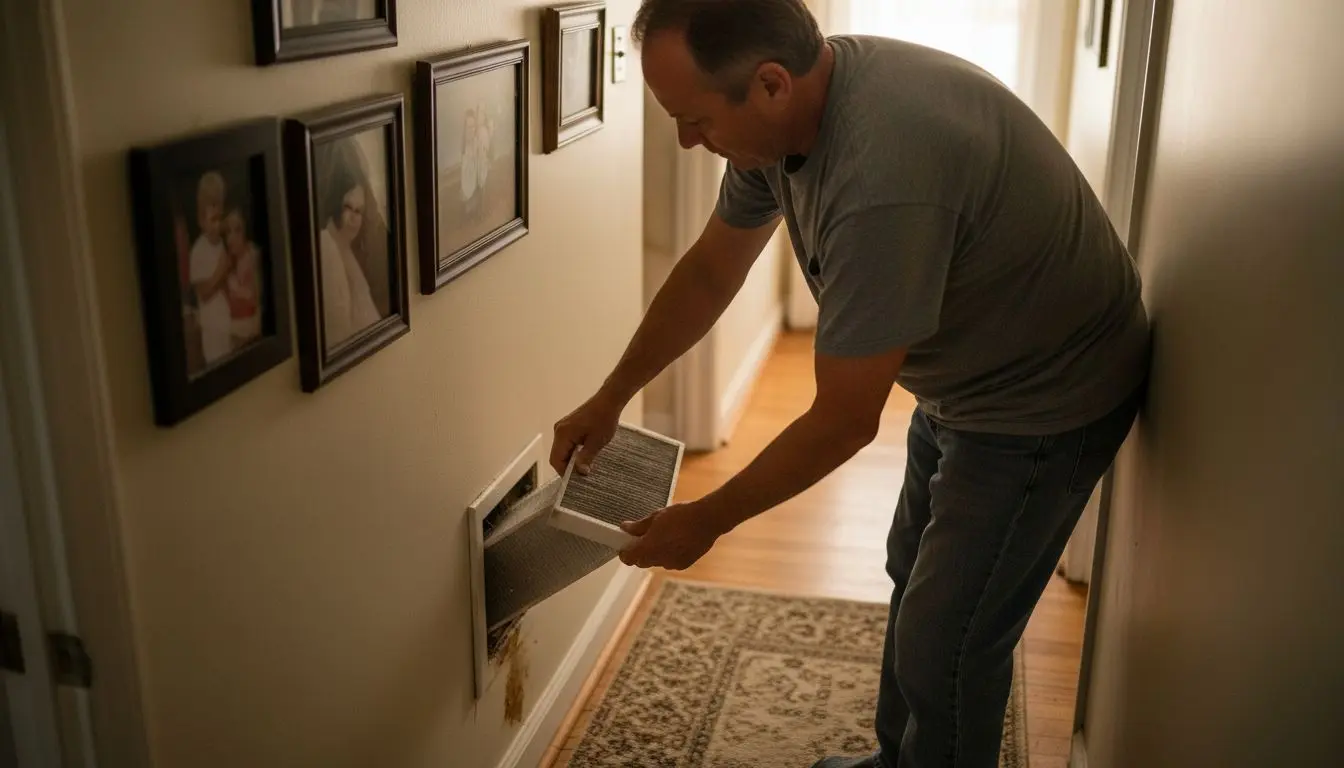
Air filter inspection is a crucial maintenance task that directly impacts your HVAC system’s performance and energy efficiency. By regularly checking and replacing your air filters, you can prevent potential system breakdowns and maintain optimal indoor air quality.
To inspect your air filters effectively, follow these key steps:
- Locate your HVAC system’s filter compartment – typically found near the return air duct or inside the air handler
- Remove the existing filter carefully – note the current filter’s size and airflow direction arrow
- Examine the filter’s condition – look for visible dirt, dust accumulation, and discoloration
Proactive air filter maintenance can significantly improve system efficiency, reducing energy consumption and preventing unnecessary strain on your HVAC equipment. A clean filter allows for better airflow, which means your system works less hard to maintain comfortable temperatures.
Replacement frequency depends on several factors:
- Home environment (pets, dust levels)
- Filter type and quality
- Number of occupants
- Local air quality conditions
Generally, standard 1-inch filters should be replaced every 30-90 days, while high-efficiency filters might last up to six months.
Compare the most common air filter types for your HVAC system:
| Filter Type | Lifespan | Filtration Efficiency | Home Environment Suitability |
|---|---|---|---|
| Fiberglass | 1 month | Basic dust removal | Minimal dust, no pets |
| Pleated | 3 months | Traps small particles | Most homes, minor allergies |
| HEPA | 6-12 months | Captures allergens | Allergy/asthma households |
A clogged air filter can increase your HVAC system’s energy consumption by 5-15%, making regular replacement a simple yet effective way to save on utility bills.
Pro tip: Consider setting a smartphone calendar reminder for filter replacement to ensure you never forget this critical maintenance task.
Step 2: Clean vents and ensure airflow is clear
Maintaining clear and clean air vents is essential for optimal HVAC system performance and indoor air quality. Proper vent maintenance helps your system run efficiently, reduces energy consumption, and prevents potential health issues caused by dust and debris buildup.
To effectively clean your vents and ensure proper airflow, follow these critical steps:
- Gather necessary cleaning supplies – vacuum with brush attachment, microfiber cloths, screwdriver
- Turn off HVAC system before starting any cleaning process
- Remove vent covers carefully – use screwdriver to detach from wall or ceiling
- Vacuum interior duct surfaces – use soft brush attachment to remove dust and debris
- Wipe down vent covers with damp microfiber cloth to remove accumulated dust
Indoor air quality maintenance requires regular vent cleaning to prevent dust accumulation and ensure optimal system performance. Professional HVAC technicians recommend thorough vent cleaning at least twice annually to maintain maximum efficiency.
Key considerations for effective vent maintenance include:
- Check for visible blockages or dust buildup
- Inspect ductwork for signs of mold or excessive debris
- Ensure all vent covers are securely reattached after cleaning
- Replace damaged or worn vent covers
Blocked air vents can reduce HVAC system efficiency by up to 25%, significantly increasing your energy costs and reducing overall system performance.
Pro tip: Invest in magnetic vent covers with built-in filters to reduce dust accumulation and improve overall air quality between deep cleaning sessions.
Step 3: Seal leaks in ducts and connections
Duct leakage can significantly compromise your HVAC system’s efficiency, causing unnecessary energy waste and higher utility bills. Identifying and sealing these leaks is a critical maintenance step that can dramatically improve your home’s overall energy performance.
Duct sealing reduces energy losses by preventing conditioned air from escaping into unconditioned spaces. To effectively seal your ductwork, you’ll need a systematic approach and the right materials:
- Inspect ductwork thoroughly – look for visible gaps, holes, and connection points
- Clean surfaces before sealing – remove dust and debris from leak areas
- Choose appropriate sealing materials – mastic sealant or specialized HVAC tape
- Apply sealant carefully – cover entire leak area with smooth, even coverage
- Allow proper drying time – follow manufacturer’s recommended curing instructions
Key areas to focus on during duct sealing include:
- Joint connections between duct sections
- Connection points near vents and registers
- Seams in flexible ductwork
- Penetrations through walls or ceilings
Properly sealed ductwork can improve HVAC system efficiency by up to 20%, translating to significant energy cost savings.
Pro tip: Consider having a professional perform a comprehensive duct leakage test to identify hidden or hard-to-detect air escape points.
Step 4: Test thermostat for accurate operation
Ensuring your thermostat functions correctly is critical for maintaining optimal HVAC efficiency and home comfort. A poorly calibrated thermostat can lead to unnecessary energy consumption and inconsistent temperature control.
Programmable thermostats improve HVAC energy efficiency by precisely managing temperature settings. To test your thermostat’s accuracy, follow these systematic steps:
- Check battery levels – weak batteries can cause erratic thermostat performance
- Verify temperature reading accuracy – compare with a separate room thermometer
- Test heating and cooling modes – ensure system responds correctly
- Examine programmable settings – confirm schedules activate as programmed
- Inspect physical connections – look for loose wires or connection issues
Key testing procedures include:
- Set thermostat 5 degrees above/below room temperature
- Monitor system activation time
- Listen for consistent system response
- Check temperature stabilization
A well-functioning thermostat can reduce energy consumption by up to 10% annually, making regular testing a crucial maintenance task.
Pro tip: Keep a digital thermometer nearby to cross-reference your thermostat’s temperature readings and calibrate if significant discrepancies exist.
Step 5: Schedule professional HVAC maintenance
Professional HVAC maintenance is your most powerful strategy for ensuring long-term system reliability and energy efficiency. By establishing a consistent maintenance schedule, you protect your home’s comfort system and prevent costly unexpected breakdowns.
Professional HVAC technicians maintain critical system standards that individual homeowners cannot easily replicate. When scheduling professional maintenance, consider these essential preparation steps:
- Research local licensed HVAC technicians – check credentials and customer reviews
- Request comprehensive system inspection – covering electrical, mechanical, and performance aspects
- Verify technician’s specific experience with your HVAC system model
- Discuss maintenance contract options for potential cost savings
- Request detailed maintenance report after service completion
Key considerations for scheduling include:
- Schedule maintenance before peak heating or cooling seasons
- Plan for at least two annual comprehensive inspections
- Keep detailed records of all professional maintenance
- Discuss potential system upgrades or efficiency improvements
Regular professional maintenance can reduce energy consumption by up to 15% and extend your HVAC system’s operational life by several years.
Pro tip: Create a digital or physical maintenance log to track service dates, technician notes, and recommended future actions for your HVAC system.
Here’s a quick reference guide to how each HVAC maintenance step benefits your system:
| Step | Main Benefit | Typical Frequency | Energy Savings Potential |
|---|---|---|---|
| Air filter maintenance | Improves air quality, prevents strain | Every 1-3 months (standard filters) | 5-15% reduction |
| Vent cleaning | Maintains airflow, reduces allergens | At least twice annually | Up to 25% reduction |
| Duct sealing | Prevents air leaks, improves efficacy | As needed after inspection | Up to 20% reduction |
| Thermostat testing | Ensures comfort, prevents overuse | Seasonally or after issues | Up to 10% reduction |
| Professional inspection | Extends HVAC lifespan, detects issues | Twice yearly | Up to 15% reduction |
Boost Your HVAC Efficiency with Trusted Local Experts
Maintaining your HVAC system’s efficiency is vital to saving energy and reducing utility bills. From regular air filter replacements to professional duct sealing and thermostat testing the challenges of managing HVAC upkeep can quickly become overwhelming. If you want to avoid costly repairs and keep your home comfortable year-round you need expert support that understands the importance of each checklist step such as vent cleaning and professional inspection.

At MDTech Services we specialize in professional HVAC repair and maintenance services across Orange County and Los Angeles County. Our licensed technicians provide quick reliable solutions tailored to your home’s unique needs so you can enjoy improved system efficiency and indoor air quality immediately. Don’t wait for inefficiency to increase your energy costs schedule your service now and experience the difference that expert care brings to your HVAC system. Take the next step toward a smarter energy future with residential appliance repair and HVAC expertise.
Frequently Asked Questions
How often should I inspect and replace my HVAC air filters?
Regularly inspect your HVAC air filters and replace them as needed, typically every 30-90 days for standard filters. Set a smartphone calendar reminder to ensure you don’t miss this critical maintenance task.
What steps should I follow to clean my HVAC vents effectively?
To clean your HVAC vents, gather cleaning supplies, turn off your HVAC system, remove the vent covers, vacuum the interior duct surfaces, and wipe down the vent covers with a damp cloth. Perform this cleaning at least twice a year to maintain optimal airflow and indoor air quality.
How can I identify and seal leaks in my ductwork?
Inspect your ductwork for visible gaps and holes, clean any surfaces around the leaks, and apply mastic sealant or specialized HVAC tape to cover them. Sealing leaks can improve your HVAC system’s efficiency by up to 20%, so perform this task annually or as needed.
What should I check when testing my thermostat?
Test your thermostat by checking the battery levels, verifying the temperature reading against a room thermometer, and ensuring it activates the heating and cooling modes correctly. Conduct this check seasonally, as a well-functioning thermostat can reduce energy consumption by approximately 10% annually.
How often should I schedule professional HVAC maintenance?
Schedule professional HVAC maintenance at least twice a year, ideally before peak heating or cooling seasons. Regular inspections can help extend your HVAC system’s life and reduce energy consumption by up to 15%.