
Choosing the wrong HVAC filter can increase your energy bills by up to 15% while failing to improve indoor air quality. Many Orange and Los Angeles County homeowners struggle with this balance, unsure how to select filters that capture local pollutants without straining their systems. This guide explains how HVAC filtration impacts both air quality and energy costs, helping you make informed choices that protect your health and budget.
Table of Contents
- Understanding HVAC Filtration: How It Works And Why It Matters
- Impact Of Filtration On HVAC System Energy Use And Performance
- Comparing HVAC Filter Types: Finding What Fits Your Home And Climate
- Common Misconceptions About HVAC Filtration
- Maintaining HVAC Filters For Optimal Air Quality And Energy Savings
- Practical Recommendations And Next Steps For Homeowners
- Improve Your Home’s HVAC Filtration With Expert Help
- Frequently Asked Questions About HVAC Filtration
Key takeaways
| Point | Details |
|---|---|
| Filtration quality | Proper HVAC filtration reduces allergens and pollutants common in Southern California homes |
| Energy impact | Higher MERV filters can increase energy consumption by 10-15% due to airflow resistance |
| Maintenance timing | Replacing filters every 1-3 months maintains efficiency and lowers energy costs |
| Rating balance | MERV 11-13 filters effectively reduce PM2.5 and allergens with manageable energy costs |
| Professional service | Annual HVAC inspections detect hidden issues beyond basic filter changes |
Understanding HVAC filtration: how it works and why it matters
Your HVAC system pulls air through filters that trap particles before circulating clean air throughout your home. These filters capture dust, pollen, pet dander, and fine particulate matter like PM2.5, which is especially prevalent in Los Angeles and Orange County due to traffic emissions and seasonal wildfires. The role of HVAC in indoor air quality becomes critical when you consider how much time you spend breathing recirculated indoor air.
Filters work through mechanical barriers that force air through dense fibers, catching particles as they pass. Smaller particles require tighter weaves, which is where filter ratings come into play. The MERV rating measures a filter’s ability to capture particles between 0.3 and 10 microns. Higher ratings mean finer filtration but also more resistance to airflow.
Southern California homes face unique challenges:
- Wildfire smoke brings fine particulates that penetrate standard filters
- Coastal areas deal with salt air and humidity affecting filter performance
- Urban pollution from heavy traffic creates constant particulate exposure
- Year-round allergens from native plants require consistent filtration
Matching your filter to local conditions protects your family’s respiratory health. Filtration captures dust, allergens, and pollutants that would otherwise circulate through your living spaces. Understanding this process helps you select filters that address your specific air quality concerns without creating new problems.
Impact of filtration on HVAC system energy use and performance
Every filter creates resistance as air passes through it. Think of it like breathing through a coffee filter versus a thick towel. Your HVAC system works harder pushing air through denser filters, consuming more electricity in the process. This tradeoff between filtration quality and energy consumption rises by 10-15% with MERV 13+ filters compared to basic options.
The relationship between filtration and energy costs breaks down like this:
- Basic MERV 1-4 filters offer minimal resistance but catch only large particles
- Mid-range MERV 8-11 filters balance capture efficiency with reasonable airflow
- High-efficiency MERV 13-16 filters trap fine particles but significantly restrict airflow
- HEPA filters provide maximum filtration but often require system modifications
Your HVAC system wasn’t designed to push air through every filter type. Installing a filter with excessive resistance forces the blower motor to run longer and work harder, driving up monthly energy bills. Regular inspecting HVAC filters prevents this strain by ensuring clean filters maintain proper airflow.
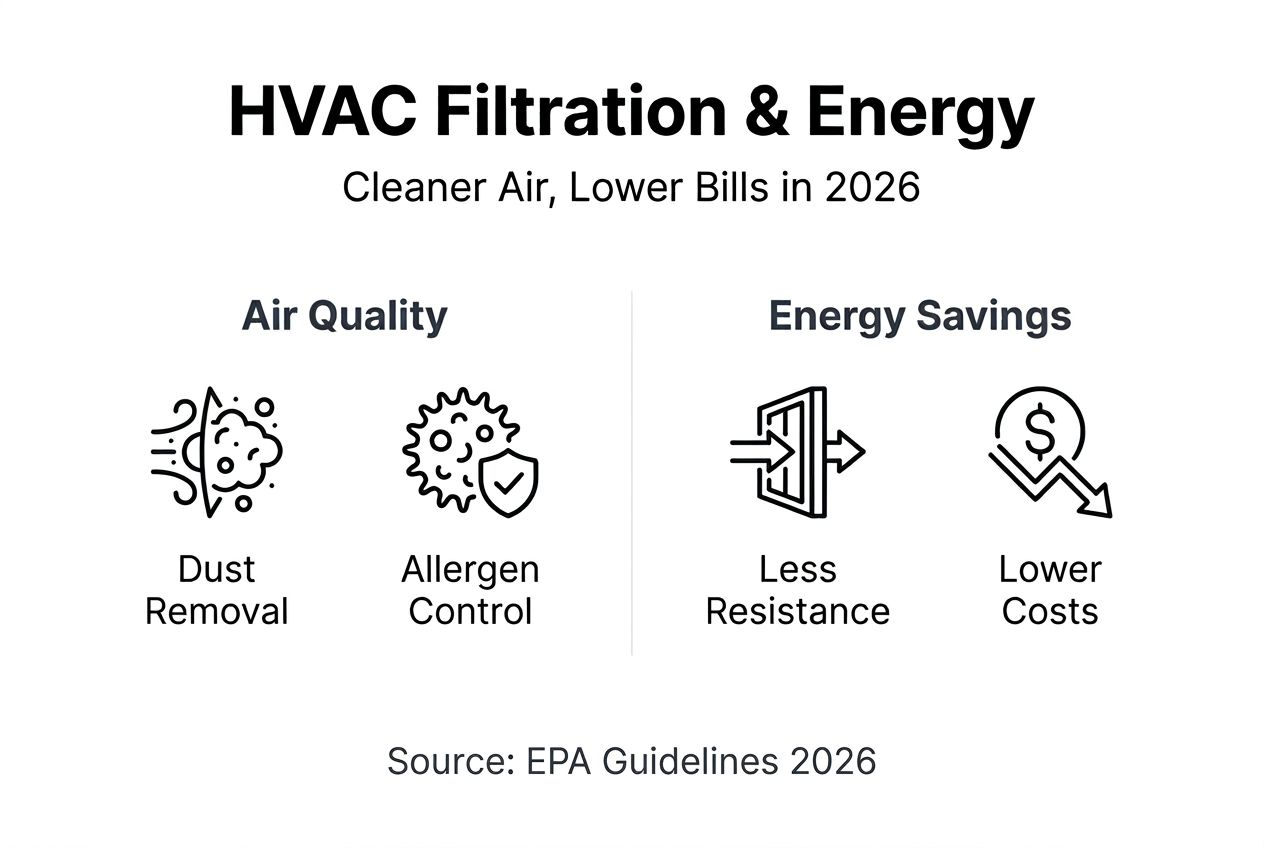
A clogged filter compounds the energy problem. As particles accumulate, resistance increases beyond the filter’s baseline rating. Your system compensates by running more frequently, wearing components faster while consuming extra electricity. This explains why neglecting filter changes costs you twice: higher energy bills and premature equipment failure.
Pro Tip: Check your HVAC system’s manual for maximum recommended MERV ratings. Most residential systems handle MERV 8-11 efficiently, but forcing MERV 13+ filters into incompatible systems wastes energy and risks damage. Following your HVAC efficiency checklist helps maintain this balance.
Comparing HVAC filter types: finding what fits your home and climate
Selecting the right filter requires understanding how different types perform in Southern California’s unique environment. Each filter technology offers distinct advantages and limitations that affect both air quality and system performance.
| Filter Type | MERV Rating | Particle Removal | Airflow Impact | Best For |
|---|---|---|---|---|
| Fiberglass | 1-4 | Large dust only | Minimal restriction | Basic protection, unrestricted airflow |
| Pleated mechanical | 8-11 | Dust, pollen, mold spores | Moderate restriction | Balanced filtration and efficiency |
| High-efficiency pleated | 13-16 | PM2.5, smoke, bacteria | High restriction | Allergy sufferers, requires compatible system |
| Electrostatic | 8-12 | Charged particle capture | Low to moderate | Pet owners, washable option |
| HEPA | 17-20 | 99.97% of particles 0.3 microns | Very high restriction | Medical needs, requires system modification |
Fiberglass filters protect your HVAC equipment from large debris but do little for indoor air quality. They work well if you simply need basic system protection and have minimal air quality concerns. However, most Orange and Los Angeles County homes benefit from stronger filtration given local pollution levels.
Pleated mechanical filters in the MERV 8-11 range represent the sweet spot for most homeowners. They effectively reduce PM2.5 and allergens from wildfire smoke and traffic pollution without excessive energy costs. The pleated design increases surface area, capturing more particles while maintaining reasonable airflow.
Electrostatic filters use static electricity to attract particles, offering decent filtration with lower airflow resistance. Some are washable, reducing ongoing costs. They work well for homes with pets since they capture hair and dander effectively. However, their performance degrades between cleanings.
HEPA filters deliver maximum filtration but rarely fit standard residential HVAC systems. The extreme airflow restriction can damage blower motors and reduce system lifespan. If you need HEPA-level filtration, consider portable air purifiers for specific rooms instead of whole-house installation.
Pro Tip: Match your filter choice to seasonal challenges. During wildfire season, upgrade to MERV 11-13 temporarily to capture smoke particles. Switch back to MERV 8-10 during cleaner months to reduce energy costs while maintaining good air quality. This flexible approach optimizes both protection and efficiency throughout the year.
Common misconceptions about HVAC filtration
Homeowners often make costly mistakes based on misleading information about HVAC filters. Understanding these misconceptions prevents wasted money and protects your system.
- Higher MERV ratings always deliver better results. Many assume maximum filtration beats everything else. Reality: your HVAC system has airflow limits. Installing MERV 16 filters in a system designed for MERV 8 forces the blower motor to overwork, increasing energy bills and shortening equipment life. Better filtration only helps if your system handles it.
- Changing filters yourself eliminates the need for professional service. Regular filter changes maintain baseline performance, but they don’t catch developing problems. Dirty coils, refrigerant leaks, and duct issues all impact air quality and efficiency. Professional technicians identify these hidden problems during inspections, preventing expensive repairs later.
- All filters provide equal health benefits regardless of type or maintenance. Filter effectiveness depends on proper rating selection, timely replacement, and correct installation. A MERV 13 filter that hasn’t been changed in six months performs worse than a regularly changed MERV 8 filter. Consistent maintenance matters more than initial filter choice.
- Expensive filters last longer and save money over time. Price doesn’t indicate longevity. Higher-priced filters often use denser materials that clog faster in polluted environments. You might replace a $30 filter as frequently as a $10 option, negating any cost advantage. Replacement frequency depends on local air quality and household factors like pets and occupancy.
- UV lights and ionizers eliminate the need for physical filters. These technologies supplement filtration but don’t replace it. Physical filters trap particles, while UV lights kill biological contaminants and ionizers charge particles. You need all three working together for comprehensive air quality management. Skipping filters leaves large particles circulating through your home.
Balanced understanding prevents these pitfalls. Focus on matching filter ratings to your system’s capabilities, maintaining regular replacement schedules, and combining DIY upkeep with professional service for optimal results.
Maintaining HVAC filters for optimal air quality and energy savings
Consistent filter maintenance directly impacts your energy bills and indoor air quality. Neglecting this simple task compounds problems over time, creating expensive repairs and health concerns.
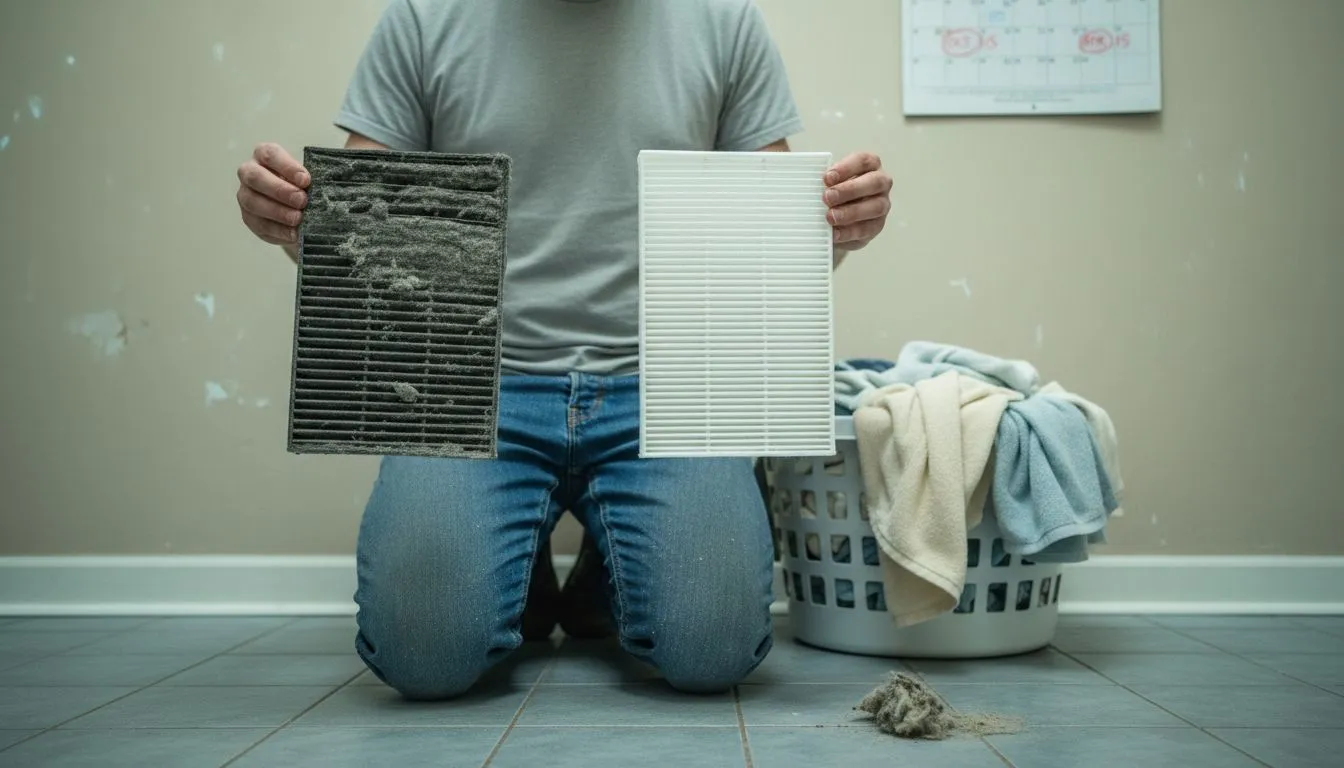
Replacing filters every 1-3 months keeps your system running efficiently. The exact interval depends on several factors. Homes with pets need monthly changes due to hair and dander accumulation. During wildfire season, check filters every two weeks since smoke particles clog them rapidly. Single-occupant homes with minimal pollution might stretch to three months safely.
Visual inspection tells you when replacement becomes urgent. Hold the filter up to light. If you can’t see through it clearly, airflow restriction has increased beyond acceptable levels. Dark discoloration, visible dust buildup, and musty odors all signal immediate replacement needs.
Professional HVAC service extends beyond filter changes. Annual inspections catch problems that impact both air quality and efficiency:
- Dirty evaporator coils reduce cooling capacity and breed mold
- Blocked condensate drains create humidity problems and biological growth
- Leaking ductwork wastes conditioned air and draws in unfiltered pollutants
- Worn blower motors struggle to maintain proper airflow even with clean filters
These issues compound filtration problems. A dirty coil reduces airflow just like a clogged filter, forcing your system to work harder. Regular inspecting HVAC filters during professional service identifies these interconnected problems before they escalate.
Set calendar reminders for filter changes. Most smartphones let you create recurring alerts. Schedule them for the first day of each month or quarter, depending on your replacement interval. This simple step prevents the “out of sight, out of mind” problem that leads to neglected filters.
Pro Tip: Buy filters in bulk when you find the right type for your system. Keeping spares on hand removes the excuse to delay changes. Consider subscribing to automatic delivery services that ship filters on your preferred schedule, ensuring you never run out. Following Energy.gov filter maintenance guidelines maximizes these benefits.
Practical recommendations and next steps for homeowners
Applying this knowledge requires a systematic approach to filter selection and maintenance. Start by evaluating your home’s specific needs rather than following generic advice.
Assess your local air quality exposure. Check AQI reports during different seasons to understand when pollution peaks. Homes near freeways face constant traffic emissions requiring consistent high-efficiency filtration. Coastal properties deal with salt air affecting filter longevity. Inland areas experience more wildfire smoke during fire season.
Verify your HVAC system’s filter compatibility before upgrading. Check the owner’s manual for maximum recommended MERV ratings. Most residential systems handle MERV 8-11 without modifications. Higher ratings might require professional assessment to ensure adequate airflow capacity. Forcing incompatible filters into your system wastes money and risks damage.
Create a maintenance schedule adapted to your household. Consider these factors:
- Homes with pets need monthly filter changes minimum
- Allergy sufferers benefit from MERV 11-13 filters changed every 6-8 weeks
- During wildfire season, inspect filters every two weeks regardless of normal schedule
- New construction or renovation projects require more frequent changes due to dust
Balance upfront costs against long-term savings. A $25 MERV 11 filter that lasts two months costs less annually than a $15 MERV 8 filter changed monthly. However, if the higher-rated filter increases your energy bill by $20 monthly, you lose money overall. Calculate total costs including energy impact.
Schedule annual professional HVAC service to maintain system health beyond basic filter changes. Technicians clean coils, check refrigerant levels, inspect ductwork, and identify developing problems. This preventive approach costs less than emergency repairs and ensures your filtration system works as designed.
Document your filter type, size, and replacement dates. Keep records in a home maintenance log or smartphone app. This history helps you identify patterns, optimize replacement intervals, and provide information to service technicians. Informed management beats guesswork every time.
Improve your home’s HVAC filtration with expert help
Optimizing your HVAC filtration requires more than just buying the right filters. Professional guidance ensures your system delivers clean air efficiently without wasting energy or risking equipment damage.
Certified technicians assess your specific system capabilities and recommend filters that balance air quality with energy efficiency. They identify compatibility issues before they become problems, saving you from costly mistakes. Our comprehensive HVAC repair guide explains how professional service protects your investment.

Expert installation and maintenance maximize filter performance while extending system lifespan. Our professional HVAC technicians handle everything from filter selection to complete system optimization. Regular service visits combined with our HVAC efficiency checklist keep your home comfortable and your energy bills manageable. Contact us today to schedule an assessment and start breathing cleaner air while reducing your monthly costs.
Frequently asked questions about HVAC filtration
What is the ideal MERV rating for homes in Orange and Los Angeles County?
MERV 8-11 filters provide the best balance for most local homes, capturing traffic pollution and wildfire smoke without excessive energy costs. Upgrade to MERV 11-13 if you have severe allergies or during heavy wildfire seasons. Always verify your system’s compatibility before installing filters above MERV 11.
How often should I replace my HVAC filter for best results?
Replace filters every 1-3 months depending on household factors. Homes with pets need monthly changes, while single-occupant homes might safely extend to three months. Check filters every two weeks during wildfire season since smoke particles clog them rapidly. Visual inspection reveals when early replacement becomes necessary.
Can I install a HEPA filter in a standard home HVAC system?
Most residential HVAC systems cannot handle HEPA filters without modifications due to extreme airflow restriction. The increased resistance damages blower motors and reduces system efficiency. Consider portable HEPA air purifiers for individual rooms instead, or consult a professional about whole-house HEPA systems requiring equipment upgrades.
What signs indicate my HVAC filter needs professional inspection?
Increased energy bills, reduced airflow from vents, more dust accumulation on surfaces, and persistent musty odors all signal filtration problems. If you notice these issues despite regular filter changes, professional inspection can identify underlying problems like dirty coils, duct leaks, or equipment malfunctions affecting air quality.
Does HVAC filtration significantly reduce allergy symptoms indoors?
Proper filtration combined with regular maintenance reduces indoor allergens by 40-60% compared to minimal filtration. MERV 11-13 filters capture most pollen, dust mites, and pet dander that trigger allergic reactions. However, filtration works best as part of comprehensive allergy management including humidity control and regular cleaning.