
TL;DR:
- Proper preventative maintenance extends appliance lifespan by 30 to 40 percent.
- Regular cleaning, inspections, and professional checkups prevent costly repairs and emergencies.
- Consistent upkeep reduces energy bills, improves safety, and delays appliance replacements.
Your refrigerator stops cooling on a Sunday afternoon. Your washer starts leaking the week before a family visit. These moments feel random, but most appliance failures follow a pattern: they happen to appliances that haven’t been properly maintained. Preventative maintenance extends appliance lifespans by 30 to 40%, which means fewer emergency calls, lower repair bills, and greater peace of mind. This guide walks you through exactly what tools you need, how to maintain each major appliance, and how to measure the results so you can protect your home with confidence.
Table of Contents
- What you need: Tools and prep for appliance maintenance
- Step-by-step: Preventative maintenance process for major appliances
- Common mistakes, troubleshooting, and when to call the pros
- Measuring results: How maintenance impacts longevity, costs, and safety
- Why most homeowners underestimate preventative maintenance
- Connect with expert appliance repair and maintenance services
- Frequently asked questions
Key Takeaways
| Point | Details |
|---|---|
| Increase appliance lifespan | Routine maintenance extends major appliances’ lives by 30-40%. |
| Save money and energy | Preventative care reduces emergency repairs by up to 40% and cuts energy use. |
| Boost home safety | Annual professional inspections prevent 90% of hazardous situations. |
| DIY maintenance basics | Homeowners can safely handle cleaning and routine checks, but call pros for electrical or gas issues. |
| Measure your results | Track appliance performance and repairs to verify the impact of your maintenance efforts. |
What you need: Tools and prep for appliance maintenance
Before you touch a single appliance, having the right tools and a clear safety plan makes all the difference. Rushing into maintenance without preparation is one of the most common ways homeowners create new problems while trying to prevent old ones.
Essential tools for basic appliance upkeep:
- Screwdrivers (flathead and Phillips)
- Adjustable wrench and pliers
- Multimeter for checking electrical connections
- Vacuum with a narrow attachment for coils and vents
- Cleaning brushes in various sizes
- Replacement filters (refrigerator water, HVAC, dryer lint traps)
- Flashlight or headlamp for inspecting tight spaces
Personal protective equipment you should always use:
- Safety gloves when handling sharp components or cleaning agents
- Safety glasses when working near electrical panels or gas connections
- Non-slip footwear when working near water appliances
A solid appliance maintenance checklist helps you stay organized and ensures you don’t skip critical steps. Tracking what you’ve done and when also gives you a reliable record if a warranty claim or professional service visit is needed.
| Task | DIY safe? | Professional needed? |
|---|---|---|
| Cleaning coils and filters | Yes | No |
| Replacing water filters | Yes | No |
| Checking door seals | Yes | No |
| Electrical wiring inspection | No | Yes |
| Gas line check or adjustment | No | Yes |
| Calibration of thermostats | Sometimes | Recommended |
Knowing when to stop is just as important as knowing how to start. Annual appliance checkups by a licensed technician can prevent 90% of emergencies, which makes professional inspections a smart investment rather than an optional expense.
Pro Tip: Before starting any maintenance task, always unplug the appliance or shut off the circuit breaker. For gas appliances, turn off the gas supply valve before inspecting any connections.
Step-by-step: Preventative maintenance process for major appliances
With your tools and safety steps in place, now walk through the core maintenance routines for each major appliance. Each appliance has specific needs, and a tailored approach delivers better results than a one-size-fits-all method.
1. Refrigerator
Clean the condenser coils every six months using a vacuum or brush. Check door gaskets for cracks or gaps. Replace the water filter every six months. Verify the internal temperature stays between 35 and 38 degrees Fahrenheit.
2. Dishwasher
Clean the filter monthly to prevent buildup. Inspect spray arms for clogged holes and clear them with a toothpick. Run a cleaning cycle with a dishwasher cleaner every three months. Check the door latch and seal for wear.
3. Washer and dryer
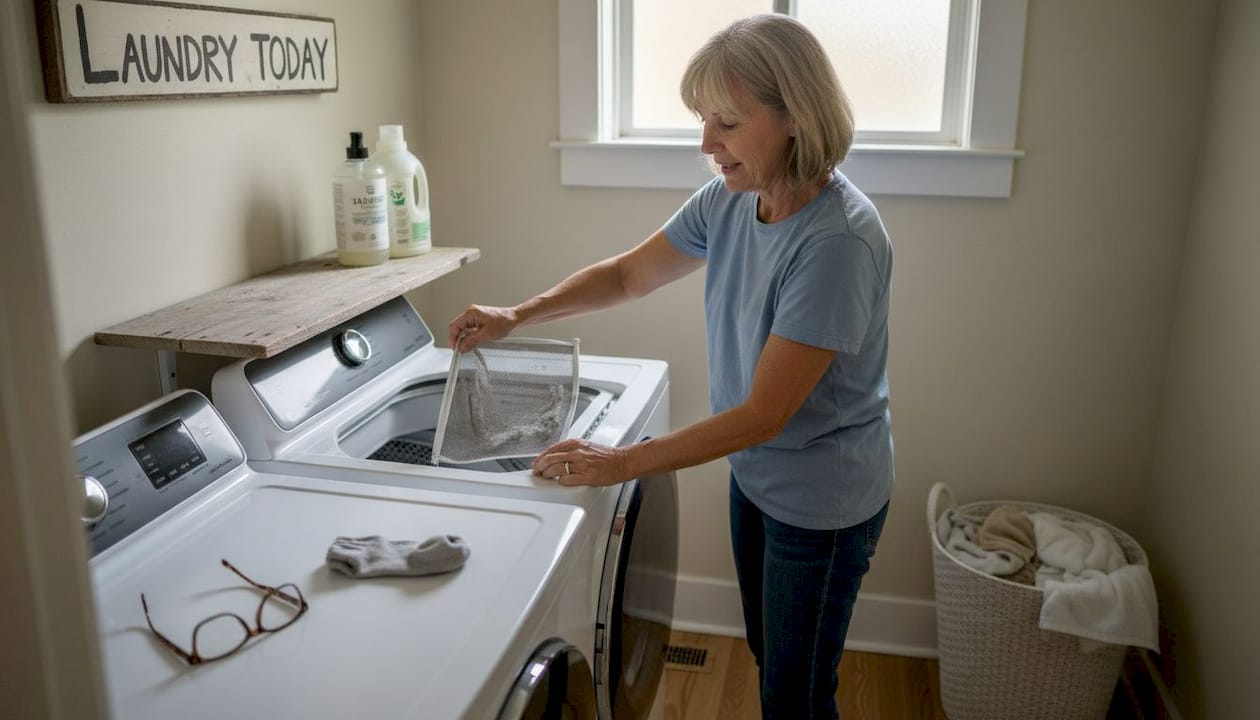
Clean the dryer lint trap after every load. Inspect and clean the dryer vent duct annually to prevent fire risk. For washers, run a cleaning cycle monthly and check hoses for cracks or bulging. Leave the washer door open between uses to prevent mold.
4. Oven and range
Clean burners and drip pans regularly. Check the oven door seal for tears. Calibrate the oven temperature with an oven thermometer annually. For gas ranges, inspect burner ports for blockages.
5. Water heater
Flush the tank annually to remove sediment buildup. Test the pressure relief valve each year. Inspect the anode rod every two to three years and replace it if it’s heavily corroded.
Following step-by-step appliance maintenance routines like these is the most reliable way to stay ahead of problems. Consistent care directly supports improving appliance lifespan across every major system in your home.
| Appliance | Maintenance frequency | Key task |
|---|---|---|
| Refrigerator | Every 6 months | Clean coils, replace filter |
| Dishwasher | Monthly / Quarterly | Clean filter, run cleaning cycle |
| Dryer | After each use / Annually | Clear lint trap, clean vent duct |
| Water heater | Annually | Flush tank, test relief valve |
| Oven | Annually | Calibrate temp, clean burners |
For a broader view of what proper care achieves, preventive maintenance benchmarks confirm that consistent routines reduce breakdowns and extend equipment life significantly. Reviewing appliance safety inspection steps alongside your routine adds an extra layer of protection.
Pro Tip: Set calendar reminders for each appliance’s maintenance schedule. Treating it like a recurring appointment keeps routines consistent and prevents tasks from being forgotten for months at a time.
Common mistakes, troubleshooting, and when to call the pros
Even with a strong routine, mistakes and challenges happen. Knowing the most common errors and how to respond to early warning signs keeps your maintenance program effective and safe.
Common mistakes homeowners make:
- Skipping the dryer vent cleaning, which is a leading cause of house fires
- Ignoring unusual noises, smells, or performance changes until they become major failures
- Using the wrong cleaning products that damage seals, coatings, or internal components
- Forgetting to replace water filters on schedule, leading to contamination and appliance strain
- Attempting gas or electrical repairs without the proper license or training
- Overlooking the water heater until a leak or complete failure occurs
Signs of trouble to watch for:
- Appliances taking longer than usual to complete cycles
- Unexplained increases in energy bills
- Unusual sounds such as grinding, rattling, or banging
- Visible rust, corrosion, or water stains around appliances
- Burning smells or tripped circuit breakers
When you notice these signs, a thorough appliance inspection guide can help you identify whether the issue is something you can address or whether it requires a professional.
“DIY maintenance is sufficient for basic cleaning and routine checks, but licensed professionals are necessary for electrical work, gas connections, calibration, and preventing serious emergencies.” — MDTech Services
Gas and electrical systems are not areas where guesswork is acceptable. Reviewing appliance safety inspection steps gives you a clear picture of what falls within safe DIY territory and what requires a licensed technician. Calling a professional early is always less expensive than waiting for a full breakdown.
Measuring results: How maintenance impacts longevity, costs, and safety
Once you’ve maintained your appliances, here’s what you can expect in terms of performance and long-term savings. The numbers are concrete and worth understanding before you decide how seriously to take your maintenance routine.
Lifespan improvements with regular maintenance:
- Refrigerators: 10 to 15 years without maintenance vs. 14 to 20 years with consistent care
- Water heaters: 8 to 10 years vs. 12 to 15 years with annual flushing and inspections
- HVAC systems: 14 years average vs. 19 years with proper servicing
- Washers and dryers: 10 years vs. 13 to 14 years with routine upkeep
These are not small gains. Adding four to six years to a major appliance means delaying a replacement that could cost $800 to $2,500 or more.
Key savings data:
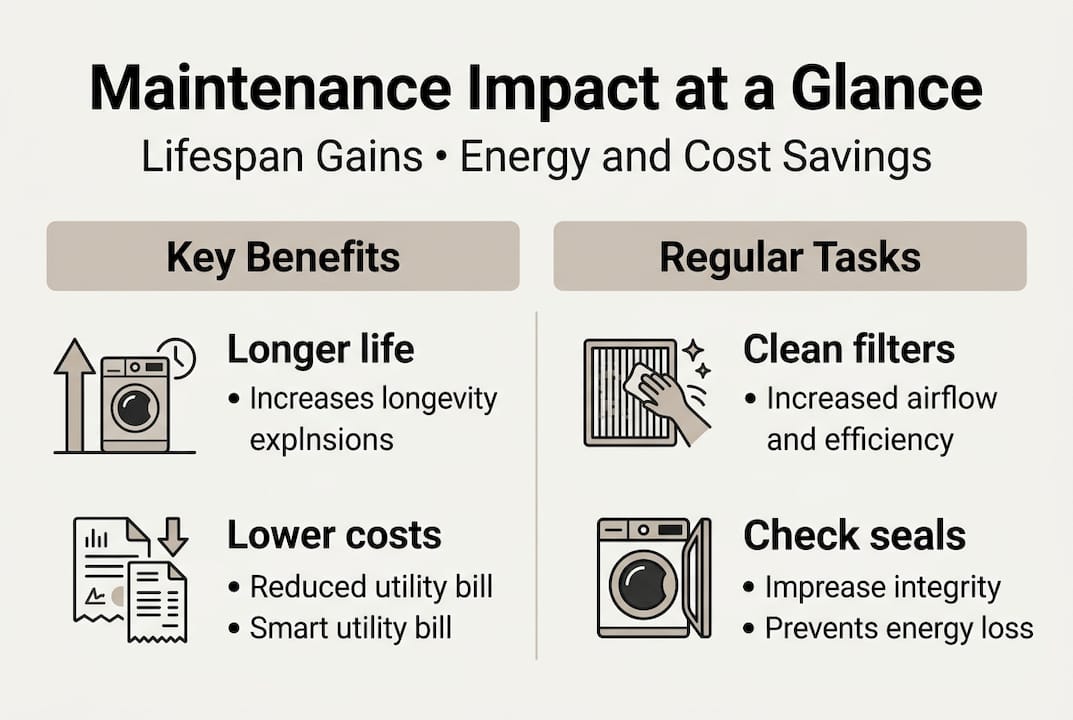
Regular maintenance reduces downtime 30 to 50%, cuts repair costs by 20 to 40%, and delivers energy savings of 10 to 20%. For a household running five or six major appliances, those savings add up quickly over a year.
| Metric | Without maintenance | With maintenance |
|---|---|---|
| Appliance lifespan | Baseline | Up to 40% longer |
| Annual repair costs | Higher | 20 to 40% lower |
| Energy consumption | Baseline | 10 to 20% lower |
| Emergency breakdowns | More frequent | 30 to 50% fewer |
Tracking your results is straightforward. Keep a simple log of each maintenance task, the date completed, and any parts replaced. Compare your energy bills year over year. Note how often you call for repairs. These records also help you understand why maintain appliances as a long-term strategy rather than a one-time fix. For additional context on appliance lifespan benchmarks, industry data consistently supports the value of routine care.
Why most homeowners underestimate preventative maintenance
Here’s what we see consistently in Orange County and Los Angeles County homes: maintenance gets postponed until something breaks. Most homeowners treat appliances the way they treat car oil changes, something they know they should do but keep pushing back until a warning light forces the issue.
The real cost of that mindset isn’t just a single repair bill. It’s the cumulative effect of shortened appliance life, higher energy costs, and safety risks that build quietly over time. A refrigerator running with dirty coils works harder, uses more electricity, and fails sooner. A dryer vent clogged with lint is a fire hazard, not just an efficiency problem.
What works best is simple, consistent action. A 30-minute maintenance session twice a year, combined with a professional annual inspection, prevents the vast majority of failures. Focusing on appliance lifespan improvement tips reframes maintenance from a chore into a reliable investment in your home’s safety and value. The homeowners who stay ahead of repairs spend less, stress less, and keep their appliances running longer.
Connect with expert appliance repair and maintenance services
If you’re ready to take the next step, MDTech Services is here to support homeowners across Orange County and Los Angeles County with professional appliance care.

Our licensed technicians specialize in appliance repair, installation, and preventative maintenance for all major household systems. Whether you want to understand what appliance repair involves, follow a trusted appliance repair guide, or schedule HVAC repair services, we make it easy to get expert help fast. Book an appointment online or call us today to protect your appliances and your home.
Frequently asked questions
How often should I perform preventative maintenance on my home appliances?
Most experts recommend basic maintenance at least every six months and professional inspections annually. Annual inspections prevent up to 90% of appliance emergencies, making them one of the most cost-effective steps a homeowner can take.
Is DIY maintenance enough, or do I need to hire a professional?
DIY is effective for cleaning filters, checking seals, and routine visual inspections. However, electrical and gas work always requires a licensed professional to ensure safety and code compliance.
What appliances benefit most from preventative maintenance?
Refrigerators, dishwashers, washers and dryers, water heaters, and ovens all see measurable lifespan and efficiency gains. Proper maintenance extends life by 30 to 40%, with HVAC systems gaining up to five additional years of service.
Does preventative maintenance make appliances safer to use?
Yes. Regular maintenance reduces the risk of electrical faults, gas leaks, and mechanical failures that can cause fires or water damage. Annual inspections reduce the chance of emergencies by up to 90%.
How much money can preventative maintenance save me?
Preventative maintenance cuts repair costs 20 to 40% and delivers 10 to 20% energy savings annually, while extending appliance lifespan by up to 40%, which delays costly replacements.
Recommended
- Top ways to extend appliance lifespan and save on repairs
- How to Improve Appliance Lifespan for Homeowners Easily
- Why Maintain Appliances – Protect Your Home Investment
- Appliance Lifespan Extension Guide for Homeowners
- Preventative Heating Maintenance Steps for Efficient Homes – Skan Plumbing & Heating