
TL;DR:
- Proper refrigerant charge is essential for optimal cooling efficiency and energy savings.
- R32 and R454B refrigerants offer better performance and lower environmental impact for Southern California.
- Early detection of refrigerant leaks and proper maintenance can prevent costly system damage.
Your home’s cooling system depends entirely on refrigerant to do its job, and most homeowners never think about it until something goes wrong. Running low on refrigerant or using the wrong type can spike energy bills by 20-40%, which adds up fast in Orange County and Los Angeles County summers. Understanding how refrigerants work, which ones perform best in Southern California’s climate, and how to catch problems early gives you real control over your comfort and your monthly costs. This guide covers all of it in plain terms.
Table of Contents
- How refrigerants drive home cooling
- Choosing the right refrigerant for efficiency and climate
- Common refrigerant issues: spotting trouble early
- Safety and regulatory updates: A2L and refrigerants for 2026
- Our expert perspective: Cooling myths and practical solutions
- Get professional support for your cooling system
- Frequently asked questions
Key Takeaways
| Point | Details |
|---|---|
| Refrigerant drives cooling | Your AC or fridge depends on refrigerant phase changes to efficiently absorb and remove heat. |
| Efficiency depends on right type | Modern refrigerants like R32 and R454B deliver substantial energy and cost savings in hot climates. |
| Low refrigerant wastes energy | Leaks or undercharged systems can spike your energy bills by up to 40%, cause poor cooling and equipment failures. |
| Safety requires professional install | Proper handling of new refrigerants ensures regulatory compliance and minimizes risks in Orange and LA County homes. |
| Expert help prevents mistakes | Certified repair and maintenance keeps your cooling efficient and avoids expensive errors. |
How refrigerants drive home cooling
Refrigerants are the working fluid that makes cooling possible. Without them, your air conditioner or refrigerator is just a box with a fan. Refrigerants serve as the working fluid in vapor-compression refrigeration cycles, absorbing heat from inside your home and releasing it outside. That process repeats continuously to keep your indoor temperature stable.
Here is how the four-stage cycle works in your system:
- Compression: The compressor pressurizes the refrigerant gas, raising its temperature significantly before it moves to the next stage.
- Condensation: The hot, pressurized gas flows to the outdoor coil, releases its heat to the outside air, and becomes a liquid.
- Expansion: The liquid refrigerant passes through an expansion valve, which drops its pressure rapidly and cools it down.
- Evaporation: The cold liquid enters the indoor coil, absorbs heat from your home’s air, and turns back into a gas, completing the cycle.
Each stage depends on the refrigerant behaving predictably under pressure and temperature changes. If the charge (the amount of refrigerant in the system) is off by even a small amount, the cycle becomes inefficient and your equipment works harder than it should.
“A properly charged system runs at peak efficiency. Even minor deviations in refrigerant level shift the entire cycle out of balance, forcing the compressor to compensate.”
Understanding how role of ductwork in cooling connects to refrigerant performance is also worth your attention, because leaky ducts and low refrigerant together create compounding efficiency losses. Similarly, maintaining refrigerator coils directly affects how well refrigerant transfers heat in your kitchen appliances. Knowing these basics helps you have informed conversations with your technician and catch problems before they become expensive.
Choosing the right refrigerant for efficiency and climate
Not all refrigerants perform equally, especially in Southern California’s high-heat environment. Orange County and Los Angeles County regularly see summer temperatures above 90°F, which puts extra strain on cooling systems. The refrigerant your system uses has a direct effect on how well it handles that load and what you pay each month.
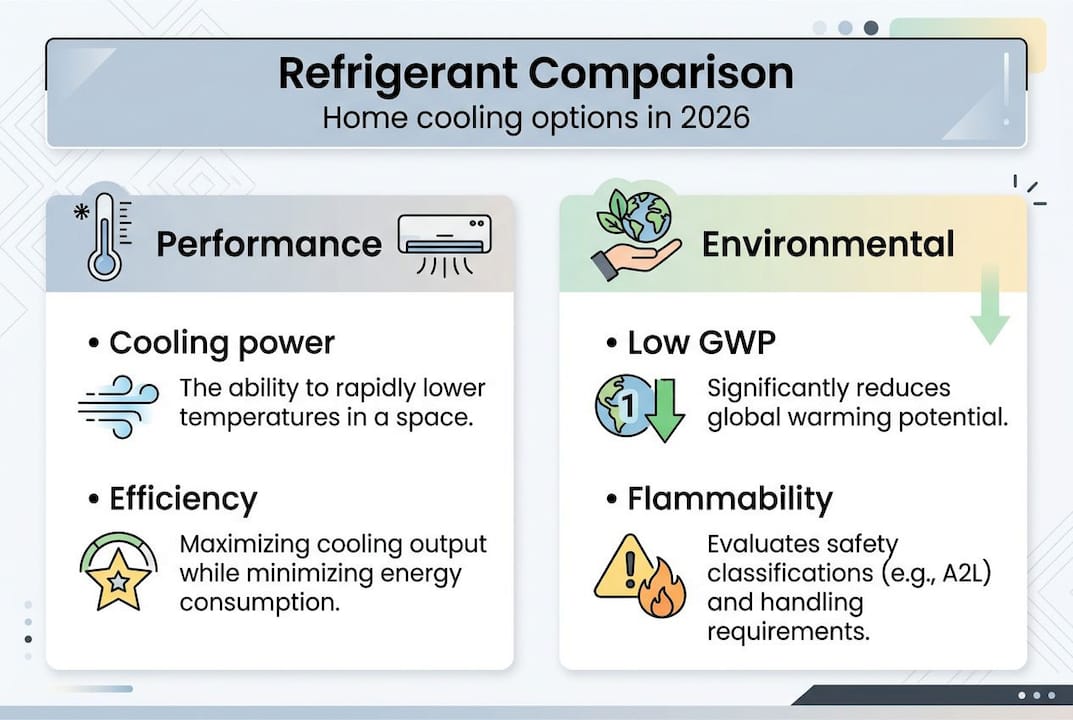
Here is how the leading refrigerant options compare:
| Refrigerant | Efficiency (COP) | GWP | Flammability | Best use case |
|---|---|---|---|---|
| R410A | Moderate | 2088 | None | Older systems |
| R32 | High | 675 | Mildly flammable (A2L) | New residential installs |
| R454B | High | 466 | Mildly flammable (A2L) | New systems, easy transition |
| R290 | Very high | 3 | Flammable (A3) | Small appliances |
COP stands for Coefficient of Performance, which is simply a measure of how much cooling you get per unit of energy used. Higher COP means lower bills for the same amount of cooling.
Key facts to keep in mind when evaluating your options:
- R290 offers higher COP and capacity but its flammability limits its use in residential central systems; R454B delivers low total environmental and economic impact
- R32 and R454B both cut Global Warming Potential (GWP) by 70 to 78% compared to R410A
- High ambient temperatures in Orange and LA County favor refrigerants with better high-temperature performance, making R32 and R454B strong choices
- Pairing the right refrigerant with HVAC zone systems for efficiency can further reduce energy consumption room by room
For a broader look at current options, best refrigerant options provides a useful comparison of what’s available in 2026.
Pro Tip: Upgrading to a new system that uses R32 or R454B can cut your annual cooling bills by $100 or more compared to older R410A systems, especially if you run your AC heavily from June through September.
Common refrigerant issues: spotting trouble early
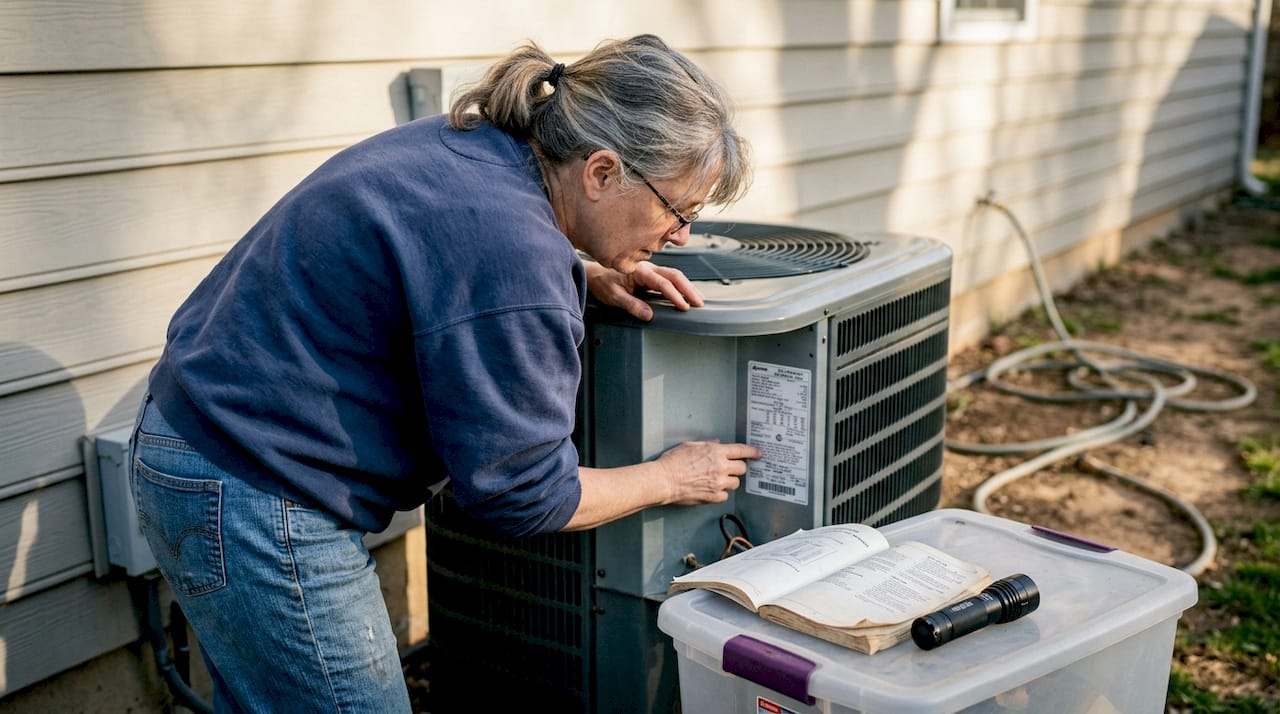
Once you’ve selected the right refrigerant, keeping your system properly charged is the next priority. Refrigerant problems are among the most common and most expensive issues homeowners face, yet they are also among the easiest to catch early if you know what to look for.
The most important warning signs include:
- Warm air from vents even when the thermostat is set low
- Ice forming on the indoor coil or refrigerant lines, which signals the refrigerant is too cold due to low pressure
- Energy bills rising without a change in your usage habits
- Hissing or bubbling sounds near the indoor unit, which can indicate a refrigerant leak
- Longer run times as the system struggles to reach your set temperature
Here is a quick reference for what each symptom typically means:
| Symptom | Likely cause | Urgency |
|---|---|---|
| Warm air from vents | Low refrigerant charge | High |
| Ice on coils or lines | Low charge or airflow issue | High |
| Bills up 20-40% | Low refrigerant, high energy use | Medium-High |
| Hissing or bubbling | Active refrigerant leak | Urgent |
| Short cycling | Overheating compressor | Urgent |
“Just a 10% drop in refrigerant charge can increase energy consumption by 20%, and continued operation accelerates compressor wear.”
Compressor replacement costs between $1,500 and $2,500 in most cases, which is why early detection matters so much. If you notice any of these signs, reviewing HVAC repair signs can help you decide whether to call a technician right away. You can also learn more about detecting appliance leaks specific to Orange and LA County homes, or check refrigerator troubleshooting tips if the issue is with your kitchen appliance rather than your central AC.
Safety and regulatory updates: A2L and refrigerants for 2026
With refrigerant selection and maintenance covered, let’s review safety and regulatory essentials for homeowners in Orange County and LA. The industry is shifting toward A2L refrigerants, which include R32 and R454B. The “A2L” classification means these refrigerants are mildly flammable, but that label causes more concern than it should.
A2L refrigerants require leak detection and ventilation measures, but when those safeguards are in place, they are safe for residential use. Modern systems designed for A2L refrigerants include these features by default.
Here is what you need to know as a homeowner:
- No drop-in replacements: You cannot simply swap R410A for R32 or R454B in an older system. The equipment must be designed for the new refrigerant from the start.
- Certified installation only: A2L refrigerants must be installed by licensed technicians who are trained in the specific handling requirements.
- Ventilation requirements: Systems using A2L refrigerants need adequate airflow in the installation space to prevent any buildup in the unlikely event of a leak.
- Leak detection: Newer systems often include built-in sensors that alert you to refrigerant loss before it becomes a safety issue.
- Charge limits: A2L regulations specify maximum refrigerant charge sizes for residential spaces, which your installer will account for.
For a broader look at A2L myths and safety, the reality is that these refrigerants have been used safely in Europe and Asia for years. The transition in the U.S. is well-supported by updated building codes and equipment standards.
Pro Tip: If a contractor tells you A2L refrigerants are too dangerous for your home without explaining the specific safeguards, ask for a second opinion. Proper installation eliminates the risk entirely.
Before scheduling any refrigerant work, reviewing a refrigerant recharging guide helps you understand what the process involves and what questions to ask your technician.
Our expert perspective: Cooling myths and practical solutions
After years of working on cooling systems across Orange County and Los Angeles County, we have noticed that most refrigerant failures come from one source: low charge. Not faulty equipment. Not bad refrigerant. Just a system that slowly lost its charge over time and was never topped off.
Homeowners often assume their AC is simply aging when bills climb and cooling weakens. In many cases, a proper recharge and leak repair restores full performance. The equipment was fine all along.
On the A2L question, safety fears about A2L refrigerants are genuinely overstated. We have installed R32 systems in residential homes without incident, and the built-in safety features on modern equipment do exactly what they are designed to do.
Our strong recommendation for anyone replacing a system in 2026: push for R32 or R454B. The efficiency gains are real, the environmental benefits matter, and the long-term savings are significant. If you are wondering whether it is time to upgrade rather than repair, why replace your old fridge walks through the decision framework clearly. The same logic applies to central AC units.
Get professional support for your cooling system
Ready to safeguard your cooling investment? Here’s where professional help makes all the difference.
Handling refrigerants requires EPA certification, specialized equipment, and hands-on training. Errors in refrigerant handling can void your warranty, damage your compressor, and create safety risks in your home. That is why working with licensed, experienced technicians is not just a convenience; it is a necessity.

At MDTech Services, our licensed technicians serve Orange County and Los Angeles County homeowners with refrigerant inspections, recharges, leak detection, and full system installations. Whether you need a complete HVAC repair guide or are looking for trusted appliance repair for homeowners, we are ready to help. Book your appointment online today and let our team protect your cooling system all year long.
Frequently asked questions
What happens if my cooling system has low refrigerant?
Low refrigerant causes poor cooling, ice buildup on coils, higher energy bills, and eventual compressor damage that can cost over $1,500 to repair. Catching it early saves you significantly.
Which refrigerant is best for homes in Orange and LA County?
R32 and R454B are both strong choices for Southern California’s climate. R32 edges R454B in efficiency while both cut GWP by 70 to 78% and can save $100 or more per year compared to older R410A systems.
Is it safe to install A2L refrigerants in my home?
Yes. A2L refrigerants are safe when installed with proper leak detection and ventilation by a certified technician. The mild flammability is managed effectively by modern equipment design.
Can I switch my old AC to a new refrigerant?
No. Most modern refrigerants are not drop-in replacements for legacy systems. Your equipment must be specifically designed for the new refrigerant, so consult a licensed pro before making any changes.
How can I maximize cooling efficiency at home?
Keep your refrigerant charge correct, choose a high-efficiency refrigerant like R32 or R454B for new installs, and schedule regular maintenance with a trusted technician to avoid the 20% or more energy waste that comes from a low charge.