
Many Orange County and Los Angeles County homeowners notice their refrigerators working harder and energy bills quietly rising, unsure of the root cause. Small issues in your appliance’s hidden systems often add up, and dirty coils top the list. Refrigerator coils play a central role in keeping your food safe and your electricity costs under control. Understanding how these coils function and why regular maintenance matters helps you safeguard your investment, prevent costly repairs, and keep your kitchen running smoothly.
Table of Contents
- Refrigerator Coils—Definition And Key Roles
- Types Of Refrigerator Coils And Their Locations
- How Clean Coils Affect Performance And Lifespan
- Signs Of Dirty Coils And Common Misconceptions
- Energy, Repair, And Health Risks Of Neglect
- DIY Coil Care Versus Professional Maintenance
Key Takeaways
| Point | Details |
|---|---|
| Importance of Coil Maintenance | Regular cleaning of refrigerator coils significantly impacts energy efficiency and appliance lifespan. Neglecting maintenance can lead to increased energy costs and potential system failures. |
| Signs of Dirty Coils | Indicators of dirty coils include constant running of the fridge, excessive heat on the exterior, and unusual temperature fluctuations. Prompt attention to these signs can prevent further issues. |
| DIY vs. Professional Maintenance | Homeowners can conduct basic coil cleaning themselves, but professional assistance is recommended for hard-to-reach coils or significant contamination. This dual approach optimizes performance and prevents costly repairs. |
| Energy Savings | Clean coils can reduce energy consumption by 25 to 50 percent, translating to significant savings on your electricity bill over time. Investing a small amount of time in maintenance can yield long-term financial benefits. |
Refrigerator coils—definition and key roles
Your refrigerator performs one fundamental job: it removes heat from inside your appliance and releases it into your kitchen. The engine behind this process consists of two critical components—the evaporator coil and the condenser coil. These coils work as a team to maintain the cold temperatures that keep your food safe and fresh. Think of them as the circulatory system of your refrigerator. The refrigeration cycle relies entirely on these coils to transfer heat using a liquid refrigerant that changes states as it moves through your system. Without properly functioning coils, your refrigerator cannot maintain consistent temperatures, and your energy bills will climb accordingly.
The evaporator coil sits inside your refrigerator’s compartment, typically behind the back wall or beneath the shelving unit where you cannot see it. This coil absorbs heat from the food and air inside your fridge, cooling everything down to preserve your groceries. Meanwhile, the condenser coil lives outside your refrigerator, usually on the back or bottom of the unit. This coil releases all that absorbed heat into your kitchen air. Both coils contain refrigerant that constantly cycles between liquid and gas states, enabling continuous heat transfer. This back-and-forth exchange of heat is what keeps your fridge cold and your kitchen warm. The refrigerant flowing through these coils is under pressure, and any restriction or blockage prevents the proper phase changes needed for cooling.
Maintaining these coils directly impacts how hard your refrigerator must work and how much electricity it consumes. When dust, pet hair, or debris accumulates on the coils, they cannot transfer heat efficiently. Your compressor—the motor that drives the cooling cycle—must run longer and more frequently to achieve the same cooling effect. Orange County and Los Angeles County homeowners often notice this problem manifesting as higher electric bills or a refrigerator that runs almost constantly without reaching the desired temperature. The critical nature of coil efficiency means that clean coils equal lower energy consumption and longer appliance lifespan. A dirty condenser coil can reduce your refrigerator’s efficiency by 25 to 50 percent, forcing your system to work significantly harder than necessary.
Pro tip: Check your refrigerator’s condenser coil location in the manual, then examine it monthly for visible dust buildup—catching debris early prevents efficiency losses and extends the life of your cooling system.
Types of refrigerator coils and their locations
Your refrigerator contains two distinct coil types, and understanding where they sit inside and outside your unit helps you maintain them properly. The evaporator coil lives inside your refrigerator’s compartment, hidden from view behind the interior walls or under the bottom panels. This coil absorbs heat from your food and the air circulating inside your fridge, causing the refrigerant flowing through it to change from liquid to gas. The evaporator is the “cold” side of your refrigeration system. On the opposite end, the condenser coil is mounted on the exterior of your unit, typically on the back wall or along the bottom near the compressor. This coil releases all that absorbed heat into your kitchen air, condensing the refrigerant back into liquid form so the cycle can repeat. Both coil types work in constant coordination, transferring heat from inside to outside through the vapor-compression refrigeration cycle/06%3A_Entropy_and_the_Second_Law_of_Thermodynamics/6.03%3A_Refrigerator_and_heat_pump).
Locating your specific coils depends on your refrigerator model. Some units place the condenser coil on the back panel, making it easily visible when you pull your fridge away from the wall. Other models position it underneath the unit near the floor, requiring you to remove a front panel or access plate to see it. The evaporator coil is almost always tucked behind the back interior wall of your fresh food compartment or freezer section, though you may catch a glimpse of it behind a plastic cover. Refrigerator coil locations vary by manufacturer and design, so checking your appliance manual is the fastest way to find yours. Los Angeles and Orange County homeowners with older refrigerators may find their coils in unexpected places, while newer models often integrate coils into the cabinet structure more efficiently.
Many refrigerators also include chttps://research.columbia.edu/refrigerator-and-freezer-maintenance-clean-your-coilsoil filters or access panels near the compressor area. These filters trap dust and lint before they can settle on the coils themselves, protecting your cooling system from buildup. If your unit has visible filters, they need regular cleaning just like the coils. Some refrigerators feature front-bottom locations for easier access to condenser coils, while others require more effort to reach them. Getting familiar with your refrigerator’s specific layout now prevents frustration later when you need to perform maintenance or schedule professional service.
Here’s how evaporator and condenser coils differ in refrigerators:
| Coil Type | Location | Main Function | Maintenance Impact |
|---|---|---|---|
| Evaporator Coil | Inside, behind panels | Absorbs heat from fridge interior | Dirty coil warms food, reduces cooling |
| Condenser Coil | Outside, back or bottom | Releases heat into kitchen air | Dirty coil increases energy use |
Pro tip: Locate your condenser coil today and mark its position in your refrigerator manual or take a photo—knowing exactly where it is makes future cleaning and maintenance tasks faster and more efficient.
How clean coils affect performance and lifespan
Dirty refrigerator coils create a domino effect of problems that directly shortens your appliance’s life and inflates your energy bills. When dust, pet hair, and lint accumulate on your coils, they act as an insulation layer that prevents heat from transferring effectively. Your condenser coil cannot release heat into your kitchen, and your evaporator coil cannot absorb heat from your food as efficiently. The refrigerant flowing through these coils cannot complete its cycle properly, forcing your compressor to run longer and work harder to achieve the same cooling results. This constant overwork strains every component in your refrigeration system. Over time, dirty coils reduce heat dissipation efficiency, causing your refrigerator to cycle on and off more frequently than it should. A clean coil system maintains optimal efficiency and durability.
The lifespan impact of neglected coils is real and measurable. A refrigerator with clean coils can operate reliably for 12 to 17 years, while one with chronically dirty coils may fail in half that time. Your compressor, the most expensive component to replace, bears the brunt of this stress. When coils stay dirty, the compressor never gets to rest, running nearly continuously in an attempt to maintain temperature. This accelerated wear leads to compressor failure, repair costs exceeding $800 to $1,200, or total appliance replacement. Orange County and Los Angeles County homeowners often discover this problem too late, when their refrigerator suddenly quits cooling altogether. Corrosion and dirt accumulation on coils decrease the heat exchange capability of the entire system, causing increased energy use and wear on the compressor and fan components.
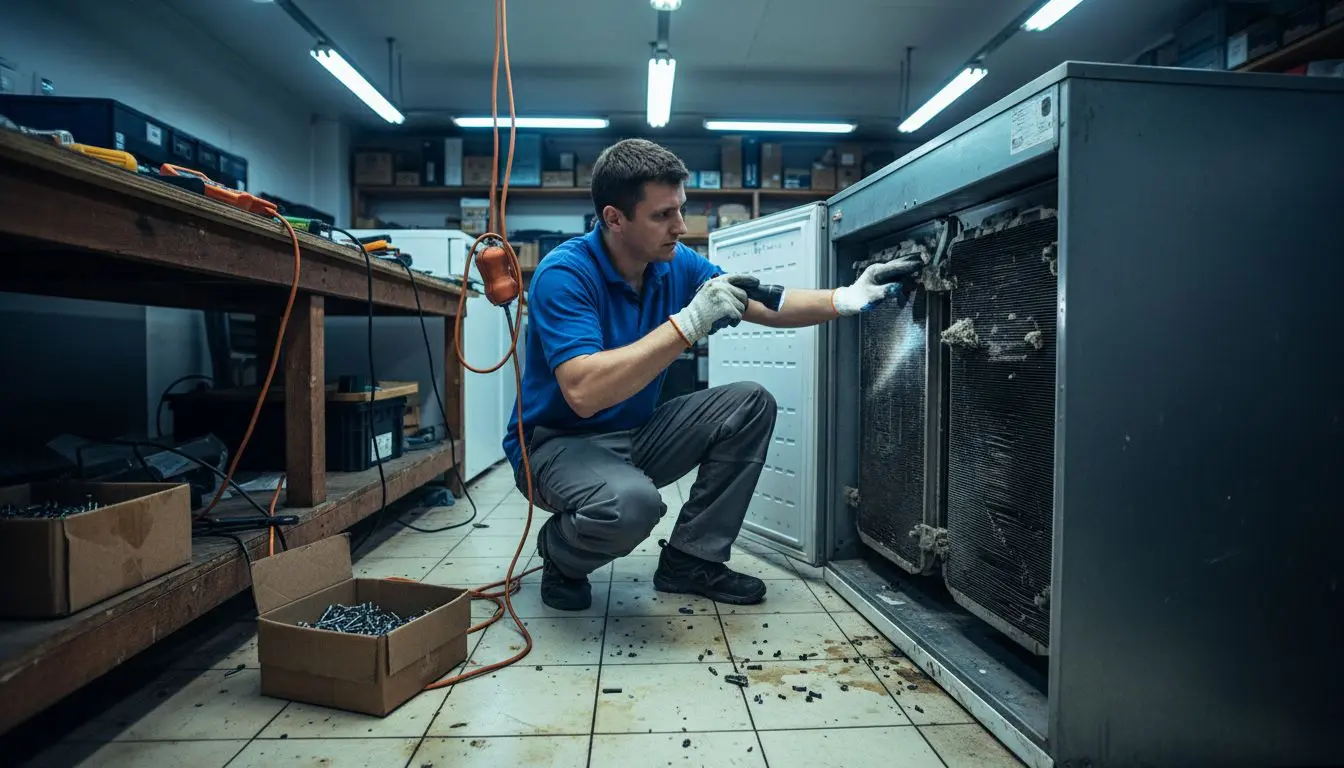
Clean coils translate directly into measurable savings on your electric bill. A refrigerator forced to work harder due to dirty coils can consume 25 to 50 percent more energy than one with clean coils. If your refrigerator uses about 600 kilowatt hours per year under normal conditions, dirty coils could push that to 900 kilowatt hours annually. Over a decade, that difference equals hundreds of dollars in wasted electricity. Beyond energy costs, maintaining clean coils prevents component failures that trigger expensive service calls. The choice is straightforward: invest 30 minutes quarterly in basic coil cleaning, or invest thousands in premature repairs or replacement. Clean coils also mean your refrigerator runs quieter, cycles less frequently, and maintains more consistent temperatures throughout your fresh food and freezer compartments.
Pro tip: Schedule coil cleaning every three months using a soft brush or vacuum with a brush attachment, and you’ll add years to your refrigerator’s life while cutting energy costs significantly.
Signs of dirty coils and common misconceptions
Your refrigerator sends clear signals when its coils need cleaning, but many homeowners miss these warning signs or misinterpret them. The most obvious indicator is that your refrigerator runs almost constantly. A healthy fridge cycles on and off throughout the day as it maintains temperature, but a unit with dirty coils never seems to stop running. Your electric bill climbs noticeably without any change in how you use the appliance. You might also feel excessive heat radiating from the back or bottom of your refrigerator, which indicates the condenser coil is struggling to release heat effectively. Some units develop frost or ice buildup in unusual places, or you notice the fresh food compartment feels warmer than it should despite the freezer being adequately cold. Weak airflow and rising energy costs indicate dirty coil problems, alongside musty odors or poor cooling performance that suggest accumulated debris is blocking airflow.
Common misconceptions about coil maintenance lead many Orange County and Los Angeles County homeowners to delay necessary cleaning. One widespread myth is that only visible dirt affects coil efficiency. People assume if they cannot see obvious debris on the condenser coil, the unit must be fine. But accumulated lint and dust hidden in coil filters impair performance just as much as visible dirt does. Another false belief is that a refrigerator will somehow manage and maintain efficiency despite dirty coils. This is dangerously wrong. Neglecting coil cleaning does not result in gradual slowdown. Instead, it can cause mechanical breakdown, premature compressor failure, and potentially create fire hazards from dust accumulation near electrical components. Some people think their new refrigerator does not need coil maintenance because it is modern. The truth is that dust and pet hair accumulate regardless of the appliance’s age or brand.
Another misconception centers on filter replacement versus coil cleaning. Homeowners often believe that changing the fresh air filter or water filter is sufficient maintenance. While these filters are important, they do not address the condenser and evaporator coils directly. Your refrigerator may have a dedicated coil filter that needs regular attention, separate from other filters. Some users also mistakenly believe that professional cleaning is always necessary and costs too much. Most coil cleaning requires only basic tools and 30 minutes of your time. A soft brush, vacuum with a brush attachment, or coil cleaning brush handles the job effectively for routine maintenance. Professional service becomes necessary only when coils are severely corroded, blocked, or damaged. Catching coil dirt early prevents costly repairs down the road.
Pro tip: Check your refrigerator monthly for continuous running, warm compartments, or excessive heat on the exterior—catching these signs early allows you to clean coils before performance suffers.
Energy, repair, and health risks of neglect
The consequences of ignoring refrigerator coil maintenance extend far beyond a higher electric bill. When coils stay dirty, your refrigerator consumes significantly more energy to maintain safe food storage temperatures. A unit with neglected coils can use 40 to 50 percent more electricity than one with clean coils, translating to hundreds of dollars in wasted energy costs annually. But the financial impact pales compared to the safety and mechanical risks that develop over time. Dirty coils force your compressor to run nearly constantly without adequate rest cycles. This relentless strain accelerates wear on the compressor’s motor and bearings, shortening its lifespan dramatically. When compressor failure occurs, repair costs often exceed $800 to $1,200, or you face total refrigerator replacement at $1,500 and up. Neglecting refrigerator coil maintenance leads to increased energy consumption and system failures that compound over time into expensive repairs.
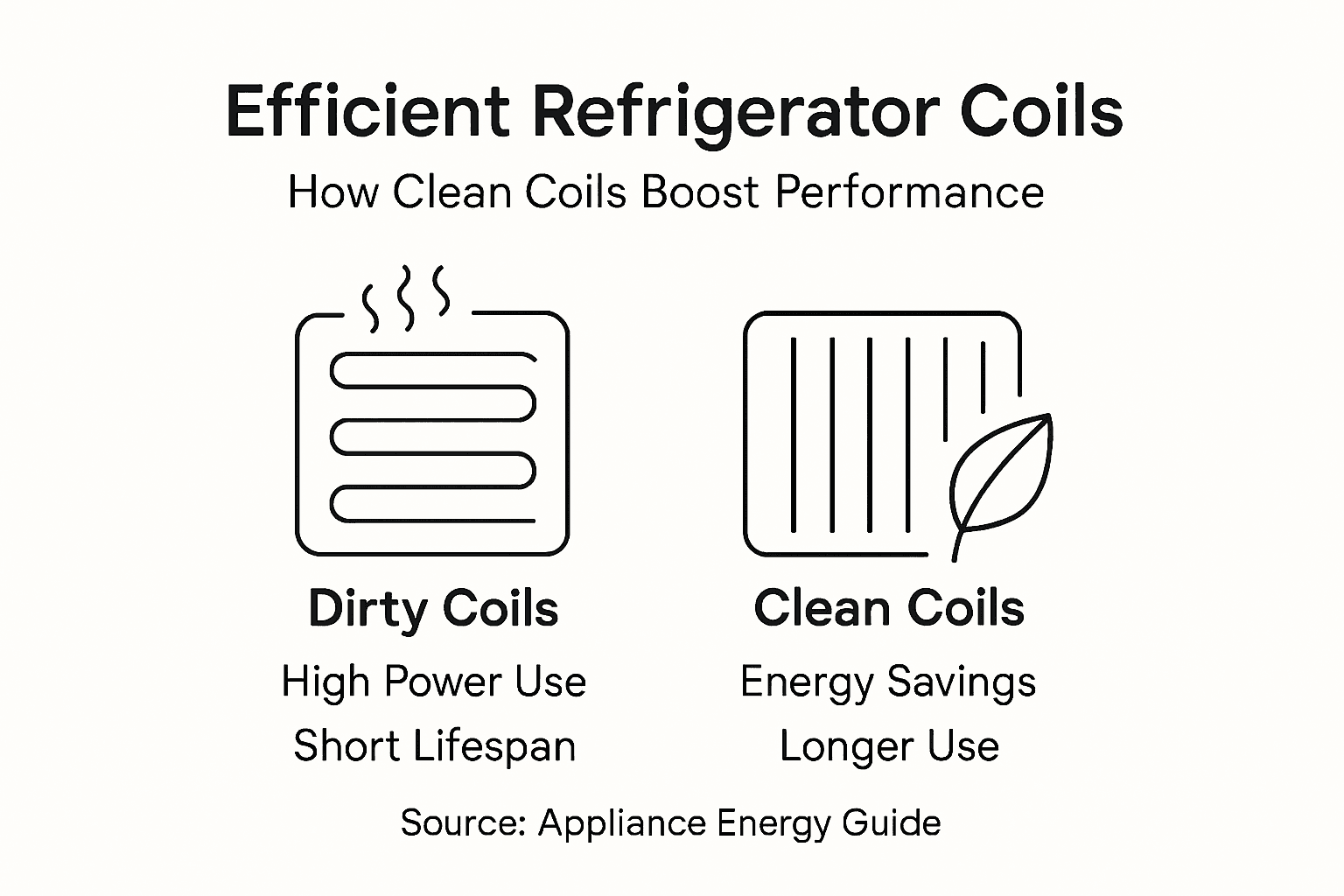
The safety hazards associated with dirty coils deserve serious attention. As coils accumulate dust and lint, heat builds up in areas not designed to withstand extreme temperatures. Electrical components near the compressor and condenser coil can overheat dangerously. In extreme cases, this overheating creates fire risk, especially in older units or those with compromised insulation. The refrigerant itself poses hazards if coil damage causes leaks. Some refrigerants are toxic and can cause health problems if released into your home’s air. Electrical failures and potential fires are documented risks related to poor refrigerator maintenance, particularly when compressors are overstrained and overheating occurs. Orange County and Los Angeles County homeowners should not dismiss these warnings as theoretical. These are real dangers that develop gradually as coil maintenance gets pushed further down the priority list.
Health risks also emerge from neglected coil maintenance. A refrigerator struggling to maintain temperature due to dirty coils may fail to keep food adequately cold. Food stored at temperatures above 40 degrees Fahrenheit enters the “danger zone” where harmful bacteria multiply rapidly. Spoiled food can cause foodborne illness, particularly dangerous for young children, elderly family members, and people with weakened immune systems. Additionally, if your coils deteriorate enough to leak refrigerant, the vapors released can irritate respiratory systems and cause other health concerns. Poor cooling performance also means your freezer might not maintain safe storage temperatures for frozen items. What starts as a simple maintenance neglect can escalate into food safety problems that affect your family’s health.
The good news is that preventing these risks requires minimal effort. Regular coil cleaning takes about 30 minutes quarterly and costs nothing beyond basic tools. This small investment of time prevents thousands in repair bills, eliminates safety hazards, and keeps your refrigerator running efficiently for years longer. When you weigh the options, cleaning coils becomes one of the highest value maintenance tasks any homeowner can perform.
Pro tip: Set a quarterly phone reminder for coil cleaning and perform it on the same day each season—this simple habit prevents emergency repairs and keeps your family safe.
DIY coil care versus professional maintenance
Many homeowners can handle basic refrigerator coil cleaning themselves without expensive service calls. DIY coil maintenance works well when coils are easily accessible and you follow simple safety steps like unplugging your refrigerator before beginning. A soft brush, vacuum with a brush attachment, or a coil cleaning brush removes dust and lint effectively from visible surfaces. You can also use safe homemade cleaners like vinegar or baking soda to dissolve stubborn debris and prevent mold or bacteria buildup on the coils. This approach costs almost nothing beyond tools you likely already own. Quarterly DIY cleaning takes about 30 minutes and prevents most coil problems before they develop into major issues. For Orange County and Los Angeles County homeowners, this maintenance routine keeps energy costs down and extends refrigerator lifespan significantly.
However, professional maintenance becomes necessary in specific situations. If your condenser coil sits in a hard-to-reach location underneath your refrigerator or behind a complex access panel, professional technicians have tools and experience to clean it safely without causing damage. When coils show signs of corrosion, are heavily fouled with debris that homemade cleaning cannot remove, or if you suspect internal contamination, professional inspection reveals problems DIY methods miss. Professionals also assess whether your coil filters need replacement, check refrigerant levels, and monitor compressor performance during their visit. Professional maintenance is recommended for thorough inspections and dealing with hard-to-reach coils or when contamination or corrosion is suspected. Licensed technicians can also identify early signs of component failure before they become emergency repairs costing hundreds or thousands of dollars.
The best approach combines both methods strategically. Handle routine quarterly cleaning yourself using basic tools and safe homemade solutions. This keeps coils reasonably clean and prevents buildup from becoming severe. Schedule professional maintenance annually or when you notice warning signs like continuous running, higher energy bills, or unusual heat from your refrigerator. Many HVAC and appliance service companies offer affordable maintenance packages that bundle coil cleaning with inspection of other critical components. During professional visits, technicians document your coil condition, photograph any concerning areas, and provide recommendations for upcoming care. This partnership between DIY maintenance and professional oversight optimizes coil health while controlling costs. You avoid paying for unnecessary service calls, but you also catch problems early before they escalate into expensive repairs or safety hazards.
Pro tip: Perform DIY coil cleaning quarterly yourself, but schedule professional inspection annually to catch hidden problems and ensure your refrigerator continues running efficiently.
Compare DIY and professional refrigerator coil maintenance:
| Maintenance Method | Typical Cost | When to Use | Key Benefits |
|---|---|---|---|
| DIY Cleaning | Minimal (basic tools) | Routine quarterly care | Saves money, quick process |
| Professional Service | Higher (service fee) | Annual or complex issues | Deep cleaning, expert inspection |
Keep Your Refrigerator Running Efficiently with Expert Coil Maintenance
Dirty refrigerator coils cause your appliance to work harder, increase energy bills, and risk costly breakdowns. If you notice your fridge running constantly or rising electric costs in Orange County or Los Angeles County, timely professional maintenance is essential. Understanding how evaporator and condenser coils impact cooling efficiency reveals just how critical regular cleaning and inspection are to preventing compressor stress and extending your refrigerator’s lifespan.

Act now to protect your home from unexpected refrigerator failures and high energy expenses by trusting the licensed technicians at MDTech Services. We specialize in expert residential appliance repair including refrigerators and ice machines. Let us handle coil cleaning, comprehensive inspections, and repairs while you enjoy peace of mind. Visit MDTech Services today to schedule your appointment and keep your refrigerator running efficiently year-round.
Frequently Asked Questions
What are refrigerator coils, and why are they important?
Refrigerator coils include the evaporator coil and condenser coil, which work together to transfer heat out of the appliance, maintaining cold temperatures inside. They are critical for food preservation and overall energy efficiency.
How often should I clean my refrigerator coils?
It’s recommended to clean your refrigerator coils every three months. Regular cleaning prevents dust and debris buildup, ensuring efficient heat transfer and extending the lifespan of the appliance.
What signs indicate that my refrigerator coils need cleaning?
Common signs include the refrigerator running continuously, warmer temperatures in the compartments despite proper settings, and excessive heat radiating from the back or bottom of the unit. You may also notice increased energy bills.
Can dirty coils really affect my refrigerator’s lifespan?
Yes, dirty coils can significantly reduce efficiency, forcing the compressor to work harder and leading to premature component failures. This can shorten the refrigerator’s lifespan from an expected 12-17 years to as little as 6-8 years.
Recommended
- 7 Step-by-Step Appliance Maintenance Tips for Homeowners
- Why Schedule Regular HVAC Checks Matters Locally
- Refrigerator repair Condenser Coil cleaning. The Ultimate Guide to Refrigerator Repair: How to Properly Clean the Condenser Coil – MDTech Services
- Refrigerator repair Freezer repair Compressor repair Fixing the Chills: Our Successful Refrigerator, Freezer, and Compressor Repairs – MDTech Services
- Why Maintenance Extends Machine Life and Efficiency