
Your air conditioner runs constantly but barely cools your home. Your energy bills climb month after month. The culprit might surprise you: 78% of HVAC systems are undercharged from the moment they’re installed. Refrigerant undercharging silently drains efficiency, costs you money, and shortens equipment life. This guide explains what refrigerant recharging is, why it matters for Orange and Los Angeles County homeowners, and how to maintain optimal system performance.
Table of Contents
- What Is Refrigerant Recharging And Why It Matters
- How Common Undercharging Affects Your HVAC System
- Refrigerant Recharging Process: What Homeowners Should Know
- Maintaining Refrigerant Levels For Long-Term HVAC Performance
- Learn More And Get Expert Help With Your HVAC And Appliance Needs
- Frequently Asked Questions
Key takeaways
| Point | Details |
|---|---|
| Most systems start undercharged | About 78% of HVAC installations have insufficient refrigerant levels from day one. |
| Performance drops dramatically | Losing over 20% of refrigerant charge causes severe capacity and efficiency losses. |
| Professional recharging restores function | Licensed technicians safely add refrigerant to restore optimal cooling and heating. |
| Regular maintenance prevents issues | Seasonal checkups catch leaks and undercharging before they become expensive problems. |
What is refrigerant recharging and why it matters
Refrigerant is the lifeblood of your HVAC system and major appliances like refrigerators. This specialized fluid absorbs heat from inside your home and releases it outside, creating the cooling effect you depend on during hot California summers. When refrigerant levels drop below optimal, your system struggles to transfer heat efficiently.
Recharging means adding refrigerant to restore the precise amount your system needs. Think of it like checking tire pressure: too little air reduces performance, wastes fuel, and damages the tire. Similarly, low refrigerant forces your compressor to work harder, increases energy consumption, and accelerates wear on expensive components.
The stakes are high for homeowners. Systems undercharged by around 15% waste energy and money every single day they operate. Your air conditioner might run constantly without reaching the temperature you set. Your refrigerator might struggle to keep food cold. These aren’t just comfort issues; they’re financial drains that compound over time.
Common causes of undercharging include:
- Incomplete installation where technicians fail to add refrigerant for longer pipe runs
- Slow leaks from connection points, coils, or damaged lines
- Improper system modifications during repairs or upgrades
- Manufacturing defects in sealed systems
Pro Tip: New HVAC installations often need refrigerant added based on the distance between your outdoor and indoor units. If installers skip this step, your system starts life undercharged. Ask your technician to verify proper refrigerant levels after any installation using pressure gauges and manufacturer specifications.
Maintaining correct refrigerant charge protects your investment. A properly charged system delivers consistent temperatures, lower utility bills, and years of reliable service. Following an HVAC efficiency checklist helps you stay on top of refrigerant levels and other critical maintenance tasks.
How common undercharging affects your HVAC system
The refrigerant problem runs deeper than most homeowners realize. Research reveals that 78% of HVAC systems were undercharged right from installation. This isn’t a rare manufacturing defect or occasional oversight. It’s an epidemic affecting three out of four homes.
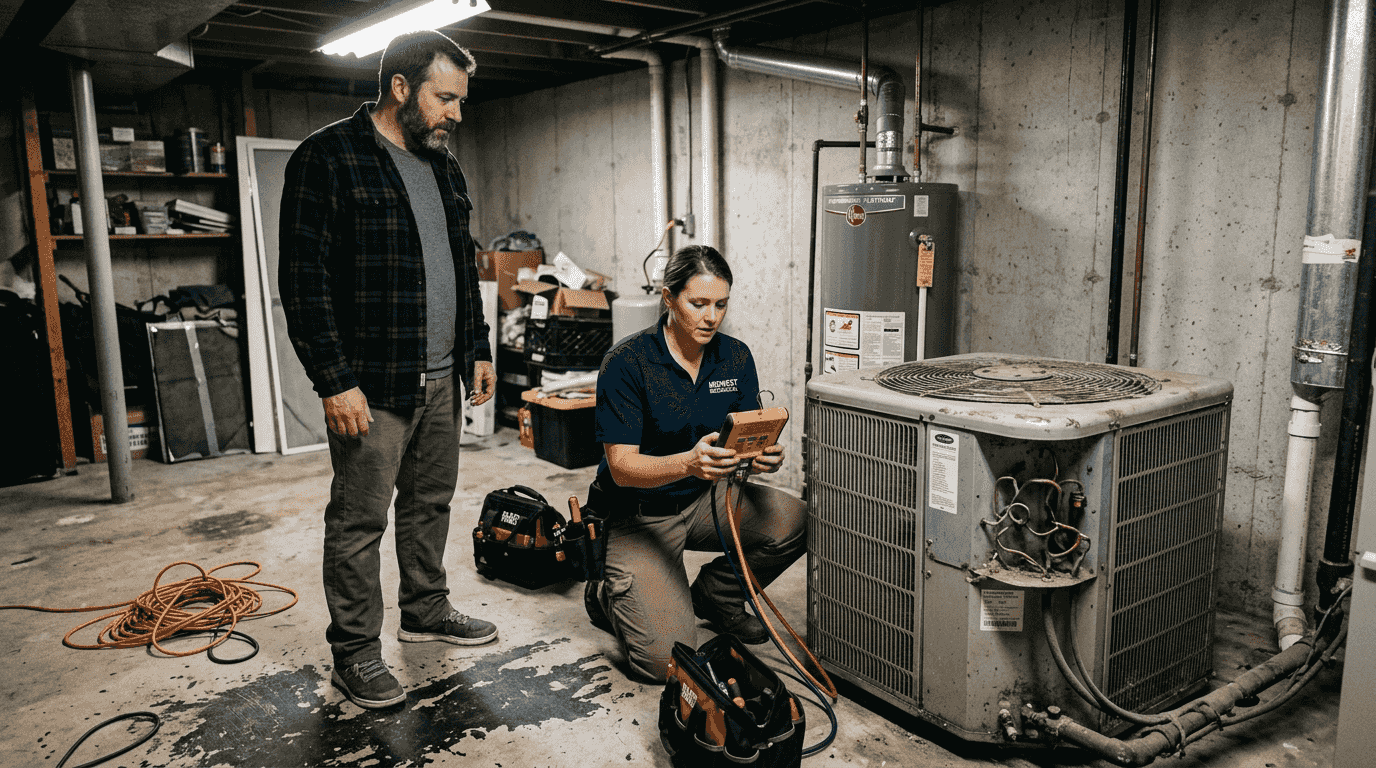
Why does this happen so frequently? Many installers fail to account for refrigerant needed in longer line sets. Your outdoor condenser comes pre-charged for a standard 15-foot connection. If your installation requires 30 or 40 feet of piping, someone must add the extra refrigerant. When they don’t, your system operates below capacity from day one.
The performance impact becomes severe as refrigerant levels drop further. Studies show that losing over 20% of refrigerant causes dramatic efficiency losses. Your system might lose 30% to 40% of its cooling capacity while consuming the same or more electricity. You’re paying full price for half the performance.
“A 20% refrigerant undercharge can reduce system capacity by more than 40% while increasing energy consumption, creating a double penalty for homeowners who remain unaware of the problem.”
You’ll notice several warning signs when refrigerant runs low:
- Rooms that never reach the thermostat setting despite the system running continuously
- Ice forming on refrigerant lines or evaporator coils
- Hissing sounds indicating refrigerant leaks
- Utility bills climbing without changes in usage patterns
- Warm air blowing from supply vents during cooling mode
The damage extends beyond immediate comfort. Low refrigerant forces your compressor to work overtime trying to achieve impossible temperature targets. This extra strain shortens compressor life significantly. Replacing a failed compressor often costs $1,500 to $2,500, sometimes approaching the price of a complete system replacement.
Regular professional inspections catch undercharging before it causes permanent damage. A qualified technician uses manifold gauges to measure refrigerant pressure against manufacturer specifications. They’ll also check for leaks using electronic detectors or ultraviolet dye. Understanding the HVAC troubleshooting process helps you recognize when professional help is needed. Following proven HVAC maintenance tips keeps your system running efficiently between service calls.
Refrigerant recharging process: what homeowners should know
Recharging refrigerant isn’t a DIY project for homeowners. Federal law requires EPA certification to handle refrigerants due to environmental and safety concerns. Licensed HVAC professionals have the training, equipment, and legal authorization to work with these controlled substances.
The professional recharging process follows specific steps:
- System diagnosis using manifold gauges to measure current refrigerant pressure and compare against specifications
- Leak detection with electronic sensors or UV dye to identify where refrigerant escapes
- Leak repair by replacing damaged components, tightening connections, or sealing small holes
- System evacuation using vacuum pumps to remove air, moisture, and contaminants
- Precise refrigerant addition measured by weight or subcooling/superheat calculations
- Performance verification to confirm proper operation and temperature output
Pro Tip: Never let a technician simply “top off” your refrigerant without finding and fixing leaks first. Refrigerant doesn’t evaporate or get used up during normal operation. If levels are low, there’s a leak. Adding refrigerant without repairs means you’ll face the same problem again in weeks or months.
The table below shows typical recharging scenarios and what they involve:
| Scenario | Actions Required | Typical Cost Range |
|---|---|---|
| Minor undercharge from installation | Add refrigerant to correct level | $150 to $300 |
| Small leak with recharge | Locate leak, repair, evacuate, recharge | $300 to $800 |
| Major leak requiring coil replacement | Replace component, evacuate, recharge | $800 to $2,500 |
| Complete system recovery and recharge | Recover old refrigerant, repair, recharge | $500 to $1,200 |
California maintains strict environmental regulations for refrigerant handling. Technicians must recover existing refrigerant before opening systems, preventing harmful releases into the atmosphere. They also must document refrigerant quantities and disposal methods. These regulations protect air quality while ensuring proper service standards.
Timing matters for refrigerant service. Spring represents the ideal season for HVAC checkups before summer heat arrives. Your technician can identify and fix refrigerant issues before you desperately need cooling. This proactive approach costs less than emergency repairs during a heatwave. The same principle applies to refrigeration appliances; addressing refrigerant problems early prevents food spoilage and expensive compressor replacements. A comprehensive HVAC maintenance guide outlines seasonal tasks, while a refrigerator fix guide helps you recognize appliance refrigerant issues.
Remember that different refrigerants exist for different applications. Modern systems use R-410A, while older units might contain R-22 (Freon). Never mix refrigerant types. Always verify your system’s specifications before service.
Maintaining refrigerant levels for long-term HVAC performance
Prevention beats repair every time. Maintaining proper refrigerant levels requires vigilance and regular professional attention. You can’t see refrigerant, smell it (in most cases), or measure it without specialized equipment. This invisibility makes scheduled maintenance essential.
Watch for these warning signs indicating potential refrigerant loss:
- Temperature inconsistencies between rooms or floors
- Frost or ice accumulation on outdoor unit components
- Unusual hissing or bubbling sounds near refrigerant lines
- Compressor running constantly without achieving set temperature
- Dramatic increases in monthly energy consumption
Professional maintenance catches problems early. Annual or bi-annual service visits include refrigerant pressure checks, leak inspections, and system performance testing. Technicians spot small leaks before they become major issues. They also verify that systems maintain proper charge rather than operating at reduced efficiency.
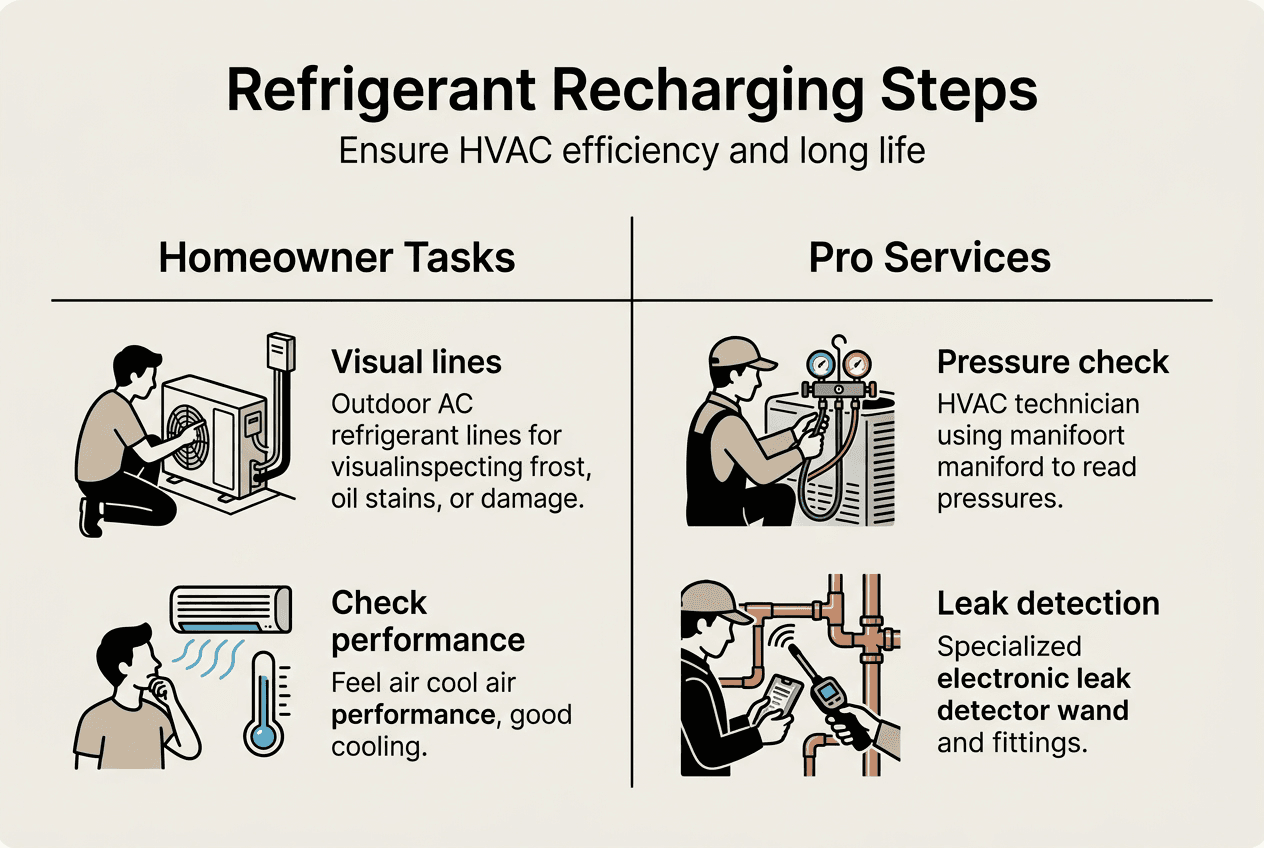
Homeowners sometimes wonder whether DIY checks make sense. The comparison below clarifies what you can and can’t do safely:
| Aspect | DIY Homeowner Checks | Professional Service |
|---|---|---|
| Visual inspection of lines and connections | Yes, look for obvious damage or oil stains | Detailed inspection with specialized tools |
| Measuring refrigerant pressure | No, requires gauges and EPA certification | Yes, with calibrated manifold gauges |
| Detecting refrigerant leaks | Limited to obvious hissing sounds | Electronic detectors and UV dye systems |
| Adding or removing refrigerant | No, illegal without certification | Yes, with proper recovery and charging equipment |
| Cost | Free for visual checks | $100 to $200 for comprehensive checkup |
Regular maintenance delivers benefits beyond refrigerant management. Clean coils transfer heat more efficiently. Proper airflow reduces system strain. Tight electrical connections prevent failures. Together, these factors extend equipment life by years while reducing operating costs.
Indoor air quality improves when systems run efficiently. Undercharged units struggle to dehumidify effectively, leading to muggy indoor conditions that promote mold growth. Proper refrigerant charge ensures your system removes humidity while cooling, creating a healthier home environment.
Schedule maintenance strategically. Spring service prepares your cooling system for summer. Fall checkups ensure your heat pump operates efficiently during winter. This twice-yearly rhythm catches problems before they interrupt your comfort. Following an HVAC efficiency checklist between professional visits helps you monitor system health. Combining this with essential HVAC maintenance tips creates a comprehensive care routine.
Document your maintenance history. Keep records of refrigerant pressures, service dates, and any repairs. This documentation helps technicians track trends and proves valuable if warranty claims arise. It also increases resale value by demonstrating proper home maintenance.
Learn more and get expert help with your HVAC and appliance needs
Understanding refrigerant recharging empowers you to maintain efficient, reliable home comfort systems. However, knowledge alone can’t replace professional expertise when service is needed. MDTech Services brings licensed technicians and specialized equipment to every job, ensuring safe, compliant refrigerant service for Orange and Los Angeles County homeowners.

Whether you need refrigerant recharging, leak detection, or complete system maintenance, professional service protects your investment and your family’s comfort. Our team handles everything from routine checkups to complex repairs on HVAC systems and refrigeration appliances. Explore our comprehensive HVAC repair guide to understand service options, or review our HVAC maintenance guide for ongoing care strategies. We also provide expert appliance repair services when your refrigerator or other cooling equipment needs attention.
Frequently asked questions
What exactly is refrigerant recharging?
Refrigerant recharging is the process of adding refrigerant fluid to your HVAC system or appliance to restore optimal levels. Licensed technicians measure current refrigerant pressure, locate and repair any leaks, evacuate the system to remove contaminants, then add the precise amount of refrigerant specified by the manufacturer.
How do I know if my HVAC system needs refrigerant recharging?
Several signs indicate low refrigerant: your system runs constantly without reaching the set temperature, ice forms on refrigerant lines or coils, you hear hissing sounds near the outdoor unit, or your energy bills increase dramatically. Warm air from vents during cooling mode is another clear indicator. Professional diagnosis with pressure gauges confirms whether recharging is needed.
Can I recharge refrigerant myself to save money?
No, refrigerant handling requires EPA certification due to environmental regulations and safety concerns. DIY recharging is illegal and dangerous. Refrigerants operate under high pressure, improper handling releases harmful chemicals into the atmosphere, and incorrect charging damages expensive equipment. Always hire licensed HVAC professionals for refrigerant service.
How often should I have refrigerant levels checked?
Schedule professional HVAC maintenance at least once yearly, ideally twice (spring and fall). During these visits, technicians check refrigerant pressure along with other system components. If you notice performance problems between scheduled maintenance, request immediate inspection rather than waiting for your next appointment.
What causes refrigerant leaks in home HVAC systems?
Common leak sources include vibration-loosened connection points, corrosion on copper lines or coils, physical damage from landscaping or impacts, manufacturing defects in sealed components, and improper installation techniques. Age also contributes as seals deteriorate and metal develops microscopic cracks. Regular maintenance helps detect leaks early before they cause significant refrigerant loss.