
Many homeowners in Orange and Los Angeles counties believe hiring an unlicensed technician is a smart way to cut costs. It sounds reasonable on the surface, but this shortcut regularly backfires. Faulty appliance repairs, improper HVAC installations, and botched gas conversions can result in fires, injuries, voided warranties, and legal bills that dwarf any initial savings. The reality is that licensing exists specifically to protect you, not to create red tape. This article breaks down exactly what licensing means, how it shields your home and finances, and how to verify credentials before you let anyone touch your appliances, HVAC system, or gas lines.
Table of Contents
- What makes a technician ‘licensed’ and why it matters
- Protection and peace of mind: Insurance, bonding, and liability
- The hidden costs and dangers of unlicensed work
- How licensed technicians keep your home safe and efficient
- Best practices: How to verify a technician’s license and credentials
- The inconvenient truth: Why shortcuts with unlicensed work rarely pay off
- Get peace of mind with expert licensed technicians
- Frequently asked questions
Key Takeaways
| Point | Details |
|---|---|
| Greater safety and reliability | Licensed technicians are trained, tested, and insured to protect your home and your family. |
| Financial and legal protection | Working with licensed pros means you’re covered by insurance and consumer protection laws in California. |
| Long-term cost savings | Hiring licensed instead of unlicensed technicians helps you avoid major repairs, liability, and surprise expenses. |
| Peace of mind for homeowners | A licensed technician means less stress, better work, and recourse if things go wrong. |
What makes a technician ‘licensed’ and why it matters
A licensed technician is not simply someone with tools and experience. In California, earning a contractor license through the CSLB requirements overview means passing background checks, trade exams, and meeting financial requirements. For HVAC work specifically, a C-20 license is required, and journeyman HVAC requirements include four years of field experience, written exams, and CSLB registration. These are not easy boxes to check.
Licensed technicians also follow continuing education requirements to stay current with updated safety codes and modern equipment. As the licensed technician role explains, licensed professionals complete rigorous education, training, apprenticeships, exams, and continuing education to ensure compliance with safety codes and best practices. That ongoing commitment to knowledge is what separates a licensed pro from someone who watched a few tutorials online.
For complex jobs like LP to natural gas conversions or advanced appliance installations, certified technician standards require specialty credentials that go beyond a general license. These credentials confirm the technician understands the specific risks involved.
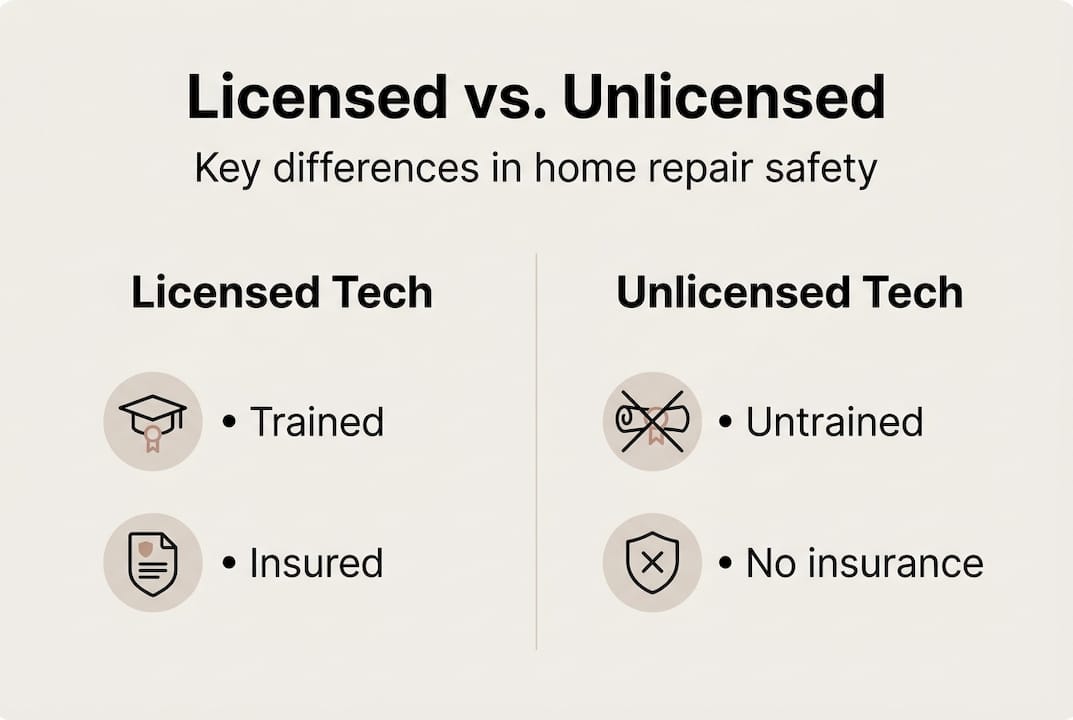
| Requirement | Licensed technician | Unlicensed technician |
|---|---|---|
| Background check | Required | None |
| Trade exam | Required | None |
| Continuing education | Required | None |
| CSLB registration | Required | None |
| Specialty credentials | Required by job type | None |
| Financial accountability | Bonded and insured | None |
Risks of hiring an unlicensed technician:
- No accountability through CSLB if work fails
- No guarantee of code-compliant installations
- Potential for voided manufacturer warranties
- Higher risk of fire, gas leak, or electrical hazard
- No recourse for property damage or injury
Pro Tip: Before scheduling any repair, ask for the technician’s CSLB license number and verify it at the CSLB website. This takes under two minutes and confirms both the license status and the specialty classification.
Protection and peace of mind: Insurance, bonding, and liability
Understanding licensing is vital, but it’s equally important to see how this protects you from major financial and legal pitfalls. When a licensed technician works in your home, they carry liability insurance, workers’ compensation, and a surety bond. According to contractor protection requirements, licensed technicians carry liability insurance, workers’ comp, and bonds to protect homeowners from accidents and property damage.
The CSLB consumer guide confirms that a $25,000 bond and mandatory workers’ comp are required for licensed contractors in California. That bond means if the work is defective, you have a financial safety net. Workers’ comp means if a technician is injured in your home, you are not personally liable for their medical bills.
| Scenario | Licensed technician | Unlicensed technician |
|---|---|---|
| Technician injured on the job | Workers’ comp covers it | You may be liable |
| Property damage during repair | Liability insurance covers it | Out of pocket for you |
| Faulty work causes fire | Bond and insurance apply | No coverage, no recourse |
| Work fails inspection | CSLB has jurisdiction | No formal complaint process |
Here is how to confirm proper insurance and bonding before work begins:
- Ask for the technician’s CSLB license number and verify it online.
- Request proof of liability insurance with your name listed as an additional insured.
- Confirm active workers’ compensation coverage.
- Check that the bond amount meets California minimums.
- Get all agreements in writing before work starts.
The safe home repair benefits of working with a properly insured technician go beyond paperwork. They give you real protection when something unexpected happens, and in home repair, unexpected things do happen.
The hidden costs and dangers of unlicensed work
Beyond the paperwork, choosing the wrong technician can create a nightmare scenario for your household and finances. One of the most common myths is that unlicensed technicians are fine for small jobs. Another is that the lower price means equal value. Neither holds up under scrutiny.
Unlicensed technicians expose homeowners to financial loss, legal liability, and no recourse through CSLB. If the work causes damage, you have no official channel to file a complaint or recover costs.
Common dangers of unlicensed appliance and HVAC work:
- Manufacturer warranties voided by non-certified repairs
- Improper gas line connections leading to leaks or explosions
- Electrical wiring errors that create fire hazards
- HVAC systems installed out of code, failing inspection
- No permit pulled, causing issues when you sell your home
- Refrigerant handled improperly, violating EPA regulations
“Average damages from unlicensed work reach $45,000 per incident, and California regulators catch over 100 unlicensed contractors every year through sting operations alone.”
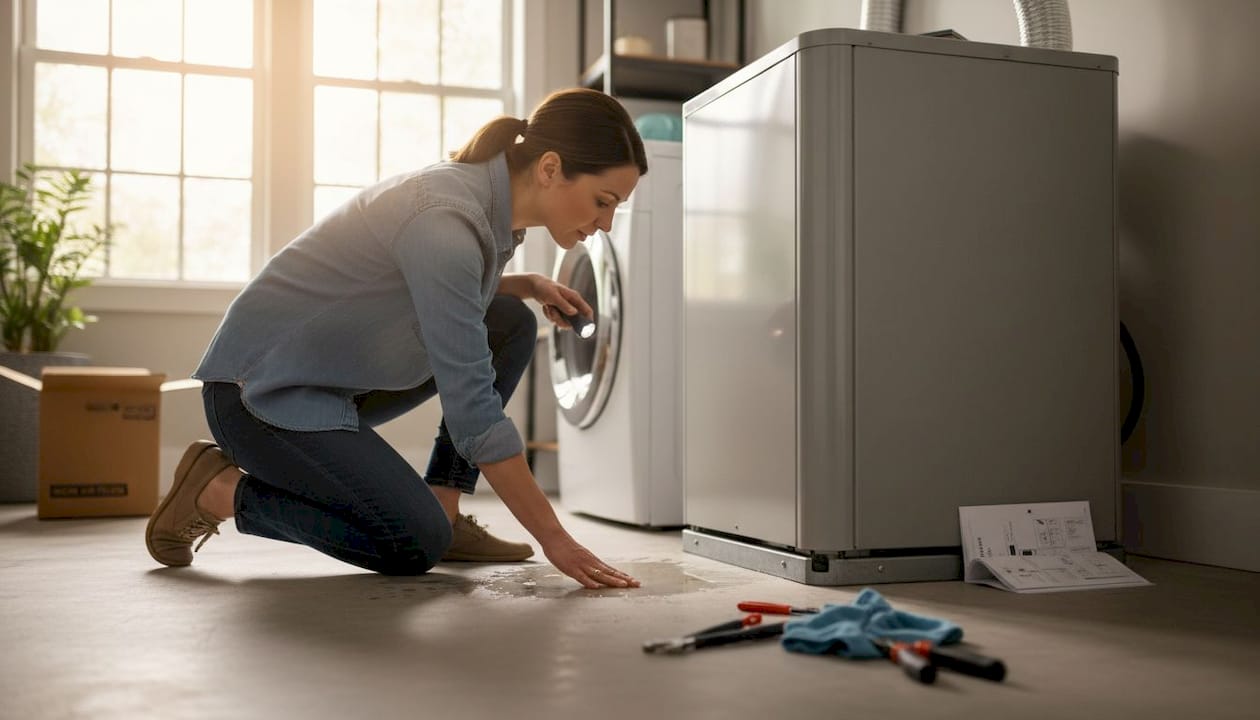
Consider a real scenario: an LA County homeowner hires an unlicensed technician for what seems like a routine HVAC repair. The tech installs a component incorrectly. Months later, the unit fails, causes a small fire, and the homeowner’s insurance denies the claim because the work was not done by a licensed contractor. The homeowner is left paying for repairs, possible legal fees, and a new HVAC system out of pocket. Following local industry standards and prioritizing the appliance safety role in every repair decision prevents exactly this kind of outcome.
How licensed technicians keep your home safe and efficient
While unlicensed work is full of pitfalls, here’s what you gain by choosing licensed professionals for your next project. Licensed technicians stay current with the latest appliance technology and HVAC systems through mandatory continuing education. They follow code-compliant processes that include safety checks at every stage of a repair or installation.
Licensed technicians use proven methodologies and maintain current certifications such as EPA 608 for refrigerant handling and NATE for HVAC systems. These certifications are not optional extras. They are proof that the technician is qualified to work on modern, complex equipment. You can also review the full HVAC licensing process to understand what California requires at each level.
Ways a licensed technician improves efficiency and safety in your home:
- Identifies underlying issues during repair, not just surface symptoms
- Ensures energy-efficient operation, reducing monthly utility bills
- Protects manufacturer warranties by following approved repair procedures
- Pulls required permits so your home passes future inspections
- Uses correct parts and tools rated for your specific appliance or system
- Documents work properly for your records and insurance needs
Review the appliance inspection process and detailed safety inspections to understand what a thorough, licensed inspection looks like from start to finish.
Pro Tip: For gas appliance work or advanced HVAC repairs, always ask the technician to show their specialty certification card on the spot. A legitimate licensed pro will have it readily available and will not hesitate to show you.
Best practices: How to verify a technician’s license and credentials
Lastly, here is how you can take practical steps to ensure your technician is truly licensed before letting them work in your home. The CSLB makes this straightforward. You can verify via CSLB’s website by entering the license number or business name, and you can also call the CSLB directly at 800-321-2752.
When you search, confirm that the license is active, that the classification matches the work being done (C-20 for HVAC, for example), and that there are no disciplinary actions on record. Use the contractor checklist as a reference to make sure you cover every step.
Warning signs of an unlicensed technician in Orange and LA counties include: asking for large cash payments upfront, refusing to provide a license number, offering prices dramatically below market rate, and not pulling permits for work that legally requires them. These are red flags that should stop you from proceeding.
For guidance on verifying a license across different service types, the process is similar regardless of trade.
Questions to ask before you say yes:
- Can you provide your CSLB license number right now?
- Is your license classification appropriate for this specific job?
- Do you carry liability insurance and workers’ compensation?
- Will you pull the required permits for this work?
- Can you provide references from similar jobs in Orange or LA County?
- Will you put the full scope of work and cost in writing?
Asking these questions takes five minutes and can save you tens of thousands of dollars.
The inconvenient truth: Why shortcuts with unlicensed work rarely pay off
Most articles on this topic focus on codes and regulations. We want to address something more practical: the real-world cost of convenience-driven decisions in home repair.
In Orange and LA counties, unlicensed contractor scams spike after major weather events and during busy seasons when legitimate pros are booked out. Homeowners under pressure make fast decisions, and those decisions frequently end badly. Rapid advances in appliance technology and HVAC systems also mean that DIY fixes and unlicensed shortcuts carry more risk today than they did a decade ago. Modern systems are more complex, and errors are more consequential.
From our experience, repairs done correctly the first time by a licensed professional are almost always more affordable over a two to three year period than repeated fixes from unlicensed techs. Even licensing critics agree that consumer protections in high-risk home services outweigh arguments against licensing requirements. The licensed role perspective is not about bureaucracy. It is about targeted, real protection for you as a homeowner.
Licensing is not red tape. It is the minimum standard that separates a professional who can be held accountable from one who cannot.
Get peace of mind with expert licensed technicians
Ready to put this knowledge into action? At MDTech Services, every technician we send to your home is licensed, insured, and current with Orange and Los Angeles county codes for appliance repair, HVAC service, and gas conversions.

Whether you need help with a refrigerator, an HVAC system, or a gas appliance conversion, our team handles it with the credentials and accountability that protect your home and your investment. Explore our HVAC repair guide to understand what proper service looks like, review appliance repair explained for a full picture of our capabilities, or learn about gas appliance conversion services in California. Book your appointment online today and experience the difference that licensed, local expertise makes.
Frequently asked questions
How can I check if a technician is licensed in California?
You can verify a technician’s license by searching their license number or business name on the CSLB’s online verification tool or by calling the CSLB directly at 800-321-2752. Always confirm the license is active and matches the type of work being performed.
What protections do licensed technicians provide that unlicensed do not?
Licensed technicians carry liability insurance, workers’ comp, and a surety bond, which means you are protected if something goes wrong during the repair. California requires a $25,000 contractor bond and mandatory workers’ compensation for all licensed contractors.
Is hiring an unlicensed technician ever worth the risk?
No. Unlicensed work frequently leads to expensive repairs, denied insurance claims, and legal costs, and you lose all consumer protections. Average damages from unlicensed contractor incidents reach $45,000 per case.
What specialties should a licensed technician have for appliances, HVAC, or gas work?
Look for a C-20 classification for HVAC, appliance repair credentials, and plumbing licensing for gas line work, along with current certifications like EPA 608 and NATE. Licensed techs must match credentials to the specific job type for both safety and legal compliance.
Does the cost of hiring a licensed technician save money in the long run?
Yes. Licensed work costs more upfront but protects you from rework, voided warranties, and liability costs that can reach tens of thousands of dollars. The long-term cost advantage of licensed work is well documented when compared to average damage costs from unlicensed repairs.