
Unexpected appliance or HVAC breakdowns can disrupt even the best-planned days for families across Orange and Los Angeles County. Choosing the right technician is not just about convenience, but about protecting your home, your warranty, and your peace of mind. Certified technicians provide more than just repairs—they deliver reliability, safety, and proven expertise backed by rigorous professional standards. Discover what sets these professionals apart and why trusting certified experts protects your investment at every step.
Table of Contents
- Certified Technicians Defined and Common Myths
- Essential Certifications and Training Explained
- Warranty, Insurance, and Legal Protections
- Safety and Quality Benefits for Homeowners
- Financial Risks of Uncertified Technicians
- Comparing Alternatives: DIY and Handyman Work
Key Takeaways
| Point | Details |
|---|---|
| Certified Technicians Ensure Quality | Hiring certified technicians guarantees professional expertise, adherence to safety standards, and ongoing skill development. |
| Verify Certifications Before Hiring | Always request proof of a technician’s certification to ensure their competency and protect your investment. |
| Legal Protections Are Essential | Understanding warranty and legal protections can help homeowners make informed decisions about repair services. |
| Risks of Unlicensed Work | Employing uncertified technicians can result in significant financial and safety risks, including voided warranties and potential property damage. |
Certified Technicians Defined and Common Myths
In the world of home repairs, certified technicians represent a critical standard of professional competence and reliability. These professionals undergo rigorous training and verification processes to demonstrate their expertise in specific technical domains. Certification standards from national organizations ensure that technicians meet comprehensive professional requirements beyond basic technical skills.
Certified technicians differ from standard repair workers in several key aspects:
- Undergo extensive professional training
- Pass standardized competency examinations
- Maintain ongoing professional development requirements
- Adhere to strict ethical and safety standards
- Possess verifiable work experience in their specialized field
Contrary to common myths, certification is not merely a piece of paper but a comprehensive validation of professional capability. Professional standards and ethics define certified technicians as committed professionals dedicated to maintaining high-quality service and public safety. They are not just skilled workers, but individuals who continuously invest in their professional growth and maintain integrity in their work.
Many homeowners mistakenly believe that all repair technicians have equivalent qualifications. However, certified technicians distinguish themselves through:
- Documented proof of technical competence
- Commitment to ongoing skills enhancement
- Understanding of complex safety protocols
- Ability to handle sophisticated repair scenarios
- Professional accountability
Pro tip: Always request and verify a technician’s certification credentials before hiring them for home repair services.
Essential Certifications and Training Explained
Home repair technicians must navigate a complex landscape of professional certifications that validate their expertise and ensure safety. Fire protection and electrical safety certifications represent critical benchmarks for technical professionals working in residential environments. These credentials go far beyond basic training, requiring comprehensive knowledge of industry standards, safety protocols, and technical competencies.
Key certifications for home repair technicians typically include:
- EPA Section 608 refrigerant handling certification
- National Fire Protection Association (NFPA) safety credentials
- North American Technician Excellence (NATE) HVAC certifications
- Electrical safety professional credentials
- Specialized trade-specific technical qualifications
The certification process involves rigorous training and examination protocols. HVAC technician certification programs demonstrate how comprehensive these professional development pathways can be. Technicians must complete extensive coursework, pass standardized examinations, and demonstrate practical skills across multiple domains. These requirements ensure that certified professionals possess not just theoretical knowledge, but also hands-on expertise in solving complex technical challenges.
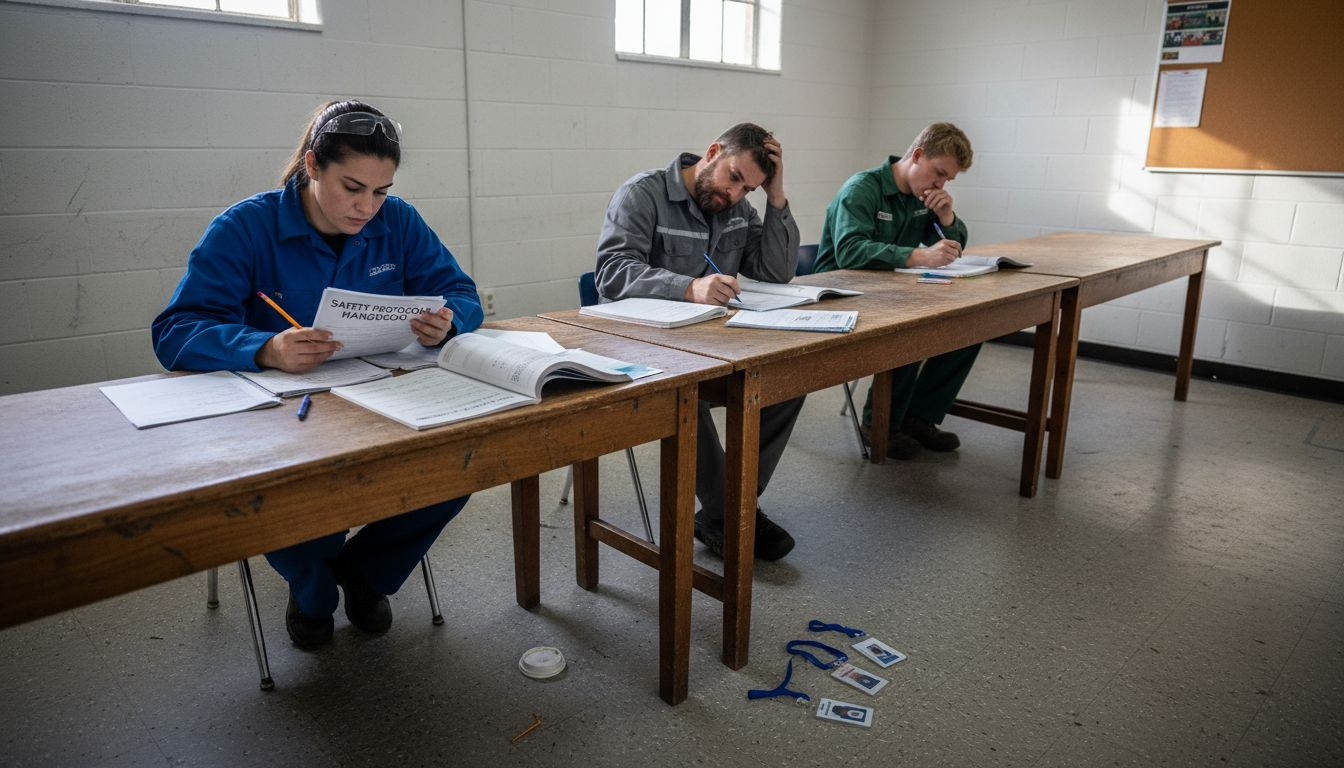
Understanding certification differences helps homeowners make informed decisions about service providers:
To clarify how technician qualification levels differ, see the table below:
| Credential Level | Experience Required | Typical Responsibilities |
|---|---|---|
| Apprentice | Entry-level, supervised | Basic repairs, assists senior technicians |
| Journeyman | Several years, licensed | Advanced troubleshooting, project oversight |
| Master Technician | Extensive, proven expertise | Complex diagnostics, supervises teams |
| Specialized Certified | Varies by specialty | Handles niche systems or safety protocols |
- Apprentice-level credentials indicate basic training
- Journeyman certifications show advanced technical competence
- Master-level credentials represent the highest professional achievement
- Specialized certifications address specific technical domains
- Continuing education requirements maintain professional standards
Pro tip: Request and verify a technician’s current certification status before scheduling any home repair service to ensure maximum safety and quality.
Warranty, Insurance, and Legal Protections
Homeowners rely on robust legal frameworks to protect their investments and ensure quality home repair services. Federal warranty standards provide critical safeguards that mandate fair and transparent consumer protections in home repair and service industries. These legal provisions ensure that technicians and service providers maintain accountability and deliver high-quality workmanship.
Key legal protections for consumers include:
- Comprehensive written warranty requirements
- Clear disclosure of service terms and conditions
- Protection against unreasonable warranty limitations
- Legal recourse for substandard repair work
- Mandatory remedies for service failures
The landscape of consumer protection continues to evolve, with emerging repair rights legislation supporting homeowners’ abilities to access repair information and services. These legal frameworks prevent manufacturers from implementing overly restrictive policies that could limit a consumer’s ability to repair or maintain their home appliances and systems.
Understanding warranty and legal protections helps homeowners make informed decisions:
- Read warranty documents carefully
- Verify technician certification and insurance
- Document all repair agreements in writing
- Understand your rights under federal consumer protection laws
- Keep detailed records of all repair interactions
Pro tip: Always request and retain written documentation of warranty terms, service agreements, and repair details to protect your legal interests.
Safety and Quality Benefits for Homeowners
Certified technicians represent the gold standard for home repair safety and quality assurance. Certified technicians minimize home repair risks through rigorous training and comprehensive understanding of safety protocols. Their specialized expertise helps prevent potential hazards that could compromise a home’s structural integrity and residents’ well-being.
Key safety benefits of hiring certified technicians include:
- Comprehensive understanding of building codes
- Advanced risk assessment capabilities
- Systematic approach to identifying potential hazards
- Precise diagnostic and repair techniques
- Commitment to ongoing professional development
Engineering technology certifications validate a technician’s ability to apply advanced technical knowledge with precision and care. Certified professionals undergo extensive training that goes beyond basic repair skills, ensuring they can navigate complex home repair challenges while maintaining the highest standards of safety and quality.
Homeowners gain multiple advantages when choosing certified technicians:
- Reduced risk of future repair complications
- Enhanced system performance and longevity
- Compliance with manufacturer warranty requirements
- Professional documentation of repair work
- Peace of mind from expert-level service
Pro tip: Always request and verify a technician’s current certification status to ensure maximum safety and quality in your home repair services.
Financial Risks of Uncertified Technicians
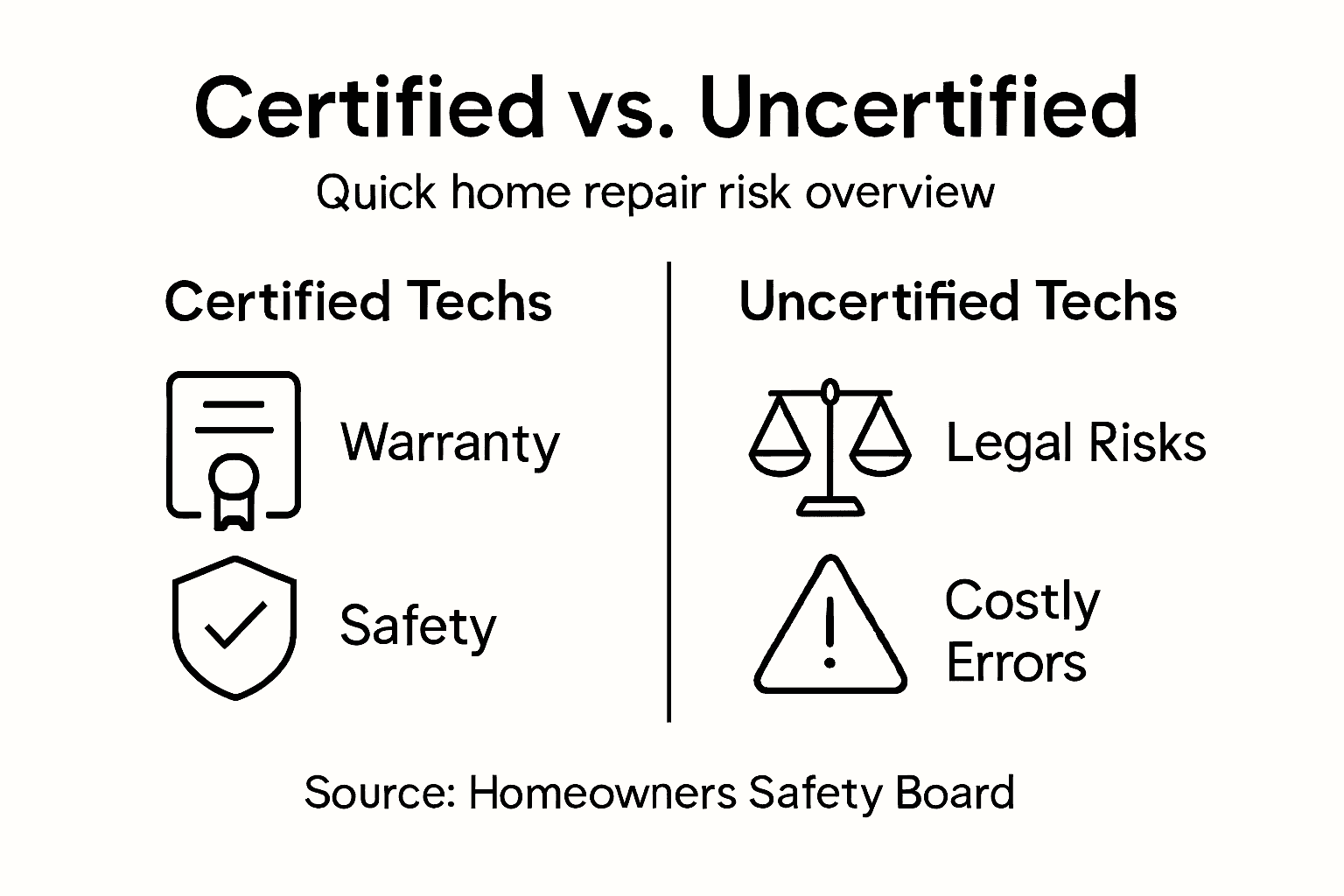
Uncertified technicians expose homeowners to significant financial vulnerabilities that extend far beyond immediate repair costs. Home repair financial risks can rapidly escalate when unqualified workers perform complex technical repairs, potentially causing long-term damage and unexpected expenses.
Potential financial risks associated with uncertified technicians include:
- Voiding manufacturer warranties
- Causing irreparable equipment damage
- Creating safety hazards requiring expensive remediation
- Generating incorrect diagnostic assessments
- Implementing improper repair techniques
Legal challenges with uncertified work present additional financial complications. Homeowners may find themselves without legal recourse when unqualified technicians cause systemic failures or property damage. The absence of professional accountability means consumers bear the financial burden of substandard repairs.
Financial consequences of hiring uncertified technicians can manifest through:
- Repeated repair costs
- Potential property value reduction
- Insurance claim complications
- Higher long-term maintenance expenses
- Potential legal liabilities
Pro tip: Always verify a technician’s professional credentials and request documented proof of certification before authorizing any home repair service.
Comparing Alternatives: DIY and Handyman Work
Homeowners often consider DIY repairs or handyman services as cost-effective alternatives to certified technicians, but these approaches carry significant hidden risks. Work safety research demonstrates that untrained individuals face substantially higher injury and damage risks compared to professionally certified technicians.
Common limitations of DIY and handyman approaches include:
- Limited technical expertise
- Insufficient safety training
- Incomplete diagnostic capabilities
- Higher probability of incorrect repairs
- Potential for compounding initial problems
- Greater long-term expense potential
Handyman service legal restrictions create additional complexity for homeowners seeking repair solutions. Many jurisdictions impose strict limitations on the scope and value of repairs unlicensed workers can legally perform, protecting consumers from potentially dangerous or substandard work.
Significant differences between certified technicians and alternative repair approaches involve:
Here is a comparison of certified technicians, uncertified technicians, and DIY for home repair:
| Aspect | Certified Technician | Uncertified Technician | DIY/Homeowner |
|---|---|---|---|
| Safety Compliance | Follows strict safety standards | May skip required protocols | Usually untrained |
| Risk of Future Issues | Very low due to expertise | Elevated risk, errors likely | Often high, mistakes common |
| Warranty Protection | Maintains manufacturer warranties | Frequently voids warranty | Often voids warranty |
| Legal Accountability | Fully insured and regulated | Limited legal accountability | No protection |
- Professional liability insurance coverage
- Comprehensive technical training
- Advanced diagnostic equipment
- Standardized repair protocols
- Ongoing professional education requirements
- Legal compliance and accountability
Pro tip: Calculate potential repair costs holistically, considering long-term risks and potential future expenses beyond immediate service charges.
Trust Certified Technicians to Protect Your Home and Investment
The article highlights the critical importance of choosing certified technicians for your home repairs to avoid safety risks, warranty voids, and costly future damages. If you want reliable, expert service from licensed professionals who follow strict safety and quality standards, MDTech Services is your local solution. Our team specializes in residential appliance repair, HVAC, and plumbing services with verified certifications that give you peace of mind and long-term savings.
Why risk your home’s safety and value with uncertified help? MDTech Services delivers expert repair and installation from fully licensed technicians who understand complex systems and manufacturer warranties. Our responsive team in Orange County and Los Angeles County provides:
- Licensed appliance repairs including refrigerators and ice machines
- Specialized appliance conversions from LP to natural gas
- Safety-focused HVAC repair and maintenance

Experience the benefits of hiring certified professionals today. Schedule your service online at MDTech Services and protect your home with confidence. Learn more about our trusted expertise and customer-first approach on our homepage and book your appointment now to avoid costly mistakes and unsafe repairs.
Frequently Asked Questions
What are the main benefits of hiring certified technicians for home repairs?
Hiring certified technicians ensures high levels of safety and quality, adherence to building codes, and possession of comprehensive technical knowledge. They minimize risks associated with home repairs, helping to maintain the integrity of your home.
How do certified technicians differ from uncertified ones?
Certified technicians have undergone extensive training, passed competency exams, and meet ongoing professional development requirements. They focus on safety protocols and professional accountability, unlike uncertified technicians who may lack essential skills and training.
Why is ongoing certification important for technicians in home repair?
Ongoing certification keeps technicians informed about the latest industry standards, safety regulations, and technological advancements. This ensures they can effectively address complex repair issues and maintain high-quality service.
What potential financial risks do homeowners face by hiring uncertified technicians?
Homeowners may face numerous financial risks, including voiding manufacturer warranties, incurring additional repair costs, and dealing with potential legal liabilities. Uncertified technicians can cause damages that lead to higher long-term maintenance expenses.