
TL;DR:
- Regular cleaning and inspection prevent bacteria buildup and extend ice machine lifespan.
- Homeowners should schedule deep cleaning every 3 to 6 months and professional inspections annually.
- Certain issues like black slime or electrical faults require professional servicing to ensure safety and proper operation.
Your home ice machine works quietly in the background, but what’s happening inside that you can’t see might surprise you. Ice machine maintenance involves regular cleaning, sanitizing, descaling for mineral buildup, condenser coil cleaning, water filter replacement, and inspections to prevent bacteria, mold, scale, and efficiency loss. Many homeowners in Orange County and Los Angeles County assume their ice is clean simply because it looks clear. This guide will show you exactly what proper maintenance involves, how often to do it, and when to call a licensed professional for help.
Table of Contents
- What is ice machine maintenance?
- Step-by-step: How to clean and care for your ice machine
- How often and why: Maintenance schedules that extend lifespan
- When to call a pro: Troubleshooting and special cases
- The overlooked truth about home ice machine maintenance
- Keep your ice machine safe: Expert help is one call away
- Frequently asked questions
Key Takeaways
| Point | Details |
|---|---|
| Routine maintenance matters | Regular cleaning and care can double your ice machine’s lifespan and keep your ice safe. |
| Local water affects schedule | Southern California’s hard water means more frequent cleaning and descaling is essential. |
| Know when to call a pro | Unusual ice problems or visible buildup require professional help to prevent costly breakdowns. |
| DIY plus expert is best | Home care works best when paired with annual expert inspection for total peace of mind. |
What is ice machine maintenance?
Ice machine maintenance is a scheduled set of cleaning and inspection tasks that keep your appliance running safely and efficiently. It goes well beyond wiping down the outside. True maintenance means addressing what builds up inside the machine over time, including bacteria, mold, and mineral scale.
Here are the core tasks that make up a complete maintenance routine:
- Cleaning and sanitizing the interior bin, water tray, and ice-making components
- Descaling to remove hard water mineral deposits from internal parts
- Condenser coil cleaning to prevent overheating and energy waste
- Water filter replacement to block sediment and improve ice taste
- Inspections of valves, seals, and electrical connections for early warning signs
Each of these steps protects a different part of the machine. Skipping even one can allow problems to compound quickly. For example, a clogged condenser coil forces the compressor to work harder, which raises energy costs and shortens the appliance’s life. You can find a broader overview of ice machine servicing explained to understand how these tasks fit into the bigger picture of appliance care.
The FDA classifies ice as a food product, which means contamination in your ice machine is a genuine health concern, not just an inconvenience. Biofilm, a thin layer of bacteria that clings to wet surfaces, can form inside a neglected machine within weeks. Mold follows soon after, especially in the warm, humid conditions inside an ice bin. Adding ice machine care to your home maintenance checklist is a practical step that protects your family.
Pro Tip: Clear ice does not mean clean ice. Bacteria and mold can thrive inside your machine without changing how the ice looks or feels. If your machine hasn’t been cleaned in six months or more, treat it as overdue regardless of appearance.
Step-by-step: How to clean and care for your ice machine
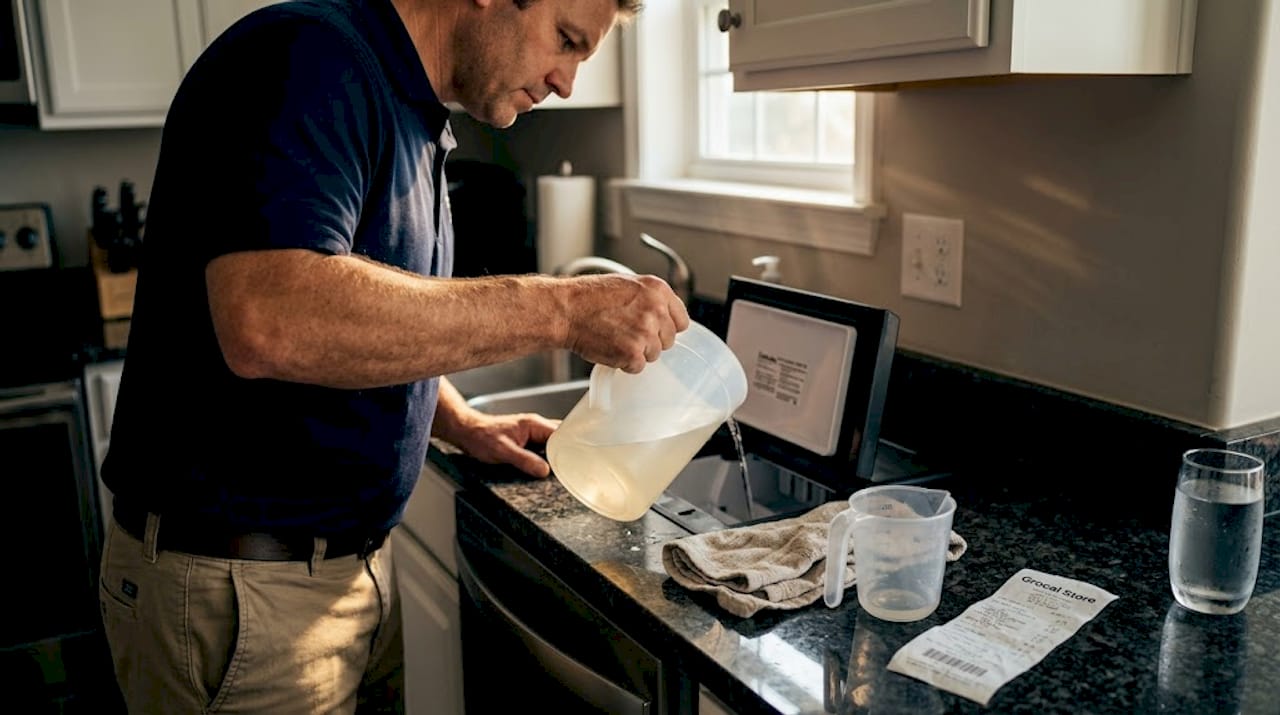
Now that you know what maintenance means, let’s walk step-by-step through a cleaning routine anyone can follow. According to Affresh’s ice maker cleaning guide, the correct process involves these key steps:
- Unplug and drain the machine. Safety first. Disconnect power and let all water drain completely before touching any internal parts.
- Remove and wash removable parts. Take out the ice bin, water tray, and any removable components. Wash them with warm water and mild dish soap, then rinse well.
- Wipe down the interior. Use a soft cloth with a mixture of warm water and baking soda, or a mild soapy solution, to clean interior walls and surfaces. Avoid abrasive scrubbers that can scratch plastic components.
- Replace the water filter. A fresh filter removes sediment and chlorine that affect ice taste and machine performance. This step is often skipped and causes more problems than most homeowners realize.
- Run a cleaning cycle. Use a nickel-safe commercial ice machine cleaner or a 5 to 10 percent vinegar solution. Run the full cycle, then discard all ice produced during that cycle. Never use bleach or harsh household cleaners, as residue can be difficult to rinse out completely and may damage internal parts.
- Sanitize. After the cleaning cycle, run a sanitizing solution through the machine to kill remaining bacteria. Follow the product instructions for contact time before rinsing.
- Clean the exterior and condenser coils. Wipe down the outside with a damp cloth. Use a vacuum with a brush attachment to remove dust and debris from the condenser coils, usually located at the back or bottom of the unit.
- Air dry before restarting. Allow all parts to dry fully before reassembling and plugging the machine back in.
“Vinegar is a safe and effective option for routine home cleaning cycles, but commercial nickel-safe cleaners are better suited for heavy mineral buildup. Always rinse thoroughly to prevent any aftertaste in your ice.”
A common mistake homeowners make is skipping the condenser coil cleaning because it feels optional. In Southern California, where dust accumulates quickly and temperatures run high, dirty coils are one of the leading causes of ice machine breakdowns. Another frequent error is not rinsing thoroughly after a cleaning cycle, which leaves a chemical or vinegar taste in the next batch of ice.
If you notice the machine struggling to produce ice or showing unusual sounds after a cleaning attempt, check out this ice maker repair guide for practical next steps. Pairing your cleaning routine with consistent appliance maintenance steps across your home keeps everything running longer.
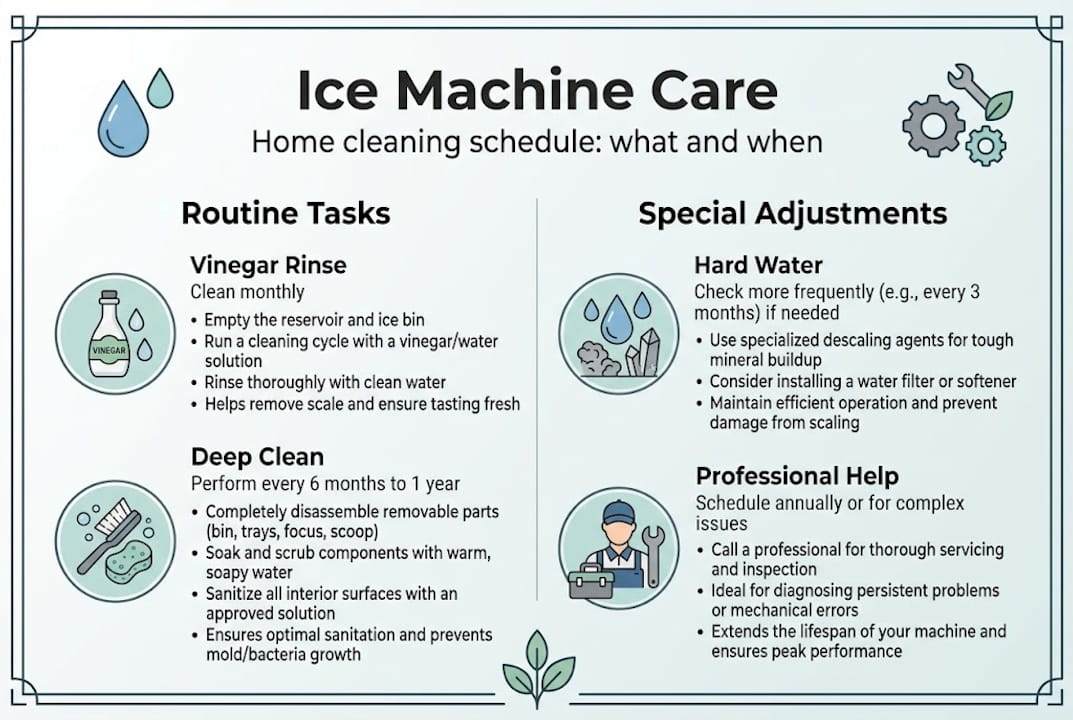
Pro Tip: A simple monthly rinse with a diluted vinegar solution, even without a full deep clean, dramatically slows the buildup of scale and biofilm between major cleaning sessions.
How often and why: Maintenance schedules that extend lifespan
You might ask, “How often do I really need to do all this?” Here’s how to time your routine for long-term savings and reliability.
Cleaning frequency recommendations suggest a monthly vinegar rinse for homeowners, a deep clean every 3 to 9 months or when the indicator light activates, condenser cleaning every 3 to 6 months, and filter replacement every 6 months. In hard water areas like Southern California, more frequent intervals are strongly recommended.
| Maintenance task | Recommended interval | SoCal hard water adjustment |
|---|---|---|
| Monthly vinegar rinse | Every month | No change needed |
| Deep clean and sanitize | Every 3 to 6 months | Every 2 to 3 months |
| Condenser coil cleaning | Every 3 to 6 months | Every 3 months |
| Water filter replacement | Every 6 months | Every 4 to 5 months |
| Professional inspection | Once per year | Once per year minimum |
The difference between a well-maintained machine and a neglected one is significant. Proper maintenance benchmarks show that routine care extends appliance life from 7 to 9 years up to 12 to 15 years, cuts downtime by 84 percent, and delivers measurable energy savings over time.
Several factors may require you to clean your machine more often than the standard schedule suggests:
- Hard water: Orange County and parts of Los Angeles County have notoriously hard water. Mineral deposits build up faster, requiring more frequent descaling.
- Heavy use: A machine that produces ice daily for a large household needs more frequent attention than one used occasionally.
- Pets in the home: Pet hair and dander circulate through the air and can clog condenser coils faster than in pet-free homes.
- Warm ambient temperatures: Garages or outdoor kitchens with high heat accelerate condenser strain and bacterial growth inside the bin.
- Recent illness in the household: After a family member is sick, sanitizing the ice machine is a smart precaution most people overlook.
Understanding why appliance upkeep matters goes beyond just ice machines. A consistent maintenance schedule across all your appliances reduces the chance of an unexpected breakdown and keeps repair costs predictable.
When to call a pro: Troubleshooting and special cases
Even with perfect routines, some issues require more expertise. Here’s when to call in a professional.
| Symptom | DIY or call a pro? | Recommended action |
|---|---|---|
| Cloudy or soft ice | DIY first | Descale and replace filter |
| Ice has an off taste or smell | DIY first | Deep clean and sanitize |
| Thin or small ice cubes | DIY first | Check water supply valve |
| No ice production | Call a pro | Valve, filter, or solenoid issue |
| Black slime in the bin | Call a pro immediately | Mold or biofilm requiring professional treatment |
| Persistent water leaks | Call a pro | Seal or connection failure |
| Electrical issues or tripped breakers | Call a pro immediately | Wiring or component failure |
Common ice machine warning signs include black slime (which always requires a professional), cloudy or soft ice indicating overdue descaling, thin ice pointing to a water flow issue, and no ice production suggesting a valve, filter, or solenoid problem. Annual professional service is strongly recommended to catch hidden issues before they become costly repairs.
Issues that go beyond DIY include:
- Solenoid valve failure: This controls water flow into the machine. A failed solenoid requires professional diagnosis and replacement.
- Persistent black slime or biofilm: Once biofilm becomes established deep in the system, surface cleaning will not eliminate it. A licensed technician has the tools and solutions to treat the machine properly.
- Refrigerant or compressor issues: These are not DIY repairs under any circumstances and require licensed technicians.
- Electrical faults: Any time the machine trips a breaker or shows signs of electrical problems, stop using it and call a professional.
In SoCal homes, one commonly overlooked issue is a water supply valve that has been bumped partially closed, which restricts water flow and causes the machine to produce thin or hollow ice. This is a quick fix, but it’s often misdiagnosed as a mechanical failure. Knowing the signs you need appliance repair helps you make that call confidently. When you do need professional help, professional ice machine repair from a licensed technician ensures the job is done safely and correctly.
The overlooked truth about home ice machine maintenance
After reviewing symptoms and solutions, here’s what most guides and manuals don’t tell you about ice machine care.
We’ve seen it repeatedly in homes across Orange County and Los Angeles County. A homeowner follows a reasonable cleaning schedule, the ice looks fine, the machine runs quietly, and then a technician opens it up during an annual inspection and finds significant biofilm buildup deep in the water distribution system. The surface was clean. The problem was invisible.
This happens because most cleaning routines address the parts you can reach and see. The water channels, distribution tubes, and internal evaporator surfaces are harder to access and require specific tools and cleaners to treat properly. Biofilm is particularly stubborn. It forms a protective layer that resists standard cleaning agents unless the right concentration and contact time are used.
There’s also a persistent myth that clear, hard ice means a clean machine. In reality, ice clarity is determined by water temperature and circulation speed during freezing, not by the cleanliness of the machine. A machine producing beautiful, clear cubes can still harbor mold in the bin walls or bacteria in the water lines.
Another hard lesson from real service calls: homeowners who skip annual professional inspections often pay three to five times more in repair costs when a problem finally becomes obvious. A small seal failure caught early costs far less than a water-damaged floor or a failed compressor. The math strongly favors prevention.
Our honest recommendation is to combine your home cleaning routine with at least one professional inspection per year. You handle the monthly rinses and filter replacements. Let a licensed technician handle the deeper inspection, coil service, and sanitizing of hard-to-reach components. That combination gives you the best protection for your family and the longest possible life for your appliance. Expert ice machine repair from a qualified local technician is not a luxury. For most SoCal homeowners, it’s the most cost-effective decision they can make.
Keep your ice machine safe: Expert help is one call away
You’ve now got the knowledge to maintain your ice machine with confidence. But knowing what to do and having the time and tools to do it right are two different things.

At MDTech Services, we work with homeowners across Orange County and Los Angeles County to keep their appliances running safely and efficiently. Our licensed technicians handle everything from routine maintenance and descaling to complex repairs and full inspections. Whether your machine is showing warning signs or you just want the peace of mind that comes from a professional check, we’re ready to help. Explore our appliance repair services or review our appliance repair guide to understand what a professional service visit covers. Call us today to schedule your appointment.
Frequently asked questions
Why does my ice taste or smell bad even if it looks clear?
Ice can absorb odors and harbor bacteria that don’t change its appearance. Internal mold or a dirty water filter can affect taste and smell without making the ice look cloudy, which is why regular cleaning and sanitizing are essential even when the machine seems fine.
Is vinegar really safe to use for cleaning my ice machine?
Yes, a diluted vinegar solution is safe for home ice machines as long as you rinse thoroughly afterward. For heavy mineral buildup, commercial nickel-safe cleaners are more effective, and you should never use bleach or harsh chemicals in any ice machine.
How do I know if hard water is affecting my ice machine?
Frequent white scale deposits on internal parts, cloudy or soft ice cubes, and needing to clean more often than the standard schedule are all signs of hard water impact. Southern California’s hard water conditions make descaling every 2 to 3 months a smart practice for most homeowners.
What are the signs I need a professional to service my ice machine?
Black slime in the bin, persistent leaks, no ice production, or any electrical issues are clear indicators that a professional is needed. These warning signs go beyond what DIY cleaning can resolve and require a licensed technician.
Does regular ice machine maintenance really save money?
Absolutely. Proper maintenance extends appliance life by several years and cuts downtime by 84 percent, which directly reduces repair bills and energy costs over the life of the machine.