
TL;DR:
- Homeowners insurance does not cover appliance breakdowns or HVAC failures; separate service contracts are needed.
- Service contracts cover wear and tear repairs but often have exclusions, caps, and waiting periods.
- Choosing the right contract requires careful review of provider licensing, coverage limits, and your home’s specific needs.
Many homeowners in Orange County and Los Angeles County assume their homeowners insurance covers appliance breakdowns and HVAC failures. It does not. A service contract, also called a home warranty or residential service contract, is an entirely separate, optional agreement designed to cover repair and replacement costs for appliances and home systems that fail due to normal wear and tear. Understanding exactly what you are buying, and what you are not, can save you from expensive surprises when your refrigerator stops cooling or your AC gives out on a hot August day in Anaheim.
Table of Contents
- What is a service contract and how does it work?
- What do service contracts cover for appliances and HVAC?
- Service contracts vs. maintenance contracts: What’s the difference?
- Pros, cons, and real-world checklists for Orange/LA County homeowners
- Why buying a service contract is not a one-size-fits-all decision
- Next steps: Reliable repairs and expert help when you need it
- Frequently asked questions
Key Takeaways
| Point | Details |
|---|---|
| Service contracts aren’t insurance | They cover breakdowns from wear and tear, not accidents or disasters. |
| Coverage and exclusions vary widely | Read all terms, exclusions, and caps before choosing a provider. |
| Maintenance and repair contracts differ | Maintenance contracts focus on regular care; service contracts cover repairs. |
| Licensing matters in California | Always select a CA-licensed provider for home appliance or HVAC contracts. |
What is a service contract and how does it work?
Service contracts are not insurance, and that distinction matters. Homeowners insurance protects you when sudden, unexpected events like fire, theft, or storm damage cause harm to your home. A service contract, on the other hand, steps in when your appliances and home systems simply wear out over time through regular use.
The table below makes the comparison clear:
| Feature | Service contract | Homeowners insurance |
|---|---|---|
| What it covers | Wear and tear breakdowns | Sudden damage, fire, theft |
| When it pays | Normal mechanical failure | Accidents and disasters |
| Who it requires | Licensed repair contractor | Insurance adjuster |
| Typical annual cost | $264 to $1,425 | $1,200 to $2,000+ |
| Service call fee | $75 to $150 per claim | Deductible per incident |
As an optional repair agreement, a service contract covers repair or replacement costs for home appliances and HVAC systems when they fail due to normal use, not accidents or disasters. That means if your washing machine motor burns out after years of use, a service contract may pick up the tab. If a pipe bursts and floods your laundry room, that falls under homeowners insurance territory.
Here is how the claim process typically works, step by step:
- You notice a covered appliance or system has failed.
- You file a claim online or by phone with your service contract provider.
- You pay the service call fee, usually $75 to $150.
- The provider dispatches a contracted repair technician to your home.
- The technician diagnoses and performs the approved repair or replacement.
The claim response time is typically 24 to 48 hours, though delays are common during peak seasons in Southern California. Summer heat waves often mean longer wait times for HVAC service, which is something to factor in when you evaluate a provider’s track record.
For example, if your refrigerator compressor fails and you have a service contract, you would file the claim, pay the service fee, and the provider sends a licensed tech. Knowing the realistic LG repair costs for your specific brand can help you judge whether a service contract’s annual premium is worth it for your household.

Service contracts are particularly useful in older homes, where multiple appliances may be approaching the end of their useful life at the same time. In communities like Long Beach, Irvine, or Torrance, many homes built in the 1980s and 1990s still have original HVAC units and kitchen appliances that are prime candidates for unexpected failures. A service contract can provide real peace of mind in those situations, as long as you read every word of the agreement before signing.
What do service contracts cover for appliances and HVAC?
Understanding the scope of coverage is where most homeowners run into trouble. A typical service contract covers a broad range of appliances and home systems, but the fine print includes exclusions and caps that can limit your actual benefit.
Common covered items include:
- Refrigerators and freezers
- Washers and dryers
- Ovens, ranges, and cooktops
- Dishwashers
- HVAC systems (heating and air conditioning)
- Plumbing and electrical systems
- Water heaters
Coverage for appliances and HVAC systems typically includes service call fees of $75 to $150, annual premiums ranging from $264 to $1,425, and a 30-day waiting period before coverage starts for conditions that preexisted the contract. That waiting period catches many homeowners off guard. If you buy a contract today and your HVAC breaks down next week due to a preexisting issue, the provider can deny the claim.
The most important exclusions you need to know about include:
- Preexisting conditions discovered during the inspection or claim
- Damage caused by improper maintenance or misuse
- Accidental physical damage
- Cosmetic damage not affecting function
- Repairs that exceed the per-item coverage cap
Coverage caps are a real concern. California providers may set caps of $3,000 to $5,000 per appliance or HVAC system. If your central AC unit needs a full replacement and costs $8,000, you may still owe a significant out-of-pocket balance after the contract pays its cap. Always ask for the specific per-item cap before signing.
Pro Tip: California regulates home protection companies separately from standard insurance. Before you sign any service contract, verify the provider holds a valid California license through the Department of Insurance. Unlicensed providers have no regulatory accountability and can disappear when you need them most.
For Orange County and Los Angeles County homeowners planning appliance installation in Orange County for new or replacement units, pairing that installation with a service contract makes good financial sense. New installations typically come with a manufacturer warranty, but service contracts can pick up where manufacturer coverage ends. Working with a provider who offers quality appliance service ensures that your installation is done correctly, which matters because improper installation can void both the manufacturer warranty and the service contract.
Service contracts vs. maintenance contracts: What’s the difference?
This is where confusion runs deep. A service contract and a maintenance contract are two different products, and buying one when you need the other can cost you real money.
| Feature | Maintenance contract | Service contract |
|---|---|---|
| Primary purpose | Scheduled tune-ups and inspections | Repair and replacement coverage |
| Covers breakdowns? | No | Yes |
| Includes discounts? | Often yes | Rarely |
| HVAC frequency | Biannual visits | On-demand claims |
| Best for | Keeping systems running well | Responding to failures |
HVAC maintenance contracts are structured around scheduled tune-ups, typically twice a year, along with priority service and discounts on repairs. They do not cover the cost of a sudden breakdown the way a repair service contract does. Think of a maintenance contract as preventive care and a service contract as emergency coverage.
Here is a practical look at which contract fits which scenario:
- Your HVAC is two years old and running fine: A maintenance contract keeps it running efficiently and may extend its life.
- Your refrigerator is eight years old and showing signs of strain: A service contract helps manage the cost of imminent repairs or replacement.
- You just moved into a resale home with older appliances and HVAC: Both types of contracts could serve you, starting with a maintenance agreement to identify any existing issues.
- You want seasonal AC tune-ups before summer: A maintenance contract covers exactly this, while a service contract would not schedule those visits.
- Your dryer stopped heating and you have no idea why: This is precisely the scenario a service contract handles.
Many homeowners in Orange County and Los Angeles County benefit from holding both types of agreements on their HVAC systems. A maintenance contract keeps the system tuned and efficient throughout the year, while a service contract provides a financial backstop if something breaks unexpectedly. For guidance on keeping appliances in top shape, resources on washer and dryer maintenance can help you understand proper care routines that keep your equipment in good standing under any contract terms.
One important note: improper maintenance can void a service contract claim. If a provider finds that your HVAC filter has not been changed in two years and the system has failed as a result, that claim could be denied under the improper maintenance exclusion. Holding a maintenance contract creates a documented record of regular care, which can actually support your claim if a dispute arises.
Pros, cons, and real-world checklists for Orange/LA County homeowners
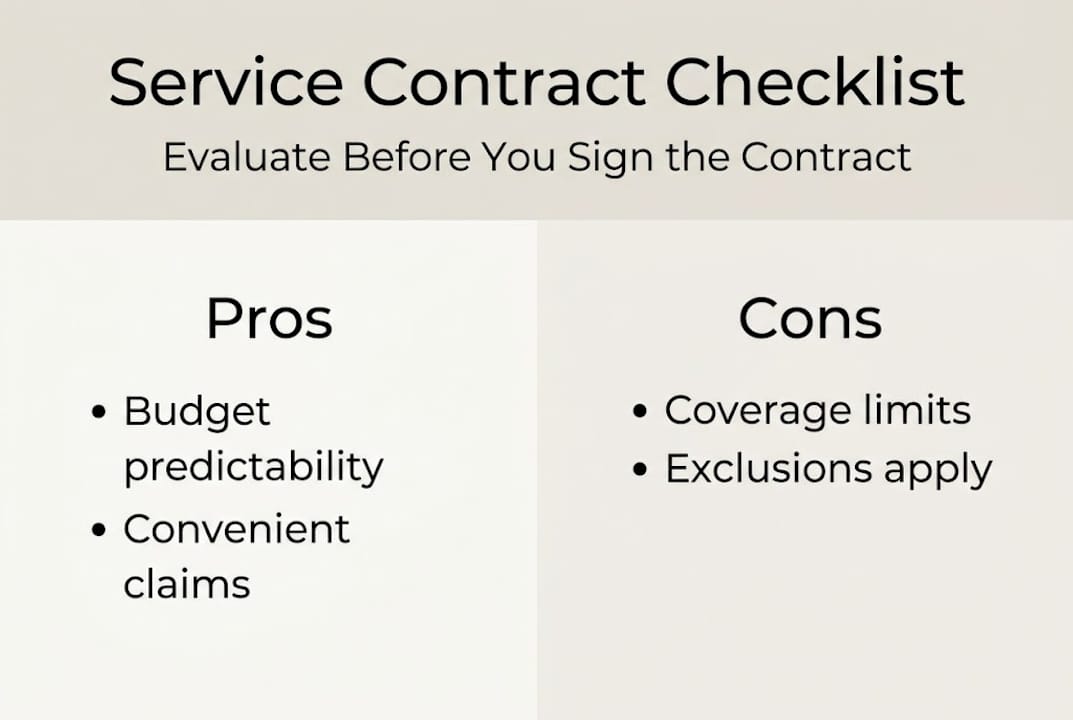
Choosing a service contract requires honest thinking about your home’s specific situation. Research and real customer experience show a clear picture of where these contracts deliver value and where they fall short.
Pros:
- Predictable monthly or annual costs replace unpredictable repair bills
- Priority service scheduling during busy seasons
- Covers multiple appliances under one agreement
- Reduces the financial shock of a major system failure
- Some plans include free annual inspections
Cons:
- Claim denials are common, especially for compressor failures and other major repairs
- Low-claim households often pay more in premiums than they recover in repairs
- Coverage caps can leave you holding a significant repair balance
- Response times vary widely and can be slow during peak demand
- The technician assigned may not be your preferred local service provider
Industry research shows that contracts can deliver priority service and predictable costs but often represent poor value for homeowners who file few claims, particularly when exclusions eliminate coverage for major components like compressors.
Checklist for choosing a service contract provider in Orange/LA County:
- Verify the provider’s California license through the Department of Insurance.
- Read every exclusion and note what specific parts are not covered.
- Confirm the per-item coverage cap before signing.
- Ask about the claims process: Is it 24/7? What is the average response time?
- Understand the appeal process if a claim is denied.
- Compare the annual premium to your expected repair frequency.
- Check online reviews from local homeowners, not just national ratings.
Pro Tip: Calculate your average annual repair spend on appliances and HVAC over the past three years. If that number is consistently lower than the contract premium plus service fees, a service contract may cost you more than it saves. Use that real data to make the decision, not fear of a worst-case repair bill.
When planning ahead for your kitchen appliances, understanding how much kitchen appliance installation typically costs in our area gives you a realistic baseline for evaluating whether a service contract’s coverage cap actually protects you meaningfully.
Why buying a service contract is not a one-size-fits-all decision
After reviewing the mechanics, coverage terms, and real-world performance of service contracts, here is a perspective that does not get enough attention in Orange and Los Angeles County.
The single biggest mistake we see homeowners make is buying a service contract based on fear rather than facts. The right time to buy a service contract is when your appliances and HVAC systems are aging but not yet failing, typically in the five to ten year range. Buying coverage on a brand-new system often means paying premiums during years when nothing will break. Buying it on a system that is already struggling often means hitting exclusions immediately.
You should also pay close attention to the provider’s contractor network. A service contract is only as good as the technicians it dispatches. In our experience serving Orange County and Los Angeles County, homeowners who choose licensed, locally accountable providers get faster, more reliable service and fewer disputes over claim outcomes. Reading the exclusions is not optional. It is the most important step in evaluating whether a contract actually covers the risks that matter for your home.
Next steps: Reliable repairs and expert help when you need it
With a clear understanding of how service contracts work, what they cover, and where the gaps are, you are in a strong position to protect your home’s appliances and HVAC.

Whether you need to understand what appliance repair involves before filing a claim, want to work through a homeowner repair guide to assess your options, or need clear information from an HVAC repair guide specific to California homes, MDTech Services has the licensed technicians and local expertise to support you. We serve Orange County and Los Angeles County homeowners with responsive, professional service and transparent pricing. Contact us today to book an appointment or ask any questions about your appliance or HVAC needs.
Frequently asked questions
Are service contracts required by law for California homeowners?
No, service contracts are optional and not legally required for homeowners in California. The state does regulate these contracts separately from insurance, with specific licensing requirements for home protection companies.
Can I buy a service contract for an old appliance or HVAC system?
You can, but preexisting conditions are typically excluded and most contracts include a 30-day waiting period before coverage begins for any conditions that existed before the contract start date.
What types of damages are not covered by service contracts?
Service contracts mainly exclude preexisting conditions, improper maintenance, and accidental damage, so routine neglect and physical accidents fall outside the coverage scope.
How much do service contracts usually cost?
Annual premiums range from $264 to $1,425, with service call fees of $75 to $150 charged each time a technician is dispatched to your home.
Do I need a separate contract for HVAC maintenance?
Yes, HVAC maintenance contracts focus on scheduled tune-ups, inspections, and priority service rather than breakdown coverage, so they serve a completely different purpose than a repair service contract.