
Your ice machine might be losing up to 30% efficiency right now without you realizing it. Neglected servicing leads to mineral buildup, bacterial growth, and mechanical wear that reduces performance and shortages your ice supply when you need it most. For homeowners in Orange County and Los Angeles County, understanding what professional servicing involves helps you maintain reliable ice production, prevent costly emergency repairs, and extend your appliance’s lifespan by years.
Table of Contents
- Introduction To Ice Machine Servicing
- Common Ice Machine Problems And Causes
- Recommended Servicing Frequency And Procedures
- Local Factors Affecting Ice Machine Maintenance
- Professional Servicing Vs Diy Approaches
- Common Misconceptions About Ice Machine Servicing
- Benefits Of Regular Ice Machine Servicing
- Signs Your Ice Machine Needs Immediate Servicing
- Trust Mdtech Services For Your Ice Machine Maintenance Needs
- Frequently Asked Questions About Ice Machine Servicing
Key takeaways
| Point | Details |
|---|---|
| Servicing includes cleaning, inspections, and part replacements | Professional technicians clean mineral deposits, inspect mechanical components, and replace worn parts to maintain optimal performance. |
| Hard water accelerates maintenance needs | Southern California’s hard water creates more frequent mineral buildup, requiring bi-annual servicing instead of annual. |
| Professional servicing reduces damage risk | DIY attempts have 35% higher contamination risk compared to certified technician work. |
| Regular maintenance extends lifespan 30% | Scheduled servicing prevents premature failures and protects your appliance investment for years longer. |
| Watch for warning signs | Slow production, misshapen cubes, leaks, and unusual noises signal immediate servicing needs. |
Introduction to ice machine servicing
Ice machine servicing is preventive maintenance that involves systematic cleaning, thorough inspection, and minor repairs to keep your appliance running efficiently. This process addresses components that naturally degrade with use, ensuring your machine continues producing clean, safe ice without interruption. Professional technicians examine and service multiple critical systems during each appointment.
Typical servicing targets several key components. Water filters trap contaminants but become saturated over time. Evaporator plates freeze water into ice but accumulate mineral deposits that reduce efficiency. Dispenser parts handle ice delivery and require cleaning to prevent jams. Mechanical elements like motors and pumps need lubrication and inspection. Electrical connections must be checked for safety and proper function. Each component plays a vital role in your ice machine’s overall performance.
Servicing matters because it directly affects ice quality and machine longevity. Mineral buildup creates cloudy ice and reduces production capacity. Bacterial growth in uncleaned machines can contaminate your ice supply, posing health risks to your family. Regular maintenance prevents these issues while catching small problems before they become expensive breakdowns. Safety implications are serious: contaminated ice can spread illness, while neglected electrical components create fire hazards.
Professional repair services address both routine maintenance and unexpected issues, giving you peace of mind that your ice machine operates safely. Licensed technicians use manufacturer-approved methods and cleaning agents that won’t damage sensitive components. This expertise protects your investment while ensuring your family has access to clean, safe ice year-round.
Common ice machine problems and causes
Mineral scale buildup tops the list of ice machine problems in Southern California. Our region’s hard water contains high concentrations of calcium and magnesium that precipitate onto evaporator plates, water lines, and pump mechanisms. This crusty white or brownish deposit restricts water flow, reduces heat transfer efficiency, and forces your machine to work harder for less ice output. Over time, scale completely clogs small passages, causing total production failure.
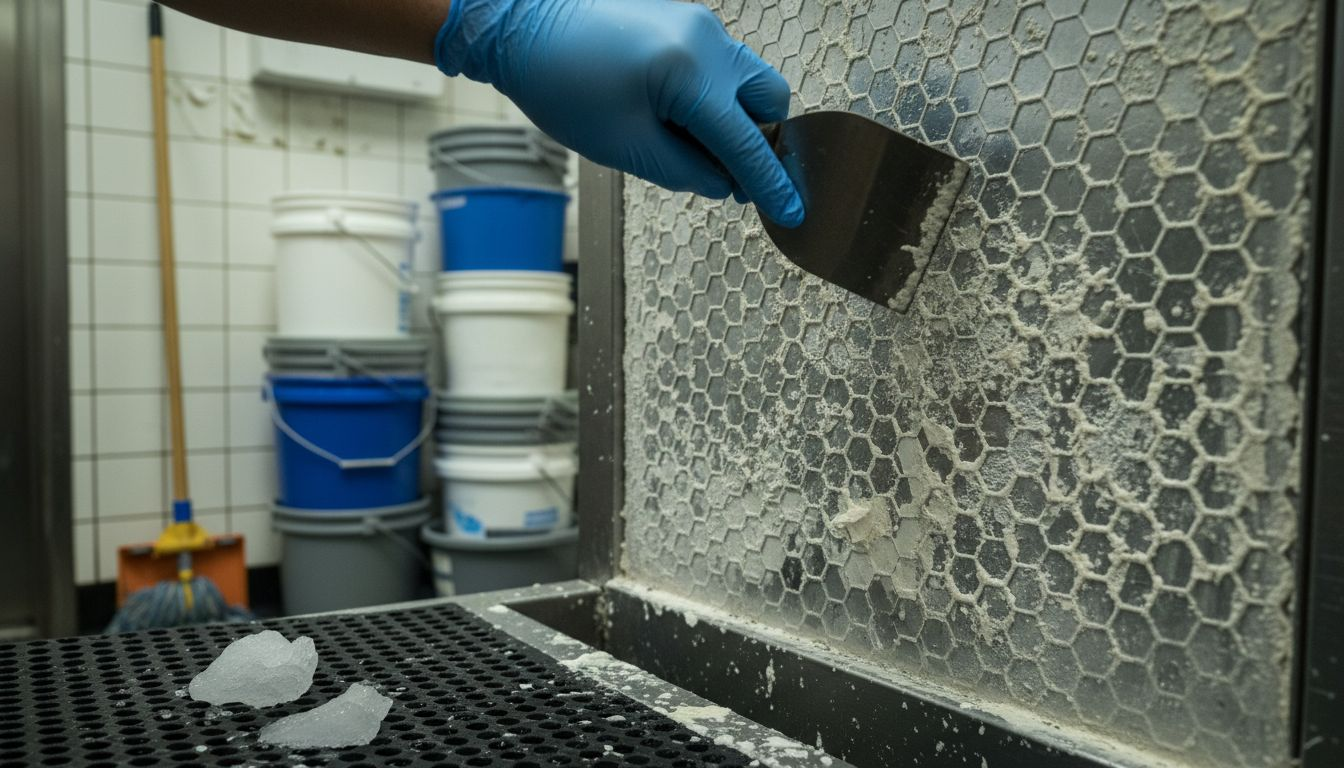
Bacterial contamination develops when machines aren’t cleaned regularly. Warm, moist environments inside ice machines create perfect breeding grounds for bacteria, mold, and slime. These microorganisms form biofilms on surfaces that contact water and ice. You might notice pink or black discoloration, musty odors, or slimy residue. Beyond being disgusting, contaminated ice can cause foodborne illness, particularly dangerous for young children, elderly family members, or anyone with compromised immunity.
Mechanical wear accelerates when maintenance is skipped. Moving parts like motors, fan blades, and water pumps gradually degrade from friction and stress. Seals and gaskets dry out and crack. Electrical connections corrode from moisture exposure. What starts as minor inefficiency progresses to complete mechanical failure. A $150 servicing appointment could prevent a $800 compressor replacement down the line.
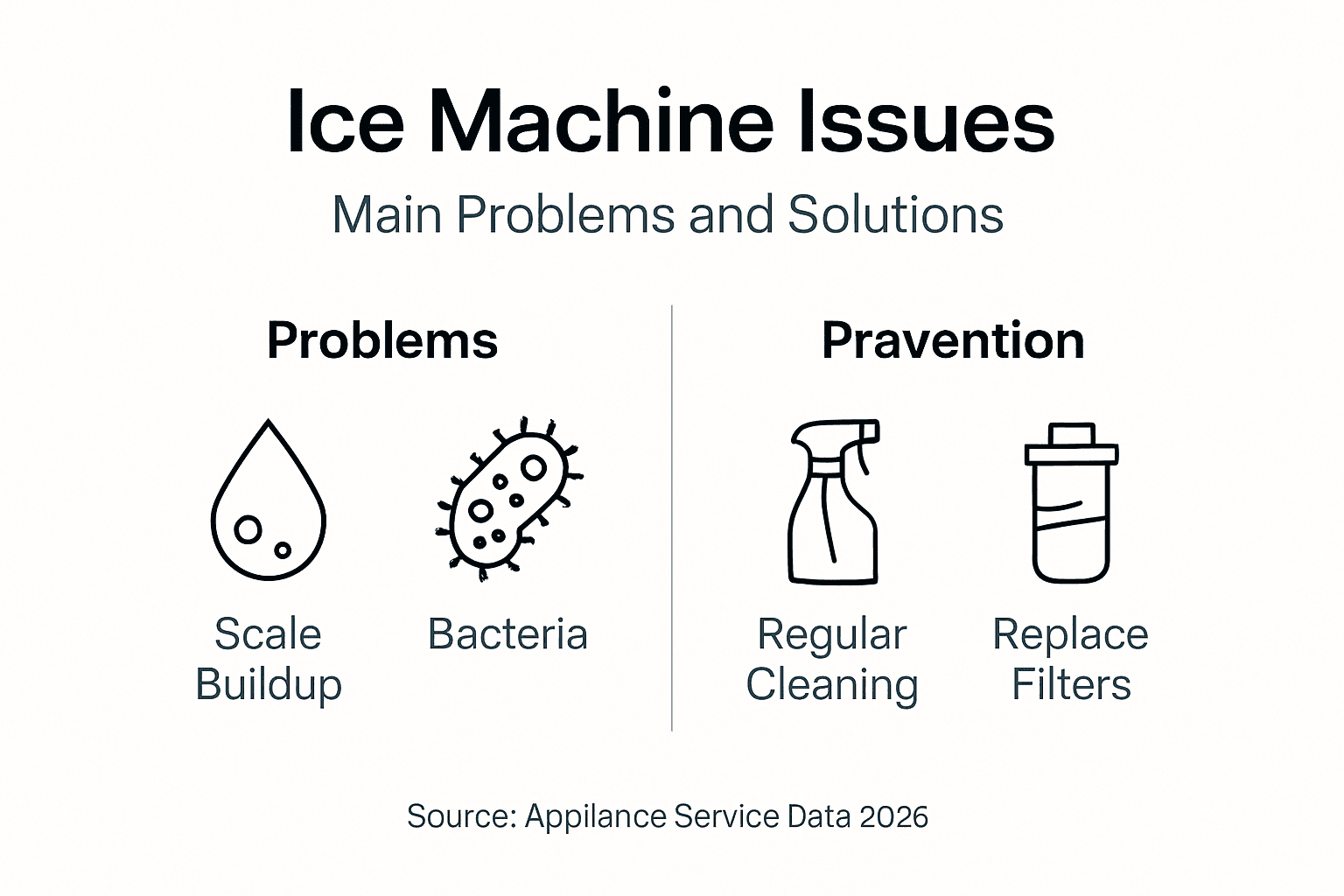
Skipping regular servicing compounds these problems exponentially. Scale buildup reduces efficiency, forcing mechanical parts to work harder, which accelerates wear. Bacterial growth goes unnoticed until ice quality becomes obviously compromised. Small electrical issues turn into safety hazards. The repair costs from neglect typically exceed 3 to 5 times what preventive servicing would have cost. Common ice machine problems almost always trace back to deferred or inadequate maintenance, making regular professional attention your best defense against costly surprises.
Recommended servicing frequency and procedures
Bi-annual servicing represents the ideal maintenance schedule for Southern California homeowners. Our hard water conditions and warm climate create harsher operating environments than manufacturers typically assume when recommending annual service. Every six months gives technicians the opportunity to address mineral accumulation before it causes damage while catching emerging mechanical issues early. Homes with particularly hard water or heavy ice usage may benefit from quarterly attention.
Professional servicing follows a systematic approach:
- Initial inspection examines ice quality, production rate, and visible component condition to identify obvious problems.
- Deep cleaning removes mineral scale from evaporator plates, water distribution systems, and internal passages using specialized descaling solutions.
- Sanitization eliminates bacteria, mold, and biofilm using food-safe antimicrobial cleaners approved for ice machine use.
- Component inspection checks mechanical parts for wear, electrical connections for corrosion, and seals for integrity.
- Filter replacement installs fresh water filters to ensure incoming water purity and protect internal components.
- Performance testing verifies ice production rate, cube quality, and overall system function before completing service.
Water filter replacements deserve special attention because filters are your first defense against contaminants and minerals. Most residential ice machines need new filters every three to six months depending on water quality and usage. Clogged filters reduce water flow, forcing your machine to work harder and potentially damaging the pump. Technicians replace filters during servicing and can advise you on whether your water conditions require more frequent changes.
Detergent wash cycles use specialized cleaning solutions formulated specifically for ice machines. Never use household cleaners, bleach, or generic detergents, which can leave harmful residues or damage components. Professional servicing ensures proper chemical selection and thorough rinsing that eliminates all cleaning agent traces before your machine resumes ice production. This attention to detail protects both your appliance and your family’s health.
Local factors affecting ice machine maintenance
Hard water defines the maintenance landscape for Orange and Los Angeles County homeowners. Our municipal water supplies contain 150 to 300 parts per million of dissolved minerals, classifying as moderately hard to very hard. This mineral concentration accelerates scale formation inside your ice machine, requiring more aggressive and frequent cleaning than homes in soft water regions. The calcium carbonate deposits form faster and thicker, reducing the time between necessary servicing appointments.
Warmer climate compounds maintenance demands. Southern California’s mild winters and hot summers mean your ice machine runs more frequently than appliances in cooler regions. Higher usage accelerates wear on mechanical components while increasing water evaporation rates inside the machine. This evaporation concentrates minerals even further, creating denser scale deposits. Your machine also works harder during summer months when ambient temperatures are higher, stressing cooling systems and shortening component lifespans.
| Water Condition | Recommended Servicing Interval | Mineral Buildup Rate | Filter Replacement Frequency |
|---|---|---|---|
| Soft water (0-60 ppm) | Annually | Low | Every 12 months |
| Moderate hard water (61-120 ppm) | Every 9 months | Moderate | Every 9 months |
| Hard water (121-180 ppm) | Every 6 months | High | Every 6 months |
| Very hard water (180+ ppm) | Every 4-6 months | Very high | Every 3-4 months |
Pro Tip: Installing a whole-house water softener or point-of-use softening system significantly reduces mineral buildup in your ice machine. If a softener isn’t feasible, ask your technician about using descaling cartridges designed specifically for ice makers. These specialized filters won’t completely eliminate servicing needs, but they can extend intervals between deep cleanings by 30 to 40%, reducing your annual maintenance costs while protecting your appliance from aggressive scale damage.
Professional servicing vs DIY approaches
DIY cleaning attempts often create more problems than they solve. Homeowners typically lack access to proper descaling chemicals, antimicrobial cleaners, and specialized tools needed for thorough ice machine maintenance. Using incorrect products like vinegar, bleach, or household cleaners can damage plastic components, leave harmful residues, or fail to remove bacterial biofilms effectively. Home attempts to clean ice machines have a 35% higher chance of causing damage or contamination compared to professional work.
Professional technicians bring expertise and equipment that ensure safe, effective servicing. They use manufacturer-approved chemicals that clean without harming sensitive components. Specialized brushes, picks, and probes reach areas homeowners can’t access. Technicians understand proper disassembly sequences, electrical safety protocols, and reassembly procedures. They perform certified safety inspections that identify potential hazards before they cause injuries or fires. This professional approach protects both your appliance and your family.
| Aspect | DIY Approach | Professional Servicing |
|---|---|---|
| Safety | Risk of electrical shock, chemical exposure, or creating fire hazards | Licensed technicians follow strict safety protocols and carry liability insurance |
| Effectiveness | Surface cleaning only, often misses internal buildup | Complete descaling and sanitization of all components |
| Cost | $20-50 in supplies per attempt | $150-250 per service, but prevents $500-1500 in repair costs |
| Time required | 2-4 hours with incomplete results | 60-90 minutes with guaranteed thoroughness |
| Lifespan impact | May accelerate wear from improper chemicals or procedures | Extends appliance life by 30% through proper maintenance |
| Warranty protection | Often voids manufacturer warranty | Maintains warranty compliance and documentation |
Pro Tip: Keep detailed records of professional servicing appointments, including dates, work performed, and parts replaced. This documentation proves valuable if warranty claims arise and helps technicians identify patterns or recurring issues with your specific machine. Many insurance policies also require proof of regular maintenance for appliance-related water damage claims, making professional service records a financial protection beyond just appliance care.
Common misconceptions about ice machine servicing
Myth 1: Ice machines are self-cleaning and don’t require maintenance. Many homeowners believe their ice machine’s automatic cleaning cycle handles all maintenance needs. While some models include basic rinse cycles, these features only address surface contamination. They cannot remove mineral scale, deep clean evaporator plates, or sanitize internal passages where biofilms grow. Self-cleaning functions supplement professional servicing but never replace it.
Myth 2: Servicing is too expensive and unnecessary unless the machine breaks. This thinking ignores the mathematics of preventive maintenance. A bi-annual $175 servicing appointment costs $350 yearly. Compare this to emergency repair calls averaging $500 to $1,200 plus the inconvenience of days without ice. Regular servicing typically prevents 80% of these breakdowns, making it a clear financial winner. The expense myth persists because people see servicing as optional rather than essential investment protection.
Myth 3: Homeowners can safely clean machines without professional help. DIY cleaning risks include improper chemical use, incomplete sanitization, and accidental damage to delicate components. Online tutorials simplify complex procedures, omitting critical safety steps or proper chemical dilution ratios. What appears as cost savings often results in damaged machines, voided warranties, or contaminated ice that poses health risks. Professional training exists for good reasons.
Understanding why regular professional cleaning is critical starts with recognizing that ice machines are complex appliances operating in challenging conditions. They handle food products (ice), making them subject to stringent safety standards. Bacteria and scale don’t announce their presence until problems become severe. By the time you notice cloudy ice, slow production, or strange tastes, contamination or damage has already progressed significantly. Professional technicians catch these issues during their early, easily correctable stages.
Long-term cost savings from regular servicing versus emergency repairs are substantial. Scheduled maintenance extends appliance lifespan from the typical 8 years to 10 or 11 years, delaying a $1,500 to $3,000 replacement purchase. It prevents compressor failures, the most expensive single repair. It eliminates the hidden costs of emergency service calls: rush fees, after-hours rates, and the productivity loss from managing an appliance crisis. When you calculate total cost of ownership, regularly serviced ice machines cost 40 to 50% less over their lifetime than neglected units.
Benefits of regular ice machine servicing
Regular servicing dramatically reduces repair frequency and eliminates most emergency breakdowns. Data from appliance service providers shows that ice machines receiving bi-annual maintenance experience 65% fewer unexpected failures compared to machines serviced only when problems arise. This reliability means you avoid the stress and inconvenience of suddenly losing ice production during family gatherings, parties, or hot summer days when you need it most. Scheduled maintenance also lets you plan service timing around your schedule rather than reacting to failures.
Improved ice production efficiency delivers tangible daily benefits. Clean evaporator plates freeze water faster and more completely. Descaled water lines maintain proper flow rates. Well-maintained machines produce ice at their designed capacity, typically 30 to 50 pounds daily for residential units. You’ll notice consistently shaped cubes, crystal-clear ice, and faster bin refilling. Energy efficiency improves too, as clean machines require less electricity to produce the same amount of ice, reducing your monthly utility costs by $5 to $15.
Servicing can extend appliance lifespan by up to 30%, protecting your significant investment. An ice machine represents a $1,500 to $3,000 purchase that you expect to last 8 to 10 years. Regular maintenance pushes that lifespan to 10 to 13 years, effectively saving you $500 to $1,000 in delayed replacement costs. Compressors, the most expensive component, last significantly longer when not stressed by scale buildup or overwork from clogged systems. Motors and pumps similarly benefit from reduced strain and proper lubrication.
Regular ice machine servicing extends appliance lifespan by up to 30%, adding 2-3 years of reliable operation and delaying expensive replacement costs.
Beyond financial benefits, properly maintained ice machines provide peace of mind. You trust the ice you serve your family is clean and safe. You avoid the embarrassment of offering guests cloudy or bad-tasting ice. You eliminate worries about unexpected breakdowns before important events. This psychological benefit of reliability and safety often matters more to homeowners than the dollar savings, though both advantages make regular servicing an easy decision.
Signs your ice machine needs immediate servicing
Slowed ice production is often the first noticeable warning sign. Your machine previously filled the bin in 6 hours but now takes 10 or 12 hours to produce the same amount. This performance decline indicates internal problems like mineral buildup restricting water flow, scale coating evaporator plates and reducing freezing efficiency, or mechanical wear affecting pump or motor function. Don’t dismiss gradual slowdowns as normal aging. Sudden or progressive production decreases signal that servicing is overdue.
Irregular or misshapen ice cubes reveal sanitation or component wear issues. Properly functioning machines produce uniform cubes with consistent size and clarity. Watch for hollow cubes, which indicate water distribution problems. Cloudy or white ice suggests mineral contamination. Cubes with unusual shapes or sizes point to worn molds or evaporator plate damage. Small, partially formed cubes signal low water pressure or clogged filters. Any departure from your machine’s normal ice appearance warrants professional inspection.
Water leaks and unusual noises often precede serious breakdowns. Puddles under or around your machine indicate failed seals, cracked water lines, or damaged connections. These leaks waste water, risk floor damage, and signal components nearing failure. Strange sounds like grinding, squealing, clicking, or buzzing suggest mechanical problems: worn bearings, failing motors, or loose components. Don’t ignore these warning signs hoping they’ll resolve themselves. They won’t, and delaying action typically increases repair costs.
Prompt professional inspection prevents minor issues from escalating into expensive repairs or total machine failure. A technician can often fix early-stage problems during a routine service call for minimal cost. Caught early, a $30 seal replacement prevents water damage to your cabinetry. A timely descaling service protects a $400 compressor from premature failure. Quick response to warning signs maximizes your appliance’s remaining lifespan while minimizing your total ownership costs. When you notice any of these symptoms, contact a qualified technician immediately rather than waiting for your next scheduled service.
Trust MDTech Services for your ice machine maintenance needs
Keeping your ice machine running efficiently requires the expertise that only experienced professionals provide. MDTech Services brings licensed, certified technicians who specialize in residential ice machine maintenance and repair throughout Orange and Los Angeles Counties. Our team understands the unique challenges Southern California’s hard water and climate create for your appliances, tailoring our servicing approach to address these regional factors effectively.

We use only manufacturer-approved cleaning agents and proper descaling solutions that thoroughly clean without damaging your machine’s sensitive components. Our flexible scheduling accommodates your busy life, offering convenient appointment times that work around your schedule. We arrive prepared with the specialized tools and genuine replacement parts needed to complete servicing efficiently, typically finishing within 90 minutes while ensuring thoroughness.
Our expert ice machine servicing extends beyond basic cleaning. We perform comprehensive safety inspections, check electrical connections, verify proper refrigerant levels, and test all mechanical systems. This attention to detail helps you maximize your appliance’s lifespan while ensuring your family enjoys clean, safe ice year-round. We also provide transparent pricing with no hidden fees, so you know exactly what to expect.
Whether you need routine maintenance or face unexpected ice machine problems, MDTech Services delivers the professional care your appliance deserves. Our appliance repair services cover comprehensive solutions beyond ice machines, making us your single trusted partner for all home appliance needs. Ready to protect your investment and ensure reliable ice production? Contact MDTech Services today to schedule your ice machine servicing appointment. Our homeowner appliance repair guide offers additional resources for maintaining all your household appliances.
Frequently asked questions about ice machine servicing
What happens if I don’t service my ice machine regularly?
Neglecting regular servicing leads to progressive efficiency loss, with machines producing 30 to 40% less ice as mineral scale accumulates. Bacterial contamination develops in uncleaned components, creating health risks from contaminated ice. Mechanical parts wear faster under increased stress from buildup, leading to premature failures that cost 3 to 5 times more than preventive maintenance. Your machine’s lifespan shrinks by years, forcing earlier replacement.
Can I use any cleaning product for my ice machine?
No, household cleaners damage ice machine components and leave harmful residues that contaminate ice. Bleach corrodes plastic and metal parts while creating toxic fumes when mixed with other chemicals. Vinegar provides insufficient descaling power for hard water minerals and doesn’t sanitize effectively. Use only food-safe, manufacturer-approved cleaning solutions specifically formulated for ice machines. Professional technicians have access to these specialized products.
How do I know if my ice machine water filter needs replacing?
Reduced ice production and slower freezing cycles indicate restricted water flow from a clogged filter. Cloudy or bad-tasting ice suggests the filter no longer removes contaminants effectively. Most manufacturers recommend replacement every 6 months, but Southern California’s hard water may require changes every 3 to 4 months. Check your owner’s manual for your model’s specific replacement indicator or schedule.
Is it safe to do ice machine maintenance myself?
DIY maintenance carries significant risks including electrical shock from improper disconnection procedures, chemical burns from concentrated cleaning agents, and component damage from incorrect disassembly. Most critically, improper cleaning leaves bacterial contamination that compromises ice safety. Professional technicians receive specialized training in ice machine servicing protocols and carry liability insurance protecting you from accidents. The safety risks outweigh any perceived cost savings.
How long does a typical servicing appointment take?
Professional ice machine servicing typically requires 60 to 90 minutes for thorough completion. This includes initial inspection, deep cleaning and descaling, sanitization, filter replacement, component inspection, and final performance testing. Machines with severe neglect or identified problems may need additional time. Technicians work efficiently to minimize disruption while ensuring comprehensive servicing that addresses all maintenance needs.