
TL;DR:
- An air conditioner’s freeze-up occurs when restricted airflow or low refrigerant causes the evaporator coil to dip below freezing, leading to ice formation. Regularly checking filters, vents, and scheduling professional maintenance can prevent most freeze-ups caused by these issues. Recharging refrigerant without leak detection is ineffective and can result in repeat freezing and costly repairs.
An air conditioner freezes up when restricted airflow or low refrigerant causes the evaporator coil to drop below 32°F, triggering ice formation that blocks cooling entirely. This condition, known in the HVAC industry as evaporator coil freeze, is one of the most common service calls homeowners face each summer. Dirty filters alone account for about 43% of frozen coil cases, and most are resolved with a simple filter swap. Understanding why does ac freeze up is the first step toward fixing it safely and keeping it from happening again.
Why does AC freeze up? The core causes explained
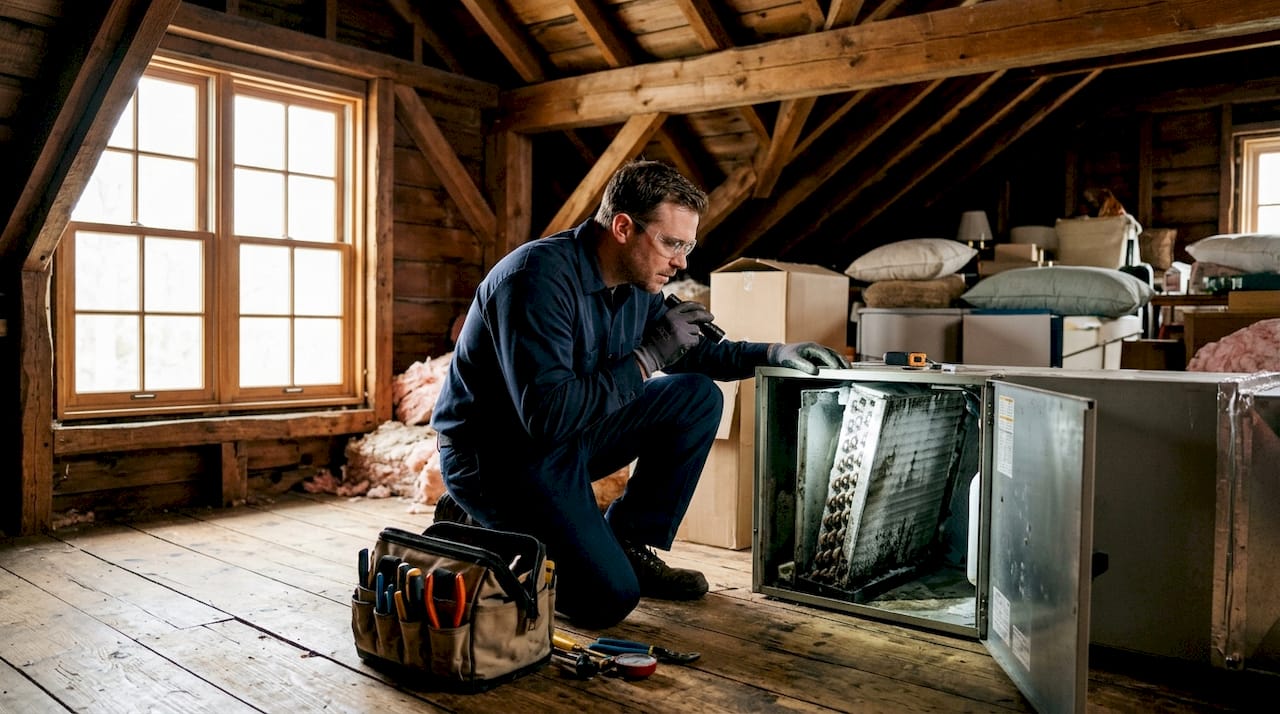
AC unit ice formation follows a straightforward physical process. The evaporator coil inside your air handler absorbs heat from indoor air. When that heat transfer is interrupted, the coil surface temperature falls below 32°F and moisture in the air freezes directly onto the coil. 2026 HVAC guidelines confirm that every freeze-up traces back to one of two root causes: restricted airflow or low refrigerant charge.
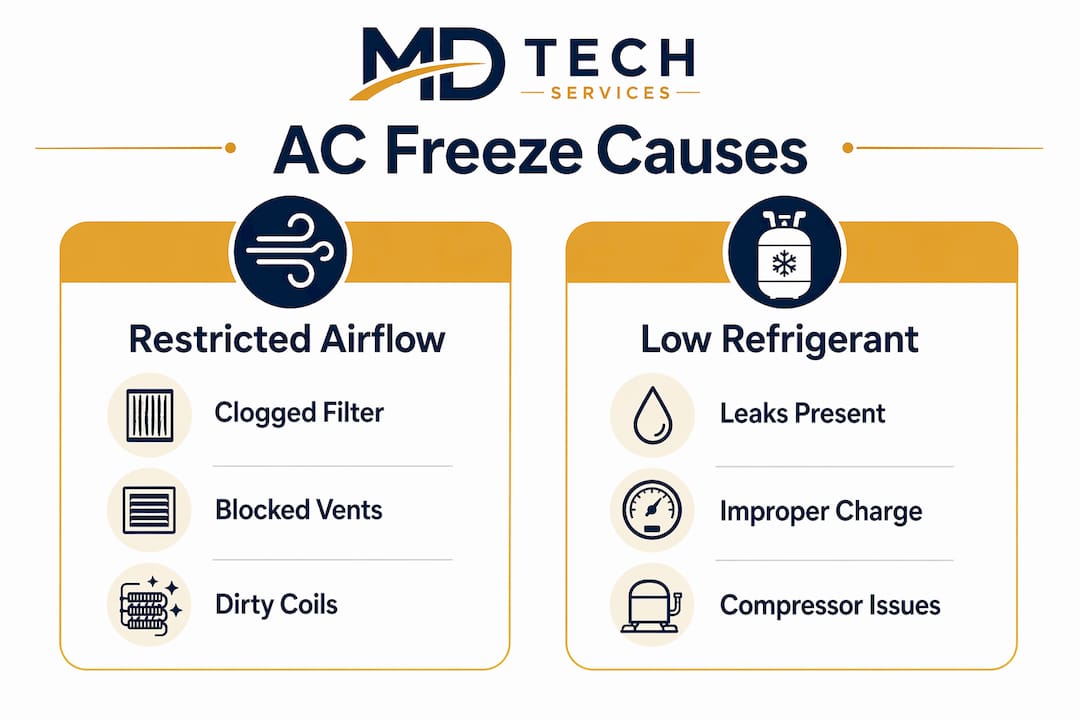
These two causes look similar from the outside but require very different fixes. Airflow problems are often DIY-friendly. Refrigerant issues always need a licensed technician. Knowing which one you are dealing with saves time, money, and prevents compressor damage.

How does restricted airflow cause AC freezing?
Airflow is the engine of heat transfer at the evaporator coil. When warm air cannot reach the coil in sufficient volume, the coil gets too cold and ice forms. The most common airflow blockers are easy to spot and fix.
- Dirty or clogged air filter. A filter packed with dust cuts airflow dramatically. Replacing a $15–$35 filter resolves roughly 43% of freeze cases outright.
- Blocked return vents or supply registers. Furniture or drapes covering vents is a frequently overlooked cause. Walk your home and check every vent.
- Closed supply registers. Closing registers in unused rooms feels logical but raises static pressure throughout the duct system, which reduces total airflow and worsens freeze risk.
- Malfunctioning blower motor. If the fan that pushes air across the coil slows down or stops, the coil temperature drops fast. A weak blower is a mechanical issue that needs professional attention.
Poor indoor air quality and restricted airflow often go hand in hand. A clogged filter does not just freeze your coil. It also circulates dust, allergens, and pollutants through your home.
Pro Tip: Check every supply and return vent in your home before calling a technician. Move any furniture, rugs, or drapes that sit within 12 inches of a vent. This five-minute check costs nothing and fixes the problem more often than you would expect.
Why do low refrigerant levels cause AC units to freeze?
Refrigerant is the substance that absorbs heat inside your home and releases it outside. It circulates in a sealed loop at carefully calibrated pressures. When the charge drops, pressure inside the evaporator coil falls too low, and the coil temperature plunges below freezing. Ice builds up fast.
The critical fact most homeowners miss: low refrigerant always means a leak. Refrigerant does not get “used up” like gasoline. If the level is low, refrigerant has escaped somewhere in the system. Simply recharging the system without finding and sealing the leak is a temporary fix. The freeze will return, often within weeks.
Signs that point to a refrigerant leak rather than an airflow problem include:
- Ice forming even after you replace the filter and open all vents.
- A hissing or bubbling sound near the indoor unit or refrigerant lines.
- Warm air blowing from vents despite the system running continuously.
- Visible oil stains near copper refrigerant lines or fittings.
- Repeated freeze-ups after a technician has already recharged the system.
Pro Tip: If a technician offers to “top off” your refrigerant without performing a documented leak detection test, decline. Technicians who skip leak detection are setting you up for a repeat service call. Ask specifically for a leak detection report before authorizing any refrigerant work. You can learn more about how refrigerants work in your cooling system before that conversation.
What other factors contribute to AC freezing?
Beyond dirty filters and refrigerant leaks, several secondary causes push a coil toward freezing. Each one reduces the coil’s ability to absorb heat at the right rate.
- Dirty evaporator coils. Dust and grime coat the coil surface and act as insulation. Dirty coils prevent heat absorption, causing coil temperature to fall and ice to form even when airflow is adequate. Coil cleaning is a professional task done during annual maintenance.
- Faulty thermostat. A broken thermostat can signal the system to run continuously, even when the home has reached the set temperature. Extended run times drive coil temperatures down and accelerate ice buildup.
- Running the AC in cold weather. Most residential AC systems are not designed to operate when outdoor temperatures fall below approximately 60°F. At lower outdoor temps, refrigerant pressure drops naturally, and the coil can freeze even with a clean filter and full refrigerant charge.
- Stuck expansion valve or blower relay. These mechanical components regulate refrigerant flow and fan operation. When either fails, the system loses the balance it needs to keep coil temperatures stable.
Overly aggressive thermostat settings can make existing problems worse by extending run times, though they rarely cause freezing on their own. Gradual temperature adjustments are always better than setting the thermostat to its lowest point and walking away.
How do you safely thaw a frozen AC and when should you call a pro?
The moment you spot ice on your AC unit, stop running it in cooling mode. Continuing to run a frozen AC can damage the compressor, which is the most expensive component in the system. Follow these steps in order.
- Turn the thermostat to OFF. Do not leave it on “cool.” Switching to off stops the refrigerant cycle and lets the coil warm up.
- Set the fan to ON. Running the fan without cooling pushes room-temperature air across the coil and speeds thawing. Expect 1 to 24 hours for a full thaw depending on ice thickness.
- Place towels around the indoor unit. Melting ice drips. Protect your floor and any nearby electrical components.
- Check and replace the air filter. While the unit thaws, pull the filter. If it is gray, matted, or visibly clogged, replace it before restarting.
- Open every supply and return vent. Walk the home and confirm nothing blocks airflow at any register.
- Restart in cooling mode only after the coil is fully clear. Feel the refrigerant lines near the indoor unit. If they are no longer cold and wet, the thaw is complete.
Never pour water on frozen coils to speed the process. Water near electrical components risks short circuits and water damage to flooring and ceilings.
Stop DIY immediately and call a licensed technician if you hear hissing sounds, if ice returns within hours of restarting, or if the unit blows warm air after a full thaw. These signs point to refrigerant leaks or mechanical failure that no filter change will fix.
Pro Tip: A frozen coil must be fully thawed before a technician can accurately read refrigerant pressures or diagnose the system. Thawing first is not just safe. It saves you money by preventing a repeat diagnostic visit.
How does regular maintenance prevent AC freeze-ups?
Consistent maintenance is the most reliable way to prevent causes of AC freezing before they become expensive problems. Most freeze-ups are predictable and avoidable with a simple routine.
- Replace filters every 1–3 months. Standard 1-inch filters need replacement monthly during heavy use. Thicker media filters last up to 3 months. A $15–$35 filter is far cheaper than a compressor repair. Check the HVAC filtration guide for filter type recommendations by system.
- Inspect vents seasonally. Walk your home at the start of each cooling season and confirm every supply and return vent is open and unobstructed.
- Schedule a professional HVAC inspection annually. A licensed technician checks refrigerant charge, cleans evaporator coils, tests the blower motor, and inspects the expansion valve. This one visit catches the issues that cause freeze-ups before summer heat arrives.
- Do not run the AC when outdoor temps fall below 60°F. Use a fan or open windows instead. Running the system in cold weather stresses the refrigerant circuit unnecessarily.
- Follow a written maintenance checklist. The HVAC maintenance steps for homeowners published by Mdtechservices cover filter schedules, vent checks, and when to call a professional.
| Maintenance Task | Recommended Frequency |
|---|---|
| Air filter replacement | Every 1–3 months |
| Vent and register inspection | Every season |
| Professional HVAC inspection | Once per year |
| Evaporator coil cleaning | Once per year (by technician) |
| Refrigerant level check | Once per year (by technician) |
Homeowners who follow this schedule rarely experience freeze-ups. Those who skip annual inspections are the ones calling for emergency service in july.
Key Takeaways
A frozen AC is always caused by restricted airflow or low refrigerant, and fixing it starts with a filter check, a safe thaw, and a professional inspection when ice returns.
| Point | Details |
|---|---|
| Root cause is always airflow or refrigerant | Every AC freeze traces to one of these two causes; identify which before acting. |
| Dirty filters cause nearly half of freeze cases | Replacing a $15–$35 filter resolves about 43% of frozen coil situations. |
| Low refrigerant always signals a leak | Recharging without leak detection leads to repeated freeze-ups and higher costs. |
| Safe thawing takes 1–24 hours | Turn the thermostat off, set the fan to on, and never use water to melt ice. |
| Annual maintenance prevents most freeze-ups | A professional inspection each year catches refrigerant and mechanical issues early. |
What most homeowners get wrong about a frozen AC
Here is the misconception I see most often: homeowners assume a frozen AC means the system is “working too hard” or “cooling too well.” That is backwards. A freeze-up is a sign the system is struggling, not succeeding. Ice on the coil means heat is not moving the way it should. The system is failing at its one job.
The second mistake is obsessing over thermostat settings while ignoring airflow. I have seen homeowners set their thermostat to 68°F and wonder why the unit keeps freezing, while three vents in the house are blocked by furniture and the filter has not been changed in six months. The thermostat is rarely the problem. Airflow almost always is.
The third mistake is accepting a refrigerant recharge without asking for a leak detection report. Technicians who skip leak detection are not solving your problem. They are scheduling your next service call. Demand documentation. A reputable technician will not hesitate to provide it.
The balance between DIY and professional help is straightforward. Clean filters and open vents are your responsibility. Refrigerant, coil cleaning, and mechanical diagnostics belong to a licensed technician. Respect that line and your system will last years longer.
— MDTECH
Frozen AC? Mdtechservices is ready to help
If your AC keeps freezing after you have replaced the filter and thawed the coil, the problem is almost certainly a refrigerant leak or a mechanical failure that needs professional diagnosis.

Mdtechservices serves homeowners across Orange County and Los Angeles County with licensed HVAC technicians who perform refrigerant leak detection, evaporator coil cleaning, and full system diagnostics. Every visit includes a documented inspection so you know exactly what was found and what was fixed. For a full overview of what residential HVAC repair involves, the HVAC repair guide on the Mdtechservices website walks through the process step by step. If you want to reduce the time your system is out of service, the appliance downtime guide covers how to prepare before a technician arrives. Book an appointment online or call the Mdtechservices team directly to get your AC running reliably again.
FAQ
Why does my AC keep freezing up even with a clean filter?
If the filter is clean and ice keeps forming, the most likely cause is low refrigerant from a leak. A licensed technician needs to perform leak detection and repair before recharging the system.
How long does it take to thaw a frozen AC unit?
Thawing takes between 1 and 24 hours depending on how much ice has built up. Turn the thermostat to off, set the fan to on, and wait until the coil is completely clear before restarting in cooling mode.
Is it safe to run my AC when it is iced over?
No. Running a frozen AC risks damaging the compressor, which is the most expensive part of the system. Shut the system off immediately and let it thaw fully before restarting.
Can I add refrigerant myself to fix a frozen AC?
Refrigerant handling requires EPA certification and specialized equipment. Adding refrigerant without finding and sealing the leak only delays the next freeze-up. Always use a licensed HVAC technician for refrigerant work.
What outdoor temperature is too cold to run my AC?
Most residential AC systems should not operate when outdoor temperatures fall below approximately 60°F. Running the system in colder conditions drops refrigerant pressure and increases freeze risk even with a clean filter and full charge.