
TL;DR:
- A water softener removes calcium and magnesium minerals from water using ion exchange to prevent scale buildup. It does not filter out contaminants and requires regular regeneration with salt or potassium chloride. Testing water hardness first ensures proper system selection; softeners mainly protect appliances and plumbing.
A water softener is defined as a whole-house filtration system that removes calcium and magnesium minerals from your water through a process called ion exchange. 85% of U.S. homes deal with hard water, meaning most homeowners face scale buildup, reduced appliance efficiency, and poor soap performance without even realizing the cause. These hardness minerals deposit inside pipes, water heaters, and dishwashers over time, quietly shortening the life of every appliance they touch. Understanding what a water softener doeshttps://checkmytap.com/news/is-my-water-too-hard-complete-guide-2026/, and whether you need one, is the first step toward protecting your home.
How does a water softener work to remove hardness minerals?
The core process behind every salt-based softener is ion exchange. Hard water flows through a resin tank packed with thousands of tiny resin beads. Those beads carry a negative charge and attract positively charged calcium and magnesium ions. As water passes through, the resin swaps those hardness minerals for sodium or potassium ions, releasing them into the water supply while holding the calcium and magnesium behind.
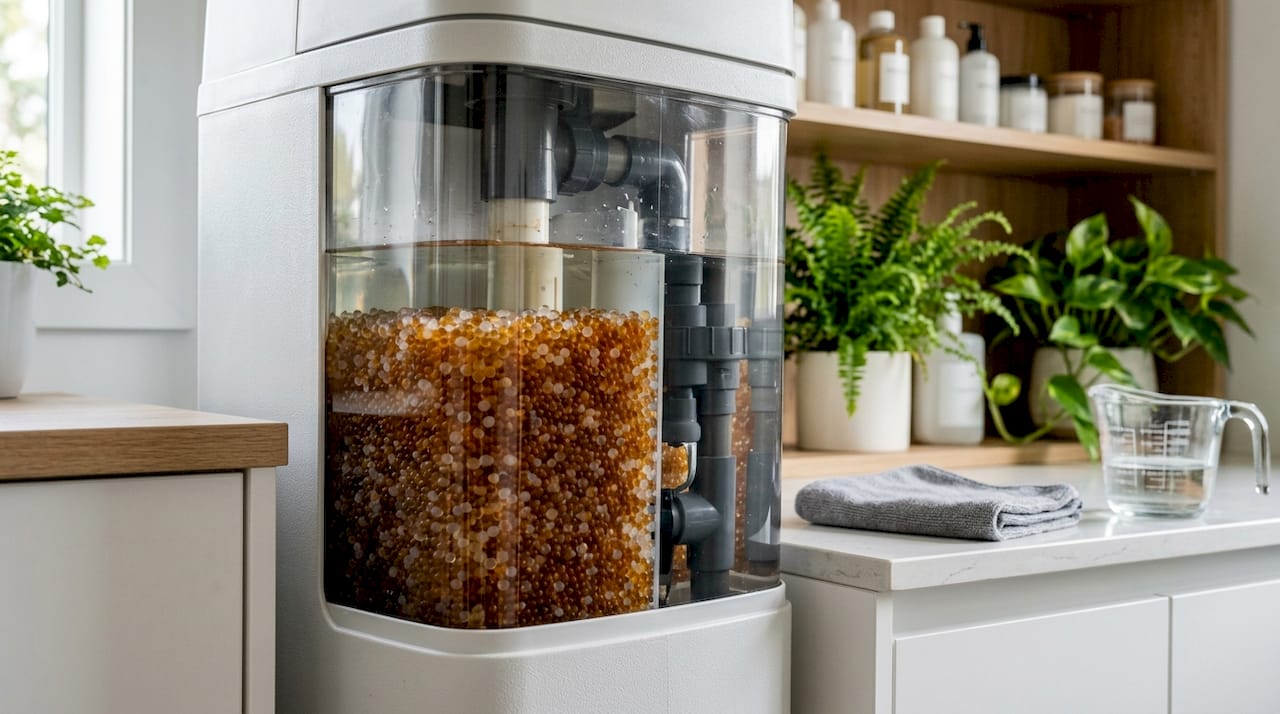
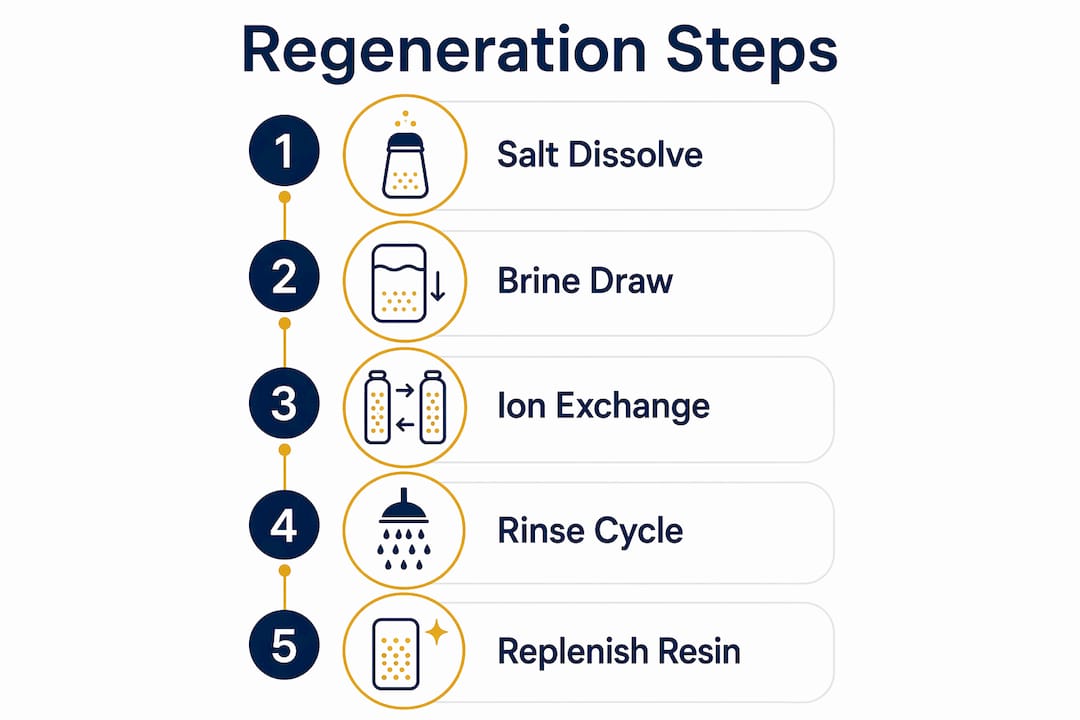
The system has two main components: the resin tank and the brine tank. The resin tank does the actual softening. The brine tank holds a salt solution that flushes the resin beads clean during a process called regeneration. Without regeneration, the resin beads would become saturated and stop working.

Regeneration cycles run automatically. Timer-based systems regenerate on a fixed schedule, such as every three days, regardless of water usage. Demand-based systems, also called metered systems, regenerate only when needed, which uses less salt and water overall. Demand-based regeneration is the more efficient choice for most households.
One critical point: a water softener is not a water filter. Softeners do not remove contaminants like chlorine, lead, or pathogens. If your water has both hardness and contamination issues, you need a softener and a separate filtration system working together.
- Resin tank: Contains ion exchange resin beads that capture calcium and magnesium
- Brine tank: Holds salt solution used to regenerate the resin beads
- Control valve: Manages water flow and triggers regeneration cycles
- Bypass valve: Allows water to flow untreated when the system is regenerating or being serviced
Pro Tip: If you notice your water feels hard again shortly after installation, check the regeneration frequency first. A system regenerating too infrequently is the most common cause of early performance loss.
What types of water softeners are available?
Salt-based ion exchange softeners are the standard and most effective type for residential use. They are the only systems that actually reduce measured hardness values in your water. Every other category either conditions the water differently or addresses scale without removing minerals.
Salt-free water conditioners are the most common alternative. They do not remove calcium or magnesium. Instead, they alter the structure of hardness minerals so they are less likely to stick to surfaces and form scale. This makes them useful for scale prevention, but they do not produce truly softened water. Homeowners with moderate hardness who want to avoid salt may find them adequate, but they will not deliver the same soap lather or skin benefits as a true softener.
The choice of regenerating salt also matters. Sodium chloride is the standard and least expensive option. Potassium chloride is a sodium-free alternative that works just as well chemically, but it costs more and is harder to find. Homeowners on sodium-restricted diets often prefer potassium chloride or choose to bypass softened water to the kitchen faucet entirely.
Electronic and magnetic water conditioners are the most basic category. They attach to the outside of a pipe and claim to alter mineral behavior using electromagnetic fields. Independent research does not consistently support their effectiveness, and they are generally not recommended as a primary solution for significant hardness problems.
| Type | Removes hardness minerals | Maintenance | Best for |
|---|---|---|---|
| Salt-based ion exchange | Yes | Salt refills, regeneration monitoring | Homes with hardness above 7 GPG |
| Salt-free conditioner | No (reduces scale only) | Minimal | Moderate hardness, low-maintenance preference |
| Potassium chloride softener | Yes | Potassium refills (higher cost) | Sodium-sensitive households |
| Electronic/magnetic conditioner | No | None | Very mild hardness, supplemental use only |
What are the benefits of using a water softener in your home?
The most measurable benefit of water softening is appliance protection. Water heaters exposed to hard water can lose up to 48% efficiency within a year and see their lifespan cut nearly in half. That is a significant cost when you consider the price of replacing a water heater. Soft water keeps heating elements free of scale, so your water heater runs at full efficiency for years longer.
Cleaning performance improves noticeably with soft water. Households with very hard water use 50–75% more soap and detergent than those with soft water. Soft water allows soap to lather fully, so you use less product to get the same result. Dishes come out without spots, laundry feels softer, and showers rinse cleaner.
Skin and hair respond well to soft water too. Softened water reduces soap film left on skin after washing and can benefit people with sensitive skin or eczema that hard water worsens. The difference is subtle at first but becomes obvious within a few weeks of switching.
- Appliance longevity: Dishwashers, washing machines, and water heaters last longer without scale buildup
- Energy savings: Scale-free water heaters run more efficiently, reducing monthly energy bills
- Less soap and detergent: Soft water activates soap more effectively, cutting product usage
- Cleaner fixtures: Faucets and showerheads stay free of white mineral deposits
- Skin and hair comfort: Less mineral residue after bathing improves skin feel over time
Pro Tip: Pair your water softener with a water heater maintenance schedule. Even with soft water, sediment can accumulate in the tank. Flushing it annually keeps efficiency high.
One important clarification: soft water does not make your drinking water safer. Hard water is generally safe to drink, and a softener does not address contaminants. If drinking water quality is your concern, a reverse osmosis filter at the kitchen tap is the right tool for that job.
How can homeowners test their water hardness?
Water hardness is measured in grains per gallon (GPG) or milligrams per liter (mg/L). The standard scale runs from soft to very hard:
- Soft: Less than 1 GPG (less than 17 mg/L)
- Slightly hard: 1–3.5 GPG (17–60 mg/L)
- Moderately hard: 3.5–7 GPG (60–120 mg/L)
- Hard: 7–10 GPG (120–180 mg/L)
- Very hard: Above 10 GPG (above 180 mg/L)
The quickest non-scientific check is the soap test. Fill a clear bottle one-third with tap water, add a few drops of liquid soap, and shake it. If the water turns cloudy with few bubbles, your water is likely hard. If it produces a rich lather with clear water below, it is probably soft. This test gives you a rough signal, not a measurement.
For accurate results, use test strips designed for water hardness. They give near-instant readings and cost very little. [Lab analysis](https://ackuritlabs.com/how-to-test-for-hard-water-and-decide-if you-need-a-softener/) goes further, measuring iron and manganese levels that affect which softener capacity you need. If you are spending money on a whole-house system, a lab test is worth the small upfront cost.
Experts recommend skipping a softener if your hardness is below 3 GPG, since the operating costs outweigh the benefits at that level. Above 7–10 GPG, a traditional salt-based softener is usually the right call. Between 3 and 7 GPG, a salt-free conditioner may be enough depending on your priorities.
Pro Tip: Check with your local water utility first. Many publish annual water quality reports that include hardness data for your area. This saves you the cost of a test if your municipality already measures it.
If you notice plumbing issues like reduced water pressure or frequent fixture buildup, do not assume hard water is the only cause. Other plumbing problems can produce similar symptoms and need separate attention.
What factors should you consider when choosing a water softener system?
Sizing is the most important selection factor. A softener that is too small will exhaust its resin capacity before the next regeneration cycle, leaving you with hard water for part of the day. Sizing is based on two numbers: your water hardness in GPG and your household’s daily water usage. Multiply those together to get the daily softening demand, then choose a system rated to handle that load with room to spare.
Installation location matters more than most homeowners expect. The softener must be installed at the main water entry point so all water in the house is treated before it reaches any fixture or appliance. The unit needs access to a drain for the regeneration discharge and an electrical outlet for the control valve. A garage or utility room near the main shutoff valve is the typical location.
Ongoing maintenance is straightforward but non-negotiable:
- Salt replenishment: Check the brine tank monthly and refill salt as needed. Running out of salt means the resin cannot regenerate and the system stops softening.
- Resin cleaning: Iron in your water can foul the resin over time. A resin cleaner added periodically keeps the beads working at full capacity.
- Regeneration monitoring: Watch for changes in water feel or soap performance. These are the first signs that regeneration frequency needs adjustment.
- Bypass for drinking water: If sodium intake is a concern, configure the system to bypass the kitchen tap. Softener-added sodium runs approximately 8 mg/L per grain of hardness removed, which adds up at high hardness levels.
A quality whole-house softener typically lasts 10–20 years with proper maintenance. The main ongoing cost is salt, which varies based on water hardness and household usage. Factor both the upfront equipment cost and the annual salt expense into your budget before deciding.
Pro Tip: Follow a routine plumbing maintenance schedule alongside your softener upkeep. Softened water protects pipes, but regular inspections catch issues the softener cannot prevent.
Key Takeaways
A water softener is the most effective tool for protecting home appliances and plumbing from hard water damage, but testing your water hardness first determines whether you actually need one.
| Point | Details |
|---|---|
| Ion exchange is the standard | Salt-based ion exchange is the only method that measurably reduces water hardness. |
| Test before you buy | Use test strips or a lab analysis to measure GPG before choosing a system type or size. |
| Softeners are not filters | A softener removes hardness minerals only; a separate filter handles contaminants like chlorine or lead. |
| Appliance protection is real | Hard water can cut water heater efficiency by up to 48% within a year; soft water prevents that loss. |
| Maintenance keeps it working | Monthly salt checks and periodic resin cleaning are required to maintain softener performance. |
What I’ve learned after years of seeing hard water damage in homes
After seeing the inside of countless water heaters and dishwashers across Orange County and Los Angeles County, the pattern is consistent. Homeowners who ignored hard water for years end up replacing appliances far sooner than they should. The scale buildup is not dramatic. It happens slowly, and by the time you notice reduced hot water output or a dishwasher that no longer cleans well, the damage is already done.
The misconception I run into most often is that a water softener is a health product. It is not. The decision to install one is about comfort and appliance protection, not medical necessity. Hard water is safe to drink. If someone tells you otherwise, they are overselling the product.
What I do recommend is testing first, always. Too many homeowners buy a system based on a neighbor’s recommendation or a general sense that their water “feels off.” A $15 test strip kit or a utility report tells you exactly where you stand. That number determines whether you need a full salt-based system, a salt-free conditioner, or nothing at all.
The sodium concern is real but manageable. If anyone in your household is on a low-sodium diet, bypass the kitchen tap or switch to potassium chloride as the regenerating salt. Neither option is complicated, and both solve the problem cleanly.
— MDTECH
Professional water softener and appliance installation in Orange County
Hard water affects every appliance in your home, from your water heater to your dishwasher. Getting the installation right from the start protects that investment for years.

Mdtechservices works with homeowners across Orange County and Los Angeles County to install and maintain home systems correctly. Our licensed technicians handle appliance repair and installation with the same attention to detail whether the job is a water softener setup or a full appliance service call. We also offer residential appliance installation guidance so you understand exactly what the process involves before we arrive. Call us or book online to schedule a service visit and get your home’s water system working the way it should.
FAQ
What is a water softener and what does it do?
A water softener is a whole-house system that removes calcium and magnesium from water through ion exchange, replacing them with sodium or potassium ions. This prevents scale buildup in pipes and appliances and improves soap performance throughout the home.
How often does a water softener need to regenerate?
Regeneration frequency depends on water hardness and household usage. Demand-based systems regenerate only when the resin is exhausted, which is more efficient than timer-based systems that run on a fixed schedule.
Does a water softener make water safe to drink?
A water softener does not filter contaminants like chlorine, lead, or bacteria. Hard water is generally safe to drink, and a softener addresses hardness only. A separate filtration system is needed for drinking water safety concerns.
What is the difference between a water softener and a water conditioner?
A salt-based water softener removes hardness minerals through ion exchange and produces measurably soft water. A salt-free water conditioner alters mineral structure to reduce scale but does not remove calcium or magnesium from the water.
At what hardness level do I need a water softener?
Experts recommend a traditional salt-based softener when hardness exceeds 7–10 GPG. Below 3 GPG, the operating costs outweigh the benefits. Hardness between 3 and 7 GPG may be manageable with a salt-free conditioner.