
Most American households lose up to 30 percent of energy through inefficient heating and cooling systems. For homeowners across Orange and Los Angeles County, this means higher bills and less comfort throughout the year. Setting aside a few minutes to follow smart, step-by-step HVAC maintenance guidance not only protects your investment but also keeps your family comfortable in every season. Discover how the right approach and a few simple tools can help you achieve a reliably efficient home.
Table of Contents
- Step 1: Gather Essential Tools And Safety Gear
- Step 2: Turn Off Power And Access HVAC Components
- Step 3: Clean Or Replace HVAC Filters
- Step 4: Inspect And Clean Coils And Drain Lines
- Step 5: Test System Operation And Airflow
Quick Summary
| Key Point | Explanation |
|---|---|
| 1. Gather the right tools and safety gear | Essential tools include wrenches, screwdrivers, and safety glasses to ensure effective and safe HVAC maintenance. |
| 2. Power off the HVAC system before maintenance | Isolating electrical power prevents shock and equipment damage, ensuring your safety during repairs. |
| 3. Clean or replace HVAC filters regularly | Regular filter maintenance improves air quality and system efficiency, preventing unnecessary strain on the equipment. |
| 4. Inspect and clean coils and drain lines | This step is vital for system performance and prevents water damage, ensuring the longevity of your HVAC system. |
| 5. Test system operation and airflow | Assessing airflow consistency and temperature output helps confirm that your maintenance efforts restored system functionality. |
Step 1: Gather Essential Tools and Safety Gear
Preparing for HVAC maintenance requires assembling the right tools and safety equipment to protect yourself and work effectively. Your safety and precision are the top priorities when performing any home system inspection or repair.
Start by gathering these essential tools: adjustable wrench, screwdriver set (flathead and Phillips), voltage tester, pliers, wire cutters, and work gloves. Safety gear is non-negotiable and includes appropriate personal protective equipment like safety glasses, insulated electrical gloves, and respiratory protection if working with dust or older systems. Professional technicians understand that proper protective equipment prevents injuries and ensures safe maintenance procedures.
Before beginning any work, inspect your tools thoroughly. Damaged or worn equipment can create hazardous situations. Power tools must have intact cords and proper grounding, and hand tools should be free from rust or structural damage. Your work area should be clean, well-lit, and have adequate ventilation. Always ensure you have a fire extinguisher nearby and that electrical circuits are properly isolated before starting maintenance.
Pro tip: Keep a dedicated toolbox for HVAC maintenance with all safety gear and tools organized and easily accessible, helping you work efficiently and safely every time.
Step 2: Turn Off Power and Access HVAC Components
Before performing any maintenance on your HVAC system, you must completely isolate electrical power to prevent potential injury or equipment damage. This critical safety step protects you from electrical shock and ensures safe component access.
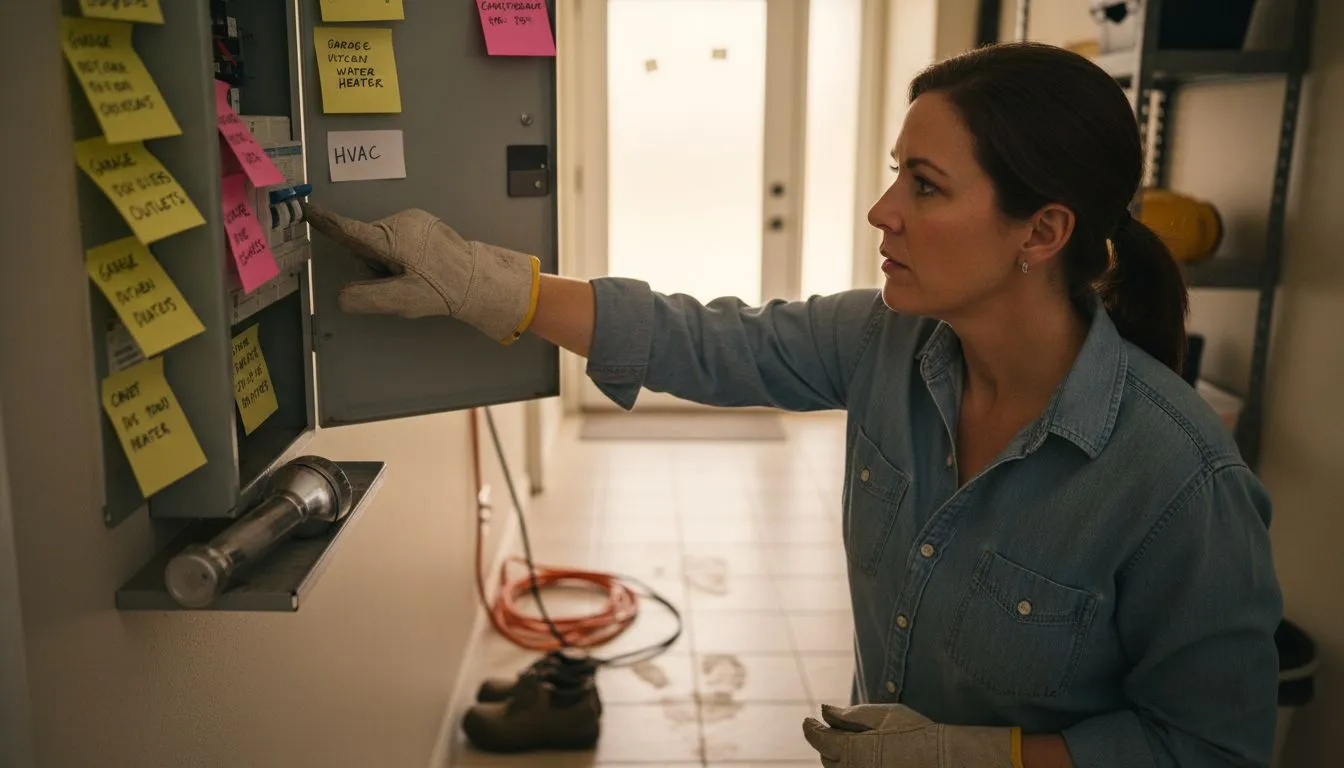
Locate your home’s electrical panel and identify the circuit breaker specifically labeled for your HVAC system. Carefully switch this breaker to the off position, verifying power disconnection by testing the system’s controls. For additional safety, follow precise shutdown procedures for building automation systems that involve understanding control panel access and electrical source isolation. After cutting power, wait several minutes to allow any residual electrical charge to dissipate before beginning your inspection.
Next, remove the exterior access panels on your heating and cooling equipment. These panels are typically secured with screws or quick release clips. Work systematically and carefully, keeping track of any removed fasteners. Take photos of the component layout before disassembly if you want a reference for reassembly. Ensure your workspace remains organized and clean throughout the process.
Pro tip: Use a voltage tester on all electrical connections even after switching off the circuit breaker to confirm zero electrical current before touching any components.
Step 3: Clean or Replace HVAC Filters
Maintaining clean HVAC filters is crucial for your system’s efficiency and your home’s air quality. This essential maintenance step helps prevent unnecessary strain on your heating and cooling equipment while ensuring the air you breathe remains clean and healthy.
Start by locating your system’s filter compartment. Most residential HVAC units have filters positioned near the return air duct or inside the air handler. Carefully remove the old filter and check its condition. If you have a disposable filter, replace it with a high efficiency model recommended by HVAC professionals. Look for filters with a MERV rating between 8 and 13 for optimal performance. For washable filters, gently rinse with lukewarm water and allow it to dry completely before reinstalling to prevent mold growth.
When selecting a new filter, pay attention to size and thickness. Measure your existing filter precisely or check your HVAC system’s manual for exact specifications. Filters typically need replacement every three to twelve months depending on usage and environmental factors. Mark your calendar or set a digital reminder to ensure you maintain a consistent filter maintenance schedule.
Pro tip: Purchase multiple replacement filters during your shopping trip and store them in a clean dry location to always have a backup ready when needed.
Compare popular HVAC filter types and their major characteristics:
| Filter Type | Typical MERV Rating | Lifespan | Best Used For |
|---|---|---|---|
| Fiberglass | 1–4 | 30 days | Basic dust filtration |
| Pleated | 8–13 | 3–6 months | Allergen reduction |
| Washable | 1–4 | Up to 5 years | Eco-friendly homes |
| HEPA | 17–20 | 12 months | Maximum particle capture |
Step 4: Inspect and Clean Coils and Drain Lines
Maintaining your HVAC system’s coils and drain lines is critical for ensuring optimal performance and preventing potential water damage or system inefficiency. This maintenance step helps your cooling system operate smoothly and extends its overall lifespan.
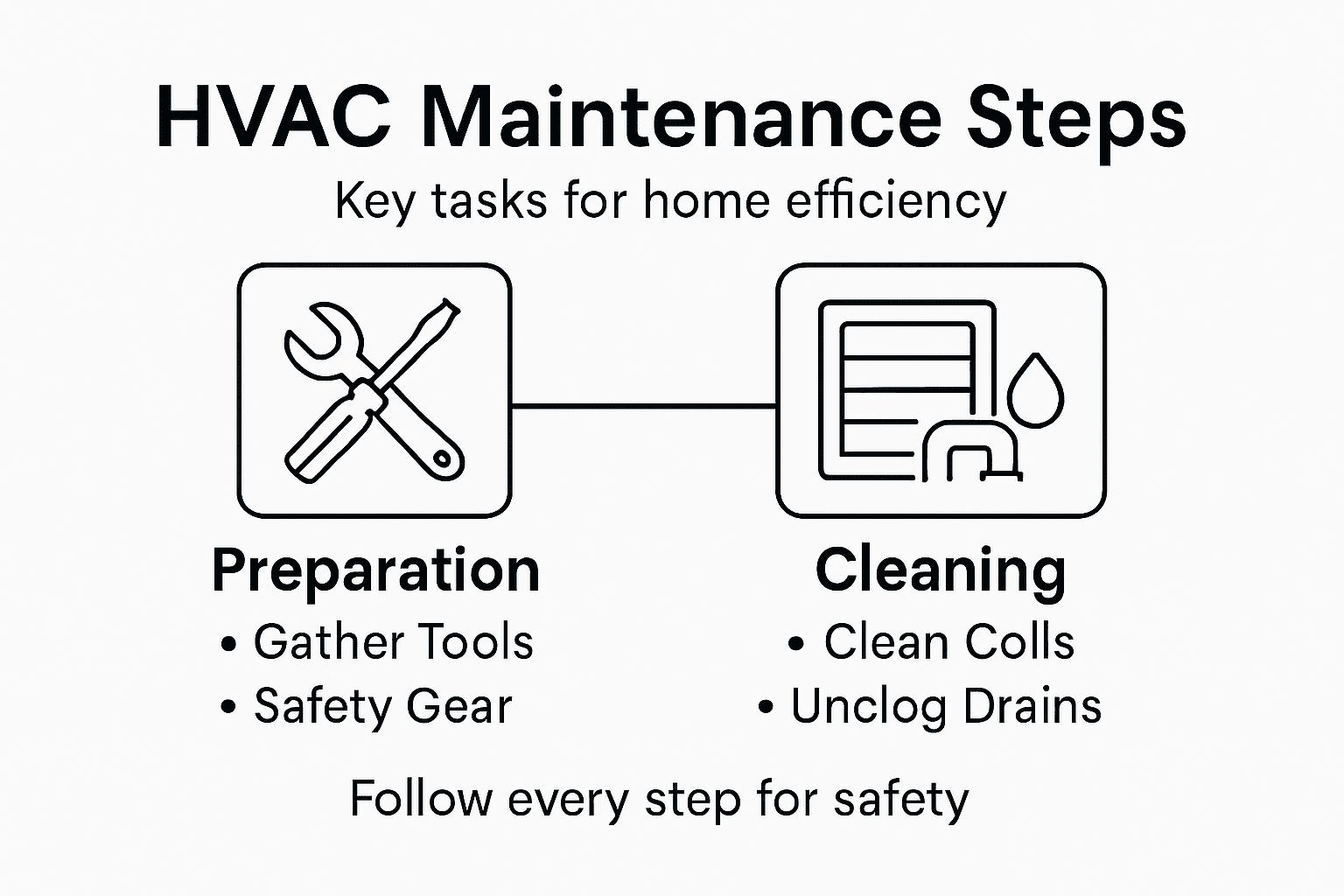
Begin by carefully inspecting the evaporator and condenser coils for any signs of dirt accumulation or debris. Identifying signs of dirty AC coils early can prevent significant performance issues. Use a soft brush or vacuum with a soft attachment to gently remove dust and debris. For more thorough cleaning, use a commercially available coil cleaner specifically designed for HVAC systems. Spray the cleaner according to manufacturer instructions, allowing it to sit briefly before wiping or rinsing.
Next, focus on the drain lines. Locate the condensate drain line near your indoor air handler and check for any blockages. Use a wet vacuum or special drain line cleaning solution to remove potential clogs caused by algae or debris. Pour a cup of white vinegar through the drain line every few months to prevent microbial growth and maintain clear drainage. Pay special attention to the drain pan underneath the unit, ensuring it is clean and free from standing water.
Pro tip: Keep a maintenance log with dates of cleaning and any observations to track your HVAC system’s performance and identify potential issues early.
Here’s a quick reference for key HVAC maintenance tasks and their benefits:
| Maintenance Task | Main Benefit | Risk If Ignored |
|---|---|---|
| Filter replacement | Improved air quality | Dust buildup, lower efficiency |
| Coil cleaning | Higher system efficiency | Compressor failure, increased energy cost |
| Drain line clearing | Prevents water damage | Mold growth, leaks |
| Airflow testing | Balanced comfort | Uneven room temperatures |
Step 5: Test System Operation and Airflow
Testing your HVAC system’s operation and airflow is crucial for ensuring optimal performance, energy efficiency, and home comfort. This step helps you verify that your maintenance efforts have successfully restored your system to peak functioning condition.
Start by turning on your heating and cooling system and evaluating system performance using professional testing methods. Listen carefully for unusual sounds during startup and monitor the airflow from each room’s vents. Check that air is coming out consistently and at the expected temperature. Use a digital thermometer to measure the temperature difference between supply and return air vents if possible. A typical system should produce a 15 to 20 degree temperature differential.
Next, systematically check each room’s airflow. Hold a piece of tissue paper near each vent to assess air movement consistency. Weak or uneven airflow might indicate issues with ductwork, blocked vents, or problems with your system’s blower. Pay attention to any rooms that feel significantly warmer or cooler than others. If you notice persistent airflow problems, it may be time to consult a professional HVAC technician for a more comprehensive assessment.
Pro tip: Create a simple sketch of your home’s floor plan and mark areas with weak airflow to help diagnose potential system issues more effectively.
Keep Your Home Comfortable and Safe with Expert HVAC Support
Performing step-by-step HVAC maintenance at home involves important tasks like turning off power safely, cleaning filters, and testing airflow. These are essential steps to boost your system’s efficiency and protect your family from poor air quality or costly equipment damage. However, we understand how challenging it can be to manage technical inspections, coil cleaning, and electrical safety on your own without risking injury or system faults.
MDTech Services offers reliable and professional HVAC repair and maintenance services in Orange County and Los Angeles County, California. Our licensed technicians specialize in ensuring your heating and cooling systems operate at peak performance so you can enjoy clean air and consistent comfort year-round. We provide fast responses, expert appliance and HVAC repairs, and safety-first service to keep your home running smoothly.

Don’t risk your home’s comfort or safety by postponing vital HVAC upkeep. Visit MDTech Services today to schedule an appointment. Whether you need help with filter replacement, coil cleaning, or system inspections, our team is ready to assist. Get peace of mind from skilled professionals focused on your home’s system reliability and your family’s well-being.
Explore how we make complex home appliance and HVAC repairs easy at MDTech Services Home Page, or contact us now to book your service. Take the next step toward hassle-free HVAC maintenance and expert support.
Frequently Asked Questions
What tools do I need for HVAC maintenance?
You will need essential tools such as an adjustable wrench, a screwdriver set, a voltage tester, pliers, wire cutters, and work gloves. Gather these tools before starting your maintenance to ensure a smooth and safe process.
How can I safely access my HVAC system’s components?
To safely access HVAC components, first turn off the power at the circuit breaker dedicated to the HVAC system. Then, remove the exterior access panels carefully, keeping track of any fasteners for reassembly.
How often should I clean or replace my HVAC filters?
You should clean or replace your HVAC filters every three to twelve months, depending on usage and environmental factors. Mark your calendar to ensure you are consistently maintaining your system’s filters for optimal performance.
What are the steps to clean the coils and drain lines?
Start by inspecting the evaporator and condenser coils for dirt and debris, and clean them gently using a soft brush or vacuum. Next, check the condensate drain line for blockages, and use a wet vacuum or vinegar solution to clear any clogs and maintain drainage.
How can I test my HVAC system’s airflow?
To test your HVAC system’s airflow, turn on the system and monitor the airflow from each room’s vents. Use a piece of tissue paper near each vent to assess air movement, ensuring it’s consistent and at the expected temperature.
What should I do if I notice weak airflow in certain rooms?
If you notice weak airflow in certain rooms, first check for blocked vents or issues with your ductwork. If the problem persists, consult a professional HVAC technician for a more comprehensive assessment and solution.
Recommended
- Effective HVAC Troubleshooting Process for Homeowners
- Seasonal HVAC Maintenance: Boosting Efficiency & Savings
- Refrigerator repair Condenser Coil cleaning. The Ultimate Guide to Refrigerator Repair: How to Properly Clean the Condenser Coil – MDTech Services
- 7-Step Appliance Replacement Checklist for Homeowners