
TL;DR:
- A condenser coil is a critical heat exchanger in HVAC and refrigeration systems that releases heat from refrigerant by converting it from a hot gas into a liquid. Its efficiency depends on proper design, material quality, and outdoor conditions, which influence heat rejection and system performance. Regular cleaning, unobstructed airflow, and professional inspections help maintain its functionality and extend the equipment’s lifespan.
A condenser coil is defined as the heat-exchanger component in an HVAC or refrigeration system that releases heat from refrigerant by converting it from a hot, high-pressure gas back into a liquid. This process is the backbone of every cooling cycle, from the central air conditioner on your roof to the refrigerator in your kitchen. Without a functioning condenser coil, refrigerant cannot complete its cycle, and your system stops cooling entirely. Understanding what this component does, where it sits, and how to keep it working gives you real power over your home’s comfort and energy costs.
The condenser coil sits inside the outdoor unit of your air conditioner or the rear/bottom section of a refrigerator. It works alongside the compressor, the condenser fan, and the refrigerant lines as a coordinated system. Bryant, a leading HVAC manufacturer, describes the outdoor condenser ensemble as a set of components that must work together for effective heat rejection outside the building. When any one part underperforms, the whole system feels it.
How does a condenser coil work in the cooling cycle?
The condenser coil operates through a precise sequence of thermodynamic events. Here is how the process unfolds from start to finish:
- Refrigerant leaves the compressor as a hot, high-pressure gas. The compressor raises the refrigerant’s pressure and temperature, sending it toward the condenser coil ready to shed heat.
- Desuperheating occurs first. The refrigerant enters the coil hotter than its condensation point. In this stage, which accounts for roughly 5 to 10% of heat rejection, the coil cools the gas down to its condensation temperature.
- Condensation is the main event. Approximately 80 to 85% of the total heat rejection happens here, as the refrigerant transitions from gas to liquid. This phase change releases a large amount of energy into the surrounding air.
- Subcooling completes the process. The final 5 to 10% of heat rejection cools the liquid refrigerant slightly below its condensation point, which stabilizes it before it reaches the expansion valve. Insufficient subcooling can cause metering issues and reduce overall system reliability.
- The condenser fan drives airflow across the coil. Without steady airflow, heat cannot transfer efficiently from the coil surface to the outdoor air. The fan is what makes air-cooled condensers practical for residential use.
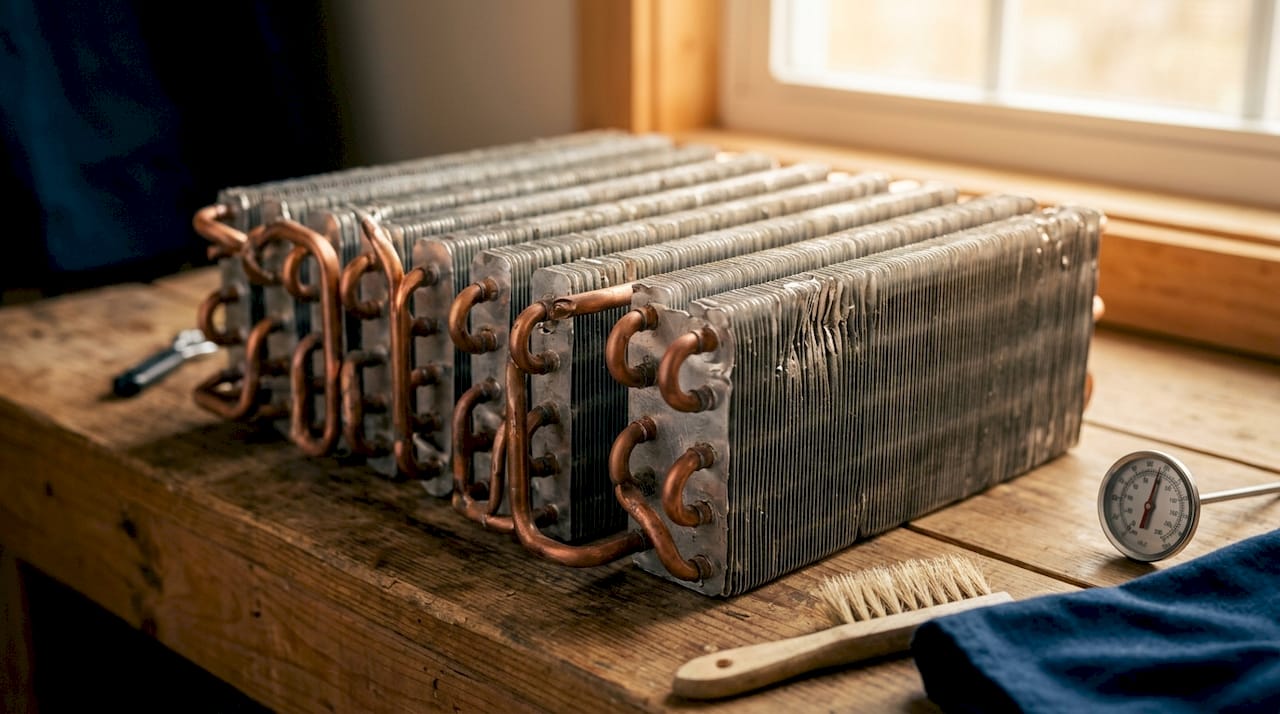
The coil itself is typically made from copper tubing bent into a serpentine pattern and surrounded by thin aluminum fins. This design maximizes the surface area available for heat transfer without making the unit physically large. The quality of the coil’s materials and the density of its fins directly affect how efficiently it can reject heat under real-world conditions.
Pro Tip: If your outdoor unit’s fan is running but the system is not cooling well, the condenser coil may be the first place to inspect. A coil that cannot shed heat forces the compressor to work harder, shortening its life.
What types of condenser coils are commonly used?
Condenser coils come in two primary designs, each with distinct trade-offs in cost, durability, and thermal performance.
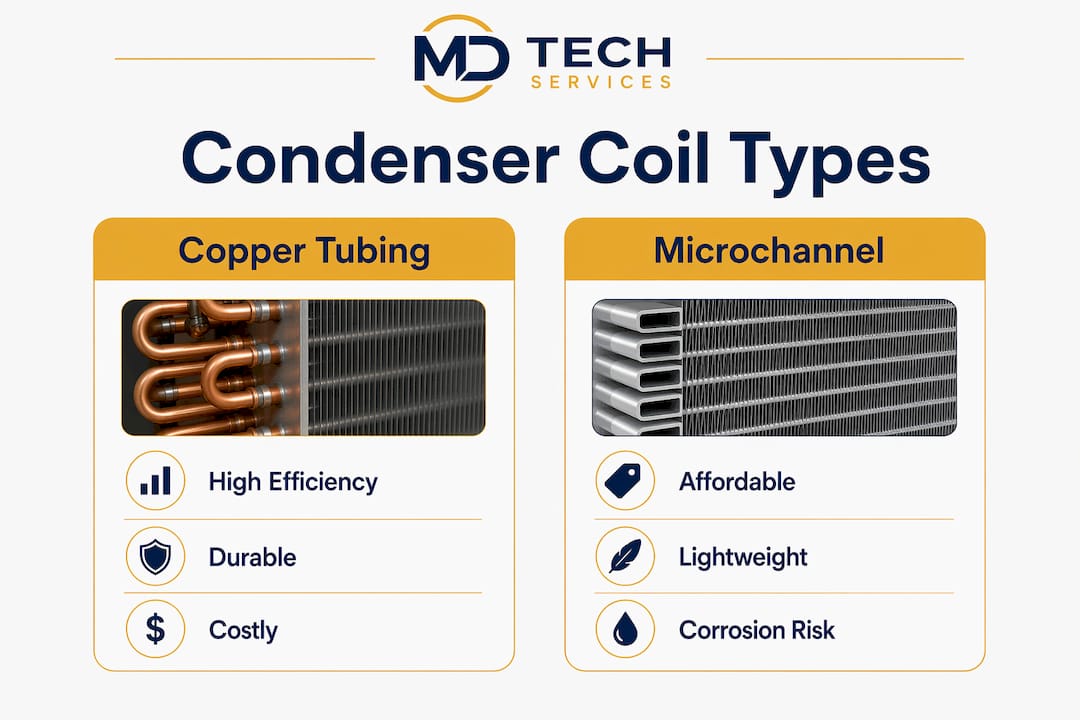
| Coil type | Material | Efficiency | Durability | Best for |
|---|---|---|---|---|
| Copper tube with aluminum fins | Copper tubes, aluminum fins | Good | High (copper resists corrosion) | Residential AC, refrigerators |
| Microchannel | Aluminum alloy | Very good | Moderate (prone to corrosion near coast) | Modern residential and light commercial AC |
Copper tube with aluminum fins is the traditional design and still the most common in residential systems. Copper conducts heat well and is relatively easy to repair in the field. The aluminum fins increase surface area and are inexpensive to manufacture. Most older systems and many current mid-range units use this design.
Microchannel coils use flat aluminum tubes with multiple small internal channels instead of round copper tubes. Key advantages include:
- Lighter overall weight, which reduces shipping and installation costs
- Higher heat transfer efficiency per unit of surface area
- Less refrigerant charge required, which lowers material costs
- Easier to clean because the flat surface does not trap debris as easily as fin-and-tube designs
The trade-off with microchannel coils is susceptibility to corrosion in coastal or high-humidity environments. Homeowners near the ocean in areas like Los Angeles County or Orange County should ask their technician about coil coatings or protective treatments when replacing a unit.
Air-cooled condensers use fans to move air across either coil type, while water-cooled and evaporative condensers use water loops for heat rejection. For residential applications, air-cooled designs with finned-tube or microchannel coils are standard.
How does outdoor environment affect condenser coil performance?
The outdoor environment is one of the most underestimated factors in HVAC performance. Your condenser coil can only reject heat into air that is cooler than the refrigerant inside it. When outdoor temperatures rise, that temperature difference shrinks, and heat transfer slows down.
Research confirms the scale of this effect. A 33.72% increase in ambient air temperature reduced condenser capacity by up to 19.84%. That means on the hottest days in Southern California, your system is working nearly 20% harder just to keep up with the same cooling load. This explains why energy bills spike in July and August even when your usage habits have not changed.
Beyond temperature, physical contamination is the other major threat:
- Dirt and dust buildup on the coil fins insulates the surface and blocks heat transfer. Even a thin layer of grime measurably reduces efficiency.
- Grass clippings and debris packed into the coil restrict airflow, which is just as damaging as a dirty surface.
- Overgrown shrubs or fencing placed too close to the outdoor unit create recirculation zones where hot exhaust air gets pulled back into the coil instead of dispersing.
- Bent fins from physical contact or hail reduce the effective surface area and restrict airflow through the coil.
Dirty or obstructed condenser coils cause higher system pressure, increased energy consumption, and potential compressor overheating. The compressor is the most expensive component in your system, so protecting it starts with keeping the coil clean and clear.
Signs that your coil’s environment is hurting performance include longer run times to reach the set temperature, warm air from supply vents on hot days, and an outdoor unit that feels unusually hot to the touch.
What are common condenser coil maintenance tips and troubleshooting signs?
Routine care for your condenser coil is straightforward and pays off in lower energy bills and fewer repair calls. Keeping coils clean and airflow unobstructed are the two most impactful things a homeowner can do between professional visits.
Here is what a solid maintenance routine looks like:
- Clear the area around the unit. Keep at least 18 to 24 inches of clearance on all sides. Trim back plants, remove stored items, and check that nothing has fallen against the coil.
- Rinse the coil with a garden hose. Spray from the inside out to push debris away from the fins rather than deeper into them. Do this at the start of cooling season and again mid-season.
- Straighten bent fins. A fin comb, available at most hardware stores, restores airflow through damaged sections of the coil.
- Check for ice or frost. Ice on the outdoor condenser coil is not normal. Frost on outdoor coils typically signals low refrigerant, a faulty metering device, or abnormal operating conditions. It is not simply a dirt problem and requires professional diagnosis.
- Schedule annual professional inspections. A licensed technician checks refrigerant charge, measures system pressures, and inspects the coil for corrosion or leaks that are not visible from the outside.
Pro Tip: Never use a pressure washer on condenser coil fins. The high pressure bends the thin aluminum fins and can force water into electrical components. A standard garden hose with moderate pressure is all you need.
Troubleshooting signs that point to condenser coil problems include:
- System runs continuously but cannot reach the set temperature
- Noticeably higher electricity bills without a change in usage
- Ice or frost on any part of the outdoor unit
- Hissing or bubbling sounds near the coil, which can indicate a refrigerant leak
- Visible corrosion, bent fins, or physical damage on the coil surface
For refrigerator condenser coils, the same principles apply. Coils located at the back or underneath the unit collect dust and pet hair, and cleaning them once or twice a year keeps the compressor from overworking. You can find a full step-by-step HVAC maintenance guide for additional guidance on caring for your entire system.
Key takeaways
The condenser coil is the single component most responsible for your HVAC system’s ability to reject heat, and its condition directly determines your system’s efficiency, reliability, and operating cost.
| Point | Details |
|---|---|
| Core function | The condenser coil converts hot refrigerant gas into liquid by releasing heat to outdoor air. |
| Three-stage process | Heat rejection occurs through desuperheating, condensation, and subcooling inside the coil. |
| Coil types matter | Copper/aluminum fin coils suit most homes; microchannel coils offer efficiency gains but need corrosion protection in coastal areas. |
| Environment impacts output | A significant rise in outdoor temperature can reduce condenser capacity by nearly 20%, raising energy costs. |
| Maintenance prevents failure | Clearing debris, rinsing the coil, and scheduling annual inspections protect the compressor and extend system life. |
What experience has taught us about condenser coil care
After years of servicing HVAC systems and appliances across Orange County and Los Angeles County, the pattern we see most often is this: homeowners wait until the system stops cooling before they think about the condenser coil. By that point, the compressor has been running under stress for weeks or months, and what could have been a simple cleaning has turned into a compressor replacement.
The misconception we hear most is that the outdoor unit is “self-cleaning” because it sits in the open air. The opposite is true. The outdoor unit collects everything the wind carries: cottonwood seeds, grass clippings, dust, and insects. A coil packed with debris is one of the most common causes of preventable system failure we encounter.
The other thing worth saying plainly: ice on your outdoor unit is never a sign that the system is working well. We have seen homeowners interpret frost on the condenser as proof the unit is “extra cold.” In reality, ice on outdoor coils points to refrigerant or flow problems that will damage the compressor if left unaddressed. If you see ice, turn the system off and call a licensed technician the same day.
The good news is that condenser coil maintenance is genuinely simple. A garden hose, 20 minutes, and a clear perimeter around the unit handle most of what homeowners can do themselves. Pair that with one professional inspection per year, and most systems will run reliably for 15 years or more. The role of refrigerants in this cycle is equally worth understanding, because coil performance and refrigerant quality are directly connected.
— MDTECH
How Mdtechservices can help with your condenser coil and HVAC system
If your system is running longer than usual, your energy bills have climbed without explanation, or you have spotted ice or damage on your outdoor unit, Mdtechservices is ready to help. Our licensed technicians serve homeowners throughout Orange County and Los Angeles County with professional HVAC inspections, condenser coil cleaning, and full system diagnostics.

We handle everything from routine coil maintenance to refrigerant recharge and compressor diagnosis, so you get a clear answer and a reliable fix. Whether you need HVAC repair services or want to understand your options before a problem gets worse, our team is available to schedule a visit at your convenience. You can also explore our appliance repair services for refrigerator condenser coil issues and other household appliance concerns. Contact Mdtechservices today to book an appointment or get a same-day assessment.
FAQ
What is a condenser coil in simple terms?
A condenser coil is the part of your air conditioner or refrigerator that releases heat from the refrigerant, converting it from a hot gas back into a liquid so the cooling cycle can continue. It sits in the outdoor unit of an AC system or at the back or bottom of a refrigerator.
What is the difference between a condenser coil and an evaporator coil?
The evaporator coil absorbs heat from indoor air to cool your home, while the condenser coil releases that heat to the outdoors. They work as a pair: the evaporator coil pulls heat in, and the condenser coil pushes it out.
How often should a condenser coil be cleaned?
Rinse the outdoor condenser coil with a garden hose at least once per cooling season, and schedule a professional inspection annually. In dusty or high-pollen environments like Southern California, a mid-season rinse adds meaningful protection.
Why is my condenser coil freezing up?
Ice on a condenser coil usually indicates low refrigerant charge, a faulty metering device, or abnormal system operating conditions. It is not a normal condition and requires a licensed technician to diagnose and repair before the compressor sustains damage.
Does outdoor temperature affect how well my condenser coil works?
Yes, significantly. Research shows that a large rise in ambient temperature can reduce condenser capacity by nearly 20%, which is why your system struggles most on the hottest days of the year.