
TL;DR:
- Compressor failure causes a complete loss of cooling by halting refrigerant circulation in HVAC systems. It often results from electrical faults, lubrication issues, or contamination, and early warning signs include unusual noises and higher energy bills. Prompt professional diagnosis and timely repair or replacement can prevent extensive damage and costly system failures.
Compressor failure is defined as the complete breakdown of the mechanical unit responsible for circulating refrigerant through your HVAC system, causing an immediate and total loss of cooling. Also called compressor burnout or compressor seizure in industry terms, this failure does not just reduce comfort. It shuts down the entire cooling cycle. Compressor failure causes an abrupt stop of refrigerant flow and triggers system shutdown, leaving your home or property without air conditioning until the problem is addressed. For homeowners and property managers in Southern California, where summer temperatures regularly exceed 90°F, understanding this failure is not optional. It is a financial and comfort necessity.
What is a compressor failure and why does it matter?
The compressor is the mechanical core of any air conditioning or heat pump system. It pressurizes refrigerant gas and pushes it through the system so heat can be absorbed indoors and released outside. When the compressor stops working, that entire process halts. No refrigerant moves. No heat transfers. The system may still run fans and draw power, but it produces no cooling.
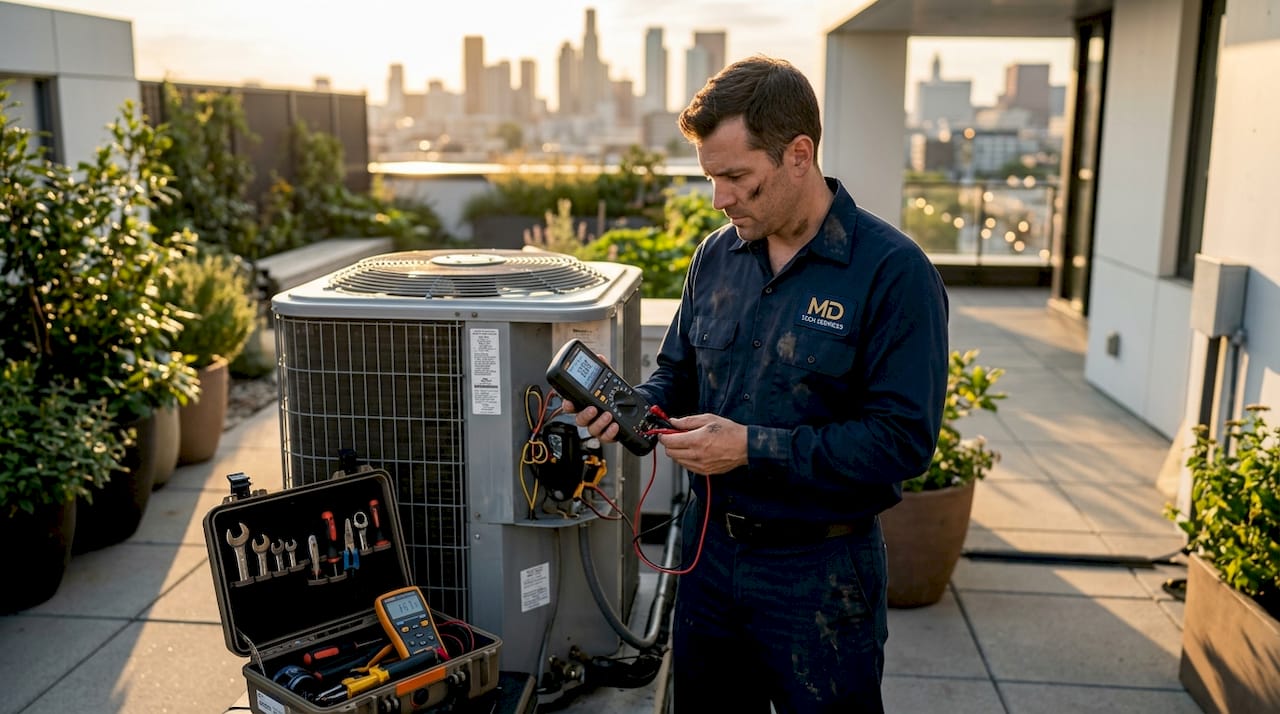
What makes compressor failure particularly costly is that it is rarely a sudden event. In most cases, it is the final consequence of untreated upstream problems, including refrigerant leaks, electrical imbalances, or contamination that built up over months or years. By the time the compressor stops, the damage is already extensive. This is why recognizing the early warning signs matters so much more than understanding the failure itself.
For property managers overseeing multiple units, a single compressor failure can affect tenant comfort, trigger lease complaints, and create liability if the issue is not resolved quickly. For homeowners, the financial impact can range from a manageable repair to a full system replacement costing several thousand dollars.
What causes a compressor to fail?
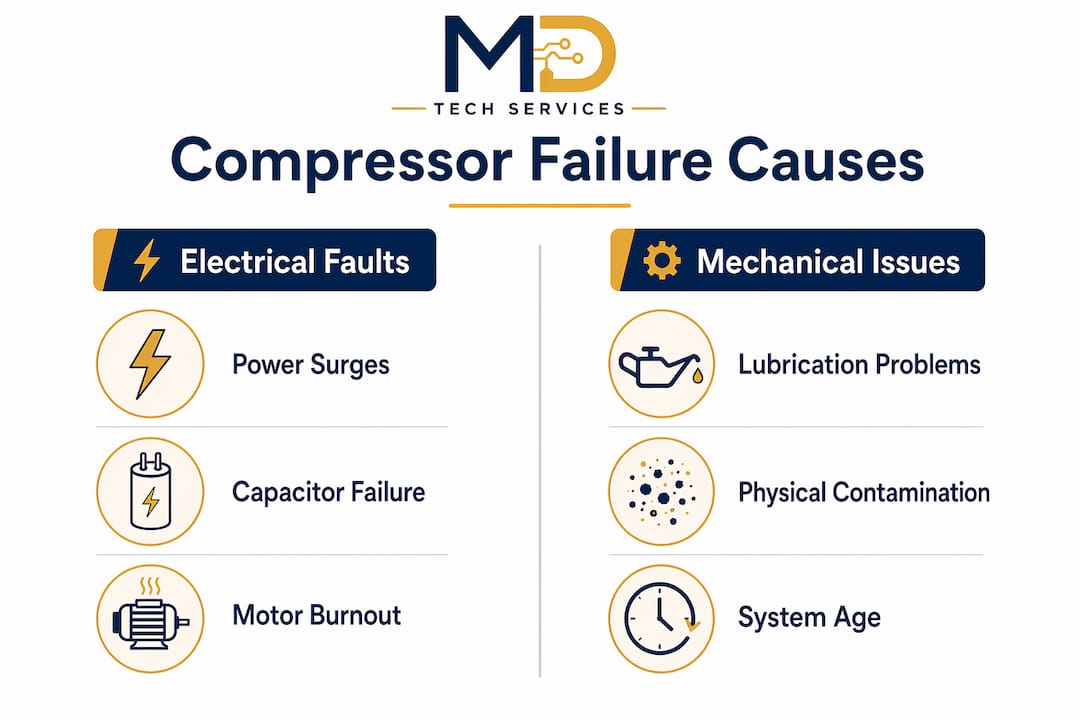
Compressor failures trace back to three primary categories: electrical faults, lubrication problems, and physical contamination. Understanding each one helps you recognize which conditions put your system at risk.
Electrical faults
Power surges, failed capacitors, and motor burnout are the most common electrical causes. A capacitor failure prevents the compressor motor from starting properly, creating a condition called “hard starting” that stresses the motor windings with every attempt. Over time, this degrades the motor until it fails completely. Electrical failures and mechanical locks are primary reasons compressors stop starting altogether.
Current imbalance is a subtler electrical threat. A 2 to 3% current imbalance in the motor windings signals internal degradation that will eventually lead to burnout. Most homeowners never see this warning because it requires a technician with the right meters to detect it.
Lubrication failures
The compressor relies on oil to keep its internal moving parts from grinding against each other. Oil starvation, caused by refrigerant leaks that carry oil out of the system, leaves metal surfaces exposed to friction and heat. The result is accelerated wear and eventual seizure.
A less obvious lubrication risk involves refrigerant chemistry. Lubricants incompatible with newer low-GWP refrigerants reduce viscosity and accelerate metal wear, leading to early failure even in relatively new units. If your system was recently serviced and the technician used the wrong refrigerant or oil combination, your compressor could fail years ahead of schedule.
Physical contamination and age
Moisture entering the refrigerant circuit reacts with refrigerant to form acid. That acid attacks metal components, degrades oil, and leaves behind sludge that clogs the system. This condition, called acid burnout, is one of the most destructive forms of compressor failure and often requires full system flushing.
Age compounds every risk. Compressor failure risk increases significantly after 10 to 15 years of system operation, particularly in high-demand climates like Orange County and Los Angeles County where systems run for extended periods each year.
Pro Tip: If your HVAC system is more than 12 years old and showing any unusual behavior, schedule a professional inspection before summer peak season. Catching a developing problem in spring costs a fraction of an emergency replacement in August.
What are the compressor failure symptoms homeowners should recognize?
Catching compressor failure signs early is the difference between a manageable repair and a full system replacement. These are the symptoms that deserve immediate attention.
- Loud or unusual noises: Rattling, banging, screeching, or clicking sounds from the outdoor unit indicate internal mechanical stress. A rattling compressor often signals loose internal components. Screeching points to bearing failure.
- Frequent breaker trips: The compressor draws the highest electrical load in your HVAC system. If it trips the circuit breaker repeatedly, the motor is drawing more current than it should, which signals internal damage.
- Hard starting or short cycling: A compressor that struggles to start or shuts off within minutes of running is under electrical or mechanical stress. Short cycling also accelerates wear on every other component in the system.
- Reduced cooling performance: If your system runs continuously but the indoor temperature never reaches the thermostat setting, the compressor may not be building adequate refrigerant pressure.
- Higher energy bills without explanation: A failing compressor works harder to achieve the same output. Ignoring early warning signs can multiply repair costs up to six times compared to addressing the issue promptly.
- Oil staining near the outdoor unit: Visible oil residue around the compressor housing indicates a refrigerant and oil leak, which directly threatens lubrication integrity.
The signs of failing HVAC systems often appear weeks or months before a compressor stops working entirely. Paying attention to these signals gives you time to act before the situation becomes an emergency.
How to diagnose compressor failure: what you need to know
Diagnosing a failed or failing compressor involves both electrical and mechanical checks. Here is how the process typically unfolds when a licensed technician evaluates your system.
- Check the control circuit first. A technician verifies that the thermostat signal is reaching the compressor contactor and that safety controls, such as high-pressure and low-pressure switches, have not tripped. A tripped safety control is a symptom, not the root cause.
- Test electrical components. Capacitors, contactors, and motor windings are tested with a multimeter. Winding resistance readings that fall outside manufacturer specifications confirm internal motor damage.
- Measure refrigerant pressures. Suction and discharge pressure readings tell a technician whether the compressor is building pressure correctly. Low discharge pressure with normal suction pressure points directly to compressor inefficiency or failure.
- Check for mechanical lock. A locked compressor will not turn at all. Technicians test this by attempting to start the compressor with a hard-start kit. If the motor still does not turn, the compressor is mechanically seized.
- Inspect for contamination. Oil samples and refrigerant analysis can detect acid or moisture contamination, which determines whether a simple compressor swap is sufficient or whether the entire refrigerant circuit needs flushing.
Pro Tip: Never override a safety shutdown to force a compressor to run. Running a failing compressor carries real risks including electrical shorts and fire hazards. If your system shuts itself off, treat that as a protective response, not a malfunction.
Most homeowners can observe symptoms and check breakers, but the actual diagnostic steps require licensed technicians with pressure gauges, multimeters, and refrigerant handling certification. Attempting electrical tests without proper training creates safety risks and can void equipment warranties.
Repair vs. replacement: understanding your options and costs
Once a compressor failure is confirmed, you face a decision that depends on system age, warranty status, and the extent of secondary damage.
| Factor | Repair | Replacement |
|---|---|---|
| System age | Under 10 years, compressor under warranty | Over 12 to 15 years, warranty expired |
| Damage scope | Isolated compressor failure, no contamination | Acid burnout, widespread contamination |
| Cost range | $800 to $2,300 for compressor replacement | $3,500 to $7,500 or more for full system |
| Energy efficiency | Restores original efficiency | New system delivers improved efficiency |
| Risk | Remaining components may fail soon | Higher upfront cost, lower long-term risk |
AC compressor replacement costs range between $800 and $2,300, with a typical cost near $1,200 for a licensed technician to supply and install the unit. That figure assumes no secondary contamination. If acid burnout is present, flushing the refrigerant circuit and replacing the expansion valve and filter drier adds significant cost.
The financial case for acting quickly is clear. Continuing to operate a failing compressor risks secondary contamination that can turn a $1,000 repair into a $6,000 or greater total system loss. The longer a damaged compressor runs, the more debris and acid it spreads through the refrigerant circuit.
For property managers, the calculus also includes tenant impact and liability. A system that fails in July in Los Angeles County creates an urgent habitability concern. Scheduling preventative HVAC maintenance before peak season is the most cost-effective way to avoid that scenario entirely.
Key takeaways
Compressor failure is almost always preventable when warning signs are caught early and addressed by a licensed technician before the damage becomes irreversible.
| Point | Details |
|---|---|
| Definition of failure | The compressor stops circulating refrigerant, causing a complete loss of cooling. |
| Primary causes | Electrical faults, lubrication breakdown, and contamination are the three root causes. |
| Act on symptoms early | Ignoring warning signs can increase repair costs up to six times the original amount. |
| Diagnosis requires a pro | Electrical and pressure testing must be performed by a licensed HVAC technician. |
| Repair vs. replace | System age and contamination scope determine whether repair or full replacement makes sense. |
What years of HVAC work have taught us about compressor failures
After servicing HVAC systems across Orange County and Los Angeles County, the pattern we see most often is this: the compressor was not the first thing to fail. It was the last. A refrigerant leak went unaddressed for a season. A capacitor showed signs of stress but the homeowner delayed the service call. A system ran through three Southern California summers without a single maintenance visit. By the time the compressor stops, it has been absorbing the consequences of those earlier decisions for months.
The uncomfortable truth is that most compressor failures we respond to were preventable. Not because the homeowner was careless, but because the early signs are easy to dismiss. A little extra noise. A slightly higher electric bill. A system that takes a few minutes longer to cool the house. None of those feel urgent until the system stops working entirely on a 95-degree afternoon.
Our strong recommendation is to treat any change in your system’s behavior as a signal worth investigating. A licensed technician can assess your system in under an hour and tell you whether you are looking at a $150 capacitor replacement or a developing compressor problem. That hour of professional time is the most cost-effective investment you can make in your HVAC system.
We also caution against the instinct to delay professional diagnosis in favor of online troubleshooting. Electrical HVAC components carry real safety risks, and a misdiagnosis can lead to replacing parts that were not the problem while the actual cause continues to damage the system.
— MDTECH
Get professional help for your HVAC compressor issue
If your system is showing any of the symptoms described in this article, the right move is a professional diagnosis before the problem gets worse.

Mdtechservices provides licensed HVAC repair and maintenance services across Orange County and Los Angeles County. Our technicians carry the tools and certifications to accurately diagnose compressor issues, assess secondary damage, and recommend the most cost-effective repair path for your specific system. Whether you are dealing with a hard-starting compressor, unexplained breaker trips, or a system that simply stopped cooling, we respond quickly and give you a clear picture of your options. Visit our HVAC repair guide to learn more about what residential HVAC repair involves and how to get started with a service request.
FAQ
What is a compressor failure in simple terms?
Compressor failure means the unit that pumps refrigerant through your air conditioning system has stopped working, causing a complete loss of cooling. The system may still run but will not produce cold air.
What are the most common compressor failure signs?
The most recognizable signs are loud banging or screeching from the outdoor unit, frequent circuit breaker trips, hard starting, and a home that will not reach the thermostat temperature despite the system running continuously.
How do I know if my compressor is failing or already failed?
A licensed technician uses pressure gauges and a multimeter to test refrigerant pressure and motor windings. A compressor that builds no discharge pressure or shows winding resistance outside manufacturer specs has failed or is failing.
How much does repairing a failed compressor cost?
Compressor replacement costs typically range from $800 to $2,300, with $1,200 being a common midpoint. Costs rise significantly if acid contamination requires full system flushing.
Should I repair or replace my HVAC system after compressor failure?
If your system is under 10 years old and the compressor is under warranty, repair is usually the right choice. For systems older than 12 to 15 years or those with widespread contamination, full replacement often delivers better long-term value.