
Choosing the right air conditioning system for your Orange or Los Angeles County home involves balancing energy efficiency, upfront costs, and climate suitability. With California’s strict energy codes requiring minimum SEER2 ratings and diverse housing stock ranging from older homes with ductwork to modern additions without ducts, homeowners face complex decisions. This article breaks down the main AC system types, their pros and cons, installation considerations, and practical advice to help you make a confident, informed choice that maximizes comfort while minimizing energy bills.
Table of Contents
- Key takeaways
- Evaluating your cooling needs: criteria for selecting an air conditioning system
- Central air conditioning systems: pros, cons, and suitability
- Ductless mini-split systems: efficient zoned cooling without ducts
- Window and portable air conditioners: budget-friendly options for targeted cooling
- Specialty systems: geothermal heat pumps and evaporative coolers for select SoCal homes
- Comparing air conditioning systems: efficiency, cost, and suitability for Orange and Los Angeles County homes
- Get expert help choosing and installing your air conditioning system
- Frequently asked questions
Key Takeaways
| Point | Details |
|---|---|
| Duct leaks waste energy | Central air uses ducts and leaks can dramatically increase energy consumption and bills. |
| Ductless mini splits | Mini splits provide targeted cooling without ducts for efficient zoning. |
| SEER2 and heat pumps | California codes require minimum SEER2 ratings and heat pumps are increasingly recommended for mild winters in Southern California. |
| Upfront vs operating costs | Higher efficiency equipment costs more upfront but saves money on energy over 15 to 20 years. |
Evaluating your cooling needs: criteria for selecting an air conditioning system
Before comparing AC types, identify what matters most for your home. Homes with existing ductwork may benefit from central air, while properties without ducts or with additions often find mini-splits more practical. California’s Title 24 energy codes mandate minimum SEER2 ratings of 15.2 for split systems in Zone 9 (Los Angeles), with higher thresholds required for utility rebates. Heat pumps are increasingly recommended for Southern California’s mild winters, offering both cooling and heating efficiency.
Budget considerations extend beyond purchase price. Upfront costs for central AC range $1,500-$4,000, while mini-splits start around $3,000 per zone. Operating expenses matter equally. A system with higher efficiency ratings costs more initially but delivers monthly savings that accumulate over 15-20 years. Zoning needs influence whether a single whole-home system or multiple targeted units work better. Coastal humidity in Orange and LA counties affects evaporative cooler performance, making refrigerant-based systems more reliable.
Key criteria for SoCal homeowners:
- Existing ductwork condition and accessibility
- Home square footage and number of zones needing cooling
- California energy code compliance and rebate eligibility
- Budget for upfront investment vs. long-term operating savings
Pro Tip: Schedule an HVAC efficiency assessment before purchasing to identify duct leaks or insulation gaps that reduce system performance. Addressing these issues first maximizes your new AC’s efficiency and may qualify you for additional utility incentives. Regular preventative maintenance extends equipment lifespan and maintains peak efficiency. Check Los Angeles HVAC efficiency ratings for local performance benchmarks.
Central air conditioning systems: pros, cons, and suitability
Central air conditioners use ductwork to distribute cooled air from a central outdoor unit throughout the home, making them ideal for properties with existing ducts but subject to 20-40% energy loss from duct leaks. The system consists of an outdoor compressor/condenser unit connected to an indoor evaporator coil, typically installed in the furnace or air handler. Refrigerant circulates between components, absorbing heat indoors and releasing it outside.
Installation costs range $1,500-$4,000 depending on home size and existing infrastructure. Systems last 15-20 years with proper maintenance. Central AC provides uniform whole-home cooling but lacks the zoning flexibility of newer technologies. Energy losses from poorly sealed ducts significantly impact efficiency, making duct inspection and sealing critical for Orange and LA County homes, many built before modern efficiency standards.
Central AC advantages and limitations:
- Leverages existing ductwork, reducing installation complexity
- Provides consistent temperature throughout the home
- Lower upfront cost compared to whole-home mini-split installations
- Duct leaks waste substantial energy, increasing monthly bills
- Less effective for zoning specific rooms or additions
- Requires attic or crawlspace access for duct maintenance
Pro Tip: If you choose central AC, invest in professional duct sealing and insulation. This single upgrade can recover 20-30% of lost cooling capacity and dramatically reduce energy bills. Consider upgrading your HVAC system if your current equipment is over 12 years old, as newer models meet stricter efficiency standards. Professional air conditioning installation ensures proper sizing and duct integration for optimal performance.
Ductless mini-split systems: efficient zoned cooling without ducts
Ductless mini-split systems provide zoned cooling without ducts via indoor wall or ceiling units connected to an outdoor compressor, offering high efficiency with no duct losses, particularly suitable for SoCal homes without ducts or additions. Each indoor air handler operates independently, allowing different temperatures in different rooms. Variable-speed inverter technology adjusts compressor speed to match cooling demand precisely, reducing energy waste and noise.
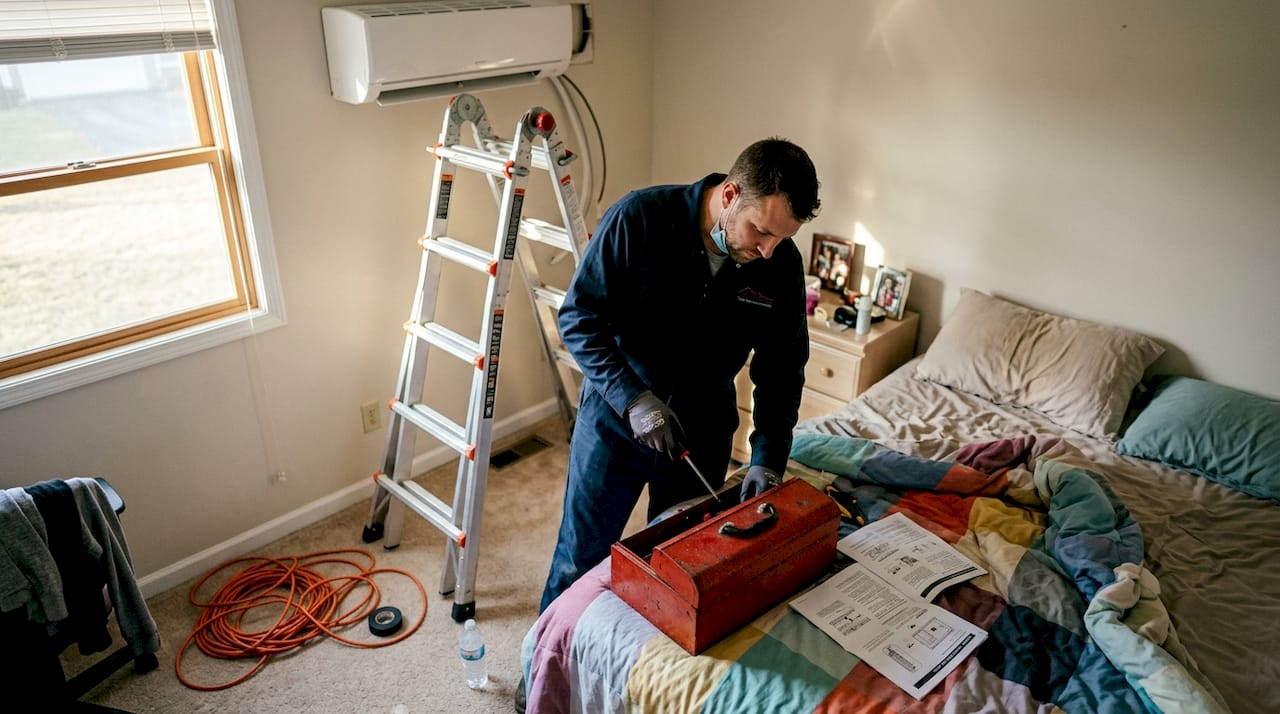
SEER2 ratings for quality mini-splits range 16-30+, delivering 30-50% energy savings compared to central or window units. Monthly summer cooling costs average $60-$95 versus $110-$160 for comparable central AC systems. Installation requires only a small hole through the wall for refrigerant lines and electrical connections, making mini-splits perfect for room additions, converted garages, or homes where installing ductwork is impractical or prohibitively expensive.
Mini-split benefits for Orange and LA County homes:
- Eliminates duct energy losses entirely
- Enables precise temperature control by room or zone
- Quieter operation than central systems or window units
- Inverter technology improves humidity control
- Ideal for homes without existing ductwork
- Faster installation with minimal structural modifications
Pro Tip: Size mini-splits correctly by calculating cooling load per zone rather than guessing based on square footage. Oversized units cycle on and off frequently, reducing efficiency and comfort. Understanding HVAC terminology helps you communicate effectively with contractors about BTU capacity, SEER2 ratings, and zoning configurations. Schedule regular maintenance to clean filters and coils, preserving efficiency and preventing breakdowns during peak summer heat.
Window and portable air conditioners: budget-friendly options for targeted cooling
Window and portable ACs are self-contained units for single-room cooling, requiring DIY installation, offering lower upfront costs but producing more noise and less efficiency, suitable for renters or apartments in Orange and LA counties. Window units mount in a window frame, venting heat directly outside. Portable models sit on the floor with an exhaust hose routed through a window or door, providing mobility but slightly lower efficiency due to indoor heat generation.
Costs range $100-$800 depending on cooling capacity and features. EER ratings typically fall between 8-12, significantly lower than mini-splits or central systems. Noise levels reach 50-55 decibels, comparable to normal conversation, which can be disruptive in bedrooms or quiet spaces. These units excel as temporary solutions, supplemental cooling for problem areas, or primary cooling for renters unable to install permanent systems.
Best use cases for window and portable units:
- Rental properties where permanent installation is prohibited
- Single-room cooling needs in larger homes
- Temporary cooling during HVAC repairs or renovations
- Budget-conscious homeowners seeking immediate relief
- Supplemental cooling for home offices or converted spaces
Understanding the difference between AC and HVAC helps clarify when standalone units versus whole-home systems make sense for your situation.
Specialty systems: geothermal heat pumps and evaporative coolers for select SoCal homes
Geothermal heat pumps use ground loops for ultra-high efficiency cooling and heating, requiring high upfront investment but delivering lowest operating costs, viable for environmentally focused homeowners. Underground temperatures remain constant year-round, providing an efficient heat exchange medium. Installation costs $10,000-$30,000 depending on property size and soil conditions, but operating expenses drop 40-70% compared to conventional systems. Payback periods extend 10-15 years, making geothermal best suited for homeowners planning long-term residence.
Evaporative coolers use water evaporation for cooling, consuming very low energy but only effective in dry climates with humidity below 50%, less suitable for coastal Orange and LA areas due to humidity. These systems work by pulling hot outdoor air through water-saturated pads, cooling it through evaporation before circulating it indoors. Energy use drops 75% compared to refrigerant-based AC, but performance degrades rapidly in humid conditions common along the coast.
| System Type | Upfront Cost | Efficiency | Climate Suitability | Operating Cost |
|---|---|---|---|---|
| Geothermal | $10k-$30k | Highest | All climates | Lowest |
| Evaporative | $500-$3k | High (dry climates) | Low humidity only | Very low |
| Mini-split | $3k-$8k per zone | Very high | All climates | Low |
| Central AC | $1.5k-$4k | Moderate | All climates | Moderate |
Specialty system considerations:
- Geothermal requires significant yard space for ground loops
- Evaporative coolers add humidity, unsuitable for coastal areas
- Both systems have niche applications rather than broad suitability
- Long payback periods require commitment to property
Learn more about what HVAC systems include to understand how specialty options integrate with existing heating and ventilation infrastructure.
Comparing air conditioning systems: efficiency, cost, and suitability for Orange and Los Angeles County homes
Mini-splits save 15-40% energy versus central due to zoning and no duct losses, with payback periods of 3-7 years in Orange County, while central performs better if existing ducts are high quality and well-sealed. The comparison table below synthesizes efficiency ratings, costs, installation complexity, and climate fit across all major AC types to guide your decision.
| AC Type | SEER2/EER | Upfront Cost | Monthly Cost | Noise Level | Best For |
|---|---|---|---|---|---|
| Mini-split | 16-30+ | $3k-$8k/zone | $60-$95 | Low (25-35 dB) | Homes without ducts, zoning needs |
| Central AC | 14-18 | $1.5k-$4k | $110-$160 | Moderate (40-50 dB) | Homes with quality existing ducts |
| Window/Portable | 8-12 | $100-$800 | $80-$120/room | High (50-55 dB) | Single rooms, renters, temporary |
| Geothermal | 25-40 | $10k-$30k | $40-$70 | Very low | Long-term eco-focused owners |
| Evaporative | N/A | $500-$3k | $20-$40 | Low | Inland dry climates only |
Decision framework for SoCal homeowners:
- Choose mini-splits for homes without ducts, additions, or zoning flexibility
- Select central AC if ducts are sealed and home is under 2,000 sq ft
- Use window or portable units for budget constraints or rental situations
- Consider geothermal for new construction or major renovations with long-term plans
- Avoid evaporative coolers in coastal Orange and LA due to humidity
Implementing preventative HVAC maintenance preserves efficiency regardless of system type. Regular service catches small issues before they become expensive repairs. Homeowners wondering why to upgrade HVAC systems should evaluate whether their current equipment meets California’s current efficiency standards and how much energy older systems waste monthly.
Get expert help choosing and installing your air conditioning system
Selecting the right AC system requires balancing technical specifications with your home’s unique characteristics and your family’s comfort preferences. Professional installation ensures correct sizing, proper refrigerant charging, and optimal placement for maximum efficiency. MDTech Services specializes in air conditioning installation for Orange and Los Angeles County homes, helping homeowners navigate California’s energy codes and rebate programs.

Our licensed technicians assess your home’s cooling load, existing infrastructure, and budget to recommend the most cost-effective solution. We handle everything from ductwork evaluation and sealing to mini-split installation and system upgrades. Regular maintenance through our service plans extends equipment lifespan and maintains peak efficiency. Whether you need HVAC repair for an existing system or want to explore why regular HVAC maintenance matters in California’s climate, our team provides expert guidance and reliable service to maximize your comfort and minimize energy costs.
Frequently asked questions
What factors should I consider when choosing an air conditioning system?
Prioritize your home’s existing infrastructure, particularly ductwork condition and accessibility. Evaluate your budget for both upfront investment and long-term operating costs, as higher-efficiency systems cost more initially but save substantially over their lifespan. Consider California’s energy code requirements and available utility rebates that can offset premium equipment costs. Assess your zoning needs and whether you want different temperatures in different rooms or uniform whole-home cooling.
How does ductwork quality affect air conditioning efficiency?
Poorly sealed ducts can waste 20-40% of your cooling energy through leaks in attics, crawlspaces, and wall cavities. This energy loss forces your AC to work harder and run longer to maintain comfortable temperatures, increasing both equipment wear and monthly utility bills. Professional duct sealing and insulation dramatically improve efficiency and comfort. Homes with severely deteriorated ductwork may find ductless mini-splits more cost-effective than duct replacement. Consider upgrading your HVAC system if duct repairs would cost more than 30% of a new system.
Are ductless mini-split systems suitable for homes in Orange and Los Angeles counties?
Mini-splits provide efficient zoned cooling, making them ideal for homes without ducts or additions in Southern California. They excel in Orange and LA counties due to mild winters, allowing heat pump models to provide year-round comfort efficiently. Variable-speed inverter technology handles temperature swings better than single-speed central systems. Mini-splits work particularly well for converted garages, home offices, sunrooms, and master bedroom suites where independent temperature control adds significant comfort value.
What maintenance practices help keep my AC system efficient?
Change or clean air filters monthly during cooling season to maintain airflow and indoor air quality. Schedule professional inspections twice yearly to check refrigerant levels, clean coils, verify electrical connections, and test system performance. Clear debris from outdoor units and maintain two feet of clearance around condenser units for proper airflow. Regular HVAC maintenance prevents 95% of breakdowns and maintains efficiency within 5% of factory specifications. Address unusual noises, weak airflow, or temperature inconsistencies immediately to prevent minor issues from becoming expensive repairs.