
Controlling temperature and air quality indoors can feel overwhelming in the unpredictable climate of Southern California. For homeowners in Orange and Los Angeles County, understanding the full scope of HVAC systems is vital for maintaining reliable comfort and clean air. This guide breaks down HVAC technologies and common misconceptions, helping you choose the best solutions and avoid costly mistakes for a healthier, energy-efficient home.
Table of Contents
- Defining HVAC Systems and Common Misconceptions
- Main Types of Residential HVAC Systems
- How HVAC Systems Control Climate and Air Quality
- Key Features and Components in Modern HVAC
- Costs, Maintenance, and Common Mistakes to Avoid
Key Takeaways
| Point | Details |
|---|---|
| Comprehensive Functionality | HVAC systems manage temperature, air quality, and humidity, offering more than just temperature control. |
| Diverse System Types | There are multiple residential HVAC configurations, each suited for different home sizes, climates, and energy efficiency needs. |
| Importance of Maintenance | Regular professional inspections and filter replacements are crucial for optimal HVAC performance and longevity. |
| Cost Considerations | Initial installation and operational costs should be carefully evaluated to ensure effective budgeting and long-term savings. |
Defining HVAC Systems and Common Misconceptions
Heating, Ventilation, and Air Conditioning (HVAC) systems represent far more than simple temperature control mechanisms for homes and buildings. These sophisticated technologies work together to create comfortable, healthy indoor environments by managing temperature, air quality, and humidity levels. HVAC systems are comprehensive environmental control solutions designed to maintain optimal living conditions.
At its core, an HVAC system encompasses three primary functions: heating, ventilation, and air conditioning. Complex environmental management technologies work synergistically to regulate indoor climates. Each component plays a crucial role:
- Heating: Warms interior spaces during colder months
- Ventilation: Exchanges indoor and outdoor air, removing contaminants
- Air Conditioning: Cools and dehumidifies interior spaces
Common misconceptions about HVAC systems often limit understanding of their true capabilities. Many homeowners mistakenly believe these systems are simply about temperature adjustment. In reality, HVAC technologies provide comprehensive environmental management that extends far beyond basic heating and cooling.
Ventilation represents a critical yet frequently overlooked aspect of HVAC functionality. Indoor air quality management involves removing airborne contaminants, controlling humidity, and ensuring consistent fresh air circulation. Modern HVAC systems utilize advanced filtration technologies to eliminate dust, allergens, bacteria, and potentially harmful gases.
Pro Tip: Schedule professional HVAC system inspections annually to ensure optimal performance and identify potential issues before they become costly repairs.
Main Types of Residential HVAC Systems
Residential HVAC systems come in several distinct configurations, each designed to meet specific home comfort and climate control needs. Common residential HVAC configurations offer homeowners multiple options for maintaining optimal indoor environments across different housing types and regional climates.
The primary residential HVAC system types include:
- Split Systems: Separate indoor and outdoor units that work together
- Packaged Systems: Compact units with heating and cooling components in one location
- Ductless Mini-Split Systems: Flexible solutions for homes without traditional ductwork
- Heat Pumps: Versatile systems providing both heating and cooling
- Furnace Systems: Traditional heating solutions using gas or electric power
Each system type offers unique advantages depending on specific home requirements. Residential HVAC system designs vary based on factors like home size, local climate, energy efficiency goals, and installation constraints. Split systems remain the most popular choice in the United States, featuring separate air handlers and outdoor condensing units that provide flexible and efficient temperature management.
Heat pumps represent an increasingly popular option for homeowners in moderate climates, offering both heating and cooling capabilities in a single system. These systems work by transferring heat between indoor and outdoor environments, making them more energy-efficient compared to traditional heating and cooling methods. Packaged units provide compact solutions for smaller homes or spaces with limited installation area, combining all components into a single, integrated system.
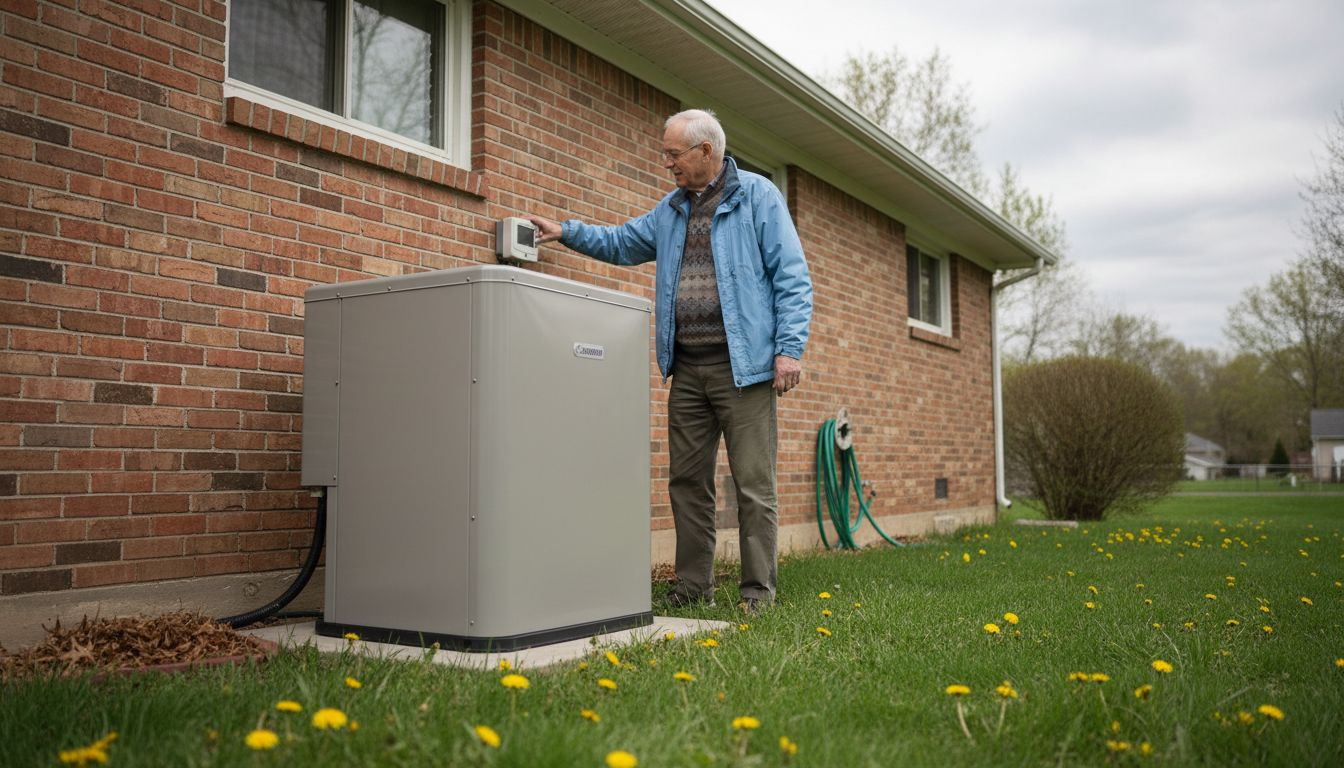
Pro Tip: Consult with a professional HVAC technician to determine the most suitable system configuration for your specific home layout and regional climate conditions.
The following table summarizes the unique benefits and ideal applications for each main type of residential HVAC system:
| System Type | Unique Benefit | Ideal Home/Application |
|---|---|---|
| Split System | Flexible installation and efficiency | Most single-family homes |
| Packaged System | Space-saving, all-in-one design | Small homes or tight spaces |
| Ductless Mini-Split | No ducts required, room zoning | Older homes, room additions |
| Heat Pump | Dual heating and cooling in one unit | Moderate climates, energy savings |
| Furnace System | Reliable, high-capacity heating | Colder regions, larger homes |
How HVAC Systems Control Climate and Air Quality
HVAC systems are sophisticated environmental control technologies that do much more than simply adjust temperature. Advanced climate control mechanisms work continuously to create optimal indoor environments by managing multiple critical factors simultaneously.
The primary components of climate and air quality control include:
- Temperature Regulation: Maintaining consistent, comfortable indoor temperatures
- Humidity Control: Balancing moisture levels to prevent discomfort
- Air Circulation: Ensuring consistent airflow throughout living spaces
- Filtration: Removing airborne contaminants and improving air quality
- Ventilation: Exchanging indoor and outdoor air to reduce pollutant buildup
Modern HVAC systems utilize an intricate network of sensors and controls to monitor and adjust indoor conditions in real-time. Sophisticated air quality management involves precise monitoring of temperature, humidity, and air composition. These systems can detect minute changes in environmental conditions and respond instantly, creating a consistently comfortable and healthy indoor environment.
Humidity and air filtration play crucial roles in maintaining indoor air quality. Advanced systems incorporate specialized technologies like electronic air cleaners, HEPA filters, and humidity regulators that can remove microscopic particles, allergens, and pathogens. These sophisticated mechanisms not only improve comfort but also contribute significantly to respiratory health and overall well-being for home occupants.
Pro Tip: Replace your HVAC system’s air filters every 90 days, or more frequently if you have pets or live in a high-pollution area, to maintain optimal air quality and system efficiency.
Key Features and Components in Modern HVAC
Modern HVAC systems represent a complex ecosystem of interconnected technological components designed to provide precise environmental control. Advanced HVAC system technologies incorporate sophisticated mechanisms that go far beyond traditional heating and cooling approaches.
The primary components of contemporary HVAC systems include:
- Compressors: Responsible for pressurizing refrigerant
- Condensers: Transfer heat from refrigerant to external environment
- Evaporator Coils: Absorb indoor heat and cool air
- Heat Exchangers: Facilitate efficient thermal energy transfer
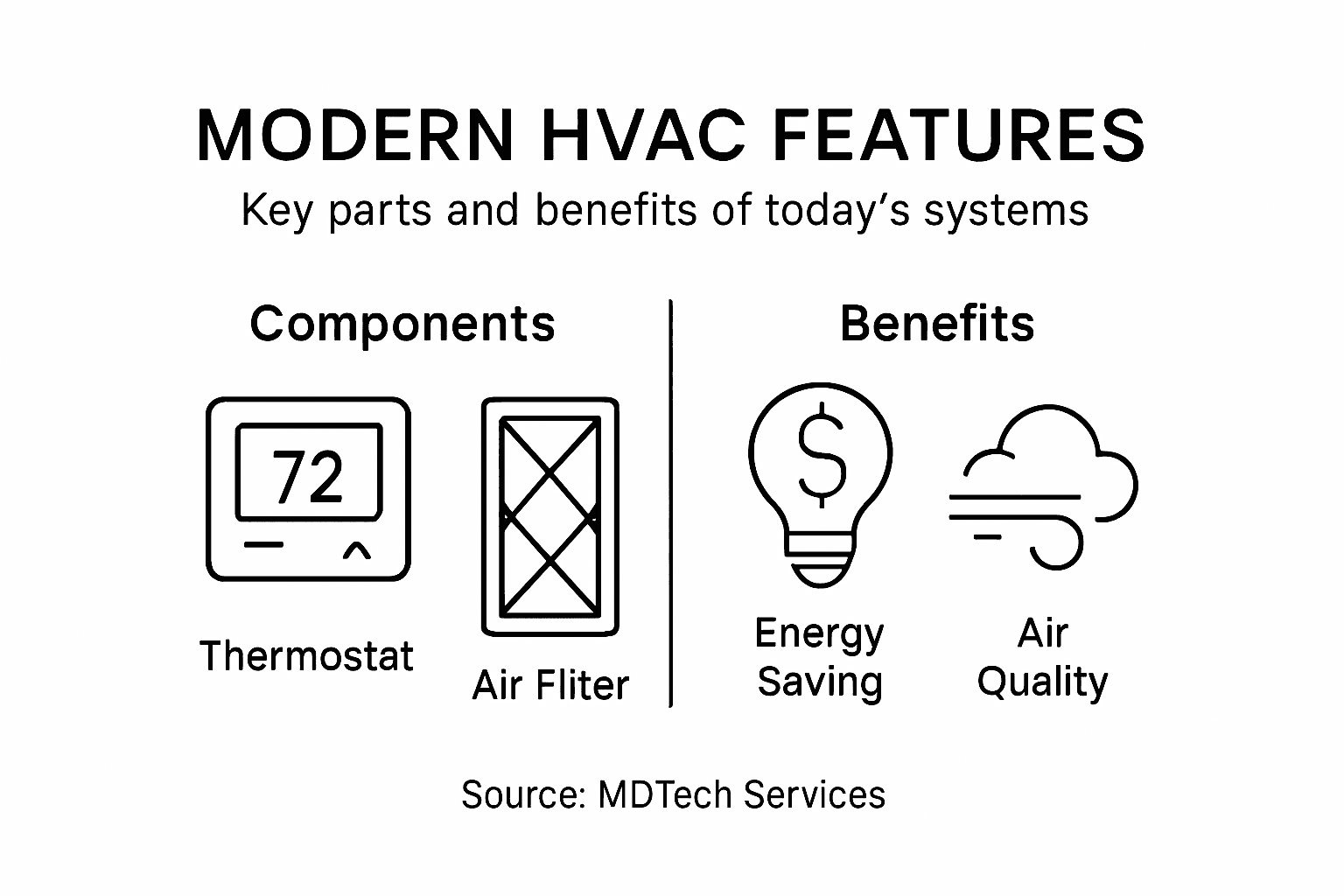
- Smart Thermostats: Enable precise temperature and humidity management
- Air Filters: Remove particulates and improve indoor air quality
Energy efficiency represents a critical design consideration in modern HVAC technologies. Variable speed drives, smart control systems, and advanced sensors work together to optimize performance while minimizing electricity consumption. These intelligent systems can dynamically adjust operations based on real-time environmental conditions, occupancy patterns, and specific comfort requirements.
Environmental sustainability has become a paramount focus in contemporary HVAC design. Manufacturers are increasingly incorporating low global warming potential refrigerants, energy recovery ventilators, and zoned heating and cooling technologies. These innovations not only enhance system performance but also significantly reduce overall carbon footprint and operational costs for homeowners.
Pro Tip: Invest in regular professional maintenance to ensure your HVAC system operates at peak efficiency and prevents potential costly breakdowns.
Costs, Maintenance, and Common Mistakes to Avoid
HVAC system expenses are complex and multifaceted, influenced by numerous factors that homeowners must carefully consider. HVAC maintenance strategies reveal that proactive planning can significantly reduce long-term operational costs and prevent unexpected system failures.
Common mistakes homeowners frequently make with HVAC systems include:
- Incorrect System Sizing: Selecting units too large or small for the space
- Neglecting Regular Maintenance: Skipping professional inspections and cleaning
- Poor Ventilation Design: Ignoring critical airflow requirements
- Inefficient Thermostat Usage: Failing to optimize temperature settings
- Delaying Filter Replacements: Allowing particulate buildup that reduces system efficiency
System costs vary dramatically based on multiple interconnected factors. Initial installation expenses range from $3,000 to $10,000, depending on home size, system complexity, and regional climate conditions. Operating costs are equally significant, with energy efficiency playing a crucial role in long-term financial considerations. Professional installation and regular maintenance can reduce annual energy expenses by up to 30%, making strategic investments critical for homeowners.
Ventilation and air quality represent often overlooked aspects of HVAC maintenance. Dust accumulation, refrigerant leaks, and improper airflow can dramatically reduce system performance and increase operational costs. Regular professional inspections help identify potential issues before they become expensive repairs, ensuring optimal system functionality and indoor environmental quality.
Pro Tip: Schedule comprehensive HVAC system evaluations twice annually to catch potential problems early and maintain peak system performance.
Here’s a concise comparison of routine HVAC maintenance actions, their purpose, and the impact of neglect:
| Maintenance Task | Main Purpose | Neglect Impact |
|---|---|---|
| Filter Replacement | Maintain airflow and air quality | Higher bills, poor air quality |
| Annual Inspection | Identify wear and prevent failures | Costly breakdowns, short lifespan |
| Duct Cleaning | Remove debris and improve efficiency | Reduced airflow, contamination |
| Thermostat Check | Ensure accurate temperature control | Uneven comfort, energy waste |
Keep Your HVAC System Running Smoothly with MDTech Services
Understanding what an HVAC system truly does and how it impacts your home’s comfort and air quality is crucial. If you are facing challenges like inconsistent temperatures, poor ventilation, or concerns about indoor air quality discussed in this article, MDTech Services is here to help. Our licensed technicians specialize in HVAC repair and installation throughout Orange County and Los Angeles County, providing reliable solutions tailored to your home’s unique needs.

Don’t wait until minor HVAC issues become costly problems. Visit MDTech Services now to book your professional HVAC inspection or repair. Experience peace of mind knowing your system is maintained by experts who prioritize safety, efficiency, and your home’s comfort. Learn more about how our team supports homeowners with comprehensive HVAC services and other appliance repair needs by exploring our service offerings. Let us help you breathe easier and stay comfortable all year long.
Frequently Asked Questions
What are the main functions of an HVAC system?
HVAC systems primarily serve three functions: heating, ventilation, and air conditioning. They work together to maintain comfortable indoor environments by regulating temperature, air quality, and humidity levels.
How does an HVAC system improve indoor air quality?
HVAC systems enhance indoor air quality through effective ventilation, which exchanges indoor and outdoor air to reduce airborne contaminants. Advanced filtration technologies in modern systems also remove dust, allergens, and other pollutants from the air.
What are the different types of residential HVAC systems?
The main types of residential HVAC systems include split systems, packaged systems, ductless mini-split systems, heat pumps, and furnace systems. Each type has unique benefits and is suited for different home layouts and climate conditions.
Why is regular maintenance important for HVAC systems?
Regular maintenance of HVAC systems ensures optimal performance, enhances energy efficiency, and prevents costly breakdowns. Neglecting maintenance can lead to higher operational costs and reduced lifespan of the system.