
Confusing AC and HVAC is a common challenge for homeowners in Southern California, where year-round comfort demands smart decisions. Choosing between air conditioning and a comprehensive heating, ventilation, and air conditioning system affects energy use, indoor air quality, and the long-term value of your property. By understanding the unique roles and capabilities of each, residents in Orange and Los Angeles County can feel confident selecting the right equipment for their repair or installation needs.
Table of Contents
- Defining AC Versus HVAC Systems
- Types of Residential AC and HVAC Units
- How Cooling and Heating Functions Differ
- Installation, Maintenance, and Service Costs
- Choosing the Right System for Your Home
Key Takeaways
| Point | Details |
|---|---|
| Understanding System Differences | AC units focus solely on cooling, while HVAC systems provide heating, cooling, ventilation, and humidity control for comprehensive climate management. |
| Choosing the Right Unit | Options like central air, ductless mini-splits, and heat pumps cater to various home sizes and comfort needs, making careful selection essential. |
| Cost Considerations | Installation and maintenance costs vary significantly across different systems; understanding these can help homeowners make informed investments. |
| Professional Consultation | Engaging a certified HVAC professional for system selection and installation ensures optimal performance and energy efficiency. |
Defining AC Versus HVAC Systems
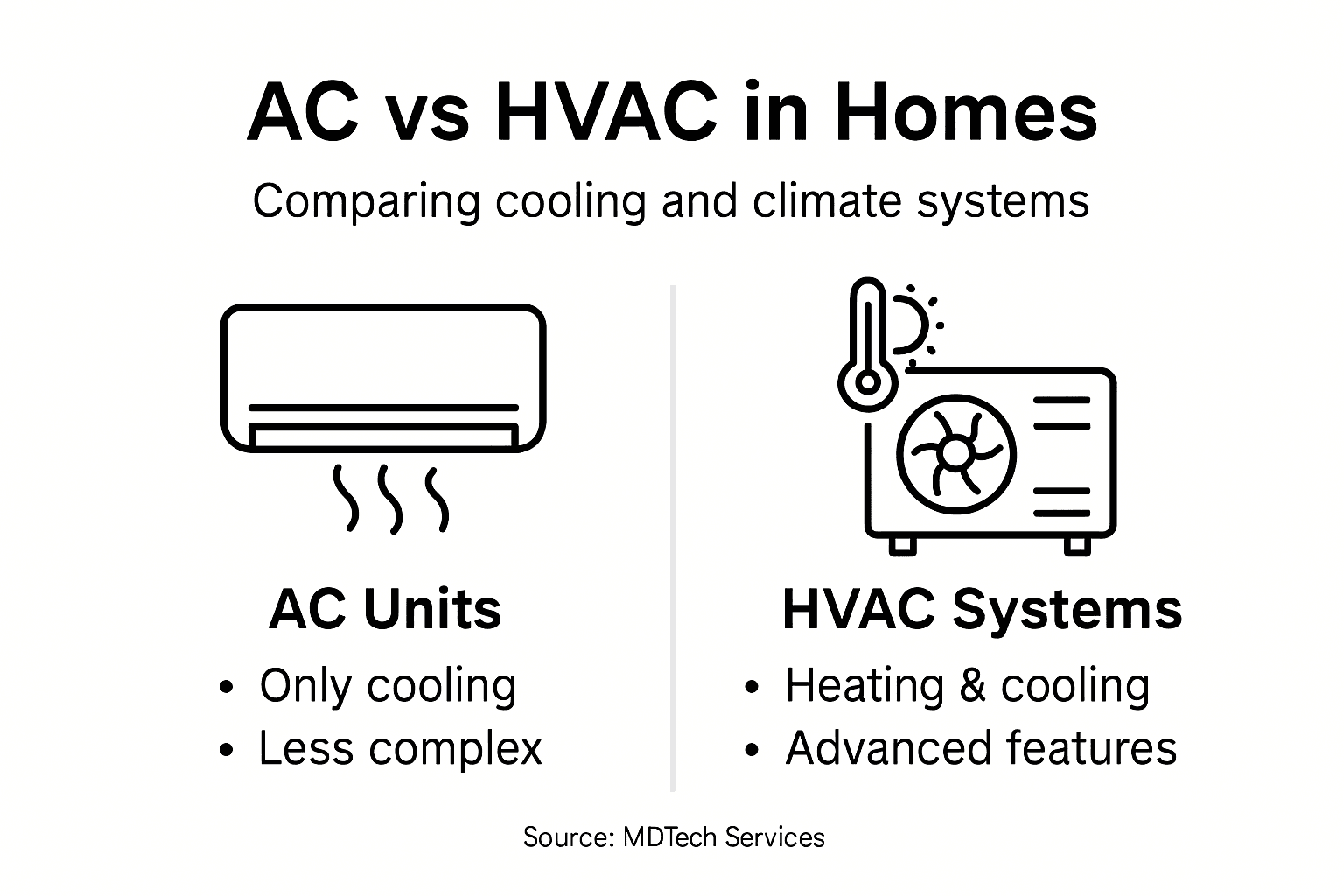
Homeowners in California often use the terms AC and HVAC interchangeably, but they represent distinctly different systems for managing indoor comfort. Air conditioning (AC) and heating, ventilation, and air conditioning (HVAC) are related but not identical technologies designed to regulate indoor temperatures and air quality.
At its core, an AC unit is a specialized piece of equipment focused solely on cooling indoor spaces. Thermal engineering research reveals that air conditioning specifically transfers heat from inside a building to the exterior, creating a cooler indoor environment. By contrast, an HVAC system represents a comprehensive approach to climate control with multiple integrated functions:
- Cooling: Reduces indoor temperature using air conditioning technology
- Heating: Generates warmth during colder months
- Ventilation: Exchanges indoor and outdoor air to maintain air quality
- Humidity Control: Manages moisture levels for optimal comfort
Heating, ventilation, and air conditioning systems provide a holistic solution for thermal management. While an AC unit operates as a single-purpose cooling device, HVAC systems offer year-round climate regulation that adapts to changing environmental conditions.
The primary difference lies in system complexity and functionality. An AC unit is essentially a component within a broader HVAC system, much like how an engine is part of a complete automobile. HVAC systems integrate multiple technologies to create a comprehensive indoor comfort solution that goes beyond simple temperature reduction.
Pro tip: When considering home comfort upgrades, think of AC as a specialized tool and HVAC as a complete climate management system.
Types of Residential AC and HVAC Units
California homeowners have multiple options when selecting residential cooling and heating systems, each designed to meet specific comfort and efficiency requirements. Residential air conditioning units range from simple window installations to sophisticated whole-home climate control systems, offering diverse solutions for different home configurations and budgets.
The primary residential AC and HVAC unit types include:
- Window Units: Compact, affordable cooling for single rooms
- Central Air Conditioning: Comprehensive cooling through ductwork
- Ductless Mini-Split Systems: Flexible room-by-room temperature control
- Heat Pump Systems: Provide both heating and cooling
- Packaged HVAC Units: All-in-one heating and cooling solution
Central air conditioning systems represent the most comprehensive approach for whole-home cooling. These systems use a network of ducts to distribute cooled air evenly throughout the house, making them ideal for larger homes with consistent cooling needs. HVAC system configurations have evolved to include more energy-efficient and adaptable technologies that can handle California’s diverse climate conditions.
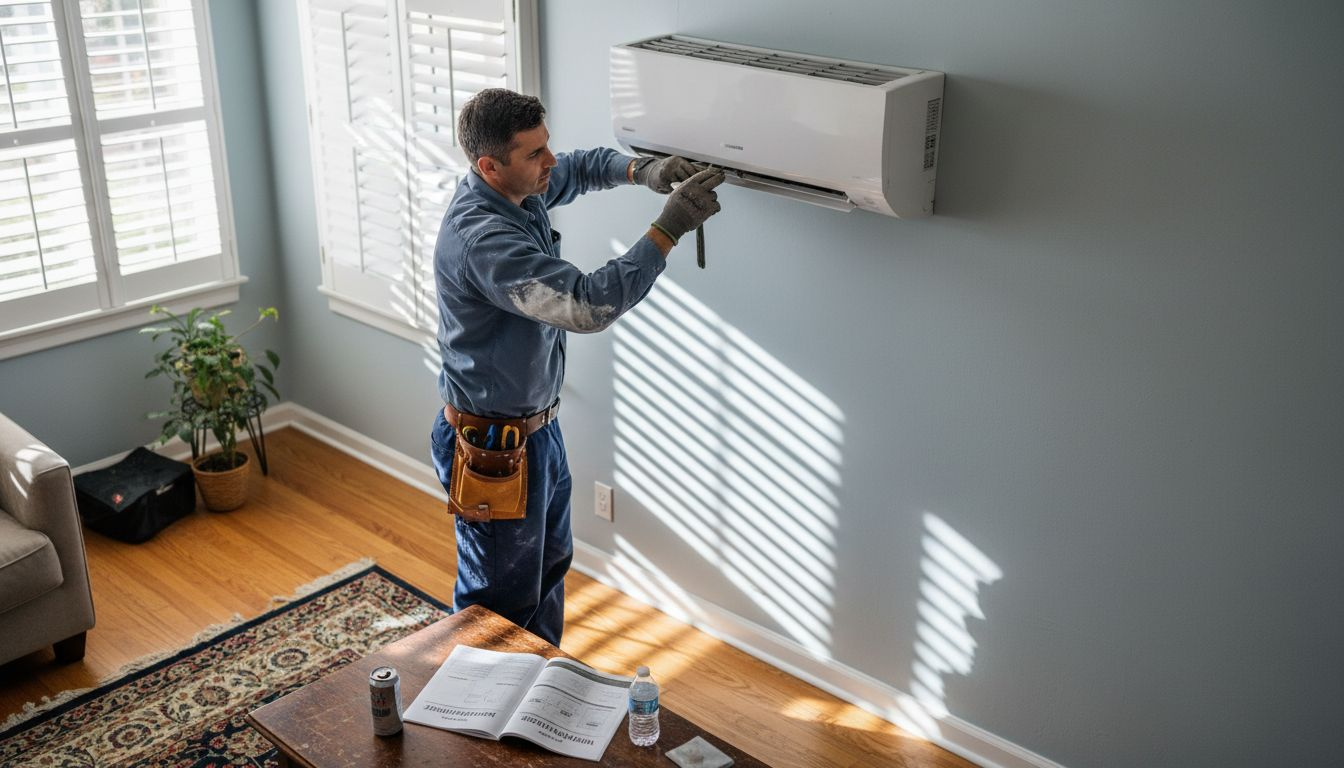
Ductless mini-split systems offer unique advantages for homes without existing ductwork or for room-specific temperature management. These systems consist of a small outdoor compressor connected to one or more indoor air handling units, allowing precise temperature control in individual spaces. They are particularly beneficial for home additions, renovated areas, or homes with challenging architectural layouts that make traditional ductwork installation difficult.
Pro tip: Consider your home’s specific layout, budget, and climate requirements when selecting between different AC and HVAC unit types to maximize comfort and energy efficiency.
Here’s a quick comparison of common residential AC and HVAC unit types to help you choose the right fit for your home:
| System Type | Best For | Installation Complexity | Typical Efficiency Impact |
|---|---|---|---|
| Window Unit | Small single rooms | Simple, minimal changes | Low to moderate |
| Central Air Conditioning | Whole-home cooling | Complex, requires ducts | Moderate to high (if modern) |
| Ductless Mini-Split | Homes without ductwork | Moderate, flexible setup | High, efficient zone control |
| Heat Pump | Year-round comfort | Moderate to complex | High, especially in mild climates |
| Packaged HVAC | Space-saving installations | Complex, single unit | Moderate to high |
How Cooling and Heating Functions Differ
Heating and cooling systems operate through fundamentally different mechanisms, each designed to manage indoor temperature in unique ways. Home cooling and heating systems represent opposite thermal management strategies that work to maintain comfortable living environments by manipulating heat transfer.
The key functional differences between cooling and heating include:
- Heating: Adds thermal energy to indoor spaces
- Cooling: Removes thermal energy from indoor spaces
- Heat Generation: Uses combustion or electrical resistance
- Heat Removal: Uses refrigerant cycles and heat transfer
- Energy Direction: Heating moves warmth inward, cooling moves heat outward
Heating mechanisms typically involve three primary approaches. Furnaces generate heat through combustion or electrical resistance, distributing warm air through ductwork. Boilers heat water or steam, which then circulates through radiators or radiant floor systems. Heat pumps represent a more versatile technology, capable of extracting warmth from outdoor air or ground sources and transferring it indoors.
Energy-efficient HVAC systems leverage advanced technologies to optimize these thermal transfer processes. Cooling systems use refrigerant cycles to absorb indoor heat and expel it outside, simultaneously lowering temperature and reducing humidity. Modern heat pumps can reverse this process, providing both heating and cooling functions within a single integrated system, making them particularly effective for California’s variable climate conditions.
Pro tip: Consider a heat pump system for maximum flexibility in managing your home’s temperature throughout the year.
Installation, Maintenance, and Service Costs
Understanding the financial investment required for AC and HVAC systems is crucial for California homeowners planning home comfort upgrades. HVAC installation and maintenance costs vary widely based on system complexity, home size, and specific regional requirements.
Typical cost breakdown for residential HVAC systems includes:
- Installation Costs:
- Central AC Systems: $3,800 – $7,500
- Heat Pump Systems: $4,200 – $8,000
- Ductless Mini-Split Systems: $3,000 – $5,500
- Annual Maintenance: $150 – $500
- Emergency Service Calls: $75 – $250 per visit
- Filter Replacements: $10 – $100 quarterly
System efficiency ratings play a significant role in determining long-term costs. HVAC system installations require careful consideration of multiple factors, including home square footage, existing ductwork, and local climate conditions. More efficient systems with higher SEER (Seasonal Energy Efficiency Ratio) ratings might have higher upfront costs but can generate substantial energy savings over time.
Professional installation and regular maintenance are critical for maximizing system longevity and performance. Certified HVAC technicians ensure proper sizing, correct installation, and ongoing system optimization. Annual professional inspections can prevent costly repairs, identify potential issues early, and maintain manufacturer warranties.
Pro tip: Always request detailed written estimates and compare multiple professional quotes before committing to HVAC installation or major service work.
Review these estimated cost and maintenance comparisons to plan your home comfort investment:
| Item | Typical Range | Impact on Ownership |
|---|---|---|
| Central AC Installation | $3,800 – $7,500 | Significant upfront cost |
| Heat Pump Installation | $4,200 – $8,000 | Higher initial investment |
| Ductless System Install | $3,000 – $5,500 | Lower for single rooms |
| Yearly Maintenance | $150 – $500 | Prevents costly repairs |
| Emergency Service Visit | $75 – $250 per call | Covers urgent breakdowns |
| Filter Replacement | $10 – $100 per quarter | Maintains air quality |
Choosing the Right System for Your Home
Selecting the ideal HVAC or AC system requires careful consideration of your home’s unique characteristics and comfort needs. Home cooling system selection involves analyzing multiple factors that impact long-term performance and energy efficiency.
Key considerations for choosing the right system include:
- Home Size: Square footage and layout
- Climate Zone: California’s varied temperature ranges
- Existing Infrastructure:
- Presence of ductwork
- Home insulation quality
- Electrical system compatibility
- Budget: Initial installation and long-term operational costs
- Energy Efficiency Goals: SEER rating and potential savings
Residential cooling technologies offer diverse solutions for different home configurations. Consumer reports on air conditioning systems recommend carefully matching system types to specific residential requirements. Central air conditioning works best for homes with existing ductwork, while ductless mini-split systems provide flexible cooling for homes without traditional ducting or with unique architectural layouts.
Heat pumps represent an increasingly popular option for California homeowners, offering year-round temperature control with exceptional energy efficiency. These systems excel in mild climates, providing both heating and cooling capabilities in a single integrated unit. Proper sizing and professional installation remain critical for maximizing system performance and achieving optimal comfort levels.
Pro tip: Consult a certified HVAC professional who can perform a comprehensive home assessment before making your final system selection.
Optimize Your California Home Comfort with Expert AC and HVAC Services
Understanding the difference between an AC and a full HVAC system is crucial for managing your home’s comfort efficiently in California’s diverse climate. Whether you need expert installation, reliable repairs, or maintenance to ensure your heating and cooling systems run smoothly year-round, MDTech Services is your trusted local partner. We specialize in professional HVAC repair and installation, offering solutions tailored to your specific needs and home setup.
Experience peace of mind with:
- Licensed technicians who prioritize safety and reliability
- Swift responses to HVAC emergencies
- Comprehensive service options including appliance conversions and system maintenance

Ready to enhance your home’s comfort with the right cooling and heating system? Visit MDTech Services now to schedule your appointment. Don’t wait for discomfort—secure your home comfort today with expert HVAC support and appliance services designed with California homeowners in mind. Learn more about our HVAC repair and installation options and get personalized assistance that keeps your family comfortable every season.
Frequently Asked Questions
What is the main difference between AC and HVAC systems?
AC (air conditioning) systems are specifically designed for cooling indoor spaces, whereas HVAC (heating, ventilation, and air conditioning) systems provide a comprehensive approach to climate control, including heating, cooling, ventilation, and humidity management.
How do I choose between an AC unit and an HVAC system for my home?
When choosing, consider factors like your home’s size, existing infrastructure (such as ductwork), climate requirements, and budget. An HVAC system is better for year-round comfort while an AC unit is suitable for cooling only.
What are the types of residential AC and HVAC systems available?
Common types include window units for small rooms, central air conditioning for whole-home cooling, ductless mini-split systems for flexibility without ductwork, heat pumps for both heating and cooling, and packaged HVAC units for space-saving solutions.
How much does it cost to install an AC or HVAC system?
Installation costs vary widely; central AC systems typically range from $3,800 to $7,500, heat pumps from $4,200 to $8,000, and ductless systems from $3,000 to $5,500. Annual maintenance can add $150 to $500, depending on the system.