
A sewer smell in your bathroom almost always starts with a dry P-trap or a dirty drain, and the first move is simple: open a window, run water in every fixture nearby, and see if the odor clears within a few minutes. If it lingers, spreads to other rooms, or comes with dizziness or nausea, ventilate further, evacuate if symptoms worsen, and call a licensed plumber.
TL;DR:
- Refill all drains and traps weekly or ensure seldom-used floor drains are sealed with mineral oil to prevent dry traps that emit sewer gas.
- A cracked wax ring under the toilet, a blocked vent pipe, or sewer line damage can cause persistent odors that require professional inspection or repair.
- Repeated use of chemical drain cleaners is discouraged because they can corrode pipes and do not fix structural or venting issues, which are common causes.
- Sewer gas exposure is generally low risk at typical odor levels, but high concentrations can cause severe health effects, so symptoms warrant immediate ventilation and medical attention.
- When DIY fixes fail or odors keep recurring, booking a licensed plumber for camera inspections, vent testing, and line repairs is the safest next step.
Table of Contents
- What Causes Sewer Smell in a Bathroom (and How to Find It)
- Quick DIY Fixes for Sewer Smell (Try These First)
- Is Sewer Smell in Your Bathroom Dangerous?
- When to Call a Plumber for Sewer Smell
- How to Prevent Sewer Smell From Coming Back
- What a Professional Diagnosis Actually Looks Like
- Our Take on Sewer Smell Diagnosis
- Book a Professional Plumbing Inspection
- Sources
- FAQ
What Causes Sewer Smell in a Bathroom (and How to Find It)
Sewer odor gets into a bathroom through a broken seal somewhere in the plumbing system, and where you smell it strongest usually tells you which seal failed.
Dry P-trap. Every drain, including the one under your sink and behind your washing machine, has a curved pipe called a P-trap that holds a small reservoir of water. That water blocks sewer gas from rising back into the room. If a bathroom or utility sink sits unused for a few weeks, the water evaporates, and the trap goes dry. This is the most common cause of sewer odor entering a home, and it’s also the easiest to fix. Run the tap for a minute and see if the smell disappears.
Clogged or dirty drains. Hair, soap scum, and organic buildup form a biofilm inside drain pipes that gives off a rotten, sewage-like smell even when water flows fine. This is common in shower drains and bathroom sink overflow channels, and it’s a frequent, fixable cause of localized odor.
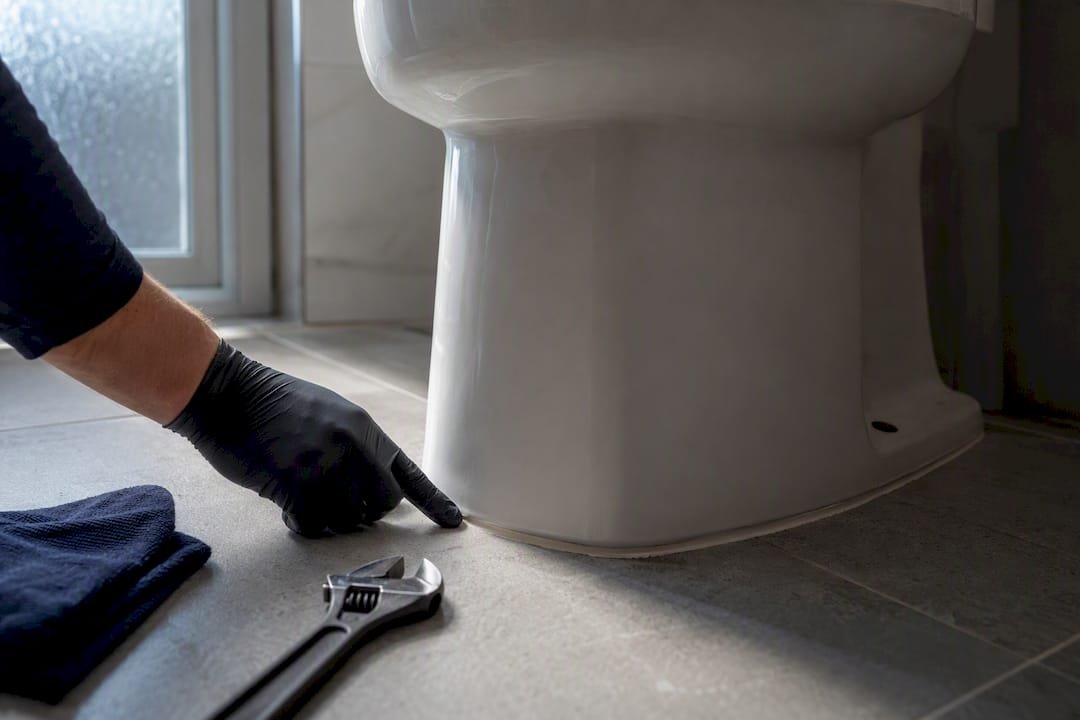
Toilet wax ring or base seal failure. If the smell is strongest right at the base of the toilet, suspect the wax ring, which seals the toilet to the drainpipe below. A cracked ring or a toilet that rocks slightly when you push on it can let gas escape around the base. Check for discoloration or soft spots on the floor near the toilet, which can signal a slow leak underneath.
Blocked or damaged vent pipe. Plumbing vents let sewer gas escape safely through the roof instead of through your fixtures. When a vent gets blocked by debris, ice, or a bird’s nest, gas has nowhere to go but back into the house. This shows up as odor across multiple fixtures at once, often paired with gurgling sounds when you flush or drain water, and blocked vents are a documented cause of house-wide sewer gas problems.
Sewer line damage or backup. A cracked, collapsed, or root-clogged main sewer line produces a persistent smell that doesn’t improve after you refill traps, and it often shows up alongside slow drains in several rooms or actual sewage backing up into a tub or floor drain. This is the scenario that separates a quick DIY fix from a real plumbing emergency.
Quick DIY Fixes for Sewer Smell (Try These First)
Work through these in order, since the fastest fixes address the most common causes.
- Refill every trap in the room. Run water for one to three minutes in the sink, tub, and shower, and flush the toilet. For a floor drain or laundry sink you rarely use, this alone often solves it.
- Protect traps you don’t use often. Pour a cup of mineral oil down a seldom-used floor drain after refilling it. Oil evaporates far slower than water, so the seal lasts months instead of weeks.
- Clean the drain stopper and overflow channel. Pull the stopper, scrub off the buildup, and run a narrow bottle brush through the sink’s overflow opening, which traps organic gunk even when the main drain looks clear.
- Flush with baking soda, vinegar, and hot water. Pour a half cup of baking soda down the drain, follow with a cup of vinegar, wait fifteen minutes, then chase it with a kettle of hot water.
- Use a plunger or hand snake for stubborn clogs. A few plunges or a manual snake usually clears hair and soap clogs that the baking soda mix couldn’t reach on its own.
- Inspect the toilet base. Gently rock the toilet. If it moves, or if you see staining on the floor, the wax ring likely needs replacement, and that’s a job worth handing to a plumber since a cracked flange underneath can cause the seal to fail again.
Pro Tip: Skip the chemical drain cleaner as your go-to fix. Repeated use corrodes older metal pipes, and it won’t touch a dry trap, a bad wax ring, or a blocked vent, the three most common culprits.
If you suspect a blocked roof vent, don’t climb up there yourself to check it. A cracked or slipped roof tile near the vent stack is a fall risk that isn’t worth saving a service call.
Is Sewer Smell in Your Bathroom Dangerous?
Sewer gas is mostly hydrogen sulfide, and it’s more than just unpleasant. At around 10 ppm it irritates the eyes; at concentrations between roughly 800 and 1,000 ppm, it can cause unconsciousness or death.
What the numbers mean for your bathroom: the odor you smell at low levels is a warning sign, not the danger itself. The real risk builds only at concentrations far higher than what a typical dry trap or slow drain produces, which is why most sewer smell cases are a maintenance issue, not a poison-gas emergency.
Watch for headache, dizziness, nausea, or respiratory irritation, which are signs of longer or higher-level exposure. If anyone in the house reports these symptoms, ventilate immediately, get them outside, and call emergency services if symptoms are severe. One caution worth knowing: hydrogen sulfide can dull your sense of smell at high concentrations, so a fading odor isn’t automatically good news if someone is also feeling unwell. Avoid open flames or sparks in an affected room, and if your HVAC system pulls air from near the source, shut it off until the odor clears.
When to Call a Plumber for Sewer Smell
Some situations are past the point of a DIY fix, and pushing forward on your own just delays the real repair.
- Multiple fixtures smell at once, or the odor follows you from the bathroom into a hallway or bedroom.
- You’ve refilled every trap and cleaned the drains, and the smell keeps coming back within a day or two.
- Drains gurgle when you run water somewhere else in the house.
- The toilet wobbles, or you see staining or soft flooring around its base.
- Sewage is visibly backing up into a tub, shower, or floor drain.
Once a plumber suspects a line problem, the diagnostic toolkit typically includes a camera inspection to see inside the pipe, smoke testing to trace where gas is escaping, and hydrojetting to clear heavy blockages before any repair. Camera inspections often run in the low hundreds of dollars, while a full sewer line repair or replacement can climb into the thousands depending on how much pipe needs to be dug up or relined. Expect the inspection itself to take under an hour; a full line repair can take a day or more depending on access.
If you’re already bracing for a bigger repair, review this emergency plumbing checklist so you know what to do while you wait for a technician.
How to Prevent Sewer Smell From Coming Back
A few small habits keep sewer gas exactly where it belongs, on the other side of your traps and vents.
- Run every sink, tub, and floor drain in the house at least once a week, even the ones you rarely use.
- Pour hot water down bathroom drains monthly to break up early buildup before it turns into biofilm.
- Never flush wipes, grease, or fats down a toilet or sink, since these are common contributors to slow-forming clogs.
- Install a trap primer on floor drains that go weeks without use, especially in a laundry room or basement bathroom.
- Have a plumber check roof vents each season, particularly before and after storms when debris and nesting are common.
Regular plumbing checks catch a slow trap or aging wax ring before it turns into a weekend emergency.
Pro Tip: Set a phone reminder for the first of each month to run water in your guest bathroom and any floor drains. It takes thirty seconds and it’s the single habit that prevents the most nuisance sewer odor calls.
What a Professional Diagnosis Actually Looks Like
A technician doesn’t guess at a sewer smell, they work through it systematically. That starts with checking every trap in the affected room for water level, then testing drains by running water and watching how fast it clears. If the smell persists after those basics check out, the next step is inspecting the vent stack, and a camera inspection if a line blockage or crack is suspected.
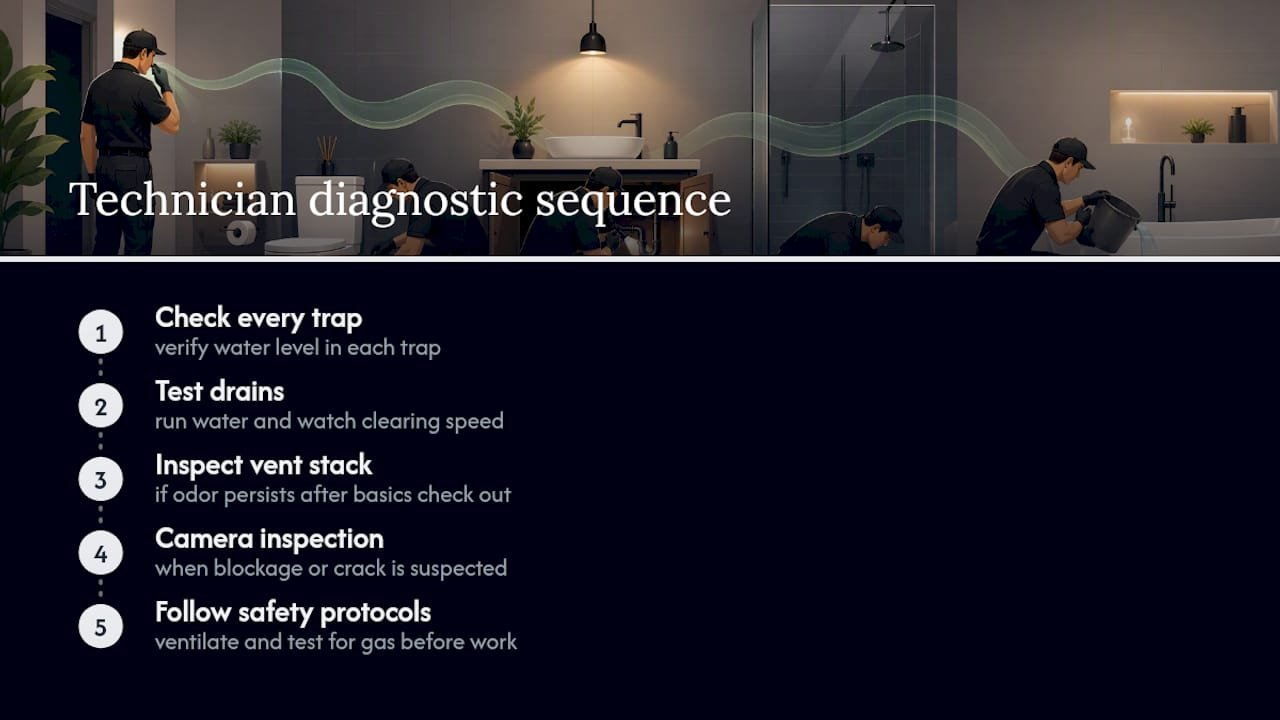
Licensed technicians follow safety-first protocols throughout, including ventilating the space before extended work and testing for gas buildup before using any tools that could spark. When you book a visit, be ready to describe exactly where the smell is strongest, whether it’s constant or comes and goes, and whether more than one fixture is affected. That detail helps a technician arrive with the right tools instead of needing a second trip.
Our Take on Sewer Smell Diagnosis
Most advice on this topic treats sewer smell as a mystery to solve through trial and error: try this cleaner, then that trick, then maybe call someone. That backwards approach wastes time. The smell’s location is the diagnosis. A smell at the toilet base points to a wax ring. A smell that follows you room to room points to a vent. Odor that returns after you’ve already refilled every trap points to something structural, not cosmetic.
Where we think homeowners get it wrong most often is treating chemical drain cleaner as a first response rather than a last one. It rarely fixes a dry trap, a bad seal, or a vent issue, and repeated use can shorten the life of older pipes. The better first move costs nothing: run the water, watch where the smell fades, and let that tell you where to look next.
Prioritize the symptom checklist before the fix checklist. A returning smell paired with gurgling or a wobbling toilet is worth a professional visit before it becomes a backup.
— MDTECH
Book a Professional Plumbing Inspection
If your bathroom still smells like sewage after running water and cleaning the drains, it’s likely something a DIY fix can’t reach, and that’s exactly the kind of job a professional plumbing service handles. Licensed technicians run full trap checks, drain testing, vent inspections, and camera diagnostics when a line issue is suspected, so you get an answer instead of another guess.

When you schedule online, mention where the smell is strongest, whether it comes and goes, and whether more than one fixture in the house is affected. That detail helps technicians bring the right equipment on the first visit instead of a second trip. Review plumbing safety tips for homeowners before your appointment, then book an inspection online and get the smell traced and fixed by experienced professionals.
This article is general information, not a substitute for advice from a qualified doctor. Consult a qualified healthcare professional about your own circumstances before acting on anything here.
Sources
- NIOSH Immediately Dangerous to Life or Health (IDLH) — Hydrogen sulfide (CAS 7783-06-4)
- Sewer gases in the home — InterNACHI
- Air: Sewer gas — Wisconsin Department of Health Services
- Why Does My Bathroom Smell Like Sewage? 6 Causes and Fixes — HowStuffWorks
FAQ
How do I get rid of a sewer smell in my bathroom?
Refill every trap by running water for a minute or two, clean the sink overflow and drain stopper, then flush with baking soda, vinegar, and hot water. If the smell returns within a day or two, the cause is likely a bad wax ring, a blocked vent, or a line issue that needs a plumber’s inspection.
Why does a sewer smell come and go?
An intermittent smell usually points to a partially dry trap that gets briefly refilled by normal water use, or a venting issue that only shows up under certain drainage conditions, like heavy rain or when multiple fixtures run at once.
What are the first signs of sewer gas poisoning?
Early signs include headache, dizziness, nausea, and eye or throat irritation, which can appear even at fairly low exposure levels. Hydrogen sulfide can also dull your sense of smell at higher concentrations, so symptoms matter more than whether the odor seems to be fading.
Is it safe to stay in a house that smells like sewage?
A faint, intermittent smell from a dry trap is usually not an emergency, but you should ventilate the area and monitor for symptoms. If the odor is strong, persistent, or anyone develops dizziness, nausea, or breathing trouble, leave the affected area, ventilate further, and call emergency services or a plumber right away.