
Expect $150 to $350 for a standard labor-only replacement, $300 to $1,200 or more when new plumbing or electrical work enters the picture, and $500 to $2,000 all-in once you add the appliance itself. The line between those numbers is simple: a straight swap into an existing hookup stays cheap, while any job that touches your water lines, drain, or electrical panel climbs fast. Most installations, regardless of scope, wrap up in one to three hours.
TL;DR:
- Most standard dishwasher replacements cost between $150 and $350 for labor when no plumbing or electrical modifications are necessary.
- Costs increase significantly if new supply lines, drain rerouting, or dedicated circuits are required, potentially reaching $1,200 or more including appliance costs.
- Factors such as inaccessible plumbing, cabinet modifications, and permit requirements can add hundreds of dollars to the overall price.
- A professional inspection often reveals hidden issues like corroded valves or wiring problems that could raise costs by $75 to $200.
- Obtaining an itemized, on-site estimate from a licensed technician helps prevent surprise charges and ensures all necessary work is included upfront.
Table of Contents
- Dishwasher Installation Cost Breakdown by Scenario
- What Changes the Price: Plumbing, Electric, Cabinetry, and Access
- Should You DIY or Hire a Licensed Technician?
- How Pros Price the Job and What Your Quote Should Include
- Getting an Accurate, Comparable Estimate
- What Our Technicians Check Before Quoting Any Job
- Why the Cheapest Bid Isn’t Always the Right One
- Book an On-Site Estimate With Mdtechservices
- Sources
- FAQ
Dishwasher Installation Cost Breakdown by Scenario
A “standard hookup” means your new dishwasher fits the same footprint as the old one, with a working shutoff valve, existing drain line, and no cabinet modifications needed. That’s the cheapest scenario, and it’s where most homeowners land. Thumbtack’s national data puts the average installation charge within a moderate national range, with most people paying a typical amount for labor alone.
Once you move into new-install territory, running fresh supply lines, adding a drain connection, or wiring a dedicated circuit, FixUpFirst’s cost analysis shows labor jumping to $300 to $1,200 or more, depending on distance from existing utilities and how much cutting or drilling the job requires.
The appliance itself swings your total just as much as labor does. Consumer Reports notes that features like stainless steel tubs and adjustable racks separate the price tiers:
- Budget units: $300–$600, basic wash cycles, plastic tub interiors
- Mid-range units: $600–$1,200, quieter motors, some stainless components
- Premium units: $1,200 and up, third racks, smart features, full stainless construction
Put those pieces together and you get three realistic homeowner scenarios. A basic swap with a mid-tier dishwasher and average labor charge results in a moderate total cost. More complex replacements involving new supply valves and higher-end units increase the price accordingly. Full new installations in kitchens without existing plumbing or wiring requirements cost significantly more.
What Changes the Price: Plumbing, Electric, Cabinetry, and Access
Quotes vary for specific, identifiable reasons. Here’s what actually drives the number up:
- New supply valve or drain routing. If there’s no existing shutoff valve or the drain line needs rerouting to a disposal or air gap, expect added plumbing labor.
- Electrical distance. A dishwasher that needs a dedicated 120V/20A circuit costs more the farther it sits from your panel; regional wage data from the Bureau of Labor Statistics also explains why electrician rates differ by metro area.
- Cabinet work. Panel-ready fronts, custom trim kits, or cutting cabinetry to fit a new unit add carpentry time, and HUD’s research on renovation costs confirms cabinet and carpentry work reliably raises retrofit totals.
- Access problems. Tight kitchen openings, subfloor damage, or outdated wiring can turn a one-hour job into a half-day one.
- Permits and disposal fees. Some municipalities require permits for electrical work, and haul-away of your old unit sometimes carries a separate fee.
Pro Tip: Ask your installer to walk you through your specific home’s setup before assuming the low end of any price range applies to you. A 1990s kitchen with galvanized supply lines is a different job than a newly renovated one.
Should You DIY or Hire a Licensed Technician?
If your new dishwasher fits the same opening as the old one, the shutoff valve works, and the drain connection is already in place, a confident homeowner can often finish the swap in one to two hours with basic tools.
That said, several situations call for professional help:
- Hire a plumber when the shutoff valve is corroded, the supply line needs replacing, or drain routing has to change, some local codes require licensed plumbing work regardless of how simple the job looks.
- Hire an electrician when the dishwasher needs a new dedicated circuit or is hardwired rather than plugged in.
- Consider licensed installation if your appliance warranty specifies professional installation as a condition of coverage, DIY work can void it.
- Check your homeowner’s insurance policy, since water damage from a self-installed appliance sometimes gets treated differently than damage from licensed work.
How Pros Price the Job and What Your Quote Should Include
Retailer-bundled installation is convenient but limited. Most bundles cover basic hookup only, and modifications like new wiring or plumbing usually cost extra, sometimes with haul-away excluded unless you specifically request it.
Independent technicians typically quote a flat fee for standard jobs or time-and-materials for anything unusual, with plumbing and electrical work occasionally billed as separate line items. When comparing quotes, look for these specific entries:
- Disconnect and haul-away of the old unit
- New supply line or shutoff valve, if needed
- Drain connection or disposal tie-in
- Electrical work (circuit, outlet, or hardwiring)
- Cabinet cutting or panel installation
- Final testing and leak check
A written, itemized quote protects you from surprise charges once the job starts. Ask about the technician’s change-order policy before work begins.
Getting an Accurate, Comparable Estimate
Follow these steps before you accept any bid:
- Send clear photos and measurements of the current setup, including the shutoff valve, drain connection, and electrical outlet.
- Describe whether your old unit needs disconnecting and hauling away.
- Ask directly whether haul-away, parts, and a final function test are included in the quoted price.
- Confirm whether a permit is required for your job and who’s responsible for pulling it.
- Request a written, itemized estimate with an expected time-on-site, not just a lump-sum number.
- If your kitchen has any unusual wiring, plumbing age, or cabinet configuration, ask for an on-site estimate rather than a remote quote based on photos alone.
What Our Technicians Check Before Quoting Any Job
A trained eye catches problems homeowners miss during a phone estimate. On arrival, technicians check shutoff valve condition, drain and disposal status, the electrical feed, and whether the new unit fits the existing cabinet opening without modification.
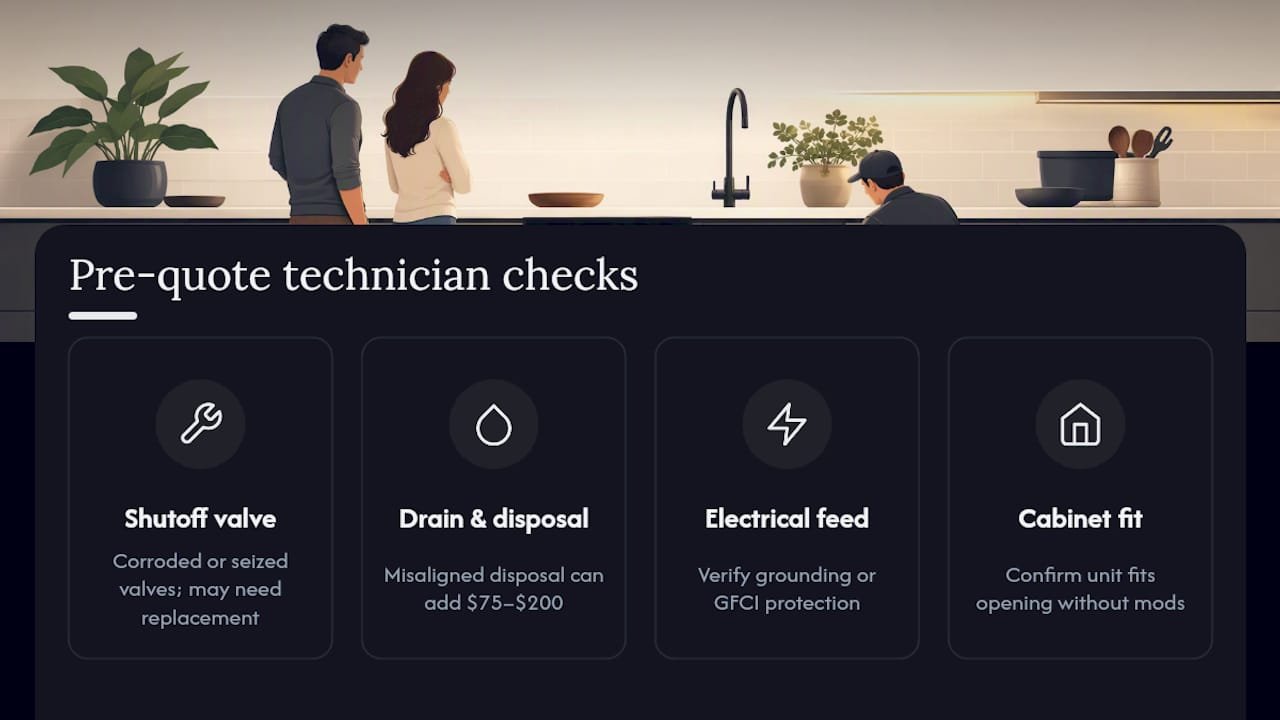
The most common surprise costs come from corroded fittings, seized shutoff valves, or a misaligned disposal connection, small fixes that typically add $75 to $200 once discovered mid-job. Safety checks matter just as much: a pressure test on the new supply line, a leak check after the first run cycle, and verification that the circuit is properly grounded or GFCI-protected where required. Learn more about what a professional installation covers.
Pro Tip: If your home still has the original shutoff valve from when the kitchen was built, budget for a possible valve replacement. Valves that haven’t been turned in years often fail the moment a technician tries to close them.
Why the Cheapest Bid Isn’t Always the Right One
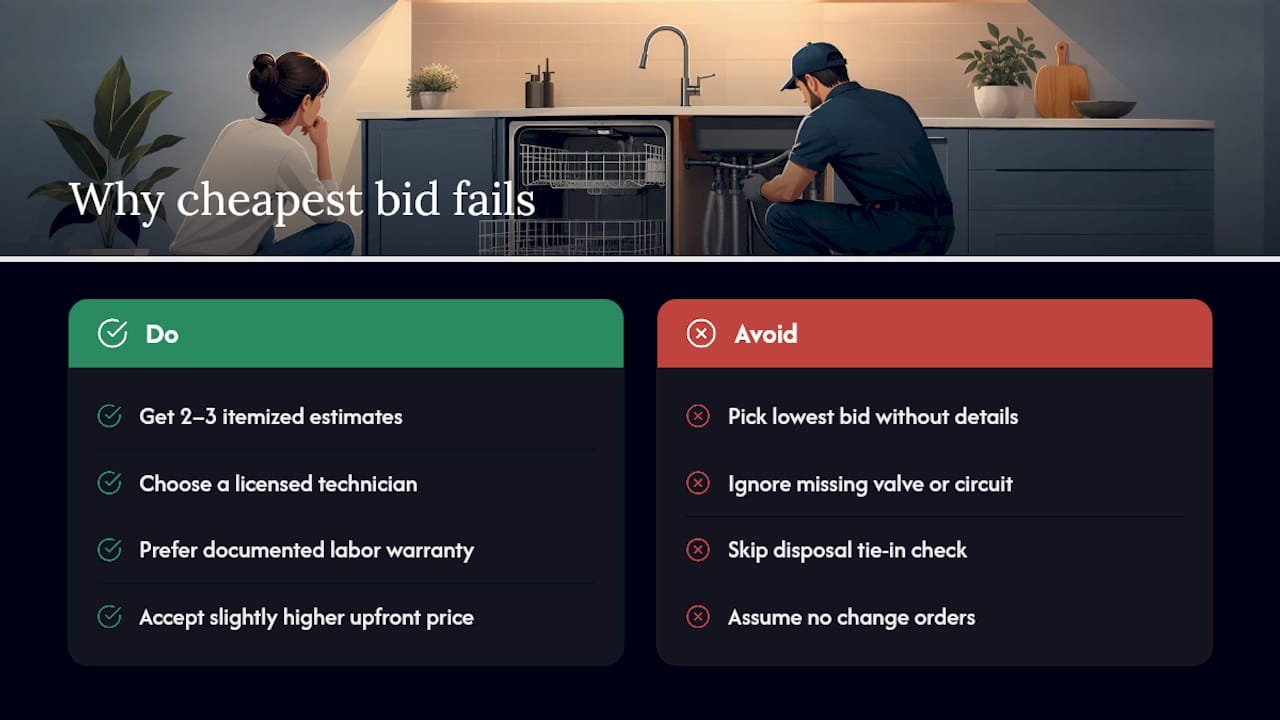
The lowest quote often looks attractive until it excludes the exact thing your kitchen needs, a new valve, a dedicated circuit, or proper disposal tie-in. Those gaps turn into change orders once work starts, and change orders almost always cost more than if they’d been priced in from the start.
Get two or three itemized estimates before deciding, and give real weight to whoever offers a documented warranty on their labor. A slightly higher upfront price from a licensed technician is usually the ounce of prevention against a callback six months later.
— MDTECH
Book an On-Site Estimate With Mdtechservices
A licensed technician can provide an on-site evaluation by checking your actual shutoff valve, drain line, and electrical feed before naming a price.

An on-site estimate from Mdtechservices covers everything this guide walks through, haul-away, disconnect, new supply line if needed, electrical assessment, and a written, itemized breakdown you can compare against any other bid you’ve collected. If a job needs a plumber or electrician, that scope gets flagged upfront instead of showing up as a surprise charge halfway through installation. For homeowners weighing DIY against a licensed swap, our step-by-step installation guide breaks down exactly where the line sits. If cabinet fit is part of your concern, the carpentry pitfalls covered in this guide to DIY door replacement challenges apply just as much to dishwasher panel fronts.
Ready to see your actual number? Book your on-site dishwasher installation estimate with a licensed Mdtechservices technician and get a written quote before any work begins.
Sources
- Dishwasher installation cost | Thumbtack
- Dishwasher Installation Cost 2026: $150–$700 Labor or All-In | FixUpFirst
- Dishwasher buying guide | Consumer Reports
FAQ
What’s the average labor cost to install a dishwasher?
Labor-only for a standard replacement typically runs $150 to $350, with Thumbtack’s data showing most homeowners paying around $194 when no plumbing or electrical changes are needed.
How much does a retailer charge to install a dishwasher?
Retailer installation bundles usually cover basic hookup only, often in the $150 to $350 range, but they commonly exclude new plumbing, electrical work, or haul-away unless you add those services separately.
Do you need a plumber to install a dishwasher?
You need a plumber when the shutoff valve, supply line, or drain routing requires work, or when local code mandates licensed plumbing for the connection; a straightforward swap into an existing hookup usually doesn’t require one.
How long does a dishwasher installation take?
Most standard replacements take one to three hours, while new installs requiring plumbing or electrical work can take longer depending on access and cabinet fit.
Is professional dishwasher installation worth the extra cost over DIY?
For straightforward swaps, DIY can work fine, but licensed installation protects your appliance warranty, catches hidden issues like corroded valves, and usually comes with a labor warranty that DIY work doesn’t offer.