
Short answer: yes, most water heater replacements need a permit, unless yours qualifies as a true like-for-like swap. The three factors that decide it are whether the unit stays in the same spot, keeps the same fuel type, and uses the same venting and roughly the same size. If any of those three answers is no, stop and call your local building department or a licensed contractor before you install anything.
TL;DR:
- Most water heater replacements require a permit unless the unit remains in the same location, uses the same fuel, vents the same way, and has similar capacity.
- Moving the heater, changing fuel sources, upgrading to tankless models, or altering venting always triggers a permit requirement, regardless of other factors.
- Permit costs typically range from $50 to $350, with faster approval for routine swaps and longer timelines for more complex upgrades or relocations.
- Inspectors verify key safety elements such as pressure relief valves, drain pans, expansion tanks, vent connections, gas testing, and seismic straps before signing off.
- Skipping permits can result in fines, higher fees for after-the-fact permits, or insurance claims being denied, making it smarter to confirm requirements beforehand.
Table of Contents
- How to Tell if Your Water Heater Job Is Permit-Exempt
- Common Triggers That Always Require a Permit
- The Permit Process, Timeline, and Typical Fees
- What Inspectors Check Before Signing Off
- What Happens if You Skip the Permit
- When Mdtechservices Recommends Calling a Licensed Pro
- Our Take: Permits Protect You More Than They Slow You Down
- Let Mdtechservices Handle Your Permit and Installation
- Where to Verify Your Local Requirements
- Sources
- FAQ
How to Tell if Your Water Heater Job Is Permit-Exempt
“Like-for-like” is the phrase every permit office uses, but it has a narrower meaning than most homeowners assume. It means the new unit sits in the exact same location, burns the same fuel, vents through the same path, and matches the old tank’s capacity closely enough that the vent sizing and gas line don’t need changes. Anything beyond that pushes you into permit territory.
A few things quietly disqualify a job from the exemption:
- Bumping from a 40-gallon to a 75-gallon tank often changes vent diameter or gas BTU demand.
- Switching from a natural draft to a power-vent or tankless unit changes the venting category entirely.
- Moving the heater from a garage to a closet or attic counts as relocation, even a few feet.
In most jurisdictions, a homeowner can pull their own permit for work on a home they occupy, but a licensed plumber typically must file when the job involves gas-line alterations or when a property manager, not an owner-occupant, is requesting it. If you’re swapping a 12-year-old 50-gallon gas tank for the same-size gas tank in the same closet with the same vent, you’re likely exempt. If you’re adding a tankless unit where a tank used to live, you’re not.
Common Triggers That Always Require a Permit
Certain changes take the decision out of gray-area territory entirely. These typically require a permit no matter how routine the swap otherwise feels:
- Fuel conversions. Switching from gas to electric or electric to gas requires both a plumbing and, if gas is involved, a fuel-gas permit, along with a licensed tradesperson for the line work.
- Relocation. Moving the unit to a new spot means new supply lines, new venting, and a fresh check of clearances, which building departments won’t sign off on without an inspection.
- Tankless or capacity upgrades. A tankless retrofit often demands a larger gas supply line or a dedicated electrical circuit, both of which fall under separate trade permits.
- Venting or combustion-air changes. Converting from atmospheric to power venting, or adding pans and drains where none existed, changes the flue category and triggers code review.
- Seismic strapping in earthquake zones. States like California, Oregon, and Washington require seismic straps by code, and inspectors verify this even on otherwise simple replacements.
Gas models generally need both a plumbing permit and a fuel-gas permit, since utilities and local codes require a leak test on any disturbed gas line under standards referenced in the IFGC and NFPA 54.
The Permit Process, Timeline, and Typical Fees
Start at your city or county’s permit portal, or call the permit desk directly if the online system doesn’t spell out water heaters specifically. Many municipalities, including San Diego, offer a simple “no-plan” plumbing and gas permit for minor installations like a standard tank swap, meaning you skip formal plan review entirely.
A few things to have ready before you apply:
- Model and serial numbers for the new unit
- Photos of the current installation location
- Your contractor’s license number, if a licensed plumber is filing
- The property address and parcel or permit history number, if your city requires it
Simple online permits for routine replacements often process the same day or within a few business days, and jurisdictions such as Clark County, Nevada list water heaters under their simple online permit category. Fees for a standard swap typically run $50 to $350, while conversions, relocations, or tankless installs cost more and may require plan review, pushing the timeline out to two to four weeks. If your job needs a licensed plumber, they usually file the permit on your behalf as part of the installation contract.
What Inspectors Check Before Signing Off
Passing inspection comes down to a handful of code-based checkpoints inspectors verify every time, regardless of jurisdiction:
- T&P valve and discharge piping. The temperature and pressure relief valve must discharge downward, terminate within a few inches of the floor or outdoors, and never be capped or threaded improperly.
- Drain pan and pan drain. Units installed in attics, above living space, or in locations where a leak could cause damage need a pan with a drain routed to an approved location.
- Expansion tank. Closed water systems, common wherever a check valve or pressure regulator sits on the main line, require an expansion tank installed on the cold supply.
- Venting and gas-line testing. Inspectors confirm vent slope and connection type, check for a sediment trap on the gas line, and verify the circuit sizing on electric units.
- Seismic strapping and clearance. In seismic zones, straps must sit at specific heights on the tank, and the unit needs clear access for future servicing.
Inspectors across the country consistently flag the same handful of items, which is exactly why the checklist above rarely changes from one city to the next. Portland, for example, requires a final plumbing inspection to formally close out the permit, and skipping that step leaves the job legally unfinished even if the water heater works fine.
What Happens if You Skip the Permit
Unpermitted water heater work carries real financial exposure, not just theoretical risk. Building departments that discover the work, often during a home sale, insurance claim, or neighbor complaint, can issue fines, require an after-the-fact permit at a higher fee, or in some cases place a lien on the property until corrections are made.
- Insurance carriers can deny a claim tied to an unpermitted installation, especially after a leak or fire.
- Manufacturer warranties frequently require proof of code-compliant installation to remain valid.
- Retroactive permits typically cost more than the original would have and may force you to open walls or ceilings for inspection access.
Homeowners who voluntarily contact their building department before an issue surfaces tend to face more reasonable penalty treatment than those caught during a sale or after an incident.
When Mdtechservices Recommends Calling a Licensed Pro
Some jobs are safe to DIY. Others genuinely aren’t, and knowing the difference protects both your home and your permit application. We generally steer homeowners toward a licensed technician whenever gas-line work, electrical circuit upgrades, or a full fuel conversion is involved. These trades require their own permits and their own liability if something goes wrong.
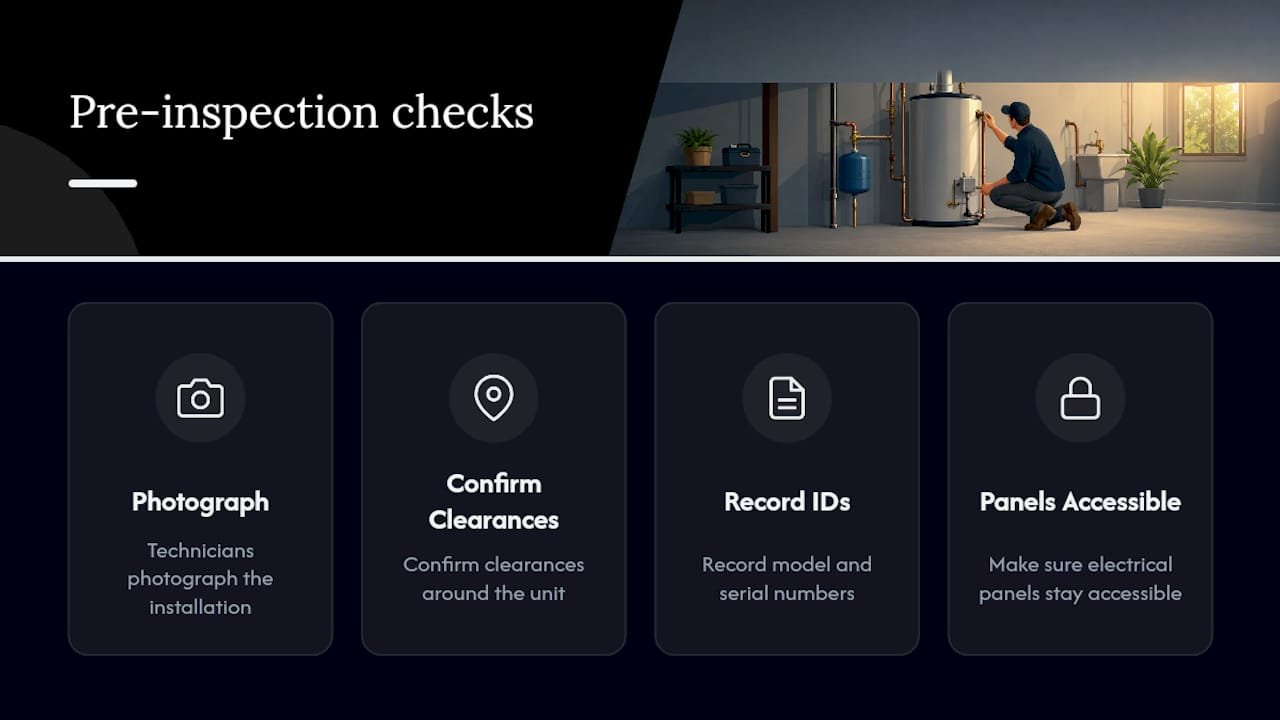
Before any inspection, technicians photograph the installation, confirm clearances around the unit, record model and serial numbers, and make sure electrical panels stay accessible. That prep work is what keeps a first inspection from turning into a second one.
Pro Tip: Call your building department before your inspector arrives to confirm which specific forms they want on-site. A missing document, not a missing part, causes most reinspection delays.
Our Take: Permits Protect You More Than They Slow You Down
The conventional wisdom treats permits as a bureaucratic tax on a simple swap. That framing misses the point. A permit is the only mechanism that forces a second set of trained eyes on a gas line, a pressure relief valve, or a seismic strap before something fails inside an occupied home.
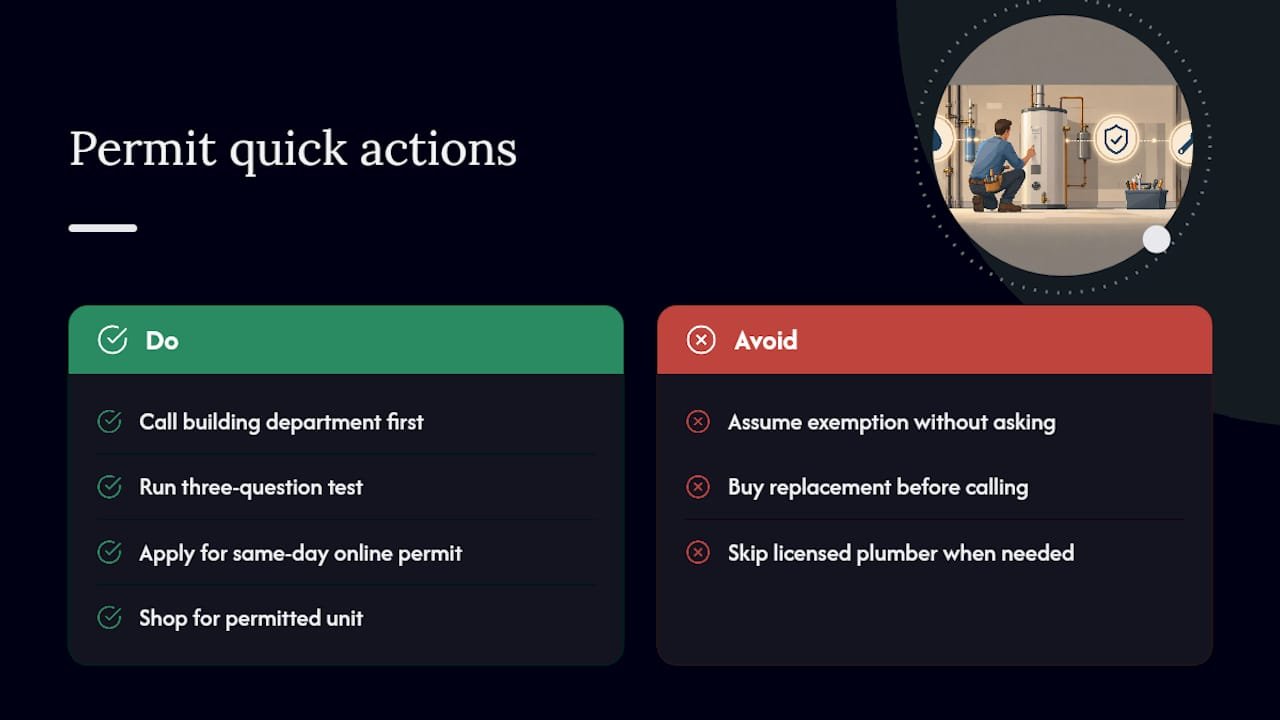
Where the standard advice falls short is treating “like-for-like” as a loophole to chase rather than a narrow, specific exemption. Homeowners lose more time and money guessing wrong about an exemption than they would spend on a same-day online permit application. The three-question test, same location, same fuel, same venting, resolves most cases in under five minutes on the phone.
If you take one action from this article, make it the phone call to your local building department before you buy the replacement unit, not after it’s already sitting in your driveway. That single call tells you whether you’re filing a simple no-plan permit or coordinating a licensed plumber for gas work, and it changes what you should shop for.
— MDTECH
Let Mdtechservices Handle Your Permit and Installation
Our service provides a licensed technician on the job to coordinate permit filing, bring licensed trades for any gas or electrical work, install seismic strapping where required, and stay on the job through final inspection.

That means you get a filed permit, a passed inspection, and paperwork you can hand to an insurance adjuster or a future buyer without hesitation. Whether you’re replacing an aging tank, converting from LP to natural gas, or dealing with a tankless upgrade, our team handles the code details so you don’t have to learn them under pressure. Ready to get it done right the first time? Schedule an appliance installation evaluation and we’ll walk you through what your specific job requires before a single tool comes out of the truck.
Where to Verify Your Local Requirements
Start with your city or county’s own permit portal for exact forms and fees, since requirements shift by jurisdiction. For gas-safety specifics, check your state’s adopted fuel-gas code; for seismic strapping rules, your local building division page will list the exact standard in force.
Sources
- Plumbing/Gas Permit | City of San Diego Official Website
- Residential Plumbing Permits
- Do you need a permit for a water heater? Complete 50-state guide (PermitDeck)
- What Happens If You Install a Water Heater Without a Permit? – LegalClarity
FAQ
How much does a water heater permit cost?
Routine replacement permits typically run $50 to $350, though conversions, relocations, or tankless installs cost more and may require plan review.
Do you need a permit for a water heater in Florida?
Florida jurisdictions generally require a plumbing permit for water heater replacement, following the same location, fuel, and venting test used across most states, so check your county’s building department for the exact form.
Do I need a permit to install a water heater in Las Vegas?
Yes, and Clark County lists water heaters under its simple online permit category, which usually processes faster than a standard plan-review permit.
Is it legal to install a water heater yourself?
In most jurisdictions, a homeowner can pull a permit and install a water heater in a home they occupy, but gas-line or electrical work often still requires a licensed tradesperson depending on local code.
What happens if I skip the permit and get caught later?
You risk fines, a required after-the-fact permit at a higher fee, and possible insurance or warranty denial, though voluntarily reporting the work before discovery typically results in more lenient treatment.