
A SEER2 rating tells you how efficiently an air conditioner or heat pump turns electricity into cooling over a whole season. A higher number means less electricity for the same cooling. SEER2 replaced the older SEER label in 2023 because the federal test now reflects how systems actually run in a house, so the two numbers look alike but cannot be compared one-to-one. If you are replacing a system in Orange County or Los Angeles County, SEER2 is the number to read on the quote, and a licensed technician can tell you what it means for your home. We handle AC and HVAC repair across both counties and explain these labels to homeowners every day.
TL;DR
- SEER2 is the current efficiency rating for central air conditioners and heat pumps: seasonal cooling output divided by the electricity used.
- SEER2 replaced SEER for new equipment in 2023. The test is tougher and more realistic, so a SEER2 figure and a SEER figure are similar but not directly comparable.
- California sits in the federal hot-dry region, so cooling efficiency matters more here than in many other states.
- ENERGY STAR heat pumps start at 15.2 SEER2 for split systems, a useful benchmark when you compare quotes.
- The rating is a starting point. Installation quality, ductwork and maintenance decide how close your system gets to it.
Table of Contents
- What a SEER2 rating measures
- What changed from SEER to SEER2
- SEER vs SEER2: can you compare the numbers?
- What this means for California homes
- What SEER2 number should you look for?
- Why the label is only half the story
- How to read a quote that lists SEER2
- Does a higher SEER2 always pay off?
- When your system needs attention
- FAQ
- Sources
What a SEER2 rating measures
SEER stands for Seasonal Energy Efficiency Ratio. The U.S. Department of Energy (DOE) defines SEER as the heat a system removes over a cooling season divided by the electricity it consumes, and SEER2 is the same kind of metric measured with a revised test procedure.
Think of it as miles per gallon for your cooling system, except the “miles” are British thermal units (BTUs) of heat removed from your home, and the “gallons” are watt-hours of electricity. A system rated 16 SEER2 removes 16 BTUs of heat for every watt-hour it draws, averaged across a range of outdoor temperatures that mimics a full cooling season.
Three things follow from that:
- Higher is more efficient. Two systems with the same cooling capacity will use different amounts of electricity if their ratings differ.
- It is a seasonal average. It is not what the unit does on one 100-degree afternoon. A related rating, EER2, describes performance at a single hot condition, and you will often see it printed beside SEER2.
- It applies to heat pumps too. A heat pump cools like an air conditioner, so it carries a SEER2 rating for cooling and an HSPF2 rating for heating. If you are weighing one, our guide to how a heat pump works in Southern California homes covers the basics.
What changed from SEER to SEER2
The DOE’s October 2022 FAQ explains that the new SEER2, HSPF2 and EER2 metrics exist because DOE changed the testing procedures to better reflect real-world installation and use. The current procedure is Appendix M1, and DOE’s consumer page identifies it together with AHRI 210/240-2024 as the method for measuring SEER2 and HSPF2.
The most important change is airflow resistance. Real ductwork pushes back against the blower, which engineers call static pressure. According to an EPRI report from 2020, Appendix M1 raises the minimum static-pressure condition for the indoor air handler, among other changes, to better represent field installation. The old test was run in easier conditions than most homes provide, so the old number flattered the equipment.
The same report lists further changes: a modified heating-load calculation, optional heating-mode tests, revised off-mode testing and a modified variable-speed factor. You do not need to follow those details. What matters is the direction: the new test is stricter and closer to what happens in a house.
If you want to understand why airflow resistance matters in your own ducts, this explanation of static pressure in ductwork shows how a duct system that pushes back too hard makes a system work harder than its label suggests.
SEER vs SEER2: can you compare the numbers?
Not directly. DOE’s FAQ says SEER and SEER2 values are similar but not directly comparable because they come from different test procedures. In practice, the same equipment usually shows a slightly lower number under SEER2 than it did under SEER, even though nothing about the machine changed.
There is also no single conversion factor. Industry coverage in ACHR News notes that packaged systems may use different SEER-to-SEER2 conversion factors than split systems, so a quick rule of thumb will not hold for every unit.
Here is a worked example. Say you have a 15-year-old system and a neighbor tells you their new unit is “a 16 SEER.” Your quote lists a 16 SEER2 unit. Those are not the same claim. Under the older test, a 16 SEER label was earned in easier conditions, so a 16 SEER2 unit has met a tougher standard. The fair comparison is SEER2 to SEER2, on quotes dated after 2023.
| SEER | SEER2 | |
|---|---|---|
| What it measures | Seasonal cooling output divided by electricity used | The same, with a revised test |
| Airflow resistance in the test | Easier conditions | Higher, closer to real ductwork |
| Where you see it | Older equipment and older quotes | New equipment since 2023 |
| Direct comparison | Not with SEER2 | Not with SEER |
What this means for California homes
DOE sorts the country into regions for minimum efficiency. Its FAQ places California in the hot-dry Southwest region with Arizona, Nevada and New Mexico. Any new central air conditioner or heat pump installed here has to meet the federal minimum set for that region, and any California-specific rules on top of it. Your installer should confirm the exact minimum for the size of system you need.
Why this matters in Orange and Los Angeles counties:
- Long cooling seasons. Inland areas such as Anaheim, Fullerton, Irvine and the San Fernando Valley run air conditioning for many months, so every efficiency point pays back more often than it would in a mild climate.
- Heat pumps are common. Many homes here use one system for both cooling and heating, so the SEER2 and HSPF2 pair tells you the full story.
- Rental properties. If you are a landlord or property manager, the rating on a replacement unit affects the tenant’s utility bills and the number of service calls you can expect over the years.
One more point from DOE: testing to the newer SCORE and SHORE metrics under Appendix M2 is not required until compliance is required with an efficiency standard based on those metrics. For now, SEER2 is the label you will see on new equipment.
What SEER2 number should you look for?
There is no single right number, because the best choice depends on your home, your usage and your budget. A good anchor is ENERGY STAR. Its criteria for split-system heat pumps call for at least 15.2 SEER2, 7.8 HSPF2 and 11.0 EER2. Single-package heat pumps need at least 15.2 SEER2, 7.2 HSPF2 and 10.0 EER2.
Use those figures as follows:
- Start from the minimum. Any new unit must meet the regional federal minimum. That is the floor, not a recommendation.
- Look at ENERGY STAR as the step up. If the unit you are quoted is certified, you know it meets the 15.2 SEER2 split-system threshold for heat pumps, along with the heating and EER2 figures.
- Match the number to your usage. A home that runs cooling every day from late spring to October gets more from a higher rating than a house used a few weeks a year.
- Check that the whole system matches. The rating is for a specific pairing of outdoor unit and indoor coil or air handler. Mixing components can change the result.
A higher SEER2 generally means less electricity for the same cooling, and your actual savings depend on how much you run the system, your electricity rate and how well the system is installed. Your own utility bill is the only honest measure of what you save.
Why the label is only half the story
A SEER2 number comes from a laboratory test on matched equipment. Your house adds variables that the label cannot capture, and they decide how close you come to it.
Installation quality
Refrigerant charge, airflow and electrical connections all affect efficiency. A high-rated unit set up poorly will not deliver its rating. This is why we put the installation and the diagnosis ahead of the sticker when we talk to homeowners.
Ductwork
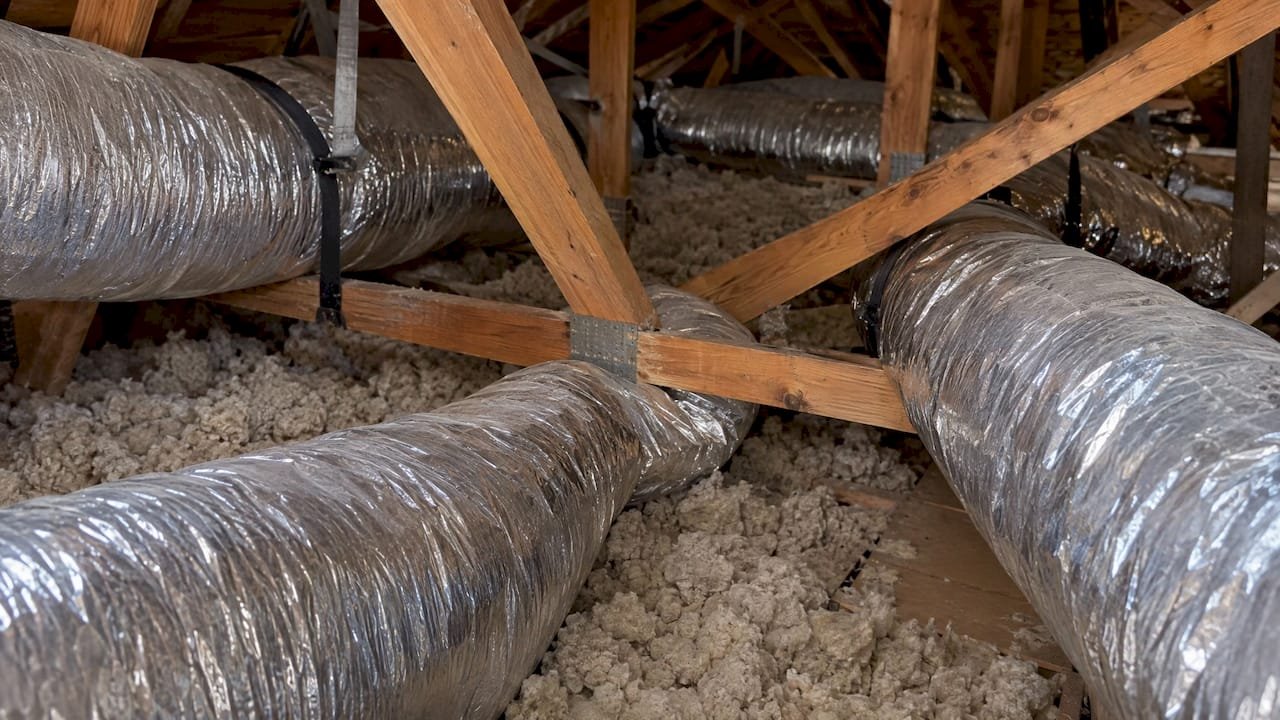
Leaky, undersized or crushed ducts raise static pressure and waste cooled air in the attic. That is the exact condition the SEER2 test tries to reflect. If your rooms are uneven or the system runs constantly, ask for the duct system to be assessed before you pay for a higher-rated unit.
Sizing
A unit that is too large cycles on and off quickly and cools unevenly. A unit that is too small runs all day. Sizing should be calculated for your home, not copied from the old system.
Maintenance
Dirty coils and clogged filters cut efficiency on any system, whatever its rating. Our seasonal HVAC maintenance tips and HVAC efficiency checklist for homeowners walk through what to do before each cooling season. For wider savings ideas, see our smart HVAC efficiency tips.
How to read a quote that lists SEER2
When you receive a proposal for a new air conditioner or heat pump, look for these items:
- SEER2, EER2 and, for heat pumps, HSPF2. All three should be listed for the exact model combination, not just one headline number.
- ENERGY STAR status. Ask whether the matched system is certified, since certification applies to specific combinations.
- Capacity in tons or BTUs. Confirm how it was calculated for your home.
- What is included. Look for ductwork assessment, refrigerant line work, thermostat and permit handling where applicable.
If your system is still running but costing more each summer, repair may be the better first step, and a technician can tell you whether the unit has life left. Our guide on the difference between AC and HVAC for California homes and our explanation of common HVAC terms help you follow what a technician says. If you are deciding between system types, types of air conditioning systems for energy efficient homes compares them.
Does a higher SEER2 always pay off?
A higher rating reduces electricity use for the same cooling, and the savings grow the more you run the system. Manufacturer guidance describes it the same way: a higher SEER2 means greater efficiency and potentially lower energy use and costs depending on how you use the system.
To think about it for your own home, compare three things: the difference in price between two models, the hours your system runs, and your electricity rate. Heavy users in inland Orange County and the Valley tend to see the most benefit from a higher rating, and a landlord covering a common system benefits as well. Ask for the quote to list each model’s SEER2 so you can set it against your last year of bills.
Our perspective
Homeowners often ask us which number to buy. Our answer is that the best system is the one that is correctly sized, correctly installed and properly maintained, with a SEER2 rating suited to how much you run it.
We work on air conditioning, heating and cooling, and HVAC repair for homes in Orange County and Los Angeles County, and our technicians are licensed. We take a long-term view: solutions that last, with upfront pricing and a response when you need it, including emergencies.
A label tells you what a unit can do in a test. A licensed technician looking at your ducts, your attic and your electrical connections tells you what it will do in your house. That is the reason we like to see the home before recommending a rating.
MDTECH
When your system needs attention
If your cooling is weak, your bills have crept up or the unit is short-cycling, a technician can find the cause before you decide whether to repair or replace. We offer air conditioning repair, HVAC repair and heating and cooling services to homeowners, landlords and property managers across Orange County and Los Angeles County. You can book an appointment online, and our technicians are available for emergencies.
To see everything we cover, from HVAC to appliances and plumbing, visit MDTech Services.
FAQ
What is the difference between SEER and SEER2?
Both measure seasonal cooling efficiency, but SEER2 uses a revised test that applies higher airflow resistance to match real installations. DOE says the two values are similar but not directly comparable. New equipment carries SEER2 labels.
Is a higher SEER2 always better?
A higher rating means the system uses less electricity for the same cooling. How much you save depends on how often you run it, your electricity rate and the quality of the installation and ducts. Compare SEER2 numbers only with other SEER2 numbers.
What SEER2 do I need in California?
California is in DOE’s hot-dry Southwest region, and every new central air conditioner or heat pump must meet the minimum that applies there. For a benchmark above the minimum, ENERGY STAR split-system heat pumps start at 15.2 SEER2. Your installer can confirm the minimum for your system size.
Can I convert my old SEER rating to SEER2?
Only roughly. The figures come from different tests, and packaged systems use different conversion factors than split systems, so no single formula is exact. Ask for the SEER2 printed on the new unit’s label instead.
Sources
- DOE 2023 central air conditioner standards FAQ (October 5, 2022)
- DOE consumer page on central air conditioners and heat pumps
- EPRI: Understanding the New Performance Metrics for Unitary Air Conditioners
- ACHR News: Higher Efficiencies, ‘Sequel’ Ratings on Tap for HVAC in 2023
- ENERGY STAR heat pump key product criteria