
An appliance diagnostic fee pays a technician to travel to your home, inspect the appliance, run tests, and give you a written repair estimate. Most homeowners pay somewhere between $40 and $160 for this visit, with $100 being a common average that shows up across service call pricing data. Here’s the part that surprises a lot of people:
- If you approve the repair the same day, most companies credit that fee toward your final bill.
- If you decline the work or just wanted an estimate, the fee is usually yours to keep as a standalone charge.
- The exact amount depends on your appliance, your location, and whether you’re calling during business hours or at 9 p.m. on a Sunday.
Key Takeaways
A fair appliance diagnostic fee runs $40 to $160, covers travel and testing time only, and is often credited toward the repair when you approve same-day work.
| Point | Details |
|---|---|
| Expect $40–$160 | Most diagnostic visits average around $100, with after-hours calls running higher. |
| Fee covers labor, not parts | Travel, testing, and inspection are included; replacement parts are billed separately. |
| Ask about credit policy first | Confirm whether the fee applies toward repair before you book the appointment. |
| Prep speeds up the visit | Have your model number, serial number, and symptom timeline ready for the technician. |
| Mdtechservices credits same-day repairs | Licensed technicians follow a documented diagnostic process and apply the fee toward approved same-day work. |
Table of Contents
- What Exactly Does the Appliance Diagnostic Fee Pay For?
- How Much Does an Appliance Diagnostic Fee Typically Cost?
- What Factors Change the Price of a Diagnostic Visit?
- When Is the Diagnostic Fee Waived or Credited?
- How Can You Avoid Surprise Charges Before Booking?
- What Should You Budget for Common Appliance Repairs?
- What Happens During a Typical Diagnostic Visit?
- How Does a Professional Actually Diagnose an Appliance?
- Frequently Asked Questions
- Sources
What Exactly Does the Appliance Diagnostic Fee Pay For?
You’re not just paying for someone to show up. The fee covers travel and mileage to your home, the technician’s time on-site, use of diagnostic tools like multimeters and error-code readers, a visual inspection of the unit, and basic safety checks around gas and electrical connections. A proper diagnostic visit typically takes 30 to 60 minutes and ends with a technician explaining what’s wrong and handing you a written estimate.
What it usually does not include:
- Replacement parts (compressors, control boards, belts, and so on)
- Labor beyond the initial diagnosis
- Permit fees for gas conversions or major installation work
That distinction matters when you’re comparing quotes. A company advertising a “$49 diagnostic” that doesn’t disassemble anything or test with real equipment isn’t giving you the same service as a $100 visit that includes a thorough inspection and a documented estimate.
How Much Does an Appliance Diagnostic Fee Typically Cost?
Price bands vary by appliance type, region, and timing, but the ranges are fairly consistent nationwide.
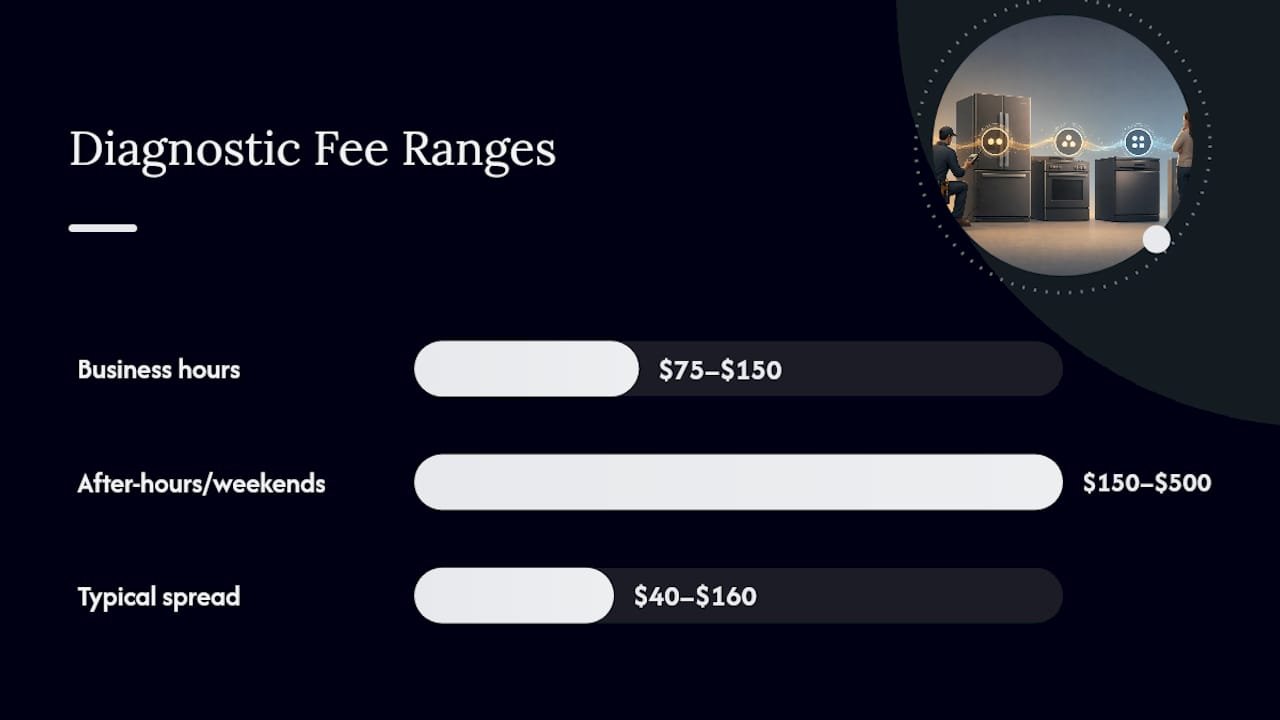
Pro Tip: Standard business-hours diagnostics generally run $75 to $150, but after-hours, weekend, or holiday calls can jump to $150 to $500 because of overtime pay and emergency dispatch surcharges. If your appliance can limp along until Monday morning, waiting often saves you real money.
Urban markets tend to run higher than rural ones simply because of labor costs and drive times. A fair rule of thumb: treat $100 as your anchor, expect $40 to $160 as the normal spread, and brace for the top of that range if you’re calling on a holiday.
What Factors Change the Price of a Diagnostic Visit?
Several variables push your bill up or down before a single part gets replaced:
- Appliance type and brand — built-in refrigerators and commercial-grade ranges often require specialized tools and take longer to diagnose than a basic dryer.
- Technician skill level — a senior technician may charge more per hour but often diagnoses faster, which can offset the higher rate.
- Travel distance — calls outside a company’s core service area often carry a trip surcharge.
- After-hours timing — evenings, weekends, and holidays commonly carry premium pricing.
- Complexity and intermittent problems — a fault that only shows up occasionally can require a longer visit or a follow-up appointment, since the issue has to actually occur while the technician is watching.
Multi-symptom appliances (say, a refrigerator that’s both noisy and not cooling properly) usually take longer to isolate, which can mean more diagnostic time billed at the hourly rate once the initial fee’s coverage runs out.
Pro Tip: Before your appointment, jot down exactly when the problem happens, take a short video or photo if you can, and have your model and serial number ready. This alone can shave real minutes off the visit, according to service call research from The Digital Life.
When Is the Diagnostic Fee Waived or Credited?
Most reputable companies handle this one of two ways: they credit the fee toward the repair, or they clearly state upfront that it’s non-refundable. That transparency is what separates a trustworthy shop from one that pressures you into a repair you don’t need, a pattern Tech Angels points out as a key sign of a reputable provider.
Common situations where the fee gets waived or credited:
- You approve the repair the same day the technician diagnoses the problem.
- The appliance is still under an active manufacturer warranty.
- You have a home warranty plan that covers trade-call fees, though coverage terms vary widely by plan.
- The company is running a promotional offer or you’re enrolled in a service membership.
Fees typically stay non-refundable when you decline the repair, request an estimate only, or cancel after the technician has already diagnosed the problem. Before booking, confirm three things with the dispatcher: whether the fee credits toward repair, whether you’ll get a written estimate, and how warranty claims are handled. Our warranty coverage guide breaks down how manufacturer and home-warranty terms affect what you actually pay.
Who Actually Pays the Diagnostic Fee?
Homeowners typically pay the diagnostic fee directly unless a warranty covers it. If you rent, check your lease first. Landlords or property managers usually authorize and pay for appliance service in a rental unit, and most leases require you to contact them before scheduling anything yourself. Home warranty trade-call fees often land between $75 and $125, noticeably lower than a standalone retail visit, though plan terms and technician choice vary.
How Can You Avoid Surprise Charges Before Booking?
A five-minute phone call before the technician arrives can save you real frustration later. Ask the dispatcher directly:
- Is the diagnostic fee credited toward the repair if I approve it the same day?
- What’s the hourly labor rate once the diagnostic hour is used up?
- Do you mark up parts, and by how much?
- Is there an after-hours or emergency surcharge for my time slot?
Before the visit, have your appliance’s model and serial number on hand, along with a clear description of when the problem occurs and any error codes on the display. This kind of preparation, backed by consumer guidance on service call fees, routinely shortens diagnostic time.
Pro Tip: Always ask for a written, itemized estimate before authorizing repair work, not just a verbal number. If a quoted repair cost approaches half the price of a new unit, get a second opinion, since replacement often makes more financial sense at that point.
What Should You Budget for Common Appliance Repairs?
Here’s how diagnostic fees and typical repairs shake out across the appliances homeowners call about most:
Refrigerators tend to run higher when a compressor is involved, since it’s both an expensive part and a labor-intensive swap. Washers and dryers usually stay in the moderate range unless a control board fails. Complex electrical faults or jobs needing multiple parts can push a project into the $600 to $1,200 range or beyond, especially on built-in appliances like ice makers where specialty parts cost more.
What Happens During a Typical Diagnostic Visit?
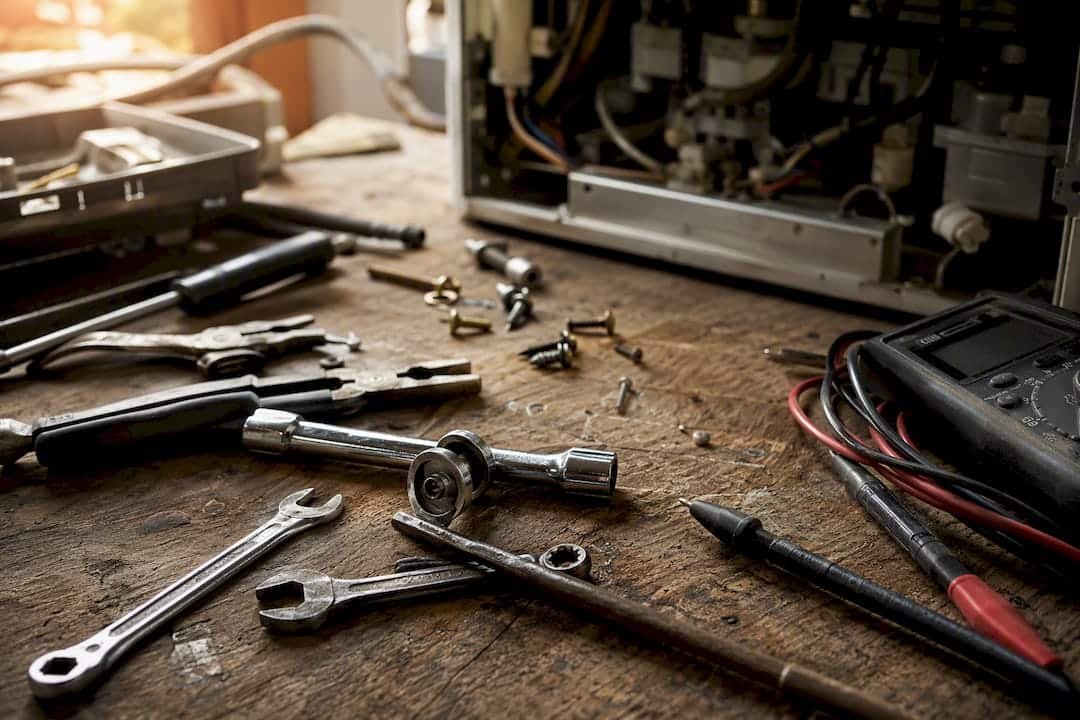
Expect a fairly predictable rhythm once the technician arrives. They’ll start with safety checks (gas, electrical, water connections), then try to reproduce the symptom you described. From there, they test with meters and error-code readers, disassemble panels if needed to inspect internal components, and walk you through what they found.
By the end of the visit, you should receive:
- A written or emailed estimate breaking down parts and labor
- An explanation of what failed and why
- A timeline for parts arrival if the repair can’t happen same-day
If the fault is intermittent or requires a specialty part, a follow-up visit may be necessary. Ask upfront whether a second visit triggers another diagnostic charge or falls under the original fee.
How Does a Professional Actually Diagnose an Appliance?
A quality diagnostic isn’t guesswork. It follows a consistent process:
- Intake and model verification — confirm the appliance model, serial number, and reported symptoms.
- Safety isolation — shut off power, gas, or water supply before hands-on work begins.
- Systematic testing — check components methodically with meters and diagnostic tools rather than guessing.
- Error-code analysis — cross-reference any displayed codes against manufacturer documentation.
- Parts verification — confirm the exact part needed and its availability before quoting labor.
- Written estimate — document findings, costs, and options in writing before any repair begins.
This approach, paired with licensed technicians and clear diagnostic workflows, is what separates a $100 diagnostic that actually solves your problem from a rushed visit that leaves you calling someone else a week later. Industry coverage on trade pricing trends shows this kind of documented, step-by-step approach is becoming the standard homeowners should expect.
A Technician’s Note on What Actually Speeds Things Up
I’ve watched plenty of visits run long simply because the homeowner couldn’t describe when the problem happens or didn’t have the model number handy. Tell your technician exactly what you noticed, when it started, and what (if anything) changed right before it. That detail alone often shortens the visit and keeps your bill lower. One thing worth repeating: if you smell gas, see sparks, or notice water pooling near an outlet, stop and call a professional immediately. Don’t wait for a scheduled appointment.
How Mdtechservices Handles Your Diagnostic Visit
Mdtechservices credits your diagnostic fee toward the repair whenever you approve same-day work, and our licensed technicians follow the same structured process outlined above: intake, safety checks, systematic testing, and a written estimate before anything gets fixed. Booking is handled entirely online, so you can schedule a visit without playing phone tag with a dispatcher.
If you’re weighing repair against replacement, our guide on appliance repair versus replacement walks through the decision in more depth. When you’re ready, you can book a diagnostic visit online and get a clear, itemized estimate before any repair work starts.
Frequently Asked Questions
Is the appliance diagnostic fee the same as the service call fee?
Yes, “diagnostic fee” and “service call fee” refer to the same charge in most of the industry. Both describe the cost of a technician traveling to your home and inspecting the appliance.
Will I have to pay the diagnostic fee if I don’t get the repair done?
Usually yes. Unless the company explicitly waives it for estimate-only visits, the diagnostic fee is typically non-refundable if you decline the repair.
Does a home warranty cover the diagnostic fee?
Often, though not always in full. Many home warranty plans charge a lower trade-call fee, commonly $75 to $125, instead of covering the full retail diagnostic charge.
Why do after-hours diagnostic fees cost so much more?
Emergency dispatch and overtime pay drive those costs. After-hours, weekend, or holiday calls can climb from a normal $75 to $150 range up to $150 to $500.
Sources
- Appliance repair call cost & pricing — CurrentCost
- HVAC Diagnostic Fee Guide 2026: Service Call Prices & What to Expect
- Appliance service call fee: what it includes & when it is waived — The Digital Life
- Why appliance repair companies charge a diagnostic fee — Tech Angels
Pricing varies by region and provider, so confirm exact numbers with a local technician before booking.