
An unexpected refrigerator breakdown in Orange or Los Angeles County can throw off your routine and budget in a single afternoon. Homeowners rely on appliances every day, making clear and enforceable warranty coverage a vital layer of financial protection. By understanding the different types of warranties and their detailed terms, you can confidently avoid costly surprises and benefit from smarter, more cost-effective appliance repairs.
Table of Contents
- Defining Warranty In Appliance Repairs
- Types Of Appliance Warranties Explained
- Coverage Details And Common Exclusions
- Homeowner Rights And Claim Procedures
- Costs, Limitations, And What To Avoid
Key Takeaways
| Point | Details |
|---|---|
| Understanding Warranties | Warranties are essential legal protections that ensure appliance quality and performance, comprising written and implied types. |
| Types of Warranties | Appliance warranties include express and manufacturer warranties, along with extended coverage options for additional security. |
| Coverage Limitations | Warranties typically come with exclusions, including damages from improper use, that homeowners should carefully review. |
| Claim Procedures | Homeowners have rights for transparent disclosure and reasonable remedy in warranty claims, necessitating thorough documentation for success. |
Defining Warranty in Appliance Repairs
A warranty represents a critical legal protection mechanism for homeowners, guaranteeing specific performance standards and repair provisions for household appliances. According to the Magnuson-Moss Warranty Act, a warranty is an official written promise that details the expected material and workmanship quality of a consumer product.
Warranties in appliance repairs typically come in two primary forms:
- Written Warranties: Explicit, documented promises from manufacturers detailing specific repair or replacement terms
- Implied Warranties: Legal protections ensuring products meet basic quality and performance standards, even without formal documentation
The legal framework surrounding warranties is designed to protect consumers by mandating clear, transparent terms. Federal regulations require that when manufacturers offer warranties, they must provide comprehensive and understandable information about coverage, limitations, and consumer rights.
Understanding the nuanced differences between written and implied warranties can help homeowners make informed decisions about appliance repairs and potential replacement strategies. Not all warranties are identical, and their specific terms can vary significantly between manufacturers and product types.
Warranties serve as a critical financial safeguard, potentially saving homeowners hundreds or thousands of dollars in unexpected repair expenses.
Pro tip: Always carefully review warranty documentation and keep original purchase receipts to ensure maximum coverage protection for your appliances.

Types of Appliance Warranties Explained
Appliance warranties are complex legal protections that come in multiple distinct categories, each offering different levels of coverage and consumer safeguards. Warranty classifications typically fall into two primary types: express and implied warranties, each serving unique purposes in protecting homeowners’ investments.
The main types of appliance warranties include:
- Express Warranties: Explicit written promises from manufacturers detailing specific repair or replacement conditions
- Implied Warranties: Legal protections automatically applied to ensure product functionality and quality
- Manufacturer Warranties: Standard coverage provided directly by the product’s original manufacturer
- Extended Warranties: Additional protection purchased separately to extend coverage beyond original terms
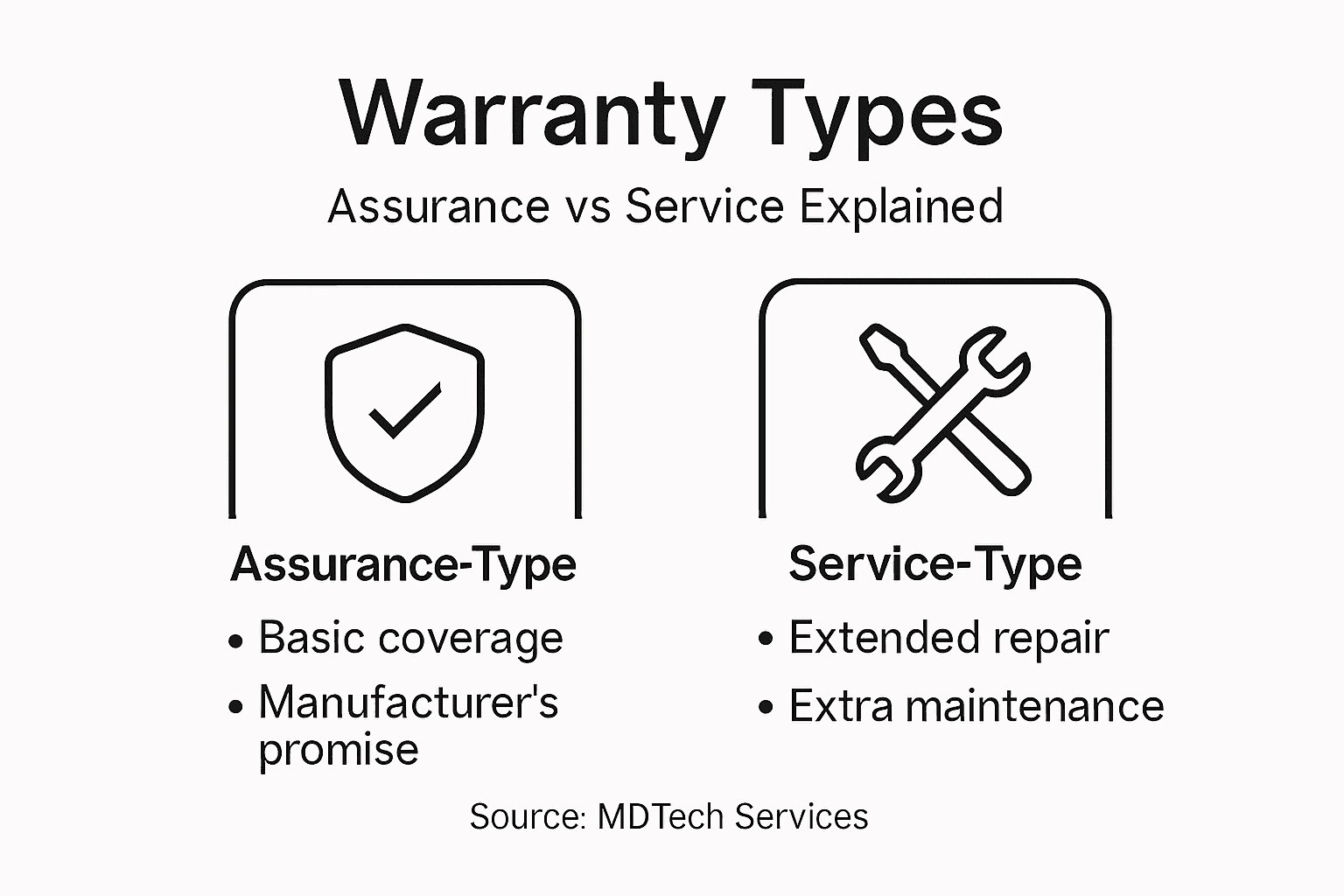
According to accounting standards, warranties are further classified into two critical categories: assurance-type and service-type warranties. Warranty obligations distinguish between basic performance guarantees and comprehensive service packages that offer additional support and maintenance options.
Assurance-type warranties primarily focus on guaranteeing the product will function as intended, while service-type warranties provide more extensive coverage, including potential additional services beyond basic repair or replacement. This distinction is crucial for homeowners to understand when evaluating their appliance protection options.
To better understand your options, here is a comparison of assurance-type and service-type appliance warranties:
| Warranty Aspect | Assurance-Type Warranty | Service-Type Warranty |
|---|---|---|
| Main Focus | Basic performance guarantee | Ongoing support and maintenance |
| Typical Cost | Included with purchase | Additional purchase required |
| Coverage Extent | Manufacturer defects only | Broader service, extra repairs |
| Duration | Usually standard warranty period | Extends past original warranty |
| Value for Homeowners | Peace of mind for defects | Added protection, fewer surprises |
Understanding the nuanced differences between warranty types can save homeowners significant money and prevent unexpected repair expenses.
Pro tip: Always document and carefully compare the specific terms of different warranty types before making a final purchase decision.
Coverage Details and Common Exclusions
Warranty coverage is a nuanced aspect of appliance protection that requires careful examination. Warranty terms typically outline specific conditions under which repairs or replacements will be conducted, with many crucial details hidden in the fine print.
Common warranty coverage typically includes:
- Parts Replacement: Free replacement of defective components
- Labor Costs: Potential coverage of professional repair service expenses
- Manufacturer Defects: Protection against inherent product manufacturing issues
- System Functionality: Ensuring core appliance systems operate as intended
Warranty exclusions are equally important to understand. Manufacturers often limit coverage for specific scenarios, including:
- Damage from improper installation
- Unauthorized modifications or repairs
- Normal wear and tear
- Cosmetic damages without functional impact
- Failure to perform routine maintenance
Homeowners should recognize that warranty protection is not a blank check for unlimited repairs. Most warranties require active maintenance and responsible use of the appliance. Consequential damages and indirect repair costs are frequently excluded, meaning consumers must carefully document and maintain their appliances to preserve warranty eligibility.
Protecting your warranty requires more than keeping documentation – it demands proactive appliance care and understanding of specific coverage limitations.
Pro tip: Photograph and document the condition of new appliances immediately after purchase to establish a baseline for potential future warranty claims.
Homeowner Rights and Claim Procedures
Homeowners possess specific legal protections when dealing with warranty claims. Homeowner warranty rights are fundamentally designed to ensure fair treatment and reasonable remedy when appliance issues arise.
Key homeowner rights in warranty claims include:
- Transparent Disclosure: Right to view complete warranty terms before purchase
- Reasonable Remedy: Entitlement to repair, replacement, or refund
- Prompt Resolution: Expectation of timely problem resolution
- Fair Treatment: Protection against unreasonable warranty conditions
Federal Warranty Law provisions mandate specific procedures for warranty claims. Manufacturers must address defects within a reasonable timeframe and without charging consumers. If multiple repair attempts fail, homeowners can demand a full replacement or refund.
The claim process typically involves several critical steps:
- Document the appliance issue thoroughly
- Contact the manufacturer or authorized repair center
- Provide all requested documentation
- Follow up consistently on the claim status
- Escalate to consumer protection agencies if unresolved
Successful warranty claims require meticulous documentation and understanding of your legal consumer rights.
Pro tip: Maintain a dedicated file with all warranty documents, repair records, and communication logs to strengthen your claim process.
Costs, Limitations, and What to Avoid
Warranty protection involves nuanced financial considerations that homeowners must carefully evaluate to avoid unexpected expenses and coverage gaps. Understanding the potential hidden costs and limitations is crucial for making informed decisions about appliance protection.
Potential additional costs in warranty coverage can include:
- Service Fees: Charges for diagnostic visits or repair assessments
- Deductibles: Out-of-pocket expenses before warranty coverage activates
- Shipping Expenses: Costs for transporting damaged appliances
- Partial Coverage: Limited reimbursement for specific components
Consumer protection laws prohibit certain unfair warranty practices. Homeowners should be wary of warranties that:
- Require using specific repair services
- Impose unreasonable maintenance conditions
- Contain unclear or overly restrictive terms
- Mandate expensive proprietary replacement parts
- Include tying arrangements that limit consumer choices
Careful documentation and understanding of warranty terms can prevent costly misunderstandings. Consumers should meticulously review all warranty conditions, ask detailed questions, and maintain comprehensive records of appliance maintenance and repair history.
Here is a summary of costs and potential pitfalls to consider before choosing warranty coverage:
| Consideration | Why It Matters | Impact on Homeowners |
|---|---|---|
| Service Fees | Can add to repair expenses | Raises overall protection cost |
| Restrictive Conditions | May limit repair options | Reduces flexibility, increases risk |
| Partial Coverage | Excludes some parts or labor | Higher out-of-pocket responsibility |
| Unclear Terms | Difficult to understand rights | Greater risk of denied claims |
Proactive research and thorough documentation are your best defenses against warranty limitations and unexpected expenses.
Pro tip: Request a written copy of complete warranty terms and read the fine print carefully before making any purchase decision.
Protect Your Home Investments with Trusted Appliance Warranty Support
Navigating the complexities of appliance warranties can be overwhelming. The article highlights common challenges like understanding warranty types, coverage exclusions, and claim procedures—issues that often leave homeowners at risk of unexpected repair costs. If you want to avoid costly surprises and ensure your appliances receive expert care that respects your warranty terms, professional service is essential. MDTech Services specializes in residential appliance repair and installation, backed by licensed technicians who understand how to maintain warranty integrity while delivering reliable solutions across Orange County and Los Angeles County.

Choose MDTech Services for quick, safe, and warranty-conscious repairs on major household appliances. Benefit from our expertise in managing repairs that align with your warranty coverage and avoid pitfalls like improper servicing or unauthorized modifications that can void protection. Book your appointment today at MDTech Services and protect your home investment with confidence. Learn more about how we can help you with appliance repairs here and explore our full range of professional repair and installation solutions.
Frequently Asked Questions
What is the difference between written and implied warranties?
Written warranties are explicit, documented promises from manufacturers detailing specific repair or replacement terms, while implied warranties are legal protections that ensure products meet basic quality and performance standards even without formal documentation.
How can homeowners protect their warranty rights?
Homeowners can protect their warranty rights by carefully reviewing warranty documentation, maintaining original purchase receipts, documenting appliance maintenance, and understanding specific coverage limitations before making claims.
What are common exclusions in appliance warranties?
Common exclusions in appliance warranties include damage from improper installation, unauthorized repairs, normal wear and tear, cosmetic damages, and failure to perform routine maintenance.
What should I do if my warranty claim is denied?
If your warranty claim is denied, document the appliance issue thoroughly, contact the manufacturer or authorized repair center for clarification, and consider escalating the issue to consumer protection agencies if needed.