
TL;DR:
- Leak detection is a proactive process that locates plumbing leaks before significant damage occurs, using tools like acoustic sensors, thermal imaging, tracer gas, and smart monitors. These non-invasive methods identify leaks in various pipe materials and configurations, with professional inspections essential for complex or concealed leaks. Implementing regular visual checks, smart sensors, and periodic professional testing helps homeowners and property managers prevent costly water damage and maintain system integrity.
Leak detection is the technical process used to locate and identify leaks within pipes and plumbing systems before they cause extensive water damage or waste. Professionals use tools ranging from acoustic listening devices and thermal imaging cameras to tracer gas systems and smart IoT monitors to pinpoint leaks without tearing apart walls or floors. Undetected household leaks can waste thousands of gallons of water annually and drive up utility bills significantly. Common causes include old piping, corrosion, worn fixtures, and improper installations. Whether you own a single-family home in Orange County or manage a multi-unit property in Los Angeles, understanding how leak detection works is the first step toward protecting your investment.
What are the common methods and technologies for leak detection?
Leak detection methods fall into several distinct categories, each suited to different leak types, pipe materials, and property configurations. Knowing the options helps you ask the right questions when hiring a professional or choosing a monitoring device for your home.
Acoustic leak detection
Acoustic detection works by using sensitive listening equipment pressed against pipes, walls, or ground surfaces to pick up the sound of pressurized water escaping through a crack or joint. Acoustic methods are rapid and cause minimal disruption, making them ideal for pressurized pipes in residential and commercial buildings. Technicians can often locate a leak before any visible water damage appears, which is a significant advantage over waiting for a wet ceiling or warped floor to reveal the problem. The limitation is that pipe material affects signal transmission, so calibration differs across copper, steel, PVC, and PEX pipe types.
Thermal imaging and infrared detection
Thermal imaging cameras detect leaks by mapping temperature differences across surfaces. Infrared cameras reveal evaporative cooling effects or heat loss at leak sites inside building envelopes, making them especially effective for finding leaks behind drywall or under concrete slabs. A wet area behind a wall will show up as a cooler zone on the thermal image, even if the surface looks completely dry. This method is non-invasive and fast, though it works best when there is a meaningful temperature difference between the leak site and the surrounding material.
Tracer gas detection
Tracer gas detection involves injecting a safe hydrogen and nitrogen mixture into a pipe system and then using a surface detector to find where the gas emerges. The standard mixture is 5% hydrogen in nitrogen, which is non-toxic and non-flammable. This method excels in complex leak path investigations where acoustic or thermal tools cannot pinpoint the exact exit point. It is particularly useful for underground pipes or slab leaks where the water travels a long distance from the actual breach before surfacing.
Smart water monitoring systems
Smart water monitoring systems enable continuous leak detection and send immediate alerts to your phone or property management software, shifting the model from periodic manual checks to real-time oversight. Devices like flow monitors installed at the main water line can detect micro-leaks by identifying irregular usage patterns at any hour. This category also includes point-of-use sensors placed under sinks, behind washing machines, or near water heaters that trigger an alarm when moisture is detected.
Pro Tip: Electronic sniffer detectors used in HVAC systems have a sensitivity range of 0.05 to 0.5 ounces of refrigerant per year, which gives you a sense of just how precise modern leak detection technology has become. That level of sensitivity translates directly to water leak tools as well.
- Acoustic detection: Best for pressurized water lines, underground pipes, and pre-damage location
- Thermal imaging: Best for in-wall leaks, slab leaks, and non-invasive surface scanning
- Tracer gas: Best for complex leak paths, underground systems, and confirming repair success
- Smart monitors: Best for continuous whole-home oversight and early micro-leak alerts
- Pressure testing and moisture meters: Best for post-repair verification and targeted spot checks
How does leak detection work in residential plumbing systems?
Residential plumbing presents specific leak scenarios that differ from commercial or industrial settings. Most homes in Orange County and Los Angeles County have a mix of copper, galvanized steel, and PEX piping, and each type responds differently to detection tools.
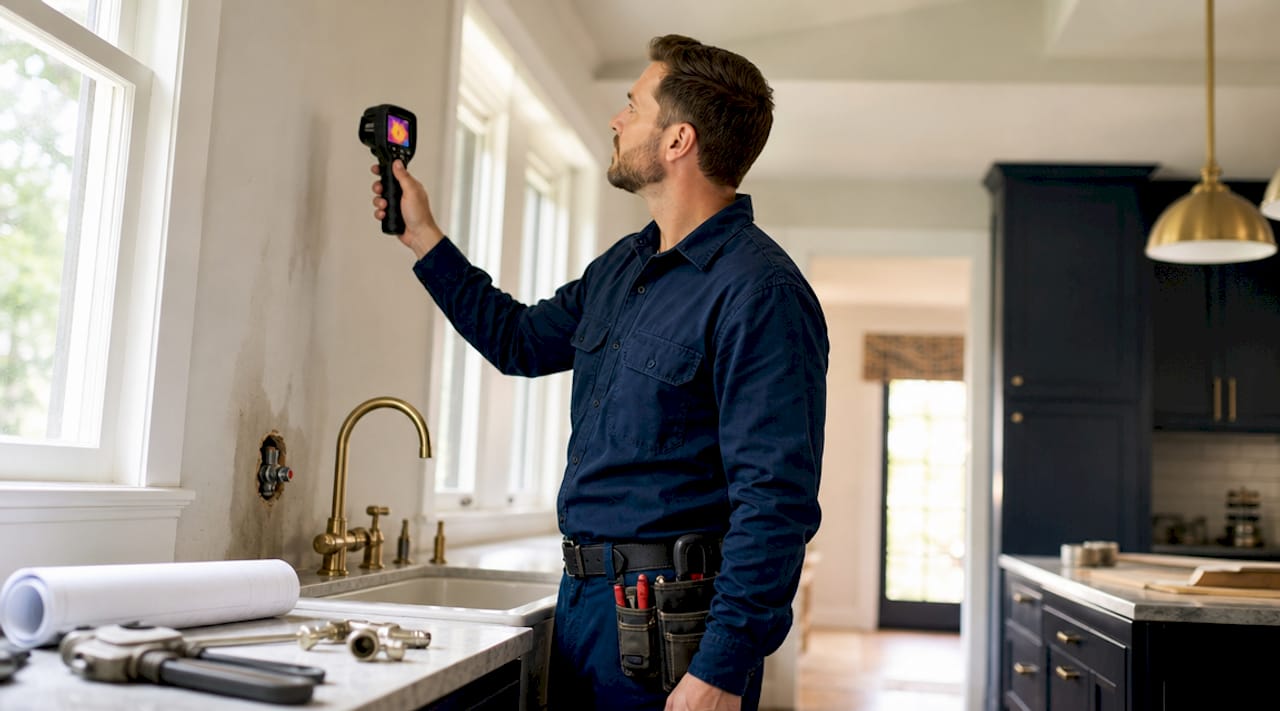
The most common residential leak types are pinhole leaks in copper pipes caused by corrosion, joint leaks at fittings and connections, and slab leaks where pipes running beneath a concrete foundation develop cracks. Each type requires a slightly different detection approach, which is why common plumbing issues often go undetected until significant damage has already occurred.
Here is how the detection process typically unfolds for a homeowner:
- Initial flow check. A licensed technician or a smart flow monitor identifies unusual water consumption patterns, such as water running when all fixtures are off.
- Acoustic survey. The technician uses ground microphones or pipe contact sensors to listen for the characteristic hiss or rumble of pressurized water escaping a crack.
- Thermal scan. An infrared camera sweeps walls, floors, and ceilings to identify temperature anomalies that indicate moisture accumulation.
- Tracer gas injection. If the leak source remains unclear after acoustic and thermal scans, tracer gas is introduced into the pipe and a surface detector traces the gas to its exit point.
- Pressure test. After a repair, the system is pressurized and monitored to confirm the leak is fully sealed before closing walls or floors.
Pro Tip: If your water bill spikes without an obvious explanation, check your meter before calling a plumber. Turn off all fixtures and watch the meter for 15 minutes. If it moves, you have an active leak. This simple test costs nothing and gives a technician a useful starting point.
The effectiveness of each method depends on conditions like ambient noise levels, pipe depth, and the temperature differential between the leak site and surrounding materials. Slab leaks are particularly challenging because water can travel several feet along the underside of a slab before surfacing, which means the wet spot you see on the floor may be far from the actual breach.
How do different leak detection methods compare?
Choosing the right method depends on where the leak is, what type of pipe is involved, and how quickly you need results. The table below compares the primary methods across the factors that matter most to homeowners and property managers.
| Method | Best application | Relative cost | Disruption level | Detection speed |
|---|---|---|---|---|
| Acoustic detection | Underground and pressurized pipes | Moderate | Low | Fast |
| Thermal imaging | In-wall and under-slab leaks | Moderate to high | None | Fast |
| Tracer gas | Complex or deep leak paths | High | Low | Moderate |
| Smart flow monitors | Whole-home continuous monitoring | Low to moderate | None | Real-time |
| Pressure testing | Post-repair verification | Low | Low | Moderate |
| Video pipe inspection | Internal pipe condition assessment | Moderate | Low | Moderate |
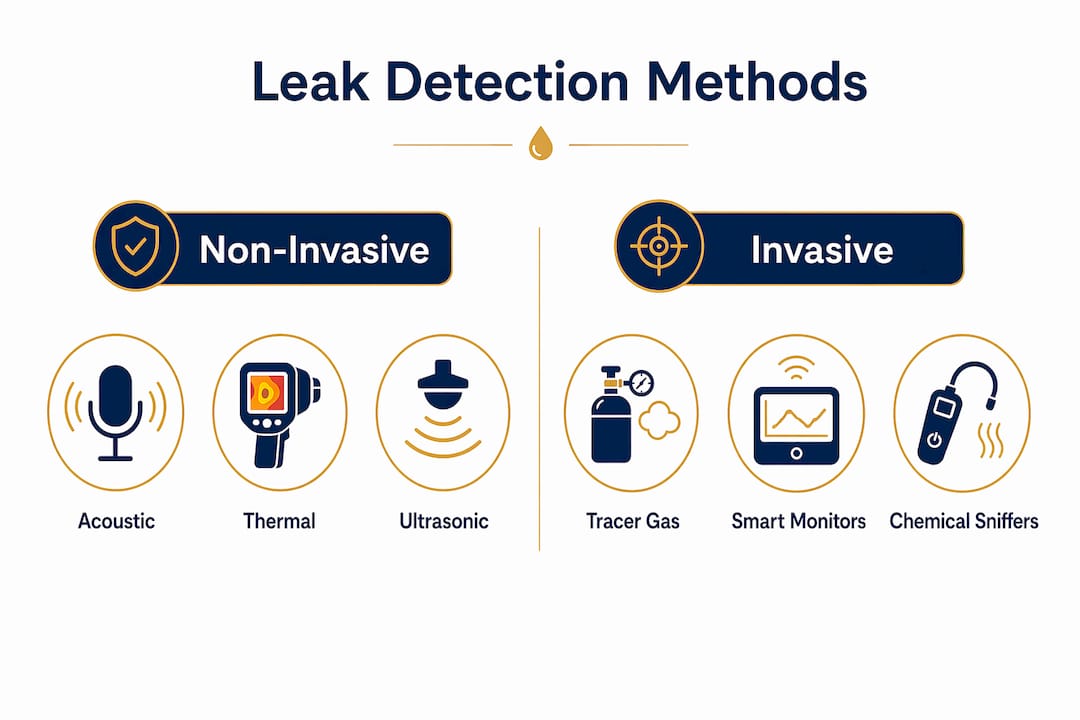
Non-invasive methods like acoustic detection and thermal imaging are the right starting point for most residential situations. They preserve walls, floors, and landscaping while still delivering accurate results. Tracer gas adds a layer of precision when the leak path is complex, such as a slab leak that has migrated under a foundation before surfacing in a different room.
Leak detection methods are increasingly split between hardware-based immediate sensing and software-based continuous modeling in smart buildings. For homeowners, this means the most practical setup combines a smart flow monitor at the main line with point-of-use sensors at high-risk appliances, backed by professional acoustic or thermal inspection when an anomaly is flagged. That layered approach covers both the slow micro-leaks that smart monitors catch and the sudden pressurized failures that acoustic tools locate quickly.
Ultrasonic detectors are effective for outdoor condenser units in windy conditions where chemical sniffers fail, which is a useful detail for homeowners with central air conditioning systems in Southern California’s climate. If your HVAC technician suspects a refrigerant leak near an outdoor unit, ultrasonic detection is the tool that works reliably in that environment.
What practical steps can homeowners and property managers take?
Knowing the methods is useful. Putting them into a regular practice is what actually protects your property. The following steps reflect best practices for both single-family homeowners and multi-unit property managers.
- Schedule routine visual inspections. Check under sinks, around water heaters, behind washing machines, and near dishwashers every month. Look for discoloration, soft drywall, or mineral deposits around pipe connections, which are signs of a slow leak. Reviewing appliance leak causes helps you know exactly what to look for.
- Install smart leak sensors at high-risk locations. Place sensors under kitchen and bathroom sinks, near the water heater, and behind the refrigerator. These devices cost between $20 and $50 each and send an alert before a drip becomes a flood.
- Monitor your water meter monthly. A consistent baseline reading makes it easy to spot a sudden increase that signals a new leak. Property managers should track consumption per unit to identify outliers.
- Hire a licensed professional for acoustic or tracer gas detection. When a smart sensor or meter reading flags a problem you cannot locate visually, a licensed technician with professional-grade equipment is the right call. Professional plumbers bring calibrated tools and the experience to interpret results accurately.
- Verify every repair with a pressure test. A repair is not complete until the system holds pressure. Skipping this step is how a “fixed” leak reappears two weeks later.
- Document everything. Routine leak detection programs reduce emergency repairs and improve insurance documentation. Keep records of inspection dates, findings, repairs made, and verification test results. This documentation supports insurance claims and demonstrates due diligence if a water damage dispute arises.
Key takeaways
Effective leak detection combines non-invasive tools like acoustic sensors and thermal imaging with continuous smart monitoring to catch leaks before they cause structural damage or significant water waste.
| Point | Details |
|---|---|
| Leak detection defined | It is the process of locating pipe and plumbing leaks before visible damage occurs. |
| Best non-invasive methods | Acoustic detection and thermal imaging locate leaks without opening walls or floors. |
| Smart monitors add real-time coverage | Flow monitors and point-of-use sensors catch micro-leaks and irregular usage 24/7. |
| Tracer gas for complex leaks | A hydrogen and nitrogen mixture pinpoints leaks in deep or complex pipe paths. |
| Documentation protects you | Recording inspections and repairs supports insurance claims and property records. |
Why I think most homeowners underestimate leak detection until it’s too late
After working with homeowners across Orange County and Los Angeles County, one pattern stands out clearly. Most people treat leak detection as a reactive measure. They call for help after the ceiling stains appear or the water bill doubles. By that point, the damage is already done and the repair cost is several times higher than it would have been with early detection.
The technology available today makes proactive detection genuinely accessible. A smart flow monitor installed at the main shutoff valve costs less than a single hour of water damage remediation. Thermal imaging during a routine plumbing inspection can catch a slow slab leak years before it undermines a foundation. These are not exotic tools reserved for commercial facilities. They are practical options for any homeowner who wants to stay ahead of the problem.
My honest recommendation is this: pair a smart monitor at your main line with annual professional inspections that include acoustic scanning. That combination covers the full spectrum from micro-leaks to sudden failures. For property managers, the math is even clearer. One undetected slab leak in a multi-unit building can result in tenant displacement, structural repairs, and insurance complications that cost far more than a systematic detection program. Proactive maintenance preserves property value and keeps repair costs predictable.
— MDTECH
Protect your property with professional leak detection services

Detecting a leak early is only half the solution. The repair needs to be done correctly the first time, and that requires licensed technicians with the right tools and experience. Mdtechservices serves homeowners and property managers across Orange County and Los Angeles County with professional plumbing services, appliance repair, and HVAC support. Whether you need a plumbing maintenance plan to stay ahead of leaks or a skilled technician to diagnose and repair an active problem, the team at Mdtechservices is ready to help. Explore our appliance repair services to address leaks from refrigerators, dishwashers, and other household appliances before they cause lasting damage. Call us today to schedule an appointment.
FAQ
What is leak detection in simple terms?
Leak detection is the process of finding leaks in pipes and plumbing systems using tools like acoustic sensors, thermal cameras, and smart monitors before water damage becomes visible. The goal is to locate the exact source of a leak with minimal disruption to walls, floors, or landscaping.
How does acoustic leak detection work?
Acoustic detection uses sensitive listening equipment to pick up the sound of pressurized water escaping through a crack or joint in a pipe. Technicians press sensors against pipes or the ground surface and use amplified audio to pinpoint the leak location.
What causes leaks in residential pipes?
Environmental causes of leaks include old piping, worn fixtures, corrosion, cold temperatures, and improper installations. In Southern California, older galvanized steel pipes and copper lines exposed to hard water are among the most common sources of residential leaks.
Are smart leak detectors worth it for homeowners?
Smart water monitoring systems provide continuous real-time alerts and can detect micro-leaks that would otherwise go unnoticed for months. Given that undetected leaks waste thousands of gallons annually, a $30 to $50 sensor at a high-risk location delivers strong value relative to its cost.
When should I call a professional instead of using a DIY detector?
Call a licensed technician when a smart sensor or meter reading flags a leak you cannot locate visually, when you suspect a slab leak, or when the leak involves pressurized supply lines. Professional-grade acoustic and tracer gas equipment locates leaks that consumer devices cannot reach.