
TL;DR:
- Preventive maintenance involves scheduled, proactive upkeep of home systems to prevent failures and extend equipment lifespan. It reduces long-term costs, minimizes emergency repairs, and enhances safety, reliability, and energy efficiency. Homeowners should create detailed checklists, document tasks, and seek professional help for complex inspections to maximize benefits.
Preventive maintenance is defined as scheduled, proactive upkeep performed on home systems and appliances before failures occur, with the goal of catching wear and deterioration early to keep equipment running reliably. For homeowners and property managers in Orange County and Los Angeles County, this approach directly reduces emergency repair bills and extends the life of major assets like HVAC systems, refrigerators, water heaters, and plumbing. A structured preventive maintenance checklist turns guesswork into a repeatable system. The difference between a $150 filter replacement and a $3,000 compressor failure often comes down to whether you had a schedule in place.
What is preventive maintenance and how does it differ from reactive maintenance?
Preventive maintenance is a proactive strategy where service tasks are performed on a fixed schedule or usage interval, regardless of whether a problem is visible. Reactive maintenance, by contrast, is unplanned repair work triggered only after a system or appliance has already failed. The core principle behind preventive maintenance is catching deterioration before it becomes a breakdown, which keeps equipment running reliably and avoids the cascading costs that follow an unexpected failure.
The financial gap between these two approaches is significant. Reactive maintenance costs 3 to 5 times more than planned preventive maintenance because of emergency labor rates, downtime losses, and collateral damage to surrounding components. A refrigerator compressor that fails without warning, for example, can damage the condenser and evaporator coils at the same time, turning a single-part repair into a full system replacement.
The table below shows the key differences between the two approaches:
| Category | Preventive maintenance | Reactive maintenance |
|---|---|---|
| Timing | Scheduled before failure | Triggered after failure |
| Cost | Lower long-term cost | 3 to 5x higher per incident |
| Downtime | Planned, minimal | Unplanned, often extended |
| Predictability | High | Low |
| Equipment lifespan | Extended | Shortened by repeated stress |
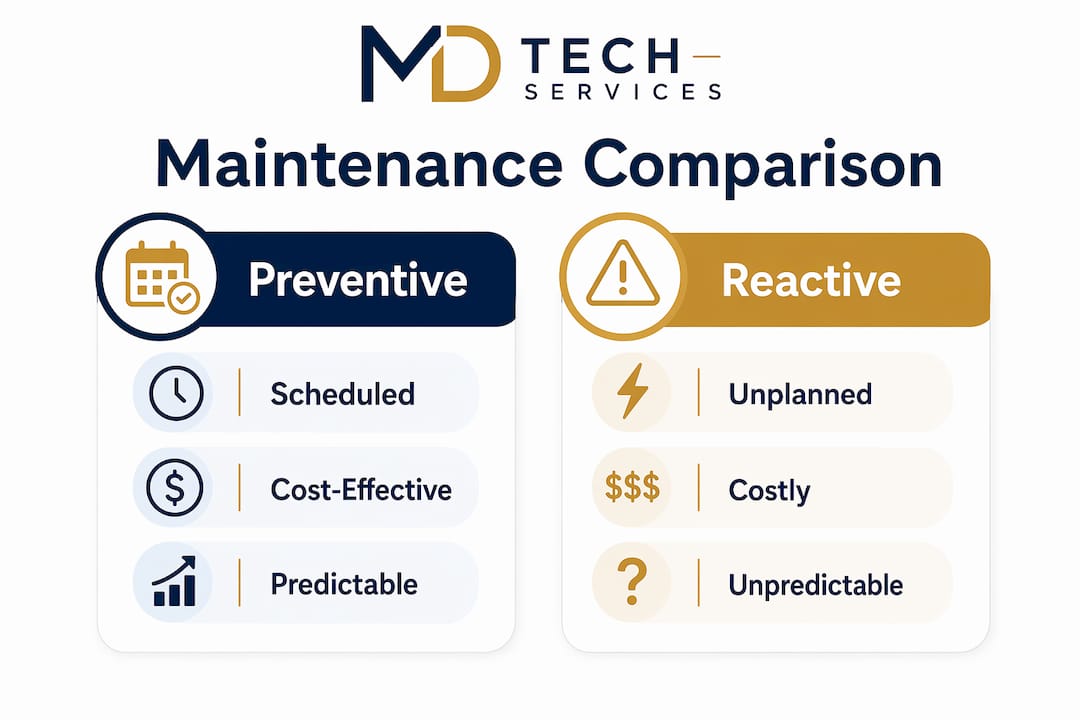
The key difference between the two approaches is scheduling and predictability, which lowers total long-term ownership costs. For a homeowner managing multiple appliances and systems, predictability alone is worth the effort of building a maintenance schedule.
What are the key benefits of preventive maintenance for homeowners?
Preventive maintenance delivers measurable results across four areas that matter most to homeowners: cost, reliability, safety, and energy efficiency.
- Fewer emergency repairs. Facilities with proactive preventive maintenance programs see unplanned downtime drop by 25 to 40%, with some manufacturers reporting reductions as high as 52.7%. For a homeowner, that translates directly to fewer panicked calls to a repair company on a Saturday night.
- Longer appliance lifespan. Regular cleaning, lubrication, and part replacement reduce mechanical stress on motors, compressors, and heating elements. A well-maintained refrigerator from brands like Whirlpool or LG can last 15 to 20 years instead of the average 10 to 13 years when neglected.
- Lower energy bills. A dirty HVAC filter forces the blower motor to work harder, increasing electricity consumption. Preventive HVAC maintenance can cut energy bills by up to 15% in California homes, a meaningful saving given the state’s utility rates.
- Improved safety. Loose electrical connections, cracked gas lines, and corroded water supply hoses are hazards that routine inspections catch before they become fires, floods, or gas leaks. Manufacturer recommendations for service intervals exist precisely because these risks are predictable.
- Maintained warranty coverage. Many appliance warranties require documented proof of routine maintenance. Skipping scheduled service can void coverage on a $1,500 dishwasher or a $4,000 HVAC unit.
Pro Tip: Set a calendar reminder for each appliance’s annual service date and store the manufacturer’s maintenance schedule in a shared digital folder so any household member or property manager can access it instantly.
What techniques and tasks are essential in a preventive maintenance program?
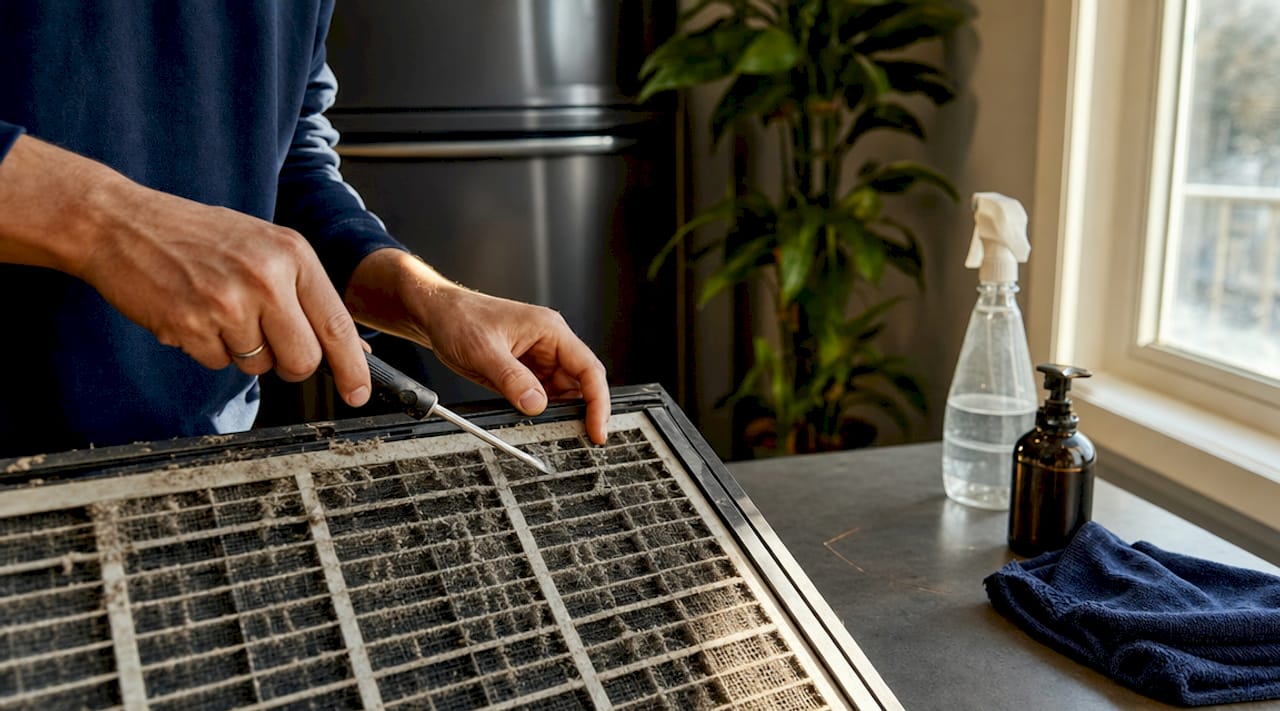
Preventive maintenance tasks include inspections, lubrication, calibration, filter changes, tightening, and cleaning. For homeowners, the most practical way to think about these tasks is by system category: HVAC, plumbing, and major appliances.
Here is a numbered list of the core tasks every homeowner should schedule:
- Replace HVAC air filters every 1 to 3 months. A clogged filter reduces airflow, strains the blower motor, and degrades indoor air quality. Use MERV 8 to MERV 11 rated filters for residential systems.
- Clean refrigerator condenser coils annually. Dust-covered coils force the compressor to run longer and hotter, shortening its lifespan. A coil brush and vacuum handle this in under 15 minutes.
- Flush the water heater tank once a year. Sediment buildup at the bottom of a tank-style water heater reduces heating efficiency and accelerates corrosion. Flushing removes the sediment and extends tank life.
- Inspect and tighten washing machine hoses every 6 months. Rubber supply hoses crack and fail without warning. Replacing them with braided stainless steel hoses and checking connections twice a year prevents flooding.
- Test smoke and carbon monoxide detectors monthly. Battery replacement and sensor testing are the simplest preventive tasks in any home, and the consequences of skipping them are severe.
- Lubricate garage door hinges and tracks twice a year. Dry metal-on-metal contact wears down components quickly. A silicone-based lubricant keeps the mechanism quiet and functional.
- Clear dryer lint traps and exhaust ducts annually. Lint accumulation in the exhaust duct is a leading cause of residential fires. A duct cleaning brush kit removes buildup the lint trap misses.
Pro Tip: Group tasks by season. Spring is ideal for HVAC inspections before summer cooling demand peaks. Fall is the right time for furnace checks, water heater flushes, and weatherstripping inspections before heating season.
For a detailed step-by-step HVAC guide tailored to homeowners, Mdtechservices has published a practical walkthrough covering filter changes, coil cleaning, and thermostat calibration.
How to create and use a preventive maintenance checklist effectively?
A preventive maintenance checklist is more than a to-do list. It is a procedural guide with exact measures and criteria that ensures consistent assessments whether you perform the task yourself or hand it off to a licensed technician. High-quality checklists include specific pass/fail criteria and exact measurement ranges, which reduces human error and ensures consistent quality across every inspection.
A well-structured checklist for a home should include the following elements:
- Asset identification. List the appliance or system by name, model number, and installation date. This matters when cross-referencing manufacturer service intervals.
- Inspection points with pass/fail criteria. Instead of “check refrigerator,” write “condenser coil temperature below 110°F at 70°F ambient” or “no visible frost buildup on evaporator.” Specific criteria remove ambiguity.
- Measurement ranges. Water heater temperature set between 120°F and 140°F. HVAC refrigerant pressure within manufacturer spec. These numbers give you a clear standard to compare against.
- Follow-up actions. Every failed check needs a defined next step. A preventive maintenance checklist must define escalation paths for failed checks to ensure timely notification and resolution. For homeowners, this means knowing when to call a licensed technician rather than attempting a repair yourself.
- Date and signature fields. Recording who performed each task and when creates an audit trail that proves maintenance was completed.
Pro Tip: Use a free tool like Google Sheets or Notion to digitize your checklist. Add a “last completed” column and a “next due” column for each task. This gives you a living document that tracks your home’s maintenance history at a glance.
Maintaining historical records of preventive maintenance allows you to identify failure patterns and justify proactive replacements before complete breakdowns occur. If your HVAC system has needed refrigerant top-ups three years in a row, the records tell you it is time to replace the unit rather than spend another season patching it.
The table below shows a sample checklist structure for common home systems:
| System | Task | Frequency | Pass criteria |
|---|---|---|---|
| HVAC | Replace air filter | Every 1 to 3 months | No visible dust blockage |
| Water heater | Flush sediment | Annually | Clear water after 5-minute flush |
| Refrigerator | Clean condenser coils | Annually | No dust accumulation visible |
| Washing machine | Inspect supply hoses | Every 6 months | No cracks, bulges, or moisture |
| Dryer | Clean exhaust duct | Annually | Unobstructed airflow confirmed |
Standardizing your process via detailed checklists reduces variability and improves reliability across every inspection cycle.
What are common preventive maintenance challenges and how to overcome them?
Most homeowners start a maintenance routine with good intentions and abandon it within a few months. The obstacles are predictable, and so are the solutions.
- Inconsistent scheduling. Without a fixed trigger, maintenance tasks get postponed indefinitely. The fix is to tie tasks to recurring calendar events or seasonal transitions rather than relying on memory.
- Lack of technical knowledge. Homeowners often skip tasks they do not understand, such as checking refrigerant pressure or testing a pressure relief valve. The solution is to use licensed technicians for tasks outside your skill level and focus your personal checklist on tasks you can confidently perform.
- Neglecting documentation. Skipping the record-keeping step defeats much of the long-term value of a preventive program. Mature PM programs aim for 90% or higher compliance with scheduled tasks. That level of consistency requires documentation, not just intention.
- Treating all systems equally. A dryer lint trap needs attention every month. A water heater anode rod needs inspection every 3 to 5 years. Grouping all tasks under a single “annual checkup” misses the variation in service intervals.
- Delaying professional inspections. Some preventive tasks require licensed technicians, particularly for HVAC refrigerant handling, gas line inspections, and electrical panel checks. Delaying these because of cost concerns typically results in larger repair bills later.
For homeowners who want to protect their investment without managing every detail personally, Mdtechservices offers licensed technicians across Orange County and Los Angeles County who can handle scheduled inspections and repairs.
Key takeaways
Preventive maintenance is the single most cost-effective strategy homeowners can use to extend appliance lifespan, reduce emergency repair costs, and maintain safe, efficient home systems.
| Point | Details |
|---|---|
| Definition and purpose | Preventive maintenance is scheduled upkeep performed before failures occur to extend equipment life. |
| Cost advantage | Reactive repairs cost 3 to 5 times more than planned maintenance due to emergency labor and collateral damage. |
| Checklist quality | Effective checklists include pass/fail criteria, measurement ranges, and defined escalation paths for failed checks. |
| Documentation value | Historical maintenance records reveal failure patterns and support proactive replacement decisions. |
| Downtime reduction | Proactive programs reduce unplanned downtime by 25 to 40%, keeping home systems running when you need them. |
Why preventive maintenance is the most underused tool in home ownership
After working with homeowners across Orange County and Los Angeles County, the pattern we see most often is this: people wait until something breaks, then spend two to three times what they would have spent on routine upkeep. The frustrating part is that most of the failures we respond to were preventable. A refrigerator compressor that failed because the condenser coils had not been cleaned in five years. An HVAC system that needed a full replacement because a clogged filter caused the evaporator coil to freeze repeatedly over two summers.
The misconception we hear most is that preventive maintenance is complicated or time-consuming. In practice, the tasks that prevent the most expensive failures take less than an hour per system per year. Cleaning condenser coils, replacing filters, flushing a water heater tank. These are not technical jobs. They are habits.
What we have found is that homeowners who keep even a basic written record of their maintenance tasks make better decisions. They know when an appliance is approaching the end of its reliable service life. They replace a $40 washing machine hose before it floods a laundry room. They call us for a scheduled HVAC inspection instead of an emergency repair on the hottest day of August.
The appliance lifespan guide we publish covers this in more detail, but the short version is straightforward. Build a checklist, follow a schedule, and document what you do. The savings and the peace of mind are worth it.
— MDTECH
Keep your home systems running with professional support
When your preventive maintenance checklist reveals a problem beyond a filter change or coil cleaning, Mdtechservices is ready to help. Our licensed technicians serve homeowners and property managers across Orange County and Los Angeles County, handling appliance repair, HVAC service, and plumbing with the same reliability and safety focus you bring to your own maintenance routine.

Whether you need a scheduled HVAC inspection, a refrigerator repair, or guidance on appliance repair options for your home, our team provides responsive, expert service backed by real experience. We also help you decide when repair makes more sense than replacement, which is one of the most valuable calls a homeowner can make. Book your appointment online or call us directly to get started.
FAQ
What is the preventive maintenance definition in simple terms?
Preventive maintenance is scheduled upkeep performed on home systems and appliances before they fail, with the goal of catching wear early and avoiding costly breakdowns. It contrasts with reactive maintenance, which only addresses problems after failure has already occurred.
How often should I perform preventive maintenance on home appliances?
Most major appliances require at least one annual inspection, while tasks like HVAC filter replacement should happen every one to three months. Check each appliance’s manufacturer service schedule for the specific intervals that apply to your equipment.
What should a preventive maintenance checklist include?
A strong checklist includes the asset name and model number, specific inspection points with pass/fail criteria, exact measurement ranges, follow-up actions for failed checks, and a date field to document when each task was completed. Specific criteria and measurement ranges reduce human error and keep inspections consistent.
Is preventive maintenance worth the cost for homeowners?
Reactive maintenance costs 3 to 5 times more per incident than planned preventive maintenance, making the investment in routine upkeep straightforward to justify. For most homeowners, a basic annual maintenance program pays for itself by avoiding a single major appliance failure.
When should I call a professional instead of doing maintenance myself?
Call a licensed technician for tasks involving HVAC refrigerant, gas line inspections, electrical panel checks, or any repair where a failed attempt could cause safety hazards or void a warranty. Mdtechservices provides licensed technicians across Orange County and Los Angeles County for exactly these situations.