
TL;DR:
- Regular maintenance and inspections prevent costly plumbing repairs in Orange and Los Angeles counties.
- Proper tools, natural cleaners, and routine checks ensure a reliable plumbing system year-round.
- Call a professional plumber for persistent issues or when signs indicate major underlying problems.
A plumbing failure never arrives at a convenient time. A burst pipe, a backed-up drain, or a slow leak hiding behind drywall can cost Orange County and Los Angeles County homeowners thousands of dollars in repair bills, not to mention the stress and disruption to your daily routine. The good news is that most of these problems are entirely preventable. With the right tools, a simple routine, and a clear understanding of when to call a licensed professional, you can keep your home’s plumbing system running reliably through every season. This guide walks you through exactly what you need to know, from preparation to professional inspections.
Table of Contents
- What you need to start: Tools, materials, and safety essentials
- Routine maintenance steps for your plumbing system
- Troubleshooting and avoiding common mistakes
- When to call a professional: What homeowners should know
- Why simple, consistent prevention beats every plumbing trick
- Protect your home with reliable plumbing and appliance experts
- Frequently asked questions
Key Takeaways
| Point | Details |
|---|---|
| Prevention saves money | Consistent routine maintenance can prevent expensive plumbing repairs. |
| Use natural cleaners | Baking soda and vinegar are safe, effective alternatives to harsh chemical drain cleaners. |
| Annual inspections essential | Even with DIY care, a yearly professional plumbing inspection is highly recommended. |
| Know when to call a pro | Contact a licensed plumber for ongoing problems or signs of hidden leaks to protect your home. |
What you need to start: Tools, materials, and safety essentials
Now that you know why maintenance matters, let’s get prepared before digging into the routine steps. Walking into a plumbing task without the right supplies is how small problems turn into bigger ones. Fortunately, basic plumbing maintenance doesn’t require a truck full of equipment. A focused kit and a few safety habits are all you need.
Essential tools and supplies
Start by gathering these items and keeping them in one dedicated place in your home:
- Adjustable wrench for tightening and loosening fittings without damaging them
- Plunger (both a cup plunger for sinks and a flange plunger for toilets)
- Bucket and old towels to catch water when opening pipes or cleaning under sinks
- Mesh drain strainers for every sink, shower, and tub in your home
- Rubber gloves and safety glasses to protect your hands and eyes from splashes or debris
- Flashlight to inspect dark areas under sinks, behind toilets, and in crawl spaces
- Plumber’s tape (Teflon tape) for sealing threaded connections
- Baking soda, white vinegar, and dish soap as your primary cleaning agents
When it comes to cleaners, the right choice matters. Natural, non-corrosive cleaners protect your pipes far better than store-bought chemical formulas that can eat through plastic and weaken older metal pipes over time. This is especially important in Orange County and Los Angeles County, where many homes have aging galvanized or copper plumbing systems that are already under stress from the region’s notoriously hard water supply.
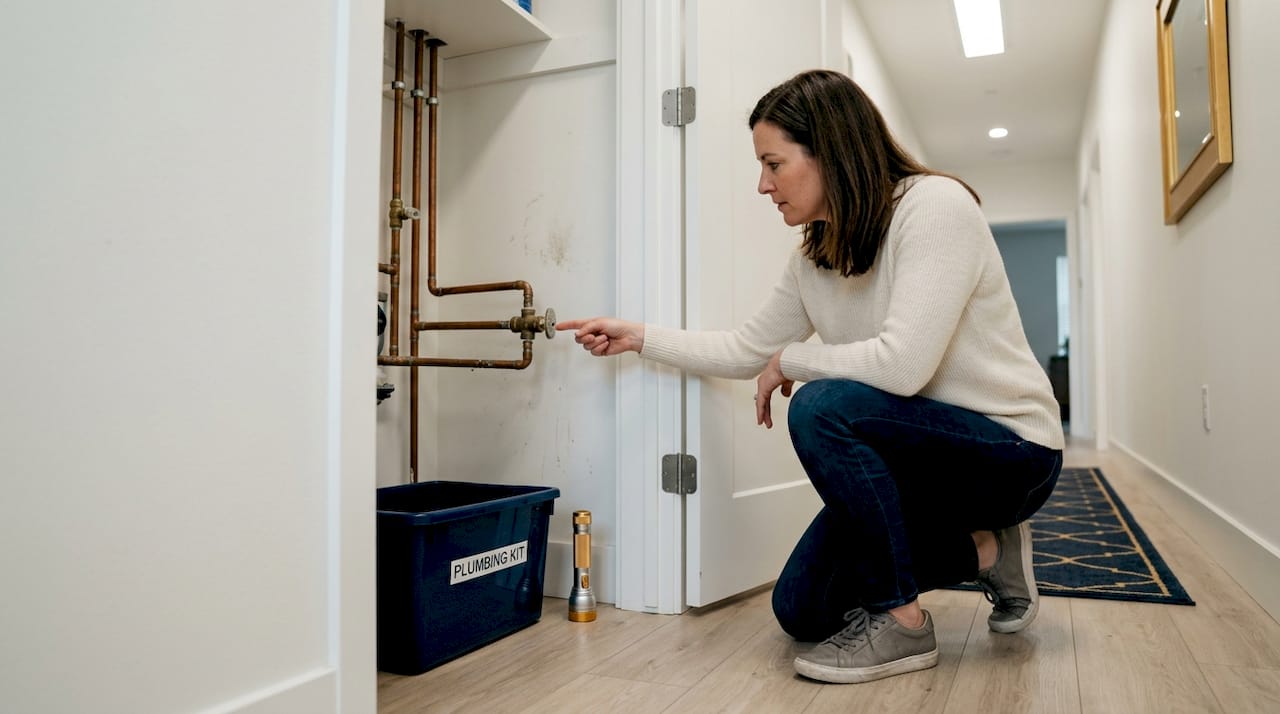
You should also know exactly where your main water shutoff valve is located before starting any maintenance task. It’s typically found near the water meter, at the front of your property, or in a utility area inside the home. Being able to turn off the water quickly in an emergency is a basic but critical skill.
| Item | Purpose | Natural or Chemical |
|---|---|---|
| Baking soda + vinegar | Drain cleaning and odor control | Natural |
| Dish soap + hot water | Grease removal in sinks | Natural |
| Mesh drain strainers | Prevent clogs from hair and debris | N/A (physical tool) |
| Chemical drain cleaners | Dissolving clogs | Chemical (not recommended) |
| Plumber’s tape | Sealing threaded pipe joints | N/A (mechanical) |
Understanding plumbing maintenance basics helps you make better decisions about when to reach for tools and when to put them back down and call for help.
Pro Tip: Store your plumbing kit in a single labeled bin under the kitchen or bathroom sink. When something goes wrong, the last thing you want is to spend 20 minutes searching for a wrench.
Routine maintenance steps for your plumbing system
With your tools and materials ready, follow these steps to keep your plumbing running smoothly year-round. Consistency matters more than perfection. Even completing this routine once every three months puts you well ahead of most homeowners in terms of preventing costly repairs.
Step-by-step routine maintenance
-
Check for leaks under every sink. Open the cabinet doors, place a dry paper towel under the pipes, and let it sit while the faucet runs. A wet towel means you have a slow drip that needs attention before it damages the cabinet or subfloor beneath it.
-
Clear and clean your drains. Pour a mixture of baking soda followed by white vinegar down each drain, wait 15 minutes, then flush with hot water. This breaks up grease buildup and keeps pipes smelling clean. To prevent clogs, never pour grease or cooking oil down any drain, use mesh strainers in every drain opening, avoid flushing wipes or paper products other than toilet paper, and stick with natural cleaners rather than harsh chemicals.
-
Clean your faucet aerators. Unscrew the aerator from the tip of each faucet, rinse away mineral deposits, and soak in white vinegar for 30 minutes if there’s significant buildup. In Southern California’s hard water environment, aerators collect calcium deposits quickly and can reduce water flow noticeably within just a few months.
-
Inspect your water pressure. Pick up a simple water pressure gauge at any hardware store and attach it to a hose bib (an outdoor faucet). Normal home water pressure ranges from 40 to 80 pounds per square inch (PSI). Pressure consistently above 80 PSI stresses your pipes and appliances. If yours reads high, a pressure reducing valve may be the right solution.
-
Look for hidden water damage. Check walls, ceilings, and floors near bathrooms, the kitchen, and the laundry room for soft spots, discoloration, peeling paint, or musty smells. These are early indicators of a slow leak somewhere in the wall cavity.
-
Test your toilet for silent leaks. Drop a few drops of food coloring into the toilet tank. Wait 10 minutes without flushing. If color appears in the bowl, the flapper inside the tank is worn and leaking, wasting hundreds of gallons of water per month.
Quick vs. deep maintenance comparison
| Task type | Method | Time needed | Frequency |
|---|---|---|---|
| Quick drain flush | Baking soda + hot water | 10 minutes | Monthly |
| Full drain treatment | Baking soda + vinegar + hot water | 30 minutes | Quarterly |
| Faucet aerator rinse | Water rinse only | 5 minutes | Monthly |
| Faucet aerator deep clean | Vinegar soak | 45 minutes | Quarterly |
| Leak inspection | Visual check and paper towel test | 20 minutes | Quarterly |
| Water pressure check | Pressure gauge reading | 10 minutes | Every 6 months |
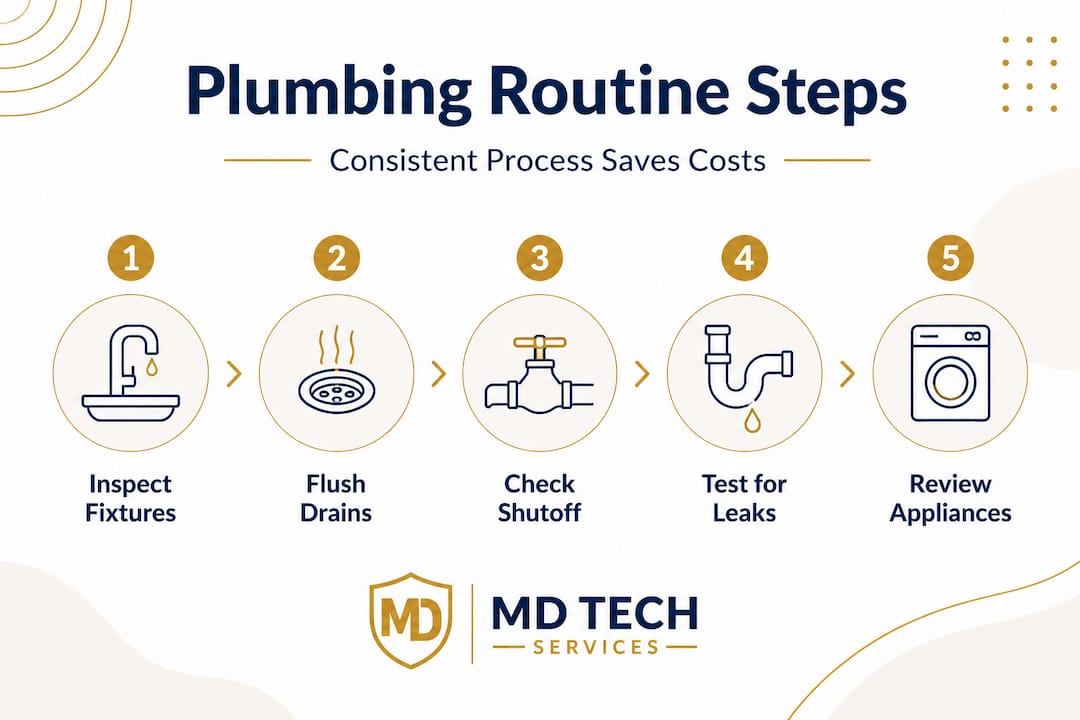
Consistent maintenance is also directly connected to long-term cost savings. Knowing how maintenance prevents expensive repairs gives you the motivation to stay on schedule rather than putting it off until something fails.
Pro Tip: Set a recurring calendar reminder on your phone labeled “Plumbing check” every three months. Attach a checklist to the inside of your under-sink cabinet so you can run through each task without having to remember the steps from scratch.
Troubleshooting and avoiding common mistakes
Once you’ve finished your routine, make sure you avoid these common pitfalls and know what to do if something seems off. Many homeowners unintentionally cause more damage during maintenance than the original issue would have created. Knowing what to avoid is just as important as knowing what to do.
Most frequent maintenance mistakes
- Using chemical drain cleaners. Products like liquid drain openers are widely available and heavily marketed, but they work by producing a chemical reaction that generates heat inside your pipes. Over time, this heat and corrosive action weaken plastic PVC connections and accelerate deterioration in older metal pipes.
- Ignoring small leaks. A drip under the sink that only fills a small cup in 24 hours is still wasting over 3,600 gallons per year, adding up on your water bill and slowly rotting the cabinet beneath it.
- Over-tightening fittings. When homeowners feel a fitting might be loose, the natural instinct is to tighten it further. Too much torque cracks plastic fittings and strips threads on metal ones, creating leaks where there were none before.
- Skipping the shutoff valve test. Many homeowners discover their shutoff valve is seized or corroded only when they desperately need it. Test it twice a year by turning it off and on slowly.
- Not testing repairs before reassembly. Always run a small amount of water through any fitting or drain you’ve worked on before closing up cabinets or replacing access panels.
Safety note: Chemical drain cleaners can cause serious burns on contact with skin and eyes, and they release fumes that are harmful in poorly ventilated spaces. Beyond personal safety, these products damage pipes and fittings with repeated use. Keep them out of your plumbing maintenance routine entirely.
Understanding common plumbing issues before they catch you off guard helps you make calm, informed decisions rather than reactive ones. Routine inspections by a professional plumber can reduce your overall repair costs by up to 30%, a number backed by industry data and reflected in the experience of homeowners who schedule annual checkups consistently.
When to call a professional: What homeowners should know
If you spot an issue that seems beyond a simple fix, it’s important to act fast and know your options for professional help. There is a clear line between what a diligent homeowner can handle and what requires a licensed plumber’s tools and expertise. Crossing that line without recognizing it is where the most expensive mistakes happen.
Warning signs that require a professional
- Recurring clogs in the same drain or toilet, which often indicate a blockage deep in the line or a problem with the drain slope
- Sudden drops in water pressure across multiple fixtures at once, which can point to a main line leak or a failing pressure regulator
- Water stains on ceilings or walls that appear, disappear, and return, suggesting a slow intermittent leak inside the structure
- Foul sewer smells coming from drains even after cleaning, which may indicate a broken vent pipe or a dried-out drain trap
- Gurgling sounds in drains when other fixtures are being used, a sign of a venting problem or partial blockage in the sewer line
- Visible pipe corrosion or greenish discoloration on copper pipe joints under sinks, indicating active corrosion and weakening connections
Even when your routine maintenance is going smoothly, annual plumbing inspections are still strongly recommended by plumbing professionals. A licensed plumber uses camera inspection tools and pressure tests to find issues that are completely invisible during a standard visual check, such as root intrusion in sewer lines or pinhole leaks in wall pipes. Scheduling professional plumbing inspections once a year is a straightforward step that consistently pays for itself.
Pro Tip: If your home was built before 1985, you are more likely to have galvanized steel pipes that corrode from the inside out. Hiring a professional to inspect and assess your pipe condition gives you an accurate picture of what replacement timeline, if any, makes sense for your home.
Why simple, consistent prevention beats every plumbing trick
There is a persistent belief among homeowners that managing plumbing well requires either expensive equipment or specialized knowledge. The plumbing industry itself sometimes contributes to this impression by promoting water softeners, enzyme treatments, pipe coatings, and various other products as essential for a healthy system.
The reality is more straightforward. Some sources recommend water softeners as a first-line defense against the hard water common in Southern California, while others argue that natural cleaning routines and proper drain habits accomplish the same result without the ongoing cost and maintenance of softener equipment. Both perspectives have merit. But where every professional and every credible source agrees is that annual inspections by a licensed plumber are non-negotiable, regardless of which approach you take to day-to-day care.
What we’ve observed working with homeowners across Orange and Los Angeles counties is that the most well-maintained plumbing systems belong to people who are simply consistent, not people who buy the most products or know the most technical details. They check for leaks on a schedule. They keep mesh strainers in their drains. They call a plumber when something feels wrong instead of waiting to see if it resolves on its own.
The biggest costs in residential plumbing almost always come from problems that were small and easy to fix at some point, but weren’t caught until they became structural or required emergency service. Understanding the plumbing terms used by professionals also helps you have more informed conversations when you do call for service, so you can make confident decisions about repairs instead of feeling uncertain.
Consistent, simple habits protect your home far more reliably than any product or one-time fix.
Protect your home with reliable plumbing and appliance experts
When routine maintenance reveals something beyond a quick fix, or when it’s time for your annual professional inspection, MDTech Services is ready to help homeowners throughout Orange County and Los Angeles County.

Our licensed technicians specialize in expert plumbing repair service that addresses everything from persistent leaks and pressure issues to full system assessments. We work efficiently to protect your home and minimize disruption to your schedule. Whether you need a one-time inspection or ongoing support for aging plumbing, you can explore the full range of plumbing services for homeowners we offer and book an appointment online. Take the next step and schedule a plumbing inspection today so you stay ahead of costly surprises.
Frequently asked questions
How often should I do routine plumbing maintenance?
Most experts recommend completing a full routine check and cleaning once every season, with a professional inspection yearly to catch anything your visual checks may have missed.
What natural solutions are safest for cleaning drains?
A mixture of baking soda, white vinegar, and hot water is effective for most drain buildup and is recommended over chemical products because natural cleaners won’t corrode your pipes or fittings over time.
Is it okay to use chemical drain cleaners occasionally?
It’s best to avoid them entirely. Even occasional use can weaken plastic and metal pipe connections, and chemical cleaners corrode pipes with repeated exposure, making future problems more likely and more serious.
When should I call a plumber versus doing maintenance myself?
Call a licensed professional when you experience recurring clogs, unexplained drops in water pressure, water stains on walls or ceilings, or foul odors, because these are signs that go beyond basic DIY steps and require a camera inspection or pressure test to diagnose accurately.