
Most homeowners assume their gas appliances are safe as long as they work, but the truth is far more alarming. Without proper venting, everyday appliances like furnaces and water heaters silently release toxic combustion gases directly into your living spaces, creating invisible health hazards that can turn deadly within hours. Venting isn’t just a technical detail buried in installation manuals, it’s the critical safety barrier between your family and carbon monoxide poisoning. This guide reveals why venting gas appliances is non-negotiable for Orange and Los Angeles County homeowners who value both safety and efficiency, and how proper ventilation transforms dangerous equipment into reliable home systems that protect your health while cutting energy costs.
Table of Contents
- Understanding Gas Appliances And Venting Basics
- Health And Safety Risks Of Unvented Gas Appliances
- Efficiency And Performance Benefits Of Proper Venting
- Common Venting Methods And Maintenance Tips For Homeowners
- Keep Your Gas Appliances Safe And Efficient With Expert Service
Key takeaways
| Point | Details |
|---|---|
| Venting removes toxic gases | Proper ventilation channels carbon monoxide and other combustion byproducts safely outside, preventing indoor air contamination. |
| Unvented appliances create fire risks | Gas buildup from blocked or absent vents increases explosion and fire hazards significantly. |
| Efficiency gains reduce energy bills | Well-vented appliances optimize combustion, improving performance and lowering monthly energy costs. |
| Annual inspections prevent failures | Regular professional maintenance catches blockages and damage before they become dangerous. |
Understanding gas appliances and venting basics
Gas appliances power essential home functions, from heating water to warming rooms during cold months. Common examples include furnaces, water heaters, ranges, and dryers that burn natural gas or propane to generate heat. Every time these appliances operate, they create combustion gases as natural byproducts of burning fuel.
These combustion gases aren’t harmless water vapor. They include carbon monoxide (CO), a deadly poison, along with carbon dioxide, nitrogen dioxide, and water vapor. Gas appliances produce combustion gases such as carbon monoxide that must be safely vented. Without a clear exit path, these gases accumulate in your home, displacing oxygen and creating toxic conditions.
Venting is the engineered process that channels these dangerous gases from your appliance through pipes or ducts to the outdoors. Think of it as a dedicated highway that keeps poison away from your breathing space. The vent system creates a pressure difference that pulls gases up and out, preventing them from spilling into rooms where your family lives.
When venting fails or doesn’t exist, consequences escalate quickly. Carbon monoxide poisoning can cause headaches, dizziness, confusion, and death, often while victims sleep. Incomplete combustion from poor venting also creates soot buildup that damages appliances and walls. Moisture from unvented combustion encourages mold growth and structural damage.
Key characteristics of properly vented gas appliances include:
- Dedicated vent pipes sized correctly for the appliance BTU rating
- Clear pathways without obstructions, nests, or debris
- Proper slope and support to prevent sagging or disconnection
- Termination points positioned away from windows, doors, and air intakes
Pro Tip: Always verify that your gas appliance conversion includes updated venting that meets current California building codes, especially when switching from LP to natural gas, as different fuels require different venting specifications.
Homeowners often discover venting problems only after symptoms appear. Understanding these basics helps you recognize when something’s wrong and why professional installation matters for every gas appliance in your home.
Health and safety risks of unvented gas appliances
Carbon monoxide stands as the silent killer in homes with venting problems. This colorless, odorless gas binds to hemoglobin in your blood 200 times more effectively than oxygen, essentially suffocating you from the inside. You can’t see it, smell it, or taste it, making detection impossible without specialized equipment.
Early CO poisoning symptoms mimic the flu: headaches, nausea, fatigue, and confusion. Victims often dismiss these warning signs, especially during winter when gas appliances run constantly. Prolonged exposure leads to unconsciousness and death. Children, elderly family members, and pets succumb faster due to their smaller body sizes and higher metabolic rates.
Improper venting can cause dangerous carbon monoxide buildup and increase fire risk. When vent pipes crack, disconnect, or become blocked by bird nests or debris, combustion gases reverse direction and flood into your home. Blocked vents also starve appliances of oxygen needed for complete combustion, creating even more CO.
Beyond carbon monoxide, unvented gas appliances create multiple hazards:
- Nitrogen dioxide exposure irritates lungs and worsens asthma
- Excess moisture promotes mold growth and respiratory problems
- Incomplete combustion produces soot that damages lungs and property
- Oxygen depletion in enclosed spaces causes suffocation risk
Fire hazards multiply when venting fails. Natural gas and propane are highly flammable, and leaks near ignition sources create explosion risks. Blocked vents cause pressure buildup that can crack heat exchangers, releasing raw gas into living spaces. Soot accumulation inside vents becomes fuel for chimney fires that spread rapidly through walls.
The Consumer Product Safety Commission reports that faulty gas appliance venting contributes to hundreds of deaths and thousands of emergency room visits annually, with most incidents occurring in homes lacking carbon monoxide detectors or regular appliance maintenance.
Orange and Los Angeles County building codes mandate proper venting precisely because the stakes are life and death. These regulations aren’t bureaucratic red tape, they’re lessons written in tragedy. Every requirement about vent sizing, materials, and placement exists because someone died when those standards weren’t followed.
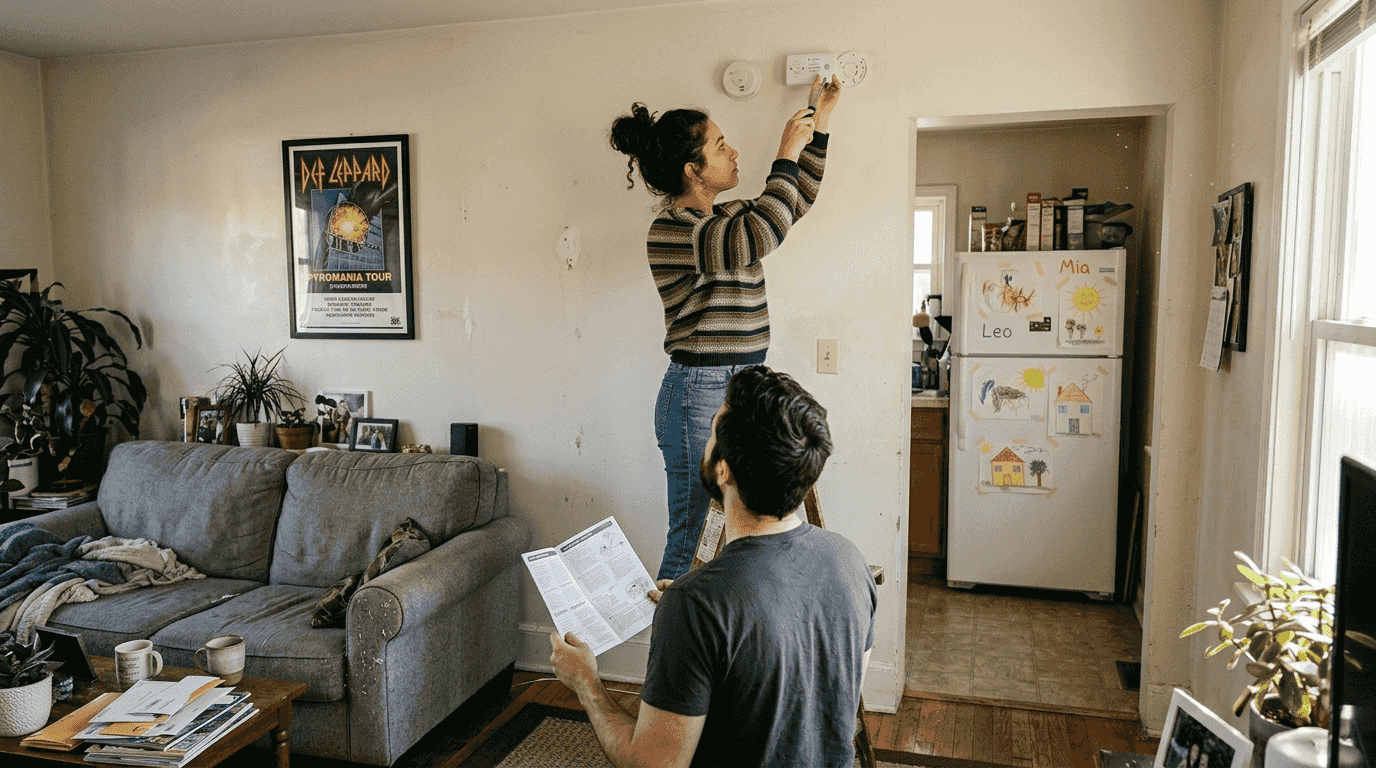
Installing carbon monoxide detectors provides a critical backup layer, but they’re not substitutes for proper venting. Detectors alert you to problems, while correct venting prevents problems from occurring. Both work together to create truly safe homes.
Efficiency and performance benefits of proper venting
Safety grabs headlines, but proper venting also delivers substantial efficiency improvements that reduce your monthly utility bills. Gas appliances achieve optimal combustion only when they receive adequate fresh air and exhaust gases exit cleanly. Venting systems make both conditions possible.
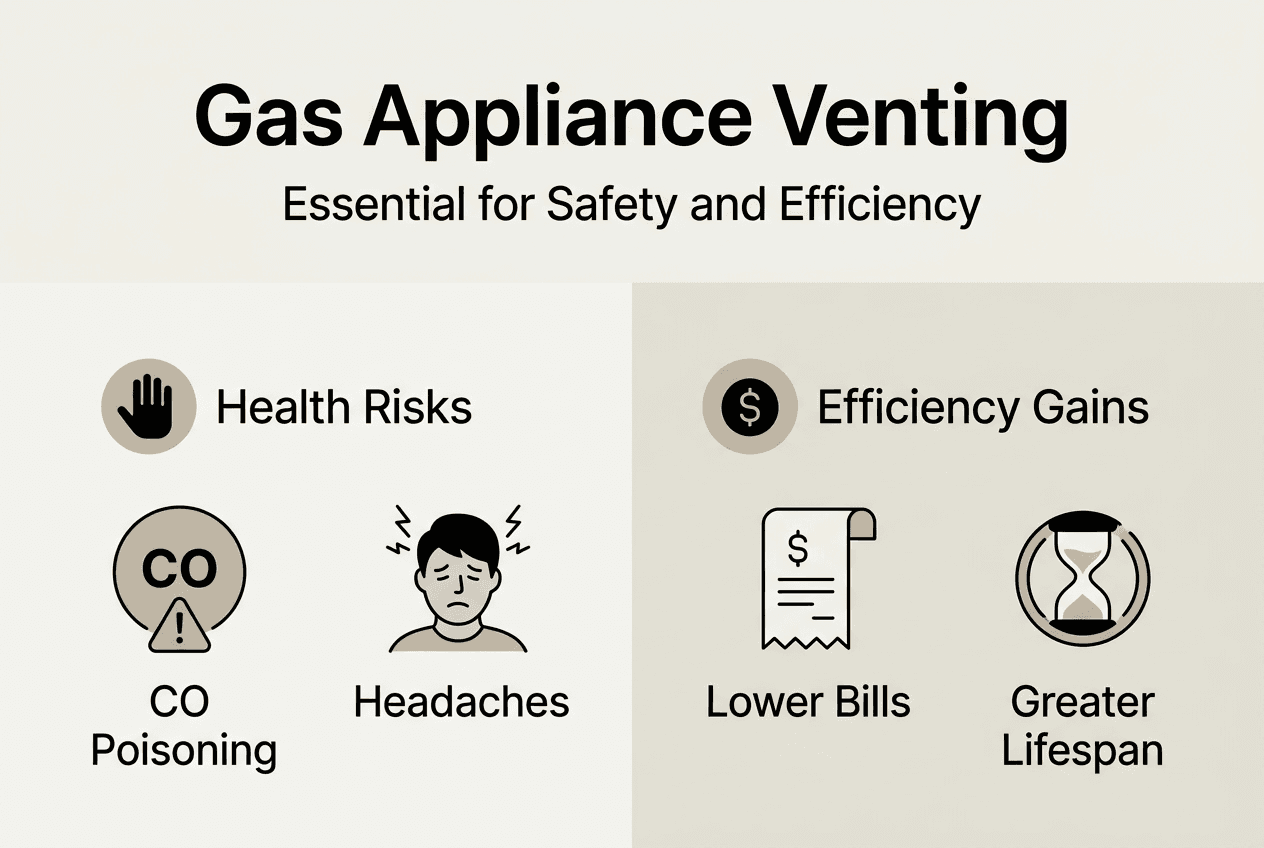
When combustion gases evacuate efficiently, your appliance maintains the correct air-to-fuel ratio for complete burning. Complete combustion extracts maximum heat energy from every cubic foot of gas, meaning you pay for less fuel to achieve the same heating results. Vented appliances operate more efficiently, saving homeowners money on energy bills.
Here’s how proper venting improves appliance performance:
- Enhanced draft creates consistent airflow that stabilizes flame patterns and heat output
- Reduced backdrafting prevents cold outdoor air from entering through the vent and cooling your appliance
- Lower operating temperatures result from efficient heat transfer rather than wasted energy heating trapped gases
- Cleaner combustion produces less soot buildup on heat exchangers, maintaining heat transfer efficiency over time
- Extended equipment lifespan occurs because appliances work less hard to achieve target temperatures
The efficiency difference between properly vented and poorly vented appliances ranges from 10% to 25%, depending on the appliance type and severity of venting problems. For a household spending $100 monthly on natural gas, proper venting could save $10 to $25 every month, adding up to $120 to $300 annually.
Beyond direct fuel savings, efficient venting reduces wear on mechanical components. Furnaces and water heaters with good venting cycle on and off less frequently because they reach temperature faster. Fewer cycles mean less stress on igniters, gas valves, and control boards, components that cost hundreds of dollars to replace.
Pro Tip: Schedule professional vent system inspections annually, ideally before winter when heating appliances work hardest, to catch blockages or damage before they reduce efficiency or create safety hazards.
Modern high-efficiency appliances depend even more critically on proper venting than older models. Condensing furnaces and tankless water heaters operate at such high efficiency that they produce cooler exhaust gases. These gases lack the buoyancy to rise through traditional vents, requiring specialized venting materials and configurations. Installing energy efficient appliances without upgrading venting systems wastes their efficiency potential.
Homeowners who invest in proper venting see returns through lower utility bills, fewer repair calls, and longer appliance lifespans. These benefits complement the critical safety improvements, making venting one of the smartest home maintenance priorities.
Common venting methods and maintenance tips for homeowners
Gas appliance venting isn’t one size fits all. Different appliances and home configurations require specific venting approaches, each with distinct advantages and maintenance needs. Understanding these options helps you recognize what’s installed in your home and communicate effectively with service technicians.
| Venting Type | How It Works | Best For | Maintenance Needs |
|---|---|---|---|
| Natural draft | Uses hot gas buoyancy to rise through vertical chimney | Traditional furnaces and water heaters in homes with existing chimneys | Annual chimney inspection, debris removal, draft testing |
| Power vent | Electric fan forces exhaust through horizontal or vertical pipes | Appliances located away from exterior walls or without chimneys | Fan motor inspection, pipe seal checks, electrical connection testing |
| Direct vent | Sealed combustion draws outside air in, exhausts gases out through same wall penetration | High-efficiency furnaces and tankless water heaters | Termination cap cleaning, pipe seal inspection, intake screen clearing |
| Sealed combustion | Completely isolated from indoor air, uses dedicated outdoor air intake | Tightly sealed homes, coastal areas with corrosive air | Gasket replacement, condensate drain maintenance, intake filter changes |
Each venting system requires specific maintenance to function safely. Routine maintenance of venting systems prevents blockages and hazards. Neglecting these tasks allows small problems to become dangerous failures.
Essential maintenance tasks every homeowner should prioritize include:
- Visual inspection of visible vent pipes for rust, holes, or disconnected sections
- Clearing vent terminations of leaves, snow, ice, or animal nests
- Testing carbon monoxide detectors monthly and replacing batteries annually
- Scheduling professional inspections before each heating season
- Monitoring for condensation or water stains near vent pipes
Warning signs that indicate immediate venting problems requiring professional attention:
- Yellow or orange flames instead of blue on gas burners
- Soot buildup around appliance vents or on nearby walls
- Pilot lights that frequently go out
- Excessive moisture or condensation near the appliance
- Unusual odors when the appliance operates
- Rust or corrosion on vent pipes or appliance exteriors
Dryer vents deserve special attention because lint accumulation creates fire hazards distinct from combustion gas venting. The principles remain similar: clear pathways prevent dangerous buildup. Regular dryer vent cleaning protects your home from fires while improving dryer efficiency.
Incorporating vent inspection into your broader appliance safety inspection routine creates a comprehensive approach to home safety. Check vents when you replace furnace filters, test smoke detectors, or perform other seasonal maintenance tasks. This integration ensures venting doesn’t get forgotten until problems arise.
Different California climates affect venting systems uniquely. Coastal Orange County homes face salt air corrosion that degrades metal vent pipes faster. Inland Los Angeles County areas with extreme temperature swings create expansion and contraction stresses on vent connections. Understanding your local conditions helps you anticipate maintenance needs.
Professional vent inspections use specialized tools homeowners don’t typically own: draft gauges measure airflow, combustion analyzers test exhaust gas composition, and cameras inspect internal vent conditions. These diagnostic capabilities catch problems invisible to visual inspection, making annual professional service worthwhile beyond DIY maintenance.
Keep your gas appliances safe and efficient with expert service
Understanding why venting matters is the first step, but proper implementation requires professional expertise. MDTech Services brings certified technicians and specialized equipment to ensure your gas appliances operate safely with correctly designed and maintained venting systems. Our team serves Orange and Los Angeles County homeowners with comprehensive appliance repair services that prioritize both safety and efficiency.

Whether you need a new appliance installed with proper venting, existing vents inspected and cleaned, or guidance on appliance repair or replacement decisions, our licensed technicians deliver solutions that protect your family and optimize performance. We follow California building codes precisely and use only approved materials for every installation. Professional appliance installation eliminates guesswork and ensures your venting system functions correctly from day one. Don’t risk your family’s safety on improper venting. Contact MDTech Services today for expert appliance service that keeps your home safe and efficient.
FAQ
What gases are vented from gas appliances?
Gas appliances produce carbon monoxide, carbon dioxide, nitrogen dioxide, and water vapor during combustion. Carbon monoxide poses the greatest danger as a toxic, odorless gas that causes poisoning and death. Proper venting removes all these combustion byproducts safely to the outdoors, maintaining healthy indoor air quality.
Can I vent a gas appliance myself or should I hire a professional?
Professional installation by licensed technicians is strongly recommended and often required by local codes. Improper venting creates life-threatening carbon monoxide hazards and violates building regulations. Hiring qualified licensed plumbers or HVAC technicians ensures code-compliant installation and protects your family from costly, dangerous mistakes.
How often should venting systems be inspected or cleaned?
Annual professional inspection and cleaning are recommended for most gas appliance venting systems. Homes with heavy appliance use, older installations, or coastal locations may require more frequent service. Include vent inspection in your regular appliance safety inspection routine, ideally before winter when heating systems operate continuously.
Do all gas appliances require venting to the outdoors?
Most gas appliances absolutely require venting to the outdoors, including furnaces, water heaters, and dryers. Some gas ranges and cooktops are designed as unvented appliances, but they still need adequate kitchen ventilation through range hoods. California building codes specify venting requirements for each appliance type, and compliance isn’t optional for safety.
What are signs my gas appliance venting system has failed?
Key warning signs include yellow or orange flames instead of blue, soot buildup around vents, frequent pilot light outages, excessive condensation, and unusual odors during operation. Physical symptoms like headaches, nausea, or dizziness when appliances run indicate possible carbon monoxide exposure requiring immediate evacuation and professional inspection. Never ignore these red flags.