
Over 40% of American households experience a major appliance breakdown each year, often leading to costly repairs or frustrating downtime at home. For homeowners in Orange and Los Angeles County, the unpredictability of repairs can create stress and disrupt daily routines. Learning how annual appliance checkups work gives you control over unexpected expenses, helps you safeguard your investments, and keeps your home running efficiently all year long.
Table of Contents
- Annual Appliance Checkups Defined
- Types of Home Appliance Inspections
- How Annual Checkups Improve Safety
- Saving Money and Energy Year-Round
- Technician Roles and Service Standards
- Local Risks and Regulatory Requirements
Key Takeaways
| Point | Details |
|---|---|
| Annual Checkups are Essential | Regular inspections can prevent expensive repairs and ensure the longevity of home appliances. |
| Safety is a Priority | Annual evaluations help identify hazards, such as electrical issues and gas leaks, promoting a safer living environment. |
| Energy Efficiency Saves Money | Proper maintenance can lead to significant energy savings, potentially decreasing utility bills by $200 to $500 annually. |
| Technicians Must be Qualified | Engaging certified professionals ensures adherence to safety standards and optimal appliance performance during repairs. |
Annual Appliance Checkups Defined
Annual appliance checkups represent a strategic home maintenance approach that helps homeowners systematically protect their significant household investments. These comprehensive inspections go far beyond basic cleaning, providing a professional evaluation of your home’s critical mechanical systems and appliances. Professional home inspectors recommend yearly assessments to identify potential problems before they escalate into expensive repairs.
A typical annual appliance checkup involves a detailed examination of multiple household systems, including refrigerators, dishwashers, washing machines, dryers, heating units, and cooling equipment. Technicians carefully inspect electrical connections, assess mechanical wear, test operational efficiency, clean critical components, and evaluate overall system performance. These thorough examinations help detect minor issues like loose connections, minor component degradation, or emerging mechanical stress that could compromise appliance functionality.
The primary goals of annual appliance checkups include preventing unexpected breakdowns, extending equipment lifespan, maintaining energy efficiency, and ensuring safe household operation. Homeowners who consistently invest in these professional inspections can potentially reduce repair costs by 40% and minimize the risk of catastrophic equipment failures. By proactively addressing potential problems, you transform reactive maintenance into a strategic, cost-effective approach to home management.
Pro tip: Schedule your annual appliance checkups during off-peak seasons like early spring or late fall when technician availability is higher and rates are more competitive.
Types of Home Appliance Inspections
Appliance inspections represent a critical component of home maintenance, encompassing multiple specialized assessment strategies designed to ensure optimal performance and safety. Federal energy standards outline specific requirements for comprehensive appliance evaluations, which typically fall into four primary categories of professional inspection techniques.
The first category involves functional testing, which assesses an appliance’s core mechanical and electrical performance. Technicians conduct detailed evaluations of moving parts, electrical connections, and overall operational efficiency. This type of inspection identifies potential mechanical weaknesses, unusual wear patterns, and emerging performance issues before they escalate into significant system failures. Functional testing is particularly crucial for complex appliances like refrigerators, washing machines, dryers, and heating systems that rely on intricate internal mechanisms.
Safety and energy-efficiency inspections represent two additional critical assessment types. Safety inspections focus on electrical and gas system compliance, checking for potential hazards like faulty wiring, gas leaks, or improper connections that could pose significant risks to household occupants. Energy-efficiency assessments measure an appliance’s power consumption, evaluate its performance relative to current efficiency standards, and identify opportunities for potential energy savings. These inspections help homeowners understand their appliances’ environmental impact and potential long-term operational costs.
The final inspection category involves comprehensive diagnostic evaluations that combine functional, safety, and efficiency assessments into a holistic review. These advanced inspections use specialized diagnostic tools to create detailed performance profiles, helping homeowners and technicians anticipate potential future maintenance requirements and make informed decisions about repair or replacement strategies.
Pro tip: Request a written report after each appliance inspection, documenting specific findings and recommended maintenance actions to create a comprehensive home equipment maintenance history.
Here’s a comparison of appliance inspection types and their main focus areas:
| Inspection Type | Primary Focus | Typical Appliances | Benefit to Homeowner |
|---|---|---|---|
| Functional Testing | Mechanical and electrical operation | Refrigerators, washers, dryers, HVAC | Early issue detection |
| Safety Inspection | Electrical and gas safety | Water heaters, stoves, heaters | Prevent hazards and injuries |
| Energy-Efficiency | Power consumption, performance | All major appliances | Utility cost savings |
| Diagnostic Evaluation | Holistic performance review | Entire home systems | Informed repair decisions |
How Annual Checkups Improve Safety
Annual appliance checkups play a crucial role in protecting household safety, addressing potential hazards before they escalate into serious risks. National health and energy conservation standards demonstrate that routine inspections directly contribute to reducing health risks associated with malfunctioning household equipment.

Electrical systems represent one of the most critical safety concerns during appliance inspections. Technicians carefully examine wiring connections, assess potential electrical load issues, and identify signs of wear that could lead to short circuits or fire hazards. Loose connections, frayed wires, and outdated electrical components can create significant risks, particularly in older homes with aging infrastructure. By detecting these potential problems early, annual checkups prevent potentially catastrophic electrical failures that could endanger household residents.
Gas-powered appliances require particularly meticulous safety evaluations. Inspectors conduct comprehensive leak detection tests, evaluate combustion efficiency, and check ventilation systems to prevent carbon monoxide risks. These assessments are critical for appliances like water heaters, stoves, and heating systems that involve complex gas transmission mechanisms. Undetected gas leaks can create life-threatening situations, making professional annual inspections an essential preventative measure for household safety.
Beyond immediate physical risks, annual checkups also contribute to long-term health protection. Poorly maintained appliances can release harmful particulate matter and contribute to indoor air quality degradation. By ensuring optimal appliance performance and addressing potential emission issues, these inspections help reduce respiratory risks and create a healthier living environment for families.
Pro tip: Install carbon monoxide and smoke detectors near major gas-powered appliances and schedule professional inspections immediately if these alarms indicate any potential problems.
Saving Money and Energy Year-Round
Annual appliance checkups represent a strategic investment that can generate significant financial benefits for homeowners through improved energy efficiency and reduced utility expenses. Federal energy studies reveal that consistent maintenance can save households between $200 and $500 annually, making these inspections a cost-effective approach to home management.
Energy efficiency represents the most direct financial advantage of regular appliance maintenance. Technicians can calibrate systems, clean critical components, and optimize operational performance, which dramatically reduces energy consumption. Poorly maintained appliances work harder to generate the same output, consuming substantially more electricity and driving up utility bills. By addressing minor inefficiencies during annual checkups, homeowners can ensure their appliances operate at peak performance, minimizing unnecessary energy waste and associated costs.
Major household appliances like refrigerators, washing machines, dryers, and heating systems are particularly significant in long-term energy management. These systems typically represent the largest energy consumers in residential settings, and their efficiency can dramatically impact monthly utility expenses. Appliance standards research demonstrates that systematic maintenance can reduce energy consumption by up to 15%, translating into meaningful financial savings and reduced environmental impact.
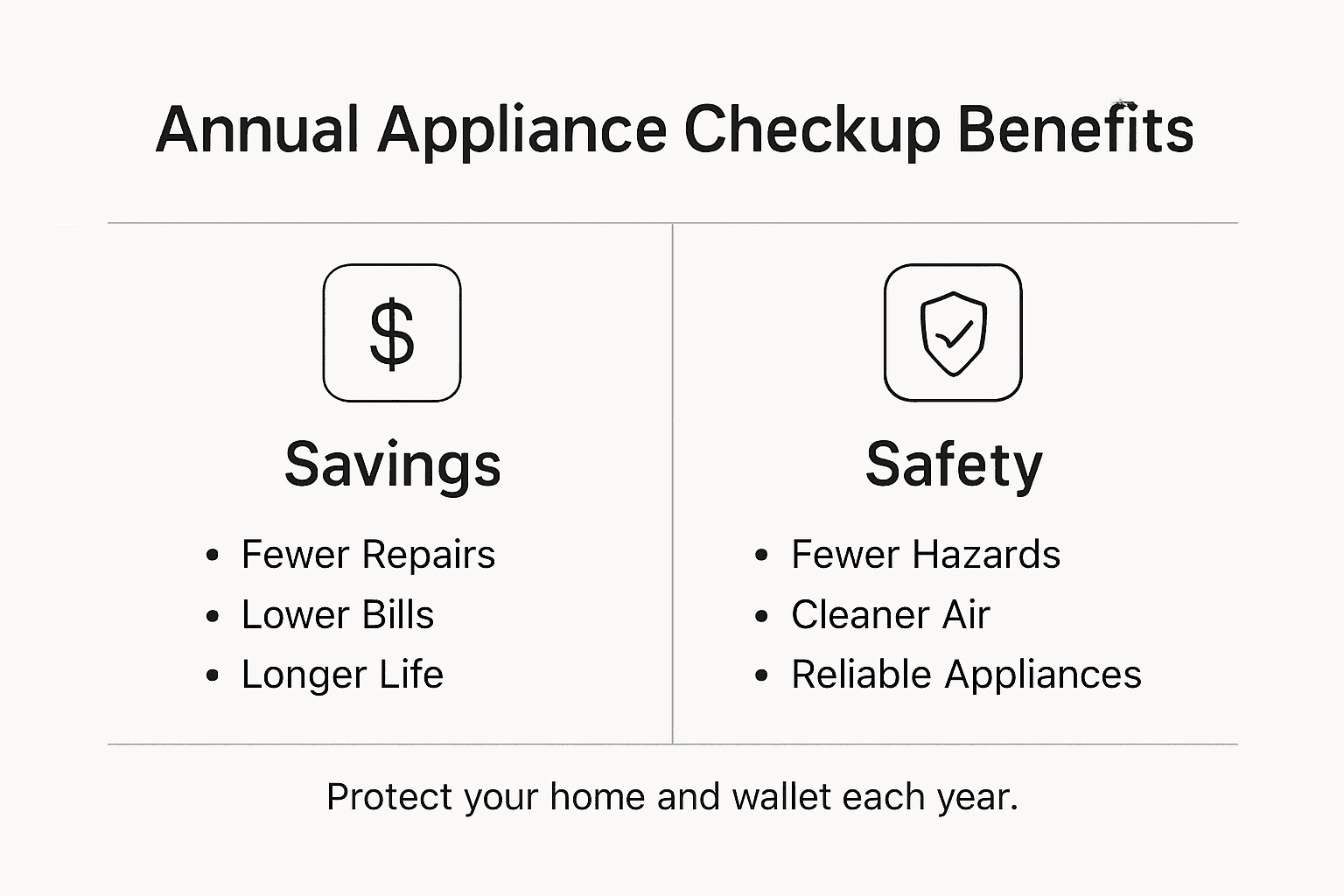
Beyond immediate financial benefits, regular appliance checkups contribute to extended equipment lifespan. Well-maintained appliances experience fewer breakdowns, require less frequent replacements, and maintain their operational efficiency over longer periods. This approach transforms maintenance from a cost center into a strategic investment that protects household equipment and supports long-term financial planning.
The table below summarizes key benefits of annual appliance checkups for homeowners:
| Benefit | Description | Long-Term Impact |
|---|---|---|
| Lower Repair Costs | Fewer emergency fixes required | 40% average savings |
| Extended Lifespan | Reduces wear and breakdowns | Delays replacement needs |
| Enhanced Safety | Prevents fires and gas leaks | Safer living environment |
| Improved Efficiency | Lower energy consumption | $200–$500 annual savings |
Pro tip: Request a detailed energy efficiency report during your annual appliance inspection to identify specific opportunities for reducing your household’s energy consumption and associated costs.
Technician Roles and Service Standards
Appliance repair technicians are the critical professionals responsible for maintaining household equipment safety and performance. Comprehensive occupational standards outline the intricate responsibilities these skilled professionals must fulfill, encompassing complex diagnostic procedures, precise repair techniques, and rigorous safety protocols.
A professional technician’s primary responsibilities extend far beyond simple repairs. They must conduct comprehensive system diagnostics, identifying potential mechanical vulnerabilities before they become significant problems. This involves using specialized diagnostic tools to evaluate electrical systems, mechanical components, and overall appliance performance. Technicians must interpret complex technical data, understand manufacturer specifications, and apply precise repair techniques that restore appliances to optimal functioning conditions while maintaining manufacturer warranty requirements.
Professional repair associations mandate extensive training and certification processes for appliance service professionals. These standards require technicians to complete brand-specific training programs, demonstrate proficiency in multiple appliance types, and stay current with evolving technological innovations. Certification processes typically involve rigorous testing of technical knowledge, safety protocols, and hands-on repair skills, ensuring that only qualified professionals can perform critical household equipment maintenance.
Legal and ethical standards play a crucial role in defining technician responsibilities. Professionals must maintain detailed service records, adhere to state and federal safety regulations, and prioritize consumer protection. This includes using certified replacement components, following manufacturer guidelines, and providing transparent communication about repair recommendations and potential risks. These comprehensive standards help build consumer trust and ensure the highest levels of service quality and safety.
Pro tip: Request documentation of a technician’s current certifications and training before scheduling complex appliance repairs to ensure you’re working with a fully qualified professional.
Local Risks and Regulatory Requirements
Home appliance safety and regulatory compliance represent complex intersections of federal, state, and local guidelines designed to protect consumers from potential hazards. Federal energy standards establish minimum safety protocols that address critical risks associated with household equipment, ranging from electrical system vulnerabilities to potential gas-related emergencies.
Regional regulatory requirements can vary significantly, with local municipalities often implementing more stringent standards beyond federal minimums. These location-specific regulations typically account for unique environmental conditions, climate challenges, and community-specific safety concerns. Appliance standards research indicates that states may impose additional requirements for appliance installation, maintenance, and operational safety, particularly in areas with extreme weather conditions or heightened environmental risks.
Key regulatory concerns focus on several critical risk areas: electrical safety, gas system compliance, fire prevention, and energy efficiency. Technicians must navigate a complex landscape of requirements that include proper equipment installation, periodic safety inspections, and adherence to manufacturer specifications. These regulations aim to mitigate risks such as electrical fires, gas leaks, carbon monoxide exposure, and potential equipment failures that could compromise household safety.
Compliance extends beyond initial installation, requiring ongoing maintenance and periodic professional inspections. Homeowners bear responsibility for ensuring their appliances meet current safety standards, which can change as technology advances and new risk assessments emerge. This dynamic regulatory environment necessitates proactive engagement with licensed professionals who understand the latest safety requirements and local regulatory nuances.
Pro tip: Maintain a comprehensive file of all appliance installation certificates, inspection reports, and manufacturer documentation to easily demonstrate regulatory compliance and simplify future maintenance processes.
Protect Your Home with Expert Annual Appliance Checkups
Maintaining the safety and efficiency of your home appliances is not just a task but a necessity as outlined in the article “Why Annual Appliance Checkups Matter for Homeowners”. Homeowners face the challenge of unexpected breakdowns, energy inefficiency, and potential safety hazards like electrical faults and gas leaks. Annual inspections help detect these issues early, prevent costly repairs, and ensure your appliances operate safely and efficiently throughout the year.
At MDTech Services, we specialize in professional appliance repair and installation along with HVAC and plumbing services across Orange County and Los Angeles County. Our licensed technicians understand the critical importance of comprehensive diagnostics, safety compliance, and energy-efficiency improvements. We provide a safety-focused approach to prolong your appliances’ life while saving you money and protecting your family.
Experience peace of mind with trusted local experts committed to prompt and reliable service tailored to your needs. Whether you need an expert to perform your annual refrigerator checkup or convert your appliances safely from LP to natural gas, we have you covered. Learn more about our services and schedule your appointment online today at MDTech Services.

Don’t wait for an emergency to discover a problem. Take control of your home’s safety and efficiency with annual appliance inspections from MDTech Services. Act now to protect your investment and keep your home comfortable and safe. Visit us at MDTech Services and book your professional checkup today.
Frequently Asked Questions
What are the benefits of annual appliance checkups?
Annual appliance checkups help prevent unexpected breakdowns, extend appliance lifespan, maintain energy efficiency, and ensure safe operation of household equipment. Homeowners can potentially save on repair costs by addressing minor issues before they escalate.
What types of appliances should be inspected annually?
Homeowners should schedule annual checkups for major appliances such as refrigerators, dishwashers, washing machines, dryers, and heating and cooling systems. These inspections help ensure optimal performance and safety for these critical household systems.
How do annual checkups enhance home safety?
Annual checkups address potential hazards such as faulty wiring, gas leaks, and combustion inefficiencies. Technicians evaluate electrical connections and perform gas leak tests, significantly reducing health risks related to malfunctioning appliances.
What is involved in a typical annual appliance inspection?
A typical annual appliance inspection includes functional testing, safety assessments, energy efficiency evaluations, and comprehensive diagnostic evaluations. Technicians check mechanical and electrical performance, inspect for safety hazards, and provide recommendations for maintenance.
Recommended
- Appliance repair or Installation service Appliance Repair vs. Replacement: How to Make the Right Decision for Your Home – MDTech Services
- Appliance Inspection: Ensuring Safety and Efficiency – MDTech Services
- Why Regular Appliance Maintenance Matters Most – MDTech Services
- Dishwasher repair or Installation Garbage disposal repair or Installation Airgap repair pump repair Fixing Dishwashers, Garbage Disposals, and More! – MDTech Services