
Homeowners often miss early warning signs that their appliances are failing, leading to expensive emergency repairs and shortened equipment lifespans. Catching refrigerator, dishwasher, oven, or dryer issues before they escalate saves hundreds of dollars and prevents dangerous situations like gas leaks or fires. This guide reveals the specific symptoms professionals watch for when diagnosing common household appliance problems, helping you take action at the right moment.
Table of Contents
- How To Recognize Faulty Refrigeration Signs
- Common Dishwasher Faults And Performance Issues
- Identifying Oven And Stove Problems Before They Escalate
- Warning Signs Your Dryer Needs Immediate Attention
- Why Accurate Appliance Fault Diagnosis Matters
- Get Expert Help With Appliance Repairs In Orange And Los Angeles Counties
Key takeaways
| Point | Details |
|---|---|
| Early detection saves money | Spotting appliance faults before complete failure prevents costly emergency repairs and extends equipment life. |
| Each appliance shows unique symptoms | Refrigerators, dishwashers, ovens, and dryers display distinct warning signs requiring specific diagnostic approaches. |
| Misdiagnosis creates hazards | Incorrect fault identification leads to repeated repairs, safety risks like fires, and unnecessary appliance replacement. |
| Professional diagnosis matters | Qualified technicians reduce follow-up visits by 40% compared to DIY misdiagnoses, saving time and expense. |
How to recognize faulty refrigeration signs
Your refrigerator works constantly to preserve food safety, making early fault detection crucial for preventing spoilage and health risks. Temperature inconsistencies represent the most common early warning sign, often indicating thermostat calibration issues or compressor failures. A 5°F temperature increase accelerates food spoilage by 40%, turning minor problems into expensive grocery losses within days.
Door seal degradation creates another telltale symptom you can check yourself. Run your hand along the refrigerator door edges while it’s closed, feeling for cold air escaping. Damaged gaskets force the compressor to work overtime, increasing energy bills by 15% to 25% monthly. These seals crack naturally over 5 to 7 years but fail faster in homes with high humidity or frequent door opening.
Modern diagnostic technology now helps homeowners catch problems before visible symptoms appear. IoT sensors detect refrigeration failures by monitoring temperature patterns, vibration signatures, and electrical current fluctuations. While professional-grade systems remain expensive, affordable smart plugs can track unusual power consumption indicating compressor strain.
Ignoring these early warnings creates cascading failures. A struggling compressor forces other components like fans and defrost timers to work harder, accelerating wear across the entire system. Most homeowners notice frost buildup, water pooling inside, or unusual clicking sounds only after multiple components have degraded. For comprehensive guidance on when professional intervention becomes necessary, review these 7 signs you need appliance repair.
Pro Tip: Place an appliance thermometer in your refrigerator’s center shelf and freezer compartment. Check weekly to establish baseline temperatures, making deviations immediately obvious before food safety becomes compromised.
Common dishwasher faults and performance issues
Dishwashers fail gradually, with cleaning performance declining so slowly that many homeowners adapt rather than recognize the fault. The most obvious symptom appears as dishes emerging still dirty, with food particles clinging to plates or cloudy film coating glassware. This degradation typically signals clogged spray arms, where mineral deposits block the tiny water jets responsible for cleaning action.
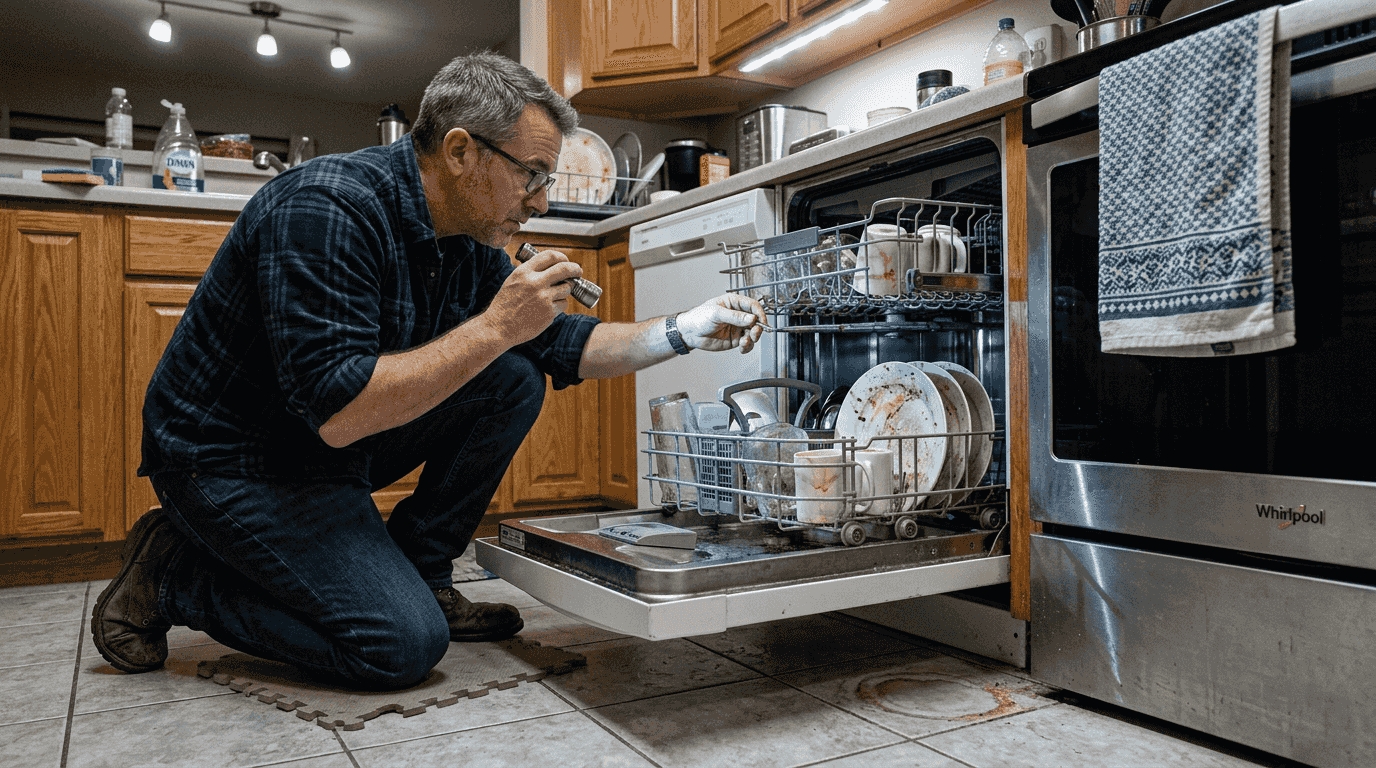
Water inlet valve failures account for 30% of dishwasher repairs, causing insufficient water fill during wash cycles. You’ll notice the dishwasher running its full cycle but producing poor results because inadequate water volume prevents proper detergent dissolution and rinse action. Check for slow filling by listening during the initial cycle, comparing current fill time to when the appliance was new.
Heating element deterioration creates another common fault pattern. Dishes that remain wet after the dry cycle or never get hot enough for sanitization indicate heating problems. This component energizes during both wash and dry phases, so failure impacts cleaning effectiveness and bacterial elimination. Hard water accelerates heating element scale buildup, shortening lifespan from 10 years to 5 or 6 years in areas with mineral-rich water supplies.
Regular maintenance prevents many dishwasher faults from developing:
- Remove and rinse spray arms monthly to clear mineral deposits
- Clean the filter screen weekly to prevent food particle recirculation
- Run a descaling cycle quarterly using citric acid or commercial cleaners
- Inspect door gaskets for cracks allowing water leaks
Upgrading to a newer, properly installed unit can dramatically improve efficiency and reliability. Modern dishwashers use 30% less water and feature superior filtration systems compared to models over 8 years old. Understanding how to install dishwasher home efficiency improvements helps you maximize performance from day one.
Identifying oven and stove problems before they escalate
Cooking appliances present unique diagnostic challenges because faults often manifest as inconsistent performance rather than complete failure. Uneven heating represents the primary symptom, where food on one side of the oven browns while the other remains undercooked. This pattern indicates heating element degradation or temperature sensor drift, both requiring professional calibration or replacement.
Gas ovens show different fault signatures than electric models. If your gas oven takes longer than 90 seconds to ignite or produces yellow flames instead of blue, the igniter is weakening or gas flow needs adjustment. Electric ovens with faulty bake or broil elements may heat partially, glowing bright in some sections while remaining dark in others. Temperature sensors failing calibration cause ovens to undershoot or overshoot set temperatures by 25°F or more.
Safety concerns make prompt oven repair critical. Cooking equipment causes the majority of home fires, with faulty components creating ignition sources or gas leaks. Never ignore burning smells, sparking, or gas odors, which demand immediate professional attention. Self-cleaning cycles stress oven components through extreme temperatures, accelerating wear on door gaskets, heating elements, and temperature sensors.
Pro Tip: Test oven accuracy using an oven thermometer placed on the center rack. Set the oven to 350°F and check the thermometer after 20 minutes of preheating. Readings consistently off by more than 15°F indicate calibration needs.
Common oven and stove fault indicators:
- Burners failing to ignite or heating unevenly
- Oven door not sealing properly, releasing heat
- Control panel buttons becoming unresponsive
- Strange odors during operation beyond initial new appliance smell
| Symptom | Likely Cause | Urgency Level |
|---|---|---|
| Uneven heating | Element failure or sensor drift | Medium |
| Slow ignition | Weak igniter or gas flow issue | High |
| Gas smell | Leak or valve problem | Critical |
| Temperature inconsistency | Thermostat malfunction | Medium |
Recognizing these patterns early connects directly to the broader 7 signs you need appliance repair, helping you prioritize which issues require immediate professional diagnosis.
Warning signs your dryer needs immediate attention
Dryers rank among the most dangerous home appliances when maintenance lapses, making fault recognition a safety imperative. The most critical warning sign appears as clothes remaining damp after a full cycle, indicating heating element failure, thermostat malfunction, or severely restricted airflow. This symptom often coincides with the dryer running hotter than normal, a dangerous combination suggesting blocked venting.
Lint accumulation represents the primary fire hazard in dryers. Dryers cause thousands of home fires annually, with lint buildup being the leading contributing factor. Beyond cleaning the lint trap after every load, you must inspect and clean the exhaust vent system annually. Reduced airflow forces the heating element to work harder, raising internal temperatures to dangerous levels while increasing drying times and energy costs.
Unusual noises signal mechanical component wear requiring attention:
- Squealing or screeching indicates worn drum support rollers or belt
- Thumping or banging suggests loose baffles or foreign objects in drum
- Grinding sounds point to motor bearing failure
- Rattling may indicate loose or damaged blower wheel
Blower motor problems create both performance and safety issues. A failing motor struggles to exhaust humid air, causing moisture buildup inside the dryer cabinet and promoting rust. Electrical components exposed to moisture can short circuit, creating fire risks or complete system failure.
Implement this safety checklist monthly:
- Clean the lint trap and surrounding cavity thoroughly
- Inspect the exterior vent flap for lint buildup and proper operation
- Check exhaust vent hose for kinks, crushing, or excessive length
- Vacuum behind and beneath the dryer to remove lint accumulation
- Test door seal integrity by checking for heat escaping during operation
- Monitor drying times and note any gradual increases
| Warning Sign | Immediate Action | Professional Help Needed |
|---|---|---|
| Burning smell | Stop use immediately, check lint trap and venting | Yes, same day |
| No heat | Verify circuit breaker, check settings | Yes, within 48 hours |
| Excessive heat | Clean lint system, reduce load size | Yes, if problem persists |
| Unusual noises | Inspect drum for foreign objects | Yes, within one week |
Diagnosing specific noise sources helps prevent catastrophic failures. Learn how to diagnose appliance noise patterns that indicate which components need replacement before they damage other parts.
Why accurate appliance fault diagnosis matters
Misdiagnosing appliance problems costs homeowners significantly more than the original repair would have required. Nearly 25% of service visits need follow-up appointments and 54% require parts, demonstrating how initial misdiagnosis compounds expenses through repeated truck rolls, labor charges, and delayed fixes. DIY attempts based on internet research frequently misidentify symptoms, leading to unnecessary part purchases that don’t resolve the underlying issue.
Financial impacts extend beyond wasted repair attempts. Incorrect diagnosis allows the actual fault to worsen, causing collateral damage to related components. A misdiagnosed refrigerator compressor problem might actually stem from a failing start relay costing $15, but running the appliance with this fault can destroy a $400 compressor within weeks. The cascading failure pattern turns affordable fixes into major expenses.
Safety hazards multiply when appliance faults go unrecognized or receive incorrect treatment. Gas appliances with misdiagnosed valve problems create carbon monoxide or explosion risks. Electrical faults misidentified as mechanical issues can cause fires when components overheat. Misdiagnosed repairs create financial loss, hazards, and irreparable damage by allowing dangerous conditions to persist.
Repeated misdiagnoses dramatically shorten appliance lifespan. Each incorrect repair attempt stresses components through unnecessary disassembly, improper reassembly, or continued operation under fault conditions. Appliances subjected to multiple failed repair attempts typically require replacement years before their expected service life ends, forcing premature capital expenditure.
Qualified technicians bring diagnostic tools and pattern recognition that homeowners lack:
- Multimeters to test electrical continuity and voltage
- Pressure gauges for refrigerant and gas systems
- Thermal imaging to identify hot spots and insulation failures
- Manufacturer-specific diagnostic codes and service bulletins
- Experience recognizing symptoms across hundreds of similar cases
Professional diagnosis proves especially critical for complex issues involving multiple interacting systems. Refrigerators combine electrical, mechanical, and thermodynamic components where faults in one area create symptoms mimicking problems elsewhere. The investment in professional assessment prevents the expensive trial and error approach many homeowners pursue.
Minimizing appliance downtime through accurate initial diagnosis provides measurable value. Learn how to reduce appliance downtime faster repairs by partnering with experienced technicians who diagnose correctly the first visit. Even seemingly minor appliance repairs save energy when addressed promptly, preventing the efficiency losses that add hundreds to annual utility bills.
Get expert help with appliance repairs in Orange and Los Angeles Counties
Recognizing appliance fault signs represents just the first step toward protecting your home investment and family safety. Professional diagnosis ensures you address the actual problem rather than symptoms, saving money through accurate first-time repairs. MDTech Services specializes in comprehensive appliance repair throughout Orange and Los Angeles Counties, bringing the expertise to correctly identify and fix issues across all major brands.

Our licensed technicians use advanced diagnostic equipment and manufacturer-specific training to pinpoint faults quickly. Whether you need clarity on what is appliance repair services or want detailed guidance through how to repair appliances homeowner guide resources, we provide the information and service you need. Fast response times mean reducing appliance downtime to hours instead of days, minimizing disruption to your household.
FAQ
What are the early signs my refrigerator is failing?
Inconsistent temperatures, unusual clicking or humming noises, and frost accumulation indicate refrigerator problems. Check door seals for gaps and monitor whether the compressor runs constantly. Place a thermometer inside to track temperature fluctuations exceeding normal ranges.
How can I tell if my dishwasher water inlet valve is faulty?
Dishes remaining dirty despite full cycles or weak water spray suggest inlet valve problems. Listen for slow filling during the initial cycle compared to normal operation. Inspect spray arms for clogs and check whether hard water deposits restrict water flow through the valve.
Why is my dryer making unusual noises and not drying clothes properly?
Unusual noises typically indicate blower motor wear, loose drum rollers, or foreign objects in the drum. Failure to dry clothes points to heating element malfunction, thermostat issues, or blocked venting. Clean lint filters and exhaust vents immediately to prevent fire hazards while investigating mechanical problems.
What risks are involved with misdiagnosed appliance repairs?
Misdiagnosis leads to repeated service calls costing hundreds extra, allows actual faults to worsen and damage other components, and creates safety hazards like gas leaks or electrical fires. Professional diagnosis by qualified technicians prevents these expensive and dangerous outcomes.