
Many homeowners mistakenly believe service calls are free under warranty, but about 85% of diagnostic visits involve paid fees. Understanding what a service call is, what happens during the visit, and how pricing works empowers you to make confident repair decisions. This guide walks you through the entire process, explains costs, and shares why choosing licensed technicians matters for appliance and HVAC repairs in Orange and Los Angeles County. After reading, you’ll be ready to schedule service calls with clarity and peace of mind.
Table of Contents
- Definition And Purpose Of A Service Call
- Typical Process And What Homeowners Should Expect
- Pricing And Cost Factors
- Types Of Services Provided During Service Calls
- Importance Of Licensed And Professional Technicians
- Common Misconceptions About Service Calls
- Comparison With Emergency And Installation Service Calls
- Local Specifics For Orange And Los Angeles County
- Explore Expert Appliance And HVAC Service Calls With MDTech Services
- Frequently Asked Questions
Key takeaways
| Point | Details |
|---|---|
| Service call purpose | Scheduled professional visit to diagnose, repair, or maintain appliances and HVAC systems. |
| Standard process | Includes booking, technician diagnosis, transparent estimate, approved repair, and follow-up. |
| Cost factors | Pricing depends on service type, urgency, and repair complexity. |
| Licensed technicians required | California mandates licensing for HVAC and gas work to ensure safety and code compliance. |
| Local expertise matters | Regional technicians familiar with Orange and LA County homes deliver faster, better repairs. |
Definition and purpose of a service call
A service call is a scheduled, on-site visit by a professional technician to diagnose, repair, or maintain your household appliances or HVAC systems. Common appliances covered include refrigerators, ovens, washers, dryers, and heating and cooling units. Homeowners in Orange and Los Angeles County request service calls to address specific appliance failures, perform regular upkeep, or complete specialized conversions like switching appliances from propane to natural gas.
Service calls help detect problems early, preventing extensive damage and costly replacements down the road. For example, a small refrigerator leak caught during a service call can save you thousands compared to replacing a flooded floor and ruined appliance. Local technicians bring familiarity with common brands, regional housing characteristics, and climate-related wear patterns, which improves diagnosis speed and repair quality.
Here’s what service calls typically address:
- Diagnosing unusual noises, leaks, or performance issues in appliances
- Performing routine maintenance like cleaning HVAC coils or replacing filters
- Repairing or replacing worn parts to restore full functionality
- Conducting safety inspections for gas appliances or HVAC systems
- Completing appliance installation service in California projects requiring professional setup
If you’re unsure whether your appliance issue warrants a service call, reviewing how to book appliance service can clarify when to contact a professional. Regular seasonal HVAC maintenance tips also highlight when preventive service calls make sense.
Typical process and what homeowners should expect
Knowing what happens during a service call removes mystery and helps you prepare. Here’s the standard step-by-step experience:
-
Contact provider and schedule appointment. You call or book online, sharing details about the appliance issue. The provider confirms technician availability, sets a time window, and discusses any diagnostic fees upfront.
-
Licensed technician arrives on schedule. The technician introduces themselves, reviews your concerns, and performs a thorough on-site diagnostic evaluation. They test components, check connections, and identify the root cause.
-
Technician explains diagnosis and provides estimate. After diagnosing the issue, the technician clearly explains the problem, repair options, and provides a transparent estimate covering parts and labor. You receive this information before any work begins.
-
Homeowner approves repair and work proceeds. Once you approve the estimate, the technician performs the repair during the visit if parts are available. Complex repairs may require ordering parts and scheduling a follow-up visit.
-
Technician cleans up and advises on maintenance. After completing the repair, the technician cleans the work area, tests the appliance to confirm proper operation, and shares maintenance tips to prevent future issues. They also set expectations for any needed follow-up.
Pro Tip: Preparing a list of appliance symptoms, unusual sounds, and recent maintenance history before the technician arrives can accelerate diagnosis and improve repair outcomes.
The HVAC troubleshooting process follows a similar structure, emphasizing thorough diagnostics before repairs. If you’re new to booking a service call, understanding this process helps you feel confident. Scheduling annual appliance checkups through service calls can catch small issues before they become expensive emergencies.
Pricing and cost factors
Understanding service call pricing helps you budget and compare providers confidently. The service call fee covers the technician’s travel time, on-site diagnosis, and initial troubleshooting. This diagnostic fee is separate from repair parts and labor costs, which are charged additionally after you approve the estimate.

Service call fees in California typically range from $75 to $150 depending on service complexity and emergency status. Emergency or priority calls can cost up to 1.5 times standard rates because of urgency and scheduling demands. Transparent providers disclose all fees upfront, so you avoid surprises when the bill arrives.
Several factors influence final pricing:
- Service type: Standard diagnostic visits cost less than emergency calls requiring immediate response.
- Time of service: After-hours, weekend, or holiday calls typically carry premium fees.
- Repair complexity: Simple part replacements cost less than extensive system overhauls.
- Parts availability: Common parts may be stocked on the truck, while specialty components require ordering and add wait time.
- Travel distance: Technicians serving remote areas may charge mileage or travel fees.
Reviewing service call pricing details before booking helps you understand what’s included. For HVAC work, HVAC repair costs depend on system age, issue severity, and whether refrigerant or major components need replacement. California’s licensing requirements also ensure technicians charge fair, regulated rates for safe, compliant work.
Types of services provided during service calls
Service calls cover a wide range of diagnostic, repair, maintenance, and specialized tasks. Understanding what technicians can accomplish during a visit helps you plan effectively.
Diagnostic evaluation identifies the root cause of appliance or HVAC issues, enabling targeted repairs instead of guesswork. Technicians use specialized tools to test electrical systems, measure refrigerant levels, inspect motors, and check safety controls. Accurate diagnosis is the foundation of quality repairs.
Minor repairs such as replacing belts, filters, thermostats, or valves are often completed during the first visit if the technician has the necessary parts on their truck. These quick fixes restore functionality without requiring follow-up appointments.
Preventive maintenance service calls include cleaning, lubrication, and tune-ups designed to reduce breakdowns. Preventive maintenance service calls reduce appliance and HVAC breakdowns by about 30%, extending equipment lifespan and saving significant repair costs over time. Regular maintenance catches wear before it causes failure.
Specialized services like converting appliances from propane to natural gas require licensed expertise and compliance with California codes. These conversions involve replacing orifices, adjusting regulators, and testing for leaks to ensure safe operation. Only qualified technicians should perform this work.
Common service call tasks include:
- Cleaning refrigerator coils to improve cooling efficiency
- Replacing worn washing machine hoses before they burst
- Lubricating dryer drum rollers to eliminate squeaking
- Testing and calibrating oven thermostats for accurate temperatures
- Flushing HVAC drain lines to prevent water damage
Pro Tip: Regularly scheduling preventive maintenance service calls can save you substantial repair costs over the appliance’s life and catch small problems before they escalate.
Exploring preventive HVAC maintenance tips shows how seasonal service calls keep systems running smoothly. If you need gas appliance conversions, hiring licensed professionals ensures compliance and safety. Learn more about preventive maintenance benefits to understand long-term value.
Importance of licensed and professional technicians
Hiring licensed technicians for service calls is not optional in California. California law mandates licensing for technicians performing HVAC and gas appliance service calls to ensure safety and regulatory compliance. Licensed professionals have completed training, passed exams, and maintain active credentials demonstrating their competence.
Unlicensed repairs risk serious safety hazards. Gas leaks from improper connections can cause explosions or carbon monoxide poisoning. Electrical mistakes can start fires or damage expensive appliances. Code violations may result in fines, voided warranties, or complications when selling your home.
“Using licensed technicians for appliance and HVAC service calls protects homeowners from liability, ensures quality workmanship, and maintains compliance with California safety codes.”
Professional expertise goes beyond legal requirements. Licensed technicians diagnose issues accurately, use proper tools, and follow manufacturer specifications. They carry liability insurance protecting you from damages during the service call. Their experience with diverse brands and models means faster repairs and better outcomes.
Key reasons to insist on licensed technicians:
- Legal compliance: California requires licensing for gas and HVAC work, making unlicensed repairs illegal.
- Safety assurance: Proper training prevents dangerous mistakes with gas lines, refrigerants, and electrical systems.
- Warranty protection: Many appliance warranties require licensed professionals for covered repairs.
- Quality workmanship: Licensed technicians follow industry standards and best practices.
- Accountability: Licensed contractors carry insurance and can be held accountable through state boards.
Hiring licensed providers is especially critical when converting gas appliances or handling HVAC systems where mistakes have severe consequences. The importance of licensed technicians cannot be overstated for homeowner safety and peace of mind. Always verify California licensing regulations before hiring any service provider.
Common misconceptions about service calls
Many homeowners hold inaccurate beliefs about service calls that lead to confusion or poor decisions. Clearing up these misconceptions helps you set realistic expectations.
Misconception 1: Service calls are always free under warranty. In reality, most warranties cover parts and labor for specific failures but not diagnostic fees. Service call fees typically apply even when the repair itself is covered. Read your warranty carefully to understand what’s included.
Misconception 2: Service calls and emergency repairs are the same. Standard service calls are scheduled appointments for diagnosis and routine repairs. Emergency calls respond to urgent failures like gas leaks or complete HVAC breakdowns, require immediate response, and cost significantly more.
Misconception 3: All technicians are equally qualified. Only licensed professionals meet California’s safety and quality standards. Unlicensed handymen may charge less but lack proper training, insurance, and accountability. The savings aren’t worth the risks.
Misconception 4: Service calls always include repairs. The service call fee covers diagnosis, not repairs. After diagnosing the issue, the technician provides an estimate, and you decide whether to proceed. Repairs are charged separately.
Misconception 5: You can’t get same-day service. Many providers offer same-day or next-day appointments for non-emergency issues, especially in urban areas like Orange and Los Angeles County. Emergency service is available 24/7 for urgent problems.
Understanding what’s truly included in a standard service call versus additional repair or installation services prevents surprises. Recognizing these distinctions helps you avoid pitfalls like unexpected fees or unsafe, unlicensed repairs.
Comparison with emergency and installation service calls
Service calls, emergency calls, and installation calls serve different purposes. Understanding these distinctions helps you choose the right service for your situation.
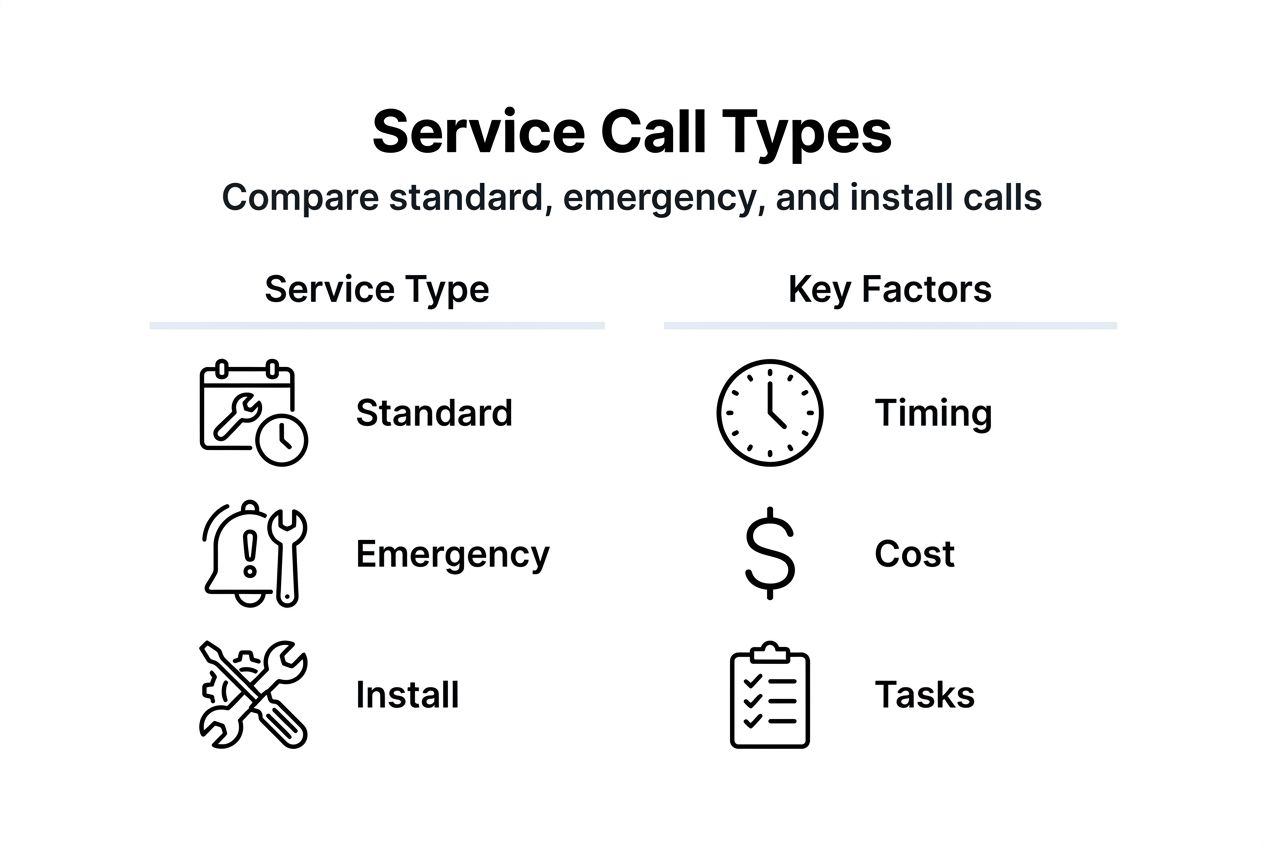
Standard service calls are scheduled appointments focused on diagnosing issues and performing minor to moderate repairs. You typically book these one to three days in advance. Fees range from $75 to $150, and the visit includes thorough diagnostics, repair estimates, and often same-visit repairs if parts are available.
Emergency calls respond immediately to urgent failures requiring fast action. Gas leaks, complete HVAC failures during extreme weather, or major water leaks from appliances qualify as emergencies. These calls command premium fees, often 1.5 to 2 times standard rates, because technicians prioritize your issue and respond outside normal hours.
Installation calls involve setting up new appliances or HVAC systems. These require different expertise, including knowledge of building codes, permit requirements, and proper connections for water, gas, or electrical systems. Installation pricing is typically project-based rather than hourly, reflecting the scope and complexity.
| Service Type | Purpose | Urgency | Typical Pricing | Common Scenarios |
|---|---|---|---|---|
| Standard Service Call | Diagnose and repair existing equipment | Scheduled 1-3 days out | $75-$150 diagnostic fee plus repairs | Appliance not cooling, strange noises, routine maintenance |
| Emergency Call | Immediate response to urgent failures | Same-day or within hours | $150-$300+ premium rates | Gas leaks, complete HVAC failure, major water leaks |
| Installation Call | Set up new equipment | Scheduled in advance | Project-based pricing | New refrigerator hookup, HVAC system replacement, gas line installation |
Understanding these differences empowers you to select the appropriate service for your needs and budget. A scheduled service call works for most appliance issues, while true emergencies justify premium emergency rates. For new equipment, proper installation prevents future service calls.
Comparing appliance repair vs installation helps you decide whether repairing existing equipment or installing new makes better financial sense.
Local specifics for Orange and Los Angeles County
Regional factors significantly affect service call quality and outcomes for homeowners in Orange and Los Angeles County. Local technicians understand the specific challenges your appliances face and bring targeted expertise.
Common appliance brands used throughout these counties include Whirlpool, GE, Samsung, LG, and Maytag. Local technicians stock parts for these popular brands, enabling faster repairs. They also recognize recurring issues specific to models common in Southern California homes.
The regional climate impacts appliance performance. Hot summers stress HVAC systems and refrigerators, while mild winters mean fewer heating calls but more year-round cooling demands. Coastal areas face humidity and salt air corrosion, while inland regions deal with dust and temperature extremes. Experienced local technicians account for these factors during diagnosis.
California regulations affect licensing, gas appliance codes, and service standards statewide, but Orange and LA County enforce additional local codes. Using local providers ensures compliance with county-specific requirements and faster permit processing when needed.
Top benefits of choosing local licensed service providers:
- Faster scheduling: Local technicians serve fewer service areas, improving availability and response times.
- Regional expertise: Familiarity with common local appliance models and climate-related issues improves diagnostic accuracy.
- Code compliance: Local providers understand county-specific regulations and permitting requirements.
Homeowners benefit from technicians who know whether your 1970s home in Orange has original gas lines needing upgrades or if your LA County property requires specific earthquake safety measures. This local knowledge translates to better service outcomes.
Applying local HVAC maintenance tips tailored to Southern California conditions helps you get the most from service calls and preventive maintenance.
Explore expert appliance and HVAC service calls with MDTech Services
When you need reliable service calls in Orange or Los Angeles County, MDTech Services delivers licensed professional expertise you can trust. Their experienced technicians specialize in diagnosing and repairing appliances and HVAC systems with transparent pricing and safety-focused service.

MDTech Services makes scheduling easy with online booking or phone appointments for both routine and emergency service calls. Their team understands local appliance brands, regional housing characteristics, and California code requirements, ensuring efficient diagnosis and compliant repairs. Whether you need appliance repair services, HVAC repair services, or preventive maintenance, their licensed technicians provide dependable solutions.
Homeowners throughout Orange and LA County rely on MDTech for swift, professional service calls that solve problems right the first time. Ready to schedule your service call? Book a service call with MDTech today and experience the difference local expertise makes.
Frequently asked questions
What is the typical fee for a service call in Orange and Los Angeles County?
Service call fees typically range from $75 to $150 depending on urgency, service type, and provider. These fees cover technician travel time and on-site diagnostics but don’t include parts or labor for actual repairs, which are quoted separately after diagnosis.
Can I expect repairs to be completed during the first service call visit?
Minor repairs are often completed during the first visit if the technician has necessary parts available on their truck. Complex repairs requiring specialty parts or extensive work may need follow-up visits after ordering components and receiving your approval.
Why is it important to choose a licensed technician for my service call?
Licensed technicians comply with California safety codes and regulations, reducing risks of unsafe work, property damage, or voided warranties. They carry proper insurance, follow industry standards, and can be held accountable through state licensing boards.