
Pilot light failure happens when the small flame inside a gas appliance fails to ignite or goes out and won’t stay lit after you release the reset button. This flame is the ignition source for furnaces, water heaters, gas fireplaces, and dryers. Without it, your appliance simply stops producing heat. The thermocouple is the safety device at the center of most failures: it detects heat from the pilot flame and sends a small electrical signal that keeps the gas valve open. When the thermocouple stops sensing heat, it shuts off gas flow to prevent a leak.
Here is what pilot light failure typically looks like:
- The pilot flame lights briefly but dies when you release the control button
- The appliance produces no heat even though the gas supply is on
- The flame appears yellow or orange instead of a steady blue
- The pilot repeatedly goes out despite multiple relighting attempts
- You notice a faint gas odor near the appliance
What causes pilot light failure and what are the signs?
Several mechanical and environmental factors can disrupt a pilot light, and knowing which one you are dealing with saves time and keeps you safe.
Common causes:
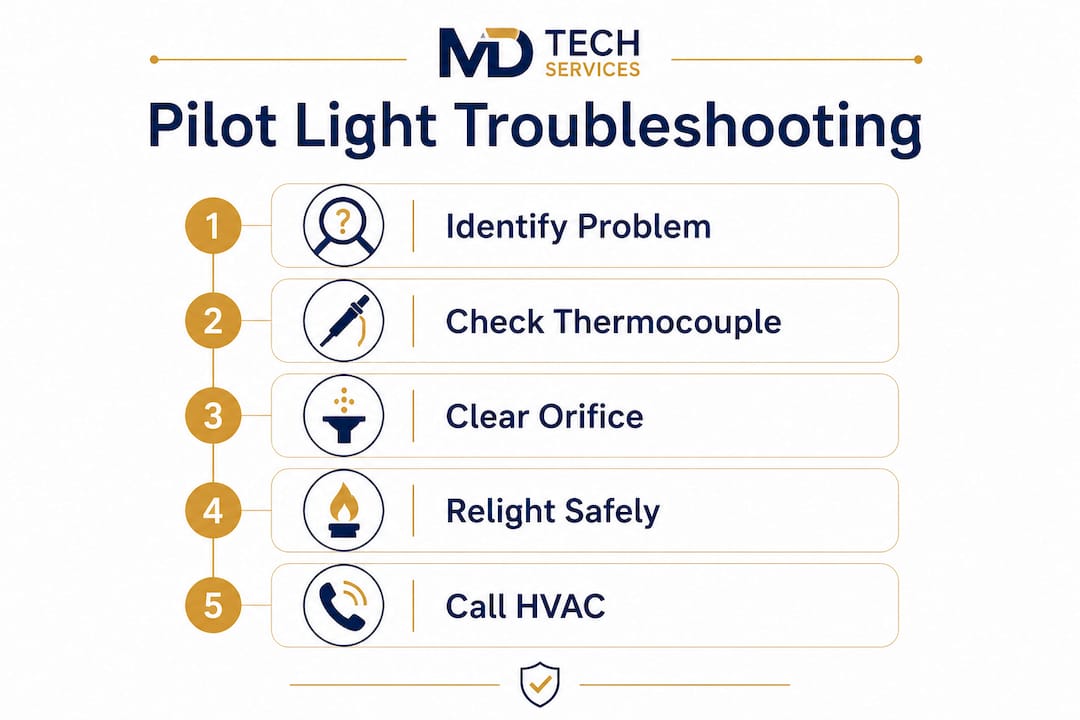
- Dirty or misaligned thermocouple. If the thermocouple tip is not sitting directly in the flame, or if corrosion has built up on its surface, it cannot generate enough voltage to hold the gas valve open. The pilot lights while you press the button, then dies the moment you let go.
- Clogged pilot orifice. Dust, spider webs, or insect debris can block the small opening that meters gas to the pilot. The result is a weak, sputtering, or yellow flame that cannot sustain itself.
- Drafts. A strong airflow from a nearby vent, open window, or chimney can physically blow the flame out even when every component is working correctly.
- Low gas pressure. A partially closed valve, a damaged gas line, or altitude changes can reduce gas flow enough to extinguish the pilot. If other gas appliances in your home are also underperforming, low gas pressure is likely the cause.
- Defective gas valve solenoid. When the valve itself fails, gas cannot reach the pilot regardless of thermocouple condition.
Signs to watch for:
- Flame color shifts from blue to yellow or orange, indicating incomplete combustion
- Pilot lights but extinguishes within seconds of releasing the button
- Furnace or water heater cycles on but produces no heat
- Clicking sounds as the appliance tries and fails to ignite
Safety warning: If you detect a rotten egg odor near any gas appliance, do not attempt to relight the pilot. Shut off the gas supply immediately and contact your gas provider or emergency services from outside the home.
Pro Tip: Run your hand slowly around the appliance to feel for airflow before assuming a component has failed. A draft blowing across the pilot is easy to fix and often overlooked.
How to safely troubleshoot and relight a pilot light
Before touching anything, confirm there is no gas smell. If the air smells clean, you can work through these steps carefully.
- Turn the gas control knob to “Off.” Wait 5–10 minutes for any residual gas to clear the area before proceeding.
- Locate the pilot assembly. Check your appliance’s label or owner’s manual for the exact location and any model-specific instructions.
- Set the control knob to “Pilot.” Press and hold the knob or reset button down to allow gas to flow to the pilot tube.
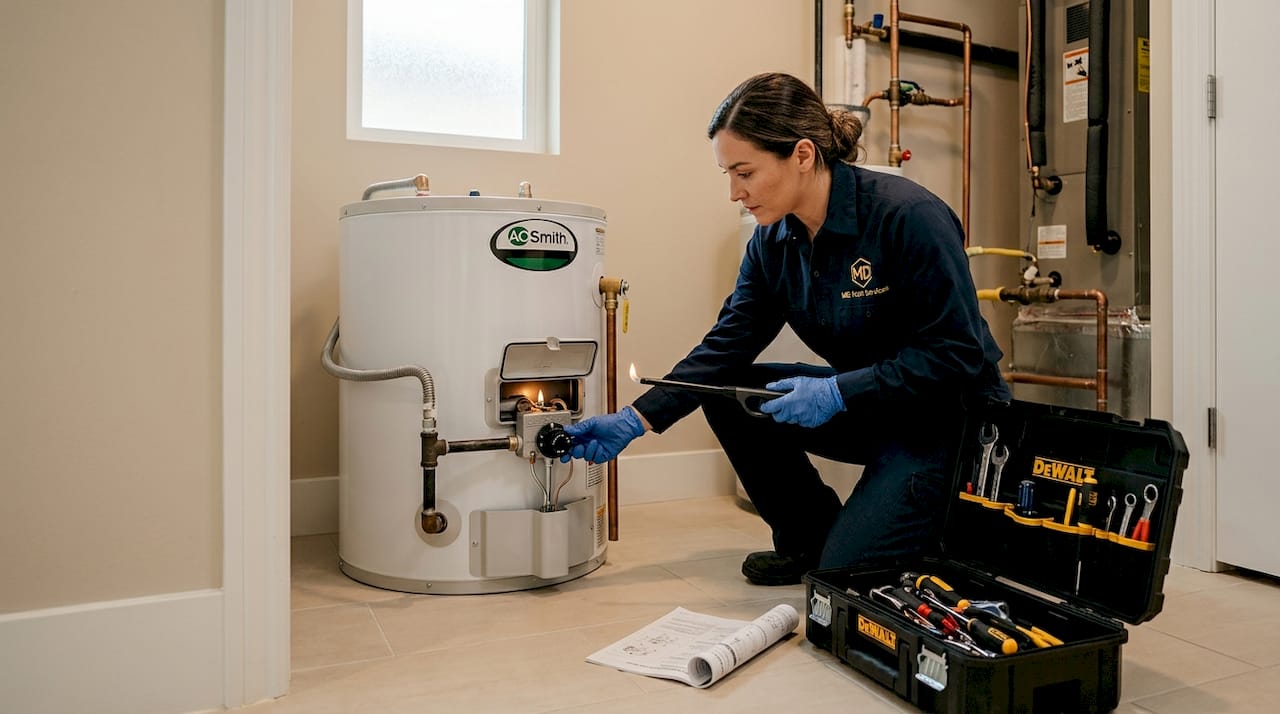
- Light the pilot. Use a long-handled lighter or long fireplace match to ignite the flame at the pilot opening while continuing to hold the button down.
- Hold the button for 30–60 seconds. This is the step most homeowners rush. The thermocouple needs enough time to heat up before it can hold the gas valve open. Releasing too soon is the most common reason a pilot dies immediately after relighting.
- Release slowly and observe. A healthy pilot burns steady and blue. If it stays lit, turn the control knob to “On” and restore normal operation.
- Check for drafts. If the flame flickers or blows out, seal nearby ventilation gaps or close windows. Installing a draft hood can shield the pilot from persistent airflow.
- Inspect the thermocouple alignment. The sensor tip must sit centered in the pilot flame. If it has shifted, gently reposition it so the flame fully contacts the tip.
- Clean the pilot orifice carefully. Use compressed air or a soft brush to clear visible debris. Do not use a needle to enlarge or force-clear the orifice, as this disrupts the air-to-fuel ratio and causes flame instability.
- Stop if the pilot still won’t hold. Repeated failed attempts do not fix an underlying fault. They waste time and can create a gas buildup risk. Call a licensed technician at this point.
For a broader look at diagnosing home appliance problems, the appliance troubleshooting guide from Mdtechservices covers when a homeowner can safely self-diagnose and when professional help is the right call.
Pro Tip: If the pilot lights but dies the instant you release the button after a full 60-second hold, the thermocouple is almost certainly defective and needs replacement, not cleaning.
When pilot light failure becomes a safety hazard
A single pilot outage is usually not dangerous on its own. The thermocouple’s job is to shut off gas when the flame goes out, which is exactly the protection it provides. The risk rises when that safety system is bypassed or when gas continues to flow undetected.
Red flags that require immediate professional attention:
- A persistent gas odor near the appliance or anywhere in the home
- Yellow or orange flames accompanied by soot buildup around the burner area
- Unusual hissing or banging sounds near the gas valve or burner
- Visible corrosion, cracks, or physical damage to the pilot assembly or gas line
- Pilot lights that repeatedly go out despite correct relighting technique and adequate hold time
- A carbon monoxide alarm activating near the appliance
Gas that flows without igniting can accumulate in an enclosed space and create a serious explosion or fire risk. Carbon monoxide is a separate danger: if the main burner becomes obstructed after relighting, combustion gases can back up into living areas. Neither situation gives obvious warning before it becomes critical.
If you smell gas, do not flip light switches, use your phone inside the home, or attempt any repair. Shut off the gas at the meter if it is safe to reach, leave the building, and call your gas utility from outside. For guidance on gas safety at home, Mdtechservices has published clear protocols for homeowners facing exactly these situations.
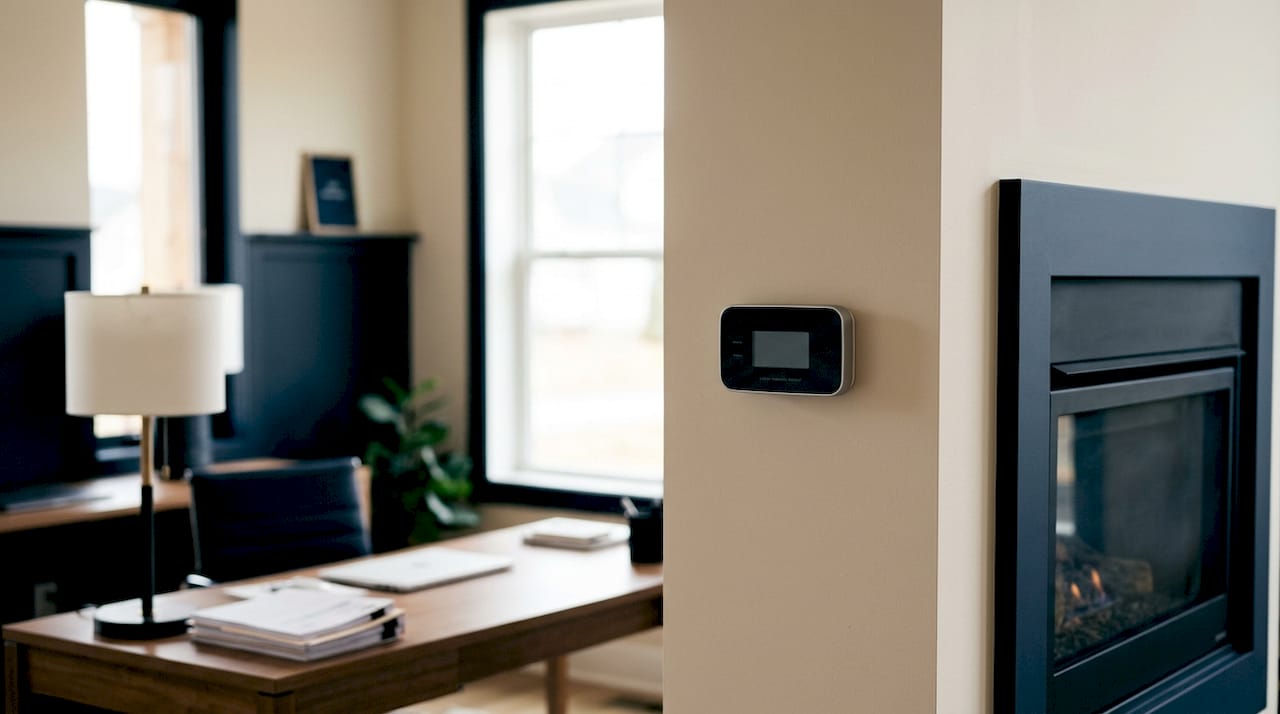
Pro Tip: Install a carbon monoxide detector within 10 feet of every gas appliance. It provides the early warning that a visual inspection of the pilot cannot.
What HVAC professionals say about pilot light safety
Licensed HVAC technicians consistently point to the thermocouple as the component homeowners most often misdiagnose. The thermocouple is not just a part that can fail; it is a deliberate safety feature. When the pilot flame does not heat it continuously, the valve closes on purpose to prevent gas from leaking into the home. That shutdown is the system working correctly, not malfunctioning.
“If the thermocouple is dirty, misaligned, or faulty, it may not generate enough voltage to keep the gas valve open. Replacing a thermocouple is a relatively simple fix that we do quite often.” — HVAC experts Justin Cornforth and David Lewis, as quoted by House Digest
Proper thermocouple cleaning uses fine emery cloth or steel wool, not abrasive tools that can scratch the sensor surface. Even after cleaning, the tip must be repositioned so the pilot flame fully surrounds it. A thermocouple that sits even slightly outside the flame path will not generate enough millivolts to hold the valve open, and the pilot will keep going out. In humid or coastal areas, corrosion on the thermocouple is common, and stainless-steel replacement units tend to last longer in those conditions.
One detail that catches homeowners off guard: a thermocouple connection that has been cross-threaded at the gas valve can appear tight but fails to conduct voltage properly. If you have replaced the thermocouple and the pilot still won’t hold, the gas valve connection itself may need inspection by a licensed technician.
Pro Tip: After cleaning and repositioning the thermocouple, always perform a full 60-second hold during relighting before concluding the part needs replacement. Premature diagnosis leads to unnecessary part costs.
When repeated troubleshooting does not resolve the issue, timely HVAC repair prevents a minor pilot problem from becoming a full appliance failure.
Key Takeaways
Pilot light failure is almost always caused by a thermocouple fault, a clogged orifice, a draft, or a gas supply problem, and each cause has a specific, safe fix.
| Point | Details |
|---|---|
| Thermocouple is the core cause | A dirty, misaligned, or failed thermocouple shuts off gas flow and is the leading reason pilots won’t stay lit. |
| Hold the reset button long enough | Pressing the reset button for 30–60 seconds gives the thermocouple time to heat and hold the gas valve open. |
| Flame color signals combustion health | A steady blue flame is normal; yellow or orange flames indicate incomplete combustion or a blocked orifice. |
| Gas odor means stop immediately | Any smell of gas near the appliance requires shutting off the supply and calling a professional before any repair attempt. |
| Repeated failure needs professional diagnosis | Pilots that go out consistently after correct relighting indicate a worn thermocouple or faulty gas valve requiring expert repair. |
When your pilot light keeps failing and home troubleshooting hasn’t resolved it, Mdtechservices is ready to help. Our licensed technicians serve Orange County and Los Angeles County with reliable appliance repair services and HVAC diagnostics. Book your appointment online today.
