
TL;DR:
- Licensed, multi-family-experienced HVAC contractors in Houston provide essential preventive maintenance and timely repairs to protect tenant comfort and property value. Verifying credentials, including NATE certification and proof of insurance, ensures reliable service, while transparent pricing offers predictability for landlords managing multiple units. Mdtechservices offers trusted HVAC and appliance repair services in California, emphasizing responsiveness and detailed documentation.
Who are the best HVAC contractors for landlords in Houston?

For landlords managing multi-family rental properties in Houston, Texas Strong Mechanical stands out as the most specialized option. The contractor focuses specifically on multi-family properties, bringing licensed technicians, transparent pricing, and a track record built on rental property work rather than one-off residential calls.
| Contractor | Specialization | Range of Services | Pricing Transparency | Best For |
|---|---|---|---|---|
| Texas Strong Mechanical | Multi-family rental properties | Repair, installation, maintenance, ductwork | Written, itemized estimates | Landlords needing full-service multi-family HVAC coverage in Houston |
Texas Strong Mechanical’s focus on multi-family properties sets it apart from general residential contractors who treat apartment buildings like oversized single-family homes. Licensed technicians, proof of insurance, and written estimates are standard practice. For landlords with multiple units across Houston, that consistency matters more than a low one-time quote.
NATE certification is the credential to look for when evaluating any technician working on your properties. NATE-certified technicians improve repair accuracy and reduce the likelihood of recurring issues, which directly cuts your emergency call costs over time. Pair that with verified general liability insurance of at least $1 million, and you have the baseline any reputable contractor should clear.
Pro Tip: Ask any contractor for a copy of their current license and insurance certificate before scheduling a site visit. A contractor who hesitates or delays on that request is telling you something.
Why multi-family HVAC expertise matters for Houston landlords
Multi-family HVAC systems are not simply larger versions of residential units. They involve zoned systems, shared ductwork, rooftop package units, and sometimes building-wide controls that a contractor without apartment experience will misdiagnose or undersize.
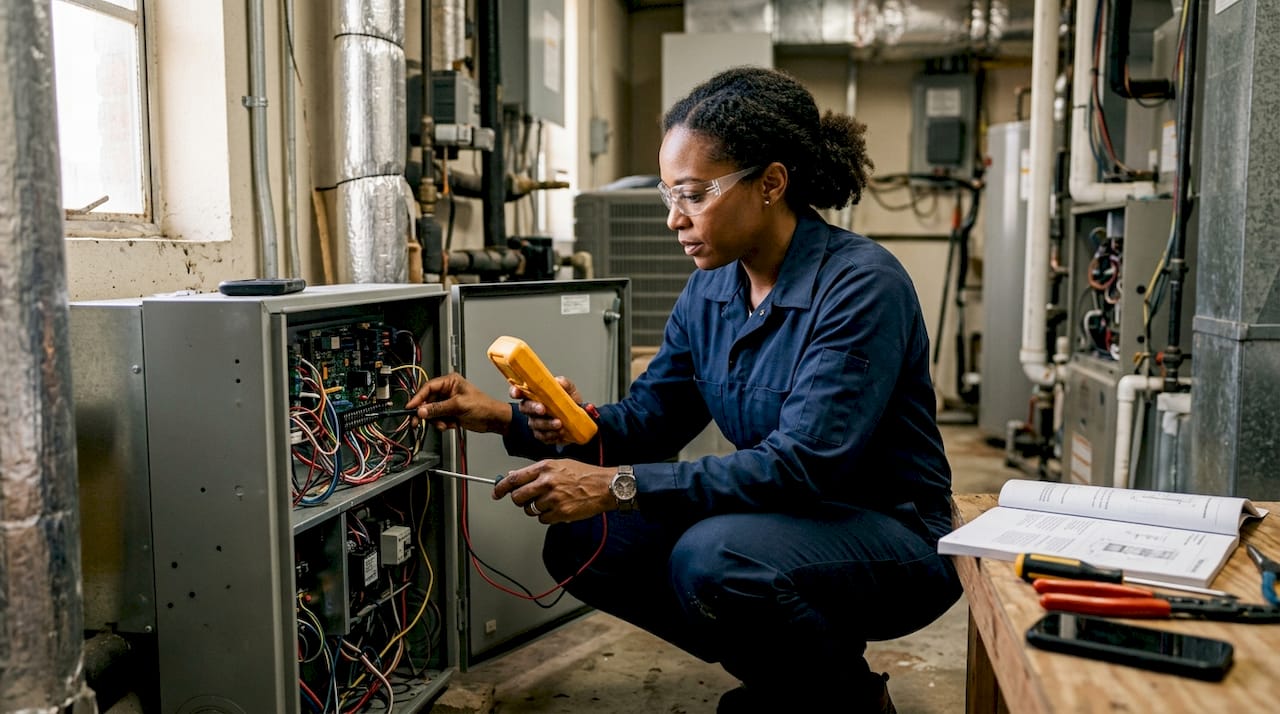
Houston’s climate adds another layer of complexity. The city’s humidity, heat load, and hurricane-season conditions push HVAC systems harder than in most American markets. A contractor who understands Houston’s regional code requirements and load demands will design and service systems that actually hold up through a Texas summer.
The financial case for specialized expertise is straightforward. Annual inspections significantly decrease emergency repair frequency, and landlords who shift from reactive repairs to preventive maintenance reduce costly service calls. Tenant comfort is directly tied to lease renewals, and a failed HVAC system in August is one of the fastest ways to lose a good tenant.
Key reasons to prioritize multi-family HVAC expertise:
- Zoned and rooftop systems require different diagnostic approaches than split systems
- Houston’s humidity and heat load demand accurate load calculations, not guesswork
- Local contractors familiar with Houston permitting navigate approvals faster
- NATE certification and brand-specific training reduce recurring repair issues
- Experienced contractors recognize when a unit is approaching end-of-life before it fails
What HVAC services should landlords expect for rental properties?
A contractor worth hiring for multi-family work offers more than emergency repairs. The full service range you should expect covers the entire lifecycle of your HVAC assets.
Preventive maintenance is the foundation. Seasonal tune-ups, filter replacements, coil cleaning, and refrigerant checks keep systems running efficiently and extend equipment life. Beyond that, landlords should expect:
- Preventive maintenance visits (spring and fall at minimum)
- System diagnostics and repair for all major components
- New system installation with proper load calculations based on square footage, insulation, and window efficiency
- Ductwork inspection, sealing, and replacement
- Warranty handling and manufacturer-authorized repairs
- Multi-property maintenance plans with coordinated scheduling
24/7 emergency support is particularly important for rental properties. Tenant comfort issues can escalate into lease disputes quickly, and priority scheduling under a service contract reduces both downtime and the cost of after-hours calls. Many states require landlords to provide functioning heat as part of the warranty of habitability, so a contractor who can respond fast is not a luxury.
Service contracts that cover multiple properties give you coordinated scheduling, detailed service reports, and a single point of contact who knows your portfolio. That consistency pays off when you need to document maintenance history for insurance claims or property evaluations.
How does transparent pricing work for multi-family HVAC in Houston?
Pricing clarity is one of the clearest signals of a contractor’s professionalism. Flat-rate pricing increases average tickets by 20–40% versus time-and-materials pricing for equivalent work, but the real benefit for landlords is predictability. You know the cost before work starts, and there is no incentive for a technician to work slowly.
For Houston landlords budgeting across multiple units, here is what to expect:
- Residential hourly rates typically run $85–$150/hour; commercial rates run $110–$190/hour
- Annual maintenance plans for commercial systems range from $1,000 to $10,000+ depending on equipment count and service frequency
- Residential plans typically run $150–$300 per system per year for two seasonal tune-ups, priority scheduling, and a 10–15% repair discount
- Written, itemized estimates are the standard; any contractor who quotes verbally only is a red flag
- Multi-property contracts often include volume discounts and fixed pricing for common services
Always get written estimates that itemize labor, parts, and any permit fees before authorizing work. Comparing bids on price alone misses the point. A lower quote that excludes permit fees or uses off-brand parts will cost more over the life of the equipment.
What does the HVAC service process look like for landlords?
Knowing the timeline for common projects helps you communicate with tenants and plan around lease schedules. The process for a full system replacement in a multi-family unit typically follows these steps:
- Initial inspection: Technician assesses existing equipment, ductwork condition, and any tenant-reported issues
- Load calculation: Proper sizing using Manual J methodology, accounting for square footage, insulation, and window efficiency
- Written estimate: Itemized quote covering equipment, labor, permits, and disposal of old equipment
- Permit pulling: Licensed contractors handle Houston municipal permits before any installation begins
- Installation or repair: Work is completed with minimal disruption to occupied units
- Testing and commissioning: System is tested for airflow, refrigerant charge, and thermostat function before sign-off
Timeline ranges vary by project type. A standard repair (capacitor, fan motor, refrigerant recharge) typically takes a few hours. A full system replacement in a single unit runs one to two days. A building-wide installation or ductwork overhaul can take one to two weeks depending on unit count and permit processing time.
Contractors with local Houston experience navigate regional permitting and climate challenges more efficiently, resulting in smoother projects. Permit delays are one of the most common sources of timeline overruns, and a contractor who has pulled permits in Houston repeatedly knows how to avoid them.
How do you choose the right HVAC contractor for multi-family rentals?
Vetting a contractor thoroughly upfront saves you from expensive mistakes later. Use these criteria every time you evaluate a new provider.
Licensing and insurance: Verify the contractor holds a current Texas HVAC license and EPA certification for refrigerant handling. Confirm workers’ compensation and general liability insurance with at least $1 million in coverage. Request certificates directly from the insurer, not just a copy from the contractor.
Certifications: Look for NATE certification or documented brand-specific training from manufacturers like Carrier, Trane, or Lennox. Certified technicians reduce recurring issues and bring familiarity with current equipment designs.
Written documentation: Itemized written estimates and signed contracts before work begins protect you legally and financially. The estimate should list equipment model numbers, labor costs, permit fees, and warranty terms.
References and reviews: Ask for local references from other landlords or property managers. Check Better Business Bureau ratings and recent Google reviews that describe actual results, not vague praise.
Red flags to avoid:
- Contractors who skip permits or inspections risk invalidating your property insurance and creating compliance liabilities
- Unusually low bids without clear justification often signal unlicensed work or cut-rate parts
- High-pressure tactics, vague contracts, or reluctance to explain diagnostics
- Inability to provide proof of insurance on request
Multi-property strategy: Negotiate maintenance contracts that cover your entire portfolio. Volume discounts become available when you commit multiple properties to the same contractor. Fixed pricing for common services simplifies budgeting and billing across your units.
Pro Tip: Ask contractors to maintain a detailed log of each unit’s equipment age, warranty status, and refrigerant type. Contractors who track asset details proactively can help you budget replacements before a unit fails at the worst possible time.
Mdtechservices: a reliable alternative for residential HVAC and appliance repair

The contractors compared above serve Houston’s multi-family market. If your properties are in Southern California, or if you need residential HVAC repair and appliance services alongside your property management work, Mdtechservices offers a different route worth knowing about.
Mdtechservices serves Orange County and Los Angeles County with licensed technicians covering HVAC repair, appliance installation, and plumbing services. The team emphasizes responsive scheduling, transparent service descriptions, and a safety-focused approach that property owners and managers in California rely on. Online appointment booking and detailed service breakdowns make it easy to coordinate repairs without the back-and-forth that slows down property management.
For landlords who want to reduce appliance downtime across their California properties, Mdtechservices provides the kind of consistent, licensed service that protects your investment and keeps tenants comfortable. It is a practical option for property owners who need a single trusted provider for HVAC and appliance work rather than managing multiple specialty vendors.
Key Takeaways
Landlords who prioritize licensed, multi-family-experienced HVAC contractors with written estimates and service contracts protect their rental income and reduce tenant turnover.
| Point | Details |
|---|---|
| Verify credentials first | Confirm a current Texas HVAC license, EPA certification, and proof of general liability insurance with at least $1 million coverage before hiring. |
| Flat-rate models increase average ticket sizes by 20–40% compared to time-and-materials pricing, giving landlords predictable costs upfront. | |
| Maintenance plans cut emergency costs | Annual commercial HVAC plans typically range from $1,000 to $10,000 or more, depending on equipment count and service frequency, and include priority scheduling and repair discounts. |
| Permits protect your investment | Contractors who skip permits risk invalidating your property insurance and creating compliance liabilities. |
| Mdtechservices for California properties | Landlords in Orange County and Los Angeles County can rely on Mdtechservices for licensed HVAC repair and appliance services. |