
TL;DR:
- Choosing the right water heater depends on your household size, fuel availability, and budget.
- Heat pump water heaters offer the highest efficiency but require proper space and electrical capacity; assessing infrastructure before purchase is crucial.
The right water heater comes down to four practical categories: storage tank (gas, electric, or propane), tankless (on-demand), heat pump/hybrid, and solar/indirect. Each one suits a different combination of fuel availability, household size, and budget. For a quick match: a small apartment with gas service does well with a standard 30–40 gallon gas storage tank; a large household with simultaneous showers benefits from a tankless gas system or a heat pump water heater (HPWH); an all-electric home with rooftop solar is a strong candidate for a heat pump model; and a retrofit with limited utility-room space often points toward a compact tankless unit.
Three metrics will guide every comparison you make in this article:
- Uniform Energy Factor (UEF): the primary efficiency rating for all residential water heaters, set by the DOE. Higher is better.
- First Hour Rating (FHR): how many gallons a storage tank can deliver in the first hour of peak use. Match this to your household’s busiest morning.
- Flow rate (GPM) and temperature rise: the two numbers that size a tankless system for your home.
Energy Star certification is the fastest shortcut to identifying models that meet or exceed federal efficiency thresholds. Brands like Bradford White, Rheem, and A. O. Smith all offer certified models across multiple types. When you are ready to move from research to installation, Mdtechservices serves Orange County and Los Angeles County homeowners with licensed technicians for water heater installation, replacement, and gas conversions.
Pro Tip: Before you shop, write down your fuel type (natural gas, propane, or electric), your utility-room dimensions, and your peak morning hot-water demand. Those three facts alone will eliminate at least half the options on any showroom floor.
Table of Contents
- What are the main types of water heaters and how do they work?
- How do you choose the right water heater for your home?
- How do UEF, FHR, and GPM actually size your water heater?
- What do water heaters actually cost, and how long do they last?
- When do you need a licensed contractor for water heater installation?
- Key Takeaways
- The water heater decision most homeowners get wrong
- Mdtechservices can handle your water heater installation or conversion
- Useful sources for homeowners
What are the main types of water heaters and how do they work?
Understanding how each type operates helps you rule out options that simply won’t fit your home’s infrastructure.
Storage tank water heaters (gas, electric, propane)
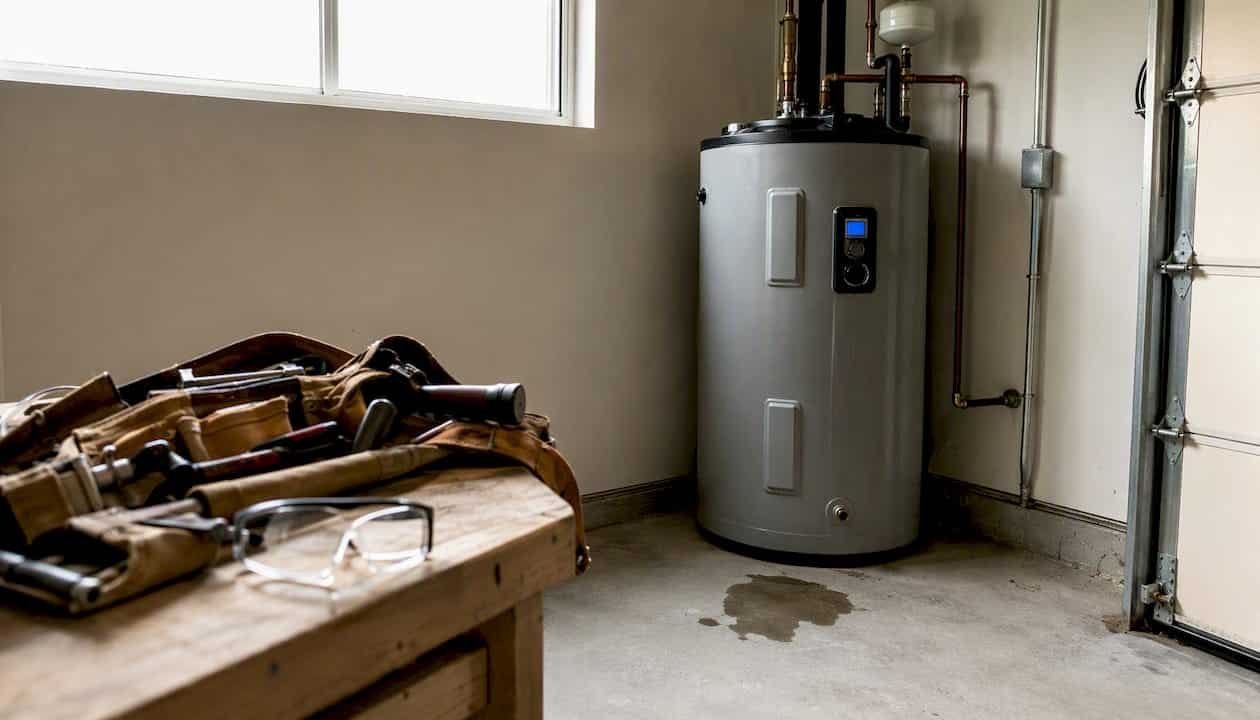
A storage tank heater keeps a reservoir of hot water ready at all times, typically 30–80 gallons. A gas burner or electric resistance element cycles on whenever the water temperature drops below the setpoint. The trade-off is standby loss: energy consumed to maintain temperature even when no one is drawing hot water. Gas models vent combustion gases and generally heat water faster than electric, giving them a higher FHR for the same tank size. Propane models work identically to natural gas units but require a separate tank and tend to cost more per therm to operate.
Electric resistance storage tanks are the most common electric option. They carry no flue, which reduces heat loss through the tank walls, but their UEF typically runs in a range depending on tank size and insulation depending on tank size and insulation. Bradford White, Rheem, and A. O. Smith all manufacture Energy Star-certified electric storage models with improved jacket insulation that push toward the higher end of that range.
Pros: low upfront cost, simple installation, widely available parts.
Cons: standby loss adds to monthly bills; FHR limits simultaneous use; shorter lifespan than tankless.
Tankless (on-demand) water heaters
Tankless units heat water only when a tap opens, eliminating standby heat loss entirely. Gas models typically deliver higher flow rates than electric and are better suited to whole-house applications. Electric tankless units work well as point-of-use boosters or in mild climates where the incoming water temperature is already relatively warm.
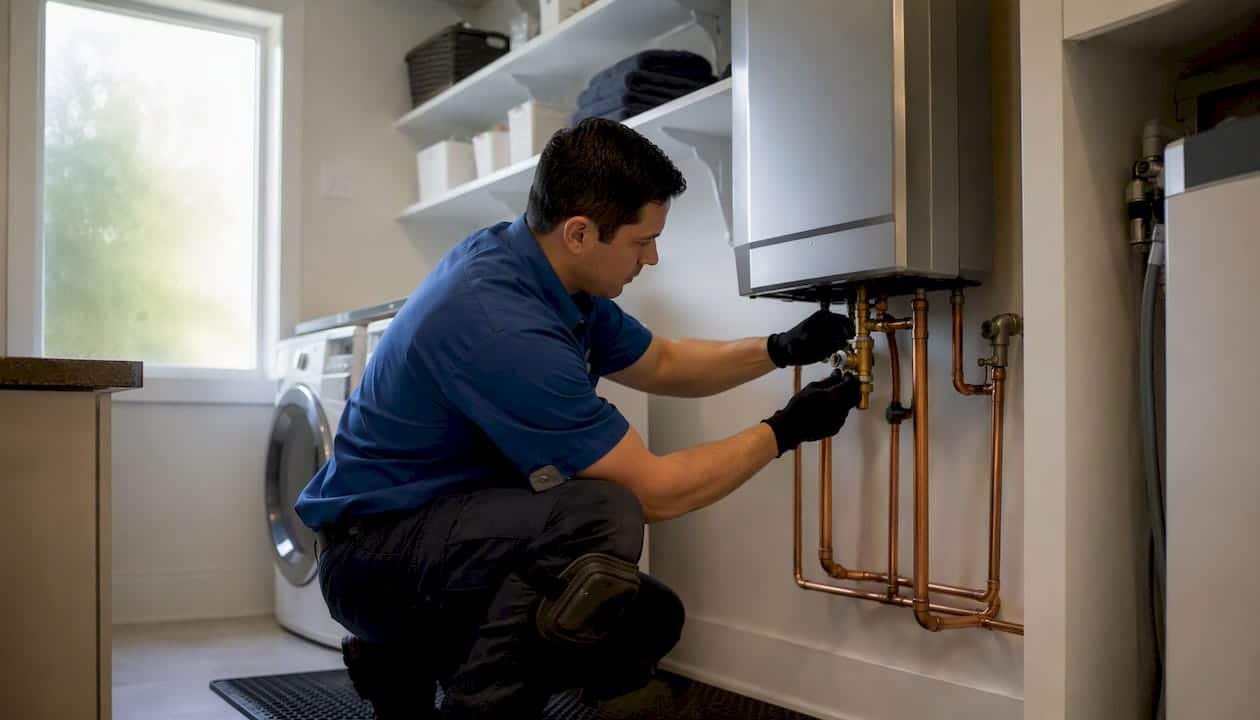
Sizing is critical. A gas tankless unit rated at 8 GPM at a 35°F temperature rise may fall short in a cold-climate home where groundwater arrives at 45°F and you need to reach 120°F. Venting requirements are also more demanding than a standard storage tank: most gas tankless units need a Category III or IV stainless-steel vent, and some require a dedicated combustion-air supply. For a deeper look at how these systems work, this tankless overview covers the key considerations for homeowners.
Hard water is a real concern. Mineral scale builds up in the heat exchanger and reduces flow over time. Annual professional descaling is often necessary in hard-water areas, and a water softener upstream of the unit extends service life considerably.
Pros: no standby loss, unlimited hot water when properly sized, long lifespan (20+ years with maintenance).
Cons: higher upfront cost, complex installation, sensitive to water hardness, potential for cold-water sandwich effect.
Heat pump water heaters (HPWH / hybrid)
A heat pump water heater moves heat from surrounding air into the tank rather than generating heat directly, working on the same refrigeration cycle as your air conditioner but in reverse. This makes it 2–3 times more energy-efficient per kilowatt-hour than a standard electric resistance tank. Energy Star-certified HPWHs from A. O. Smith (Voltex series) and Rheem (ProTerra series) consistently post UEF scores that are significantly higher than standard electric resistance tanks, meaning they deliver $3.30–$4.10 worth of hot water for every $1.00 of electricity consumed.
The installation location matters more than with any other type. The unit needs a space with adequate air volume (typically at least 700–1,000 cubic feet) because it draws heat from the room, which will lower the ambient temperature slightly. That can actually help in a warm garage or utility room in Southern California but may add heating load in a cold basement. Expect compressor noise similar to a small refrigerator. For homes pairing an HPWH with an HVAC upgrade, heat pump service considerations are worth reviewing before finalizing placement.
Pros: highest UEF of any electric type, strong rebate eligibility, acts as a mild dehumidifier.
Cons: requires adequate air volume, audible compressor, higher upfront cost, needs 240V/30A circuit.
Solar thermal and indirect (boiler-connected) water heaters
Solar water heating systems use roof-mounted collectors to preheat water before it reaches a backup heater. Two collector types dominate the U.S. market: flat-plate collectors and evacuated tube collectors. Active systems use a circulating pump and controls; passive systems rely on convection. In Southern California’s climate, solar thermal can cover a substantial portion of annual water-heating energy, with a conventional gas or electric backup handling cloudy days and peak demand. Closed-loop systems with antifreeze fluid protect against freeze damage and are standard in most U.S. installations outside the warmest climates.
Indirect water heaters use a home’s existing boiler to heat a fluid that circulates through a heat exchanger in a separate storage tank. They are most practical in homes that already have a high-efficiency hydronic boiler, since the boiler does double duty for space heating and domestic hot water.
Pros: very low operating cost when solar resource is strong, long collector lifespan.
Cons: high upfront cost, requires roof space and structural assessment, backup system still needed.
Condensing gas storage water heaters
Condensing gas models capture heat from flue gases before venting, pushing efficiency well above a standard gas storage tank. They require a condensate drain because the flue gas moisture condenses into acidic liquid. These units make sense for homeowners who want higher gas efficiency without switching fuel types and who have the venting and drain infrastructure to support them.
| Type | UEF range | Upfront cost (approx.) | Best fit |
|---|---|---|---|
| Gas storage tank | 0.63–0.95 | $400–$900 | Most homes with gas service |
| Electric storage tank | 0.63–0.95 | $300–$700 | All-electric homes, simple install |
| Gas tankless | 0.82–0.97 | $800–$1,500 | High-demand households, limited space |
| Heat pump (HPWH) | 3.3–4.1 | $1,000–$1,800 | All-electric homes, often eligible for rebates |
| Solar thermal | Varies | $2,000–$5,000+ | High solar resource, long payback horizon |
| Condensing gas storage | 0.90–0.95 | $700 | Gas homes wanting higher efficiency |
Efficiency callout: UEF ranges for heat pump models (3.3–4.1) are three to four times higher than standard electric resistance tanks (0.63–0.95), making HPWHs the clear efficiency leader among electric options.
How do you choose the right water heater for your home?
A methodical checklist prevents the most common mistake: buying a unit and then discovering the home needs a panel upgrade, a new gas line, or a condensate drain before it can even be installed.
Homeowner decision checklist
- Confirm fuel availability. About 52% of U.S. homes use natural gas for water heating, about 42% use electricity, and the remainder use propane or fuel oil. If your home has no gas line, tankless gas and gas storage are off the table unless you budget for a new line.
- Measure your utility space. Note ceiling height, floor area, and proximity to an exterior wall or roof penetration for venting. HPWHs need vertical clearance and air volume; tankless units need a vent path.
- Check your electrical panel. An HPWH needs a dedicated 240V/30A circuit. A whole-house electric tankless unit may require 150–200A of available capacity. If your panel is already near capacity, factor in the upgrade cost.
- Calculate peak-hour demand. Add up the gallons used during your busiest morning hour (shower: ~10 gallons, dishwasher: ~6 gallons, laundry: ~7 gallons). Match that number to the FHR on any storage tank you consider.
- Set a realistic budget including installation. Infrastructure upgrades can cost as much as the water heater itself, so get a site inspection before purchasing.
- Research local rebates and federal tax credits. HPWHs and solar systems often qualify for significant incentives that change the payback calculation.
Questions to ask your contractor
- What is the current ampacity of my panel, and will this unit require an upgrade?
- What is the diameter of my existing gas line, and can it supply the BTU demand of a tankless unit?
- What venting category does this unit require, and what is the existing vent material?
- Does my installation location require a condensate drain, and where will it route?
- What does the warranty cover, and does it include labor?
Red flags that require a written quote before purchase
- Panel is already at or near capacity (common in homes built before 1990)
- Gas line runs more than 50 feet from the meter to the heater location
- No existing vent penetration for a new tankless or condensing unit
- Water hardness above 7 grains per gallon in a tankless installation
- Utility room has no floor drain for condensate routing
Pro Tip: Ask the contractor to bring a clamp meter and check actual panel load during the site visit, not just the breaker labels. Breakers are often mislabeled, and a live reading takes two minutes.
How do UEF, FHR, and GPM actually size your water heater?
Uniform Energy Factor (UEF)
UEF replaced the older Energy Factor (EF) rating and is now the standard efficiency metric for all residential water heaters sold in the U.S. It measures how efficiently a unit converts its energy source into hot water under a standardized draw pattern. Higher UEF means lower operating cost. The DOE’s water heating guidance and AHRInet both publish UEF data by model, making cross-type comparison straightforward.
| Type | Typical UEF range |
|---|---|
| Gas storage tank | 0.63–0.95 |
| Electric resistance storage | 0.63–0.95 |
| Gas tankless | 0.82–0.97 |
| Heat pump (HPWH) | 3.3–4.1 |
| Condensing gas storage | 0.90–0.95 |
UEF callout: A heat pump water heater with a UEF of 3.5 uses roughly 60% less electricity than a standard electric resistance tank with a UEF in the typical range of 0.63–0.95, translating directly to lower monthly utility bills.
First Hour Rating (FHR) for storage tanks
DOE guidance is clear: select a storage tank with an FHR that meets or exceeds your household’s measured peak-hour demand. The FHR appears in the top-left corner of the EnergyGuide label. A family of four with two morning showers, a dishwasher cycle, and a load of laundry running simultaneously might need an FHR of 60–70 gallons. A 50-gallon gas tank from Bradford White or Rheem typically carries an FHR of 70–90 gallons, while a 50-gallon electric tank from A. O. Smith may post 60–70 gallons because electric elements heat more slowly than a gas burner.
Sizing a tankless system (GPM and temperature rise)
Tankless units are rated in GPM at a specified temperature rise. To size one for whole-house use:
- Step 1: List all fixtures that could run simultaneously (two showers at 2.0 GPM each = 4.0 GPM total).
- Step 2: Determine your incoming groundwater temperature. In Southern California, groundwater typically arrives at 60–65°F. To reach 120°F, you need a 55–60°F temperature rise.
- Step 3: Match those two numbers to a unit’s rated output. A gas tankless unit rated at 8.4 GPM at a 55°F rise covers that scenario comfortably.
Climate matters for HPWHs too. In colder ambient conditions, the heat pump compressor works harder and COP drops. Southern California’s mild climate is genuinely favorable for HPWH performance year-round.
What do water heaters actually cost, and how long do they last?
Upfront and installation cost ranges
- Gas storage tank: $400–$900 for the unit; $300–$600 for standard installation. Add $500–$2,000 if a new vent or gas-line upgrade is needed.
- Electric storage tank: $300–$700 for the unit; $200–$400 for standard installation. Add $500–$1,500 for a panel upgrade if required.
- Gas tankless: $800–$1,500 for the unit; $500–$1,000 for installation. Venting and gas-line work can add $500–$2,000.
- Heat pump (HPWH): $1,000–$1,800 for the unit; $300–$600 for installation. New 240V circuit adds $200–$500.
- Solar thermal: $2,000–$5,000+ for the system; installation varies widely by roof type and collector count.
Infrastructure upgrades can match or exceed the appliance cost, which is why a site inspection before purchase is non-negotiable.
Lifecycle comparison
| Type | Expected lifespan | Common service items | Operating cost level |
|---|---|---|---|
| Gas storage tank | 8 years | Annual anode rod check, periodic flush | Medium |
| Electric storage tank | 10–15 years | Annual anode rod check, element replacement | Medium-high |
| Gas tankless | 20+ years | Annual descaling, filter cleaning | Low-medium |
| Heat pump (HPWH) | 10–15 years | Air filter cleaning, annual inspection | Low |
| Solar thermal | 20+ years (collectors) | Annual inspection, antifreeze check | Very low |
Rebates and federal tax credits can materially reduce the net cost of HPWHs and solar systems. Check current incentive programs through your utility and the federal Database of State Incentives for Renewables and Efficiency (DSIRE) before finalizing your budget. A $300–$600 rebate on an HPWH can cut payback time significantly. For a detailed maintenance schedule that protects any of these investments, the water heater maintenance checklist from Mdtechservices is a practical starting point.
When do you need a licensed contractor for water heater installation?
Some water heater tasks are genuinely DIY-friendly. Most are not. The line is drawn by safety, code, and liability.
Tasks that require a licensed contractor:
- Gas piping connections, sizing, and pressure testing
- Electrical panel upgrades and new circuit installation
- Venting installation or modification (Category III/IV stainless for condensing and tankless)
- Permit application and inspection scheduling (required in most California jurisdictions)
- LP-to-natural-gas or natural-gas-to-LP conversions, including burner orifice replacement and pressure adjustment
Safety checklist for installation and first-year operation:
- T&P (temperature and pressure) relief valve must be routed to within 6 inches of the floor or to a drain, never capped
- Combustion air supply must be verified for any atmospherically vented gas appliance
- Carbon monoxide detector should be installed within 10 feet of any gas appliance
- Condensate drain from a condensing or HPWH unit must route to an approved drain, not onto the floor
- Seismic strapping is required in California for all storage tank water heaters
Installation note: Energy Star installer guidance specifically recommends using contractors trained on high-efficiency systems like HPWHs, since improper placement or electrical work can negate efficiency gains and void the manufacturer warranty.
LP-to-natural-gas conversions involve replacing burner orifices, adjusting gas valve pressure, and verifying manifold pressure with a manometer. The reverse conversion (natural gas to LP) follows the same scope. These are not adjustments a homeowner should attempt. A licensed technician completes the work, tests for leaks, and documents the conversion for the manufacturer’s warranty record. For California homeowners considering a gas appliance conversion, the scope and permit requirements vary by county, so a written quote from a licensed contractor is the right first step.
What a professional should bring to a site visit: gas leak detector, clamp meter, manometer, combustion analyzer, and a copy of the local mechanical code. A written quote should itemize the unit, labor, permit fees, and any infrastructure upgrades separately so you can compare bids accurately. The advantages of professional installation go beyond safety: a properly permitted installation protects your homeowner’s insurance coverage and the manufacturer warranty.
Key Takeaways
Heat pump water heaters deliver the highest efficiency of any electric option, but the right choice depends on matching the technology to your home’s fuel, space, and infrastructure before you buy.
| Point | Details |
|---|---|
| Match fuel and infrastructure first | Confirm gas line, panel capacity, and venting before selecting any type. |
| Use FHR for storage tanks, GPM for tankless | Size to your peak-hour demand, not just tank gallons or BTU rating. |
| HPWHs lead on efficiency | UEF of 3.3–4.1 versus 0.63–0.95 for standard electric tanks; rebates improve payback. |
| Hidden upgrade costs are real | Panel, venting, and gas-line work can match the appliance cost; get a site inspection first. |
| Mdtechservices for local installation | Licensed technicians in Orange and Los Angeles counties handle installation, conversions, and inspections. |
The water heater decision most homeowners get wrong
The most common mistake we see is choosing a water heater based on the unit price alone, then discovering the home needs a panel upgrade, a new vent run, or a gas-line upsizing that doubles the total project cost. That is not a contractor problem. It is a sequencing problem: the homeowner bought the unit before anyone inspected the infrastructure.
The second mistake is defaulting to the same type as the old unit. A 15-year-old 50-gallon gas tank being replaced today is a genuine opportunity to evaluate whether an HPWH makes more sense, especially in California where electricity rates and rebate programs have shifted the math. A heat pump model with a UEF above 3.5 paired with a rooftop solar system can cut water-heating costs dramatically compared with a straight gas-tank replacement.
Efficiency ratings matter, but they only tell part of the story. A unit with a UEF of 4.0 installed in a space with inadequate air volume will underperform its rating, and typical UEFs for heat pump models range from 3.3 to 4.1, compared to 0.63–0.95 for electric resistance tanks. A tankless unit installed in a hard-water area without a descaling plan will scale up within two to three years and lose flow rate. The technology works when the installation is right. That is why a site visit from a qualified technician, one who actually measures panel load, checks gas-line diameter, and tests water hardness, is worth more than any spec sheet.
Mdtechservices can handle your water heater installation or conversion
You have done the research. Now the practical question is who installs it correctly the first time.
Mdtechservices is the local alternative to guessing your way through a water heater project in Orange County or Los Angeles County. Our licensed technicians handle the full scope: water heater installation and replacement across all major types, LP-to-natural-gas and natural-gas-to-LP conversions, plumbing connections, electrical coordination, and permit support. We inspect your panel, gas line, venting, and space before recommending a unit, so there are no surprise upgrade costs after the fact.
Bradford White, Rheem, and A. O. Smith units are all within our service scope. Whether you are replacing an aging storage tank, upgrading to a heat pump model, or converting fuel types, we bring the tools, the license, and the written quote to your door. Book a site visit through our appliance repair and installation service page, or call us directly to schedule an in-home estimate.
Useful sources for homeowners
- Sizing a New Water Heater — U.S. Department of Energy: FHR guidance, tankless GPM sizing methodology, and storage tank sizing rules from the primary federal authority.
- Selecting a New Water Heater — U.S. Department of Energy: Overview of all residential water heater types, fuel options, and selection criteria.
- Which Water Heater Is Right for You? — U.S. Department of Energy: Plain-language type comparison with links to deeper DOE resources on each category.
- AHRInet — Water Heater Efficiency Directory: Searchable database of certified UEF ratings by manufacturer and model; use this to verify any spec sheet claim.
- Energy Star — Certified Water Heaters: Certified product lists, rebate finder, and installer guidance for HPWHs and other high-efficiency models.
- Building America Strategy Guideline: Water Heater Selection: Regional fuel-use data and detailed selection guidance for builders and contractors.
- Comparison of Advanced Residential Water Heating Technologies — DOE/EERE: Technical simulation study comparing gas storage, tankless, HPWH, condensing, and solar across U.S. climates.
- Consumer Reports — Water Heaters: Independent reliability ratings, installation cost guidance, and hidden-upgrade-cost warnings; check before finalizing a brand or model.
Check your local utility’s rebate portal and the federal DSIRE database (dsireusa.org) for current incentives on HPWHs and solar thermal systems before purchasing. Federal tax credit eligibility and amounts change; confirm current rules with a tax professional or the IRS website.