
Many homeowners believe any plumber can safely convert gas appliances or install water lines without incident. This dangerous misconception leads to fire hazards, insurance claim denials, and costly code violations across Orange and Los Angeles Counties. Licensed plumbers undergo rigorous training and certification specifically to protect your family from these preventable disasters, and understanding their critical role helps you make informed, safety-first decisions for your home.
Table of Contents
- Understanding The Licensed Plumber Role
- Training, Certification, And Continuing Education
- Professional Standards In Appliance Installation And Repairs
- Role Of Licensed Plumbers In Gas Conversions And Safety Compliance
- Common Misconceptions About Plumbing Expertise
- Risks And Consequences Of Using Unlicensed Or Diy Plumbers
- How To Verify And Select A Licensed Plumber
- Summary And Practical Recommendations
- Choose Mdtech Services For Licensed Plumbing Excellence
- Faq
Key Takeaways
| Point | Details |
|---|---|
| Legal Authorization | Licensed plumbers are legally authorized and trained to perform complex plumbing tasks safely. |
| Code Compliance | They ensure appliance installations and gas conversions comply with strict California codes. |
| Safety Protection | Unlicensed plumbing work significantly increases safety hazards and legal risks. |
| Ongoing Education | Continuing education keeps licensed plumbers updated on regulations and best practices. |
| Homeowner Security | Verifying a plumber’s license and insurance protects homeowners from costly mistakes. |
Understanding the Licensed Plumber Role
A licensed plumber in California holds certification from the California State License Board, granting legal authority to perform complex plumbing work that directly affects your home’s safety and functionality. This credential isn’t just paperwork; it represents verified expertise in water supply systems, drainage, gas line installation, and appliance connections. Licensed plumbers can legally install water heaters, run gas lines for stoves and dryers, convert appliances between fuel types, and repair critical plumbing infrastructure throughout your home.
The distinction matters because California law explicitly prohibits unlicensed individuals from performing most plumbing work for compensation. Homeowners who hire unlicensed workers face penalties ranging from fines to forced removal of non-compliant work. More importantly, insurance companies routinely deny claims for damage caused by unlicensed plumbing, leaving you responsible for thousands in repairs.
Licensed plumbers play an especially vital role in appliance installation and gas conversions. When you need a refrigerator ice maker connected or a dryer converted from LP to natural gas, licensed technician roles ensure the work meets California’s stringent safety standards. The California Plumbing Code mandates that gas system modifications, including conversions between natural gas and LP gas, require precise pressure adjustments and leak testing that only trained professionals should attempt.
Key responsibilities of licensed plumbers include:
- Installing and repairing water supply lines, drainage systems, and gas piping
- Performing appliance connections that require plumbing modifications
- Conducting gas pressure tests and leak detection for safety compliance
- Obtaining necessary permits and ensuring inspections meet local codes
- Maintaining liability insurance to protect homeowners from installation errors
Without proper licensing, workers lack accountability, leaving you vulnerable when installations fail or cause property damage.
Training, Certification, and Continuing Education
Becoming a licensed plumber requires years of hands-on apprenticeship under experienced professionals before you can even apply for certification. California mandates at least four years of journeyman-level experience, totaling approximately 8,000 hours of supervised work across residential and commercial projects. This extensive training exposes apprentices to diverse plumbing scenarios, from basic fixture repairs to complex gas system installations.
The licensing examination tests comprehensive knowledge across multiple domains:
- California Plumbing Code requirements and local amendments
- Gas system safety protocols and pressure calculations
- Water supply system design and backflow prevention
- Drainage system venting and waste management
- Appliance connection standards and manufacturer specifications
- Business law, contracts, and safety regulations
Passing this rigorous exam demonstrates technical competency, but licensure also requires proof of liability insurance and contractor bonding. These financial protections ensure that if a plumber’s work causes damage, you have recourse beyond the individual’s personal assets. Many unlicensed workers operate without any insurance, leaving homeowners financially exposed.
California requires licensed plumbers to complete continuing education every two years to maintain active status. These courses cover updates to building codes, new safety standards, emerging technologies in plumbing systems, and best practices for plumbing maintenance. This ongoing education ensures your plumber stays current with evolving regulations rather than relying on outdated methods.
Pro Tip: When verifying plumber credentials, ask about their most recent continuing education courses. Plumbers who proactively pursue additional training beyond the minimum requirements often deliver higher quality work and stay ahead of code changes that affect your home’s compliance.
Professional Standards in Appliance Installation and Repairs
Licensed plumbers adhere to industry standards that distinguish professional installations from amateur attempts. They exclusively use code-compliant materials designed for specific applications, from braided stainless steel supply lines that resist bursting to approved gas connectors rated for your fuel type. According to a comprehensive plumbing industry survey, 70% of licensed plumbers rate code-compliant materials as essential for achieving first-time-right installations without callbacks.
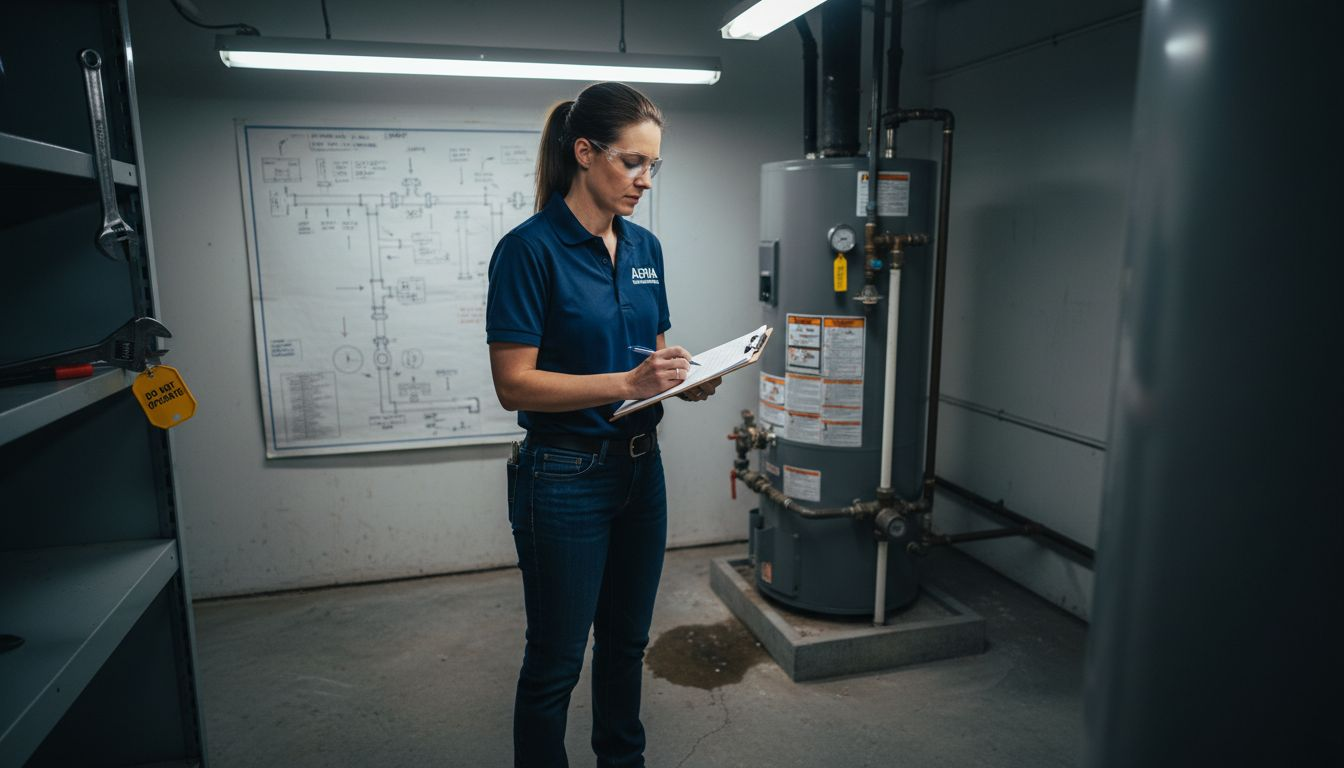
70% of licensed plumbers consider code-compliant materials essential for reliable, first-time-right installations that minimize future service calls.
Before and after every appliance repair or installation, licensed professionals perform systematic diagnostic checks. They test water pressure to ensure it falls within manufacturer specifications, inspect existing supply lines for deterioration, verify proper drainage slope, and confirm that venting meets code requirements. For gas appliances, they conduct pressure drop tests and apply leak detection solutions to every connection point, documenting results for your records.
These thorough procedures yield measurable benefits:
- Reduced callback rates because installations work correctly from day one
- Extended appliance lifespan by preventing stress from improper connections
- Fewer emergency repairs caused by installation defects
- Protection from insurance claim denials due to non-compliant work
- Peace of mind knowing your family’s safety was prioritized
Code compliance isn’t bureaucratic red tape; it represents decades of lessons learned from plumbing failures. When licensed plumbers follow these standards during remodeling projects or appliance upgrades, they prevent the water damage, gas leaks, and structural issues that plague homes with substandard plumbing work. Your investment in professional service pays dividends through reliability and safety that unlicensed workers simply cannot guarantee.
Role of Licensed Plumbers in Gas Conversions and Safety Compliance
Gas conversions between natural gas and LP gas represent some of the highest-risk plumbing work homeowners encounter. The California Plumbing Code and International Fuel Gas Code establish strict requirements for these modifications because improper conversions create immediate fire and explosion hazards. Licensed plumbers receive specialized training in gas system physics, pressure calculations, and safety protocols that DIY attempts and unlicensed workers dangerously ignore.
The complexity begins with understanding that natural gas and LP gas burn at different pressures and require distinct orifice sizes in appliance burners. A licensed plumber performing an LP to natural gas conversion must replace jets, adjust regulators, recalibrate air-to-fuel ratios, and test the entire system under operating conditions. Miss any step, and you risk incomplete combustion producing deadly carbon monoxide or over-pressurization causing gas leaks.
California law imposes serious consequences for non-compliant gas work:
- Contractors performing unpermitted gas work face fines up to $5,000 per violation
- Homeowners must pay to remove and redo non-compliant installations before selling
- Insurance companies deny fire damage claims when unlicensed work caused the incident
- Local building departments can red-tag properties until violations are corrected
- Criminal liability may apply if negligent gas work causes injury or death
Licensed plumbers prevent these scenarios through meticulous attention to gas pressure adjustment and leak prevention. They install approved connectors, apply pipe thread sealant rated for gas service, perform pressure drop tests across the system, and use electronic leak detectors sensitive to parts per million. After lighting pilots and burners, they verify proper flame color and combustion efficiency, documenting everything for permit closeout.
Improper gas conversions contribute to 15% of residential fire incidents in California, with most involving unlicensed installations that bypassed required safety inspections and pressure testing protocols.
Your family’s safety depends on this expertise. Gas leaks can accumulate undetected until an ignition source triggers catastrophic results, while carbon monoxide poisoning from incomplete combustion offers no warning before causing permanent harm. Licensed plumbers carry this responsibility seriously, knowing their work directly protects the people living in homes they service.
Common Misconceptions About Plumbing Expertise
Homeowners frequently underestimate the importance of plumbing licenses, leading to decisions that compromise safety and increase costs. The most dangerous myth suggests that any experienced plumber can safely perform gas conversions regardless of licensing status. In reality, only licensed technicians receive mandated training in gas system codes and possess legal authority to modify fuel lines. Unlicensed workers may have mechanical aptitude, but they lack verified competency in the specific regulations that prevent gas leaks and ensure proper combustion.
Another widespread misconception claims that hiring unlicensed plumbers saves money without significant risk. This thinking ignores the true cost calculation:
- Failed installations requiring complete reinstallation by licensed professionals
- Property damage from leaks or improper drainage that insurance won’t cover
- Permit violations discovered during home sales that delay or cancel transactions
- Health hazards from carbon monoxide or contaminated water supplies
- Legal liability if substandard work harms future occupants
Many homeowners also believe plumbing licenses represent one-time certifications with no ongoing requirements. California actually mandates continuing education every two years specifically to keep practitioners current with evolving codes, materials, and safety standards. A plumber who obtained their license decades ago without further training may be working from outdated knowledge that doesn’t meet current requirements.
Pro Tip: Before hiring any plumber, verify their current license status through the California State License Board website, not just a business card or advertisement. Confirm their continuing education is up to date and that their insurance coverage remains active, protecting you from liability if accidents occur during work.
The final misconception treats plumbing as simple manual labor anyone can learn through online videos. While basic repairs may seem straightforward, professional plumbing requires understanding water pressure dynamics, drainage physics, gas combustion chemistry, and material compatibility. Licensed plumbers spend years mastering these fundamentals under supervision before working independently, a depth of knowledge no YouTube tutorial can replicate.
Risks and Consequences of Using Unlicensed or DIY Plumbers
Choosing unlicensed plumbers or attempting complex DIY plumbing exposes you to measurably higher failure rates and safety incidents. Industry data shows unlicensed plumbing work fails at rates 25% to 40% higher than licensed professional installations, with complications ranging from minor leaks to catastrophic flooding and gas explosions. These aren’t abstract statistics; they represent real families dealing with water-damaged homes, denied insurance claims, and unsafe living conditions.
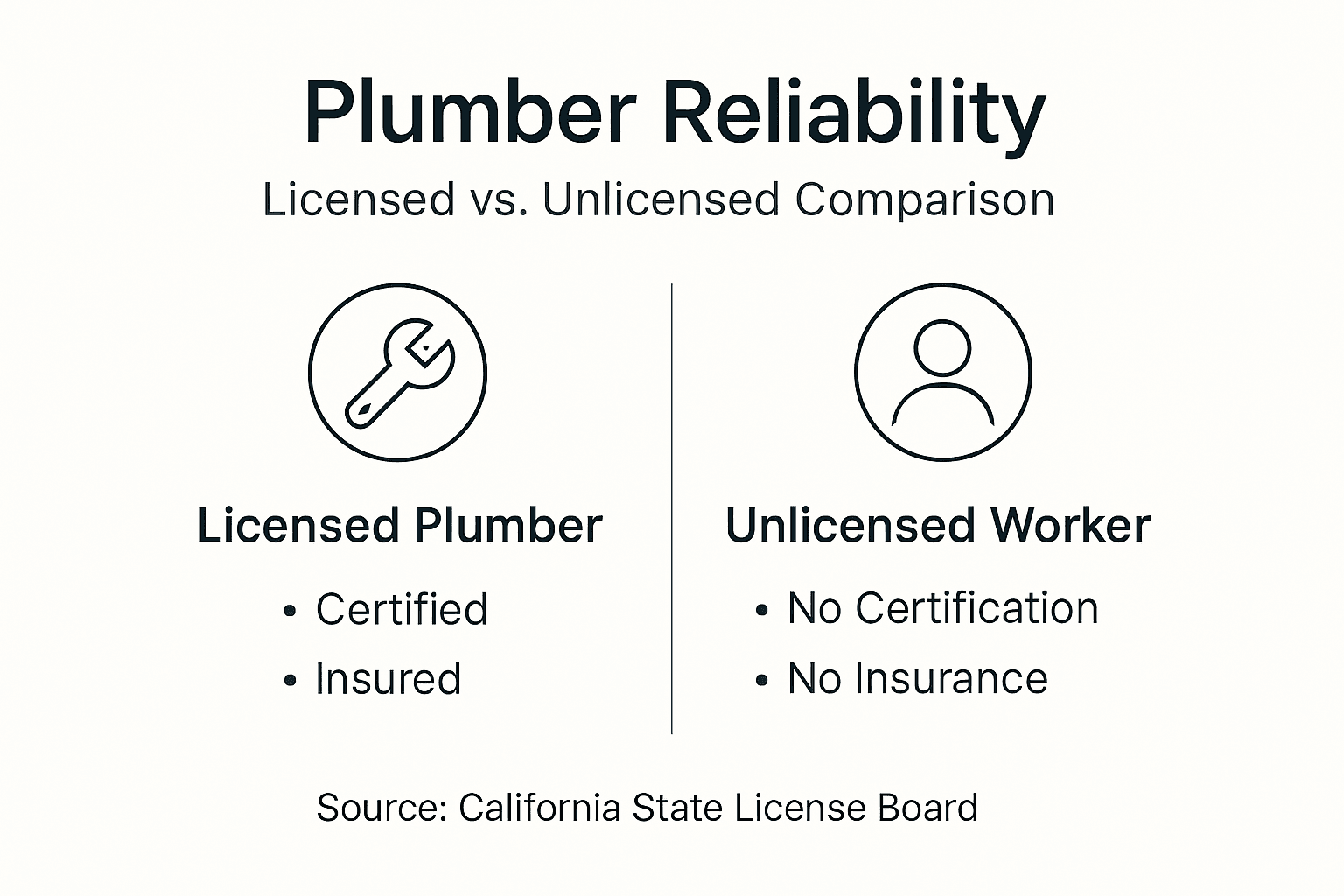
Insurance companies explicitly exclude coverage for damage caused by unlicensed contractors or homeowner installations that violate building codes. When a burst pipe floods your home because an unlicensed worker used incorrect fittings, your policy won’t pay for repairs. When a gas leak from a DIY conversion causes a fire, you’re personally liable for all damages. These exclusions exist because insurers recognize that unlicensed work introduces unacceptable risk levels they won’t underwrite.
The progression from poor installation to costly crisis follows a predictable pattern:
- Unlicensed worker or DIYer completes installation using incorrect materials or methods
- Initial function masks underlying defects like improper venting or inadequate support
- Stress, corrosion, or normal use triggers failure weeks or months later
- Damage occurs requiring emergency repairs and cleanup
- Insurance adjuster identifies non-compliant work and denies claim
- Homeowner pays out of pocket for damage repair plus correct reinstallation
Safety hazards compound the financial risks. Improperly installed gas lines leak fuel into living spaces, creating explosion hazards that endanger your entire family. Cross-connections between potable water and drain lines introduce sewage contamination into drinking water. Inadequate venting allows carbon monoxide accumulation that causes illness or death without warning.
| Factor | Licensed Plumber | Unlicensed Worker |
|---|---|---|
| Legal Status | State-certified, permit authority | No legal authorization |
| Safety Training | Mandatory code education, ongoing updates | No verified training |
| Insurance Coverage | Required liability and bonding | Usually uninsured |
| Accountability | License at risk, regulatory oversight | No professional consequences |
| Code Compliance | Follows current regulations | Unaware of requirements |
| Warranty Protection | Professional guarantees honored | No recourse when problems occur |
The money you think you’re saving by avoiding licensed plumbing services evaporates when you calculate the full cost of failures, unsafe conditions, and the eventual need to hire licensed professionals to fix the original mistakes. Professional service costs more upfront because it includes training, insurance, permits, and accountability that protect your investment.
How to Verify and Select a Licensed Plumber
Protecting your home starts with thoroughly vetting plumbers before they begin work. The California State License Board provides free online tools to verify any contractor’s license number, status, and disciplinary history. You should check three critical elements:
- Enter the plumber’s license number at the CSLB license verification portal to confirm active, current status without restrictions or suspensions.
- Review their complaint history and any disciplinary actions that might indicate quality or safety issues with past work.
- Verify their license classification matches the work you need, as California issues different plumbing licenses for various specializations.
- Confirm current liability insurance and bonding by requesting certificates of insurance directly from their provider, not just copies that could be outdated.
- Assess their specific experience with appliance installation and gas conversions by asking about similar recent projects in your area.
Experience matters because plumbers develop specializations over their careers. A plumber who primarily works on commercial buildings may lack familiarity with residential appliance connections. Look for professionals who regularly perform the specific work you need, whether that’s refrigerator water line installation, gas dryer conversion, or water heater replacement.
Customer feedback reveals patterns that credentials alone can’t show. Check multiple review platforms for consistent themes about punctuality, communication, cleanliness, and problem-solving. Pay special attention to how plumbers responded to complications or customer concerns, as these situations demonstrate professionalism and integrity.
Pro Tip: Be immediately suspicious of any plumber offering prices significantly below competitors without clear justification. Extremely low bids often indicate unlicensed workers, use of substandard materials, or plans to cut corners on safety procedures. Quality appliance repair and installation costs reflect proper materials, adequate time for thorough work, insurance coverage, and permit fees that protect you.
Once you’ve narrowed your options, schedule in-person assessments before committing. Professional plumbers will:
- Evaluate your specific installation site and existing plumbing conditions
- Explain necessary permits and code requirements for your project
- Provide detailed written estimates breaking down labor, materials, and fees
- Answer your questions about their approach and timeline
- Offer references from similar recent projects you can contact
This process takes time, but rushing into hiring an unqualified plumber risks your safety and investment. The peace of mind from working with verified, licensed professionals far outweighs any convenience gained by skipping due diligence.
Summary and Practical Recommendations
Licensed plumbers provide irreplaceable expertise that protects your family, property, and financial investment from the serious risks inherent in plumbing and gas work. Their legal authorization, verified training, mandatory insurance, and ongoing education create accountability and competency that unlicensed workers simply cannot match. Every installation and repair they perform adheres to California’s strict safety codes developed through decades of lessons learned from plumbing failures.
The risks of unlicensed plumbing work extend far beyond inconvenience. Failures cause property damage insurance won’t cover, safety hazards that endanger your family, legal violations that complicate home sales, and costs that dwarf any initial savings. Professional plumbing service represents an investment in reliability, safety, and long-term value rather than an expense to minimize.
Before hiring any plumber, complete this essential checklist:
- Verify active license status through CSLB’s official website
- Confirm current liability insurance and contractor bonding
- Assess specific experience with your type of project
- Review customer feedback across multiple platforms
- Obtain detailed written estimates and project timelines
- Check that estimates include necessary permits and inspections
Proactive engagement with qualified licensed professionals gives you confidence that appliance installations, gas conversions, and plumbing repairs will function safely and reliably for years. Your family’s wellbeing depends on the integrity of systems licensed plumbers install and maintain. Making informed, safety-first decisions about plumbing service protects everything you’ve worked to build in your home.
Choose MDTech Services for Licensed Plumbing Excellence
When you need reliable appliance installation services or plumbing repair services in Orange or Los Angeles County, MDTech Services delivers the licensed expertise your home deserves. Our team specializes in code-compliant appliance connections and safe gas conversion services that protect your family.

We combine technical proficiency with transparent pricing and prompt response times, making professional plumbing service accessible when you need it most. Every installation and repair meets California’s strict safety standards, backed by proper licensing, insurance, and workmanship guarantees. Trust MDTech Services to deliver the quality and reliability that only licensed professionals can provide.
FAQ
What is a licensed plumber and why do I need one?
Licensed plumbers hold state certification proving they’ve completed required training and passed comprehensive exams on plumbing codes and safety. They follow strict California standards that protect your home and family from hazards unlicensed workers create. Learn more about licensed technicians importance for home safety.
How can I verify a plumber’s license in California?
Use the CSLB license verification site to search by plumber name or license number for instant status confirmation. Check that their license is active, current, and free from restrictions before hiring. Our guide on plumber license verification walks through the complete process.
Why is it risky to hire unlicensed plumbers for gas conversions?
Unlicensed gas conversions typically violate safety codes and create dangerous leak or fire risks through improper pressure adjustments. Insurance companies routinely deny claims for damage caused by unlicensed work, leaving you financially responsible. Only licensed professionals have the training and legal authority to safely modify gas systems.
What ongoing education do licensed plumbers need?
California requires licensed plumbers to complete continuing education courses every two years covering code updates and new safety practices. This mandatory training ensures they stay current with evolving regulations rather than relying on outdated methods. Always verify a plumber’s continuing education status is current when checking credentials.
How do licensed plumbers ensure appliance installation reliability?
They exclusively use code-compliant materials and professional diagnostic tools to prevent leaks, pressure problems, and malfunctions. Systematic testing before and after installation catches issues that would otherwise cause future failures. This thorough approach reduces repair needs and eliminates safety hazards that compromise your family’s wellbeing.