
Busy families across Orange and Los Angeles County know that keeping household appliances running smoothly saves time and money. Taking proactive steps to assess, clean, and maintain these machines leads to more reliable performance and fewer costly surprises. This guide reveals proven strategies for preventing appliance failures and shows how simple routines can extend the life of your favorite investment pieces.
Table of Contents
- Step 1: Assess Appliance Condition and Setup
- Step 2: Clean Components and Remove Debris
- Step 3: Replace Worn Parts and Filters
- Step 4: Verify Performance and Functionality
- Step 5: Schedule Routine Maintenance Checks
Quick Summary
| Key Message | Explanation |
|---|---|
| 1. Conduct Regular Inspections | Regularly check your appliances for unusual noises, wear, and performance issues to prevent breakdowns. |
| 2. Maintain Clean Components | Clean appliances regularly to reduce debris buildup and identify potential problems before they escalate. |
| 3. Replace Worn Parts Promptly | Timely replacement of filters and worn parts prevents failures and enhances appliance efficiency. |
| 4. Verify Appliance Performance | Perform systematic tests to ensure appliances operate correctly and recognize early signs of decline. |
| 5. Schedule Maintenance Checks | Create a comprehensive maintenance calendar to keep track of inspections and service needs for each appliance. |
Step 1: Assess Appliance Condition and Setup
Assessing your home appliances involves careful examination to ensure optimal performance and safety. By methodically checking each appliance’s condition, you can prevent potential failures and extend their operational lifespan.
Start by conducting a comprehensive visual and functional inspection. Look for these critical indicators of appliance health:
- Unusual noises during operation
- Visible wear or damage on cords and components
- Performance inconsistencies like reduced cooling or heating
- Electrical issues such as frequent circuit breaker trips
The U.S. Department of Energy recommends evaluating appliance energy consumption by examining energy guide labels and using electricity usage monitors. These tools help you understand your appliance’s efficiency and potential age-related performance decline.
Additionally, the Electrical Safety Foundation International advises checking for signs of potential hazards. If you notice repeated electrical problems or significant performance degradation, consider professional inspection or potential replacement. Modern appliances often become more energy-efficient, potentially offsetting replacement costs through reduced electricity consumption.
Pro tip: Schedule annual professional maintenance checks to catch potential issues before they become expensive repairs.
Step 2: Clean Components and Remove Debris
Maintaining clean appliance components is crucial for ensuring optimal performance and extending their operational lifespan. Regular cleaning prevents debris buildup, reduces wear and tear, and helps identify potential issues before they become costly repairs.
When cleaning your appliances, follow these systematic steps:
- Unplug electrical devices before starting any cleaning process
- Use appropriate cleaning tools specific to each appliance type
- Remove and clean removable parts separately
- Inspect components for signs of wear or damage during cleaning
The University of Florida provides guidance on effective cleaning and sanitizing procedures, emphasizing the importance of removing food soils and preventing bacterial growth. Different appliances require unique cleaning approaches:
- For refrigerators: Clean condenser coils and drain pans
- For dishwashers: Clear filter and spray arm holes
- For ovens: Remove accumulated grease and food residue
- For HVAC systems: Replace or clean filters regularly
Consistent maintenance prevents 70% of premature appliance failures.
Professional guidelines stress the importance of securing electrical isolation and following risk assessment protocols during cleaning. Always consult your appliance’s manual for specific maintenance recommendations.

Pro tip: Invest in specialized cleaning tools designed for specific appliance types to ensure thorough and safe component maintenance.
Step 3: Replace Worn Parts and Filters
Extending the lifespan of your home appliances requires proactive maintenance, with timely replacement of worn parts and filters being a critical strategy. By identifying and swapping out components before they completely fail, you can prevent more expensive repairs and maintain optimal appliance performance.
Consumer Reports recommends tracking filter replacement intervals to ensure appliance efficiency. Different appliances require specific maintenance approaches:
- Refrigerator filters: Replace every 6 months
- HVAC system filters: Change every 3-6 months
- Dishwasher filters: Clean monthly, replace annually
- Water purifier filters: Replace according to manufacturer guidelines
Key steps for successful part replacement include:
- Identify the exact model and part number
- Purchase manufacturer-recommended replacements
- Carefully follow installation instructions
- Disconnect electrical power before starting
Routine parts replacement can extend appliance life by up to 50%.
Professional guidance emphasizes inspecting door gaskets, seals, and critical components for signs of wear. Look for cracks, reduced flexibility, or visible damage that might compromise appliance performance.
Pro tip: Create a digital maintenance calendar to track replacement schedules for each appliance and receive automated reminders.
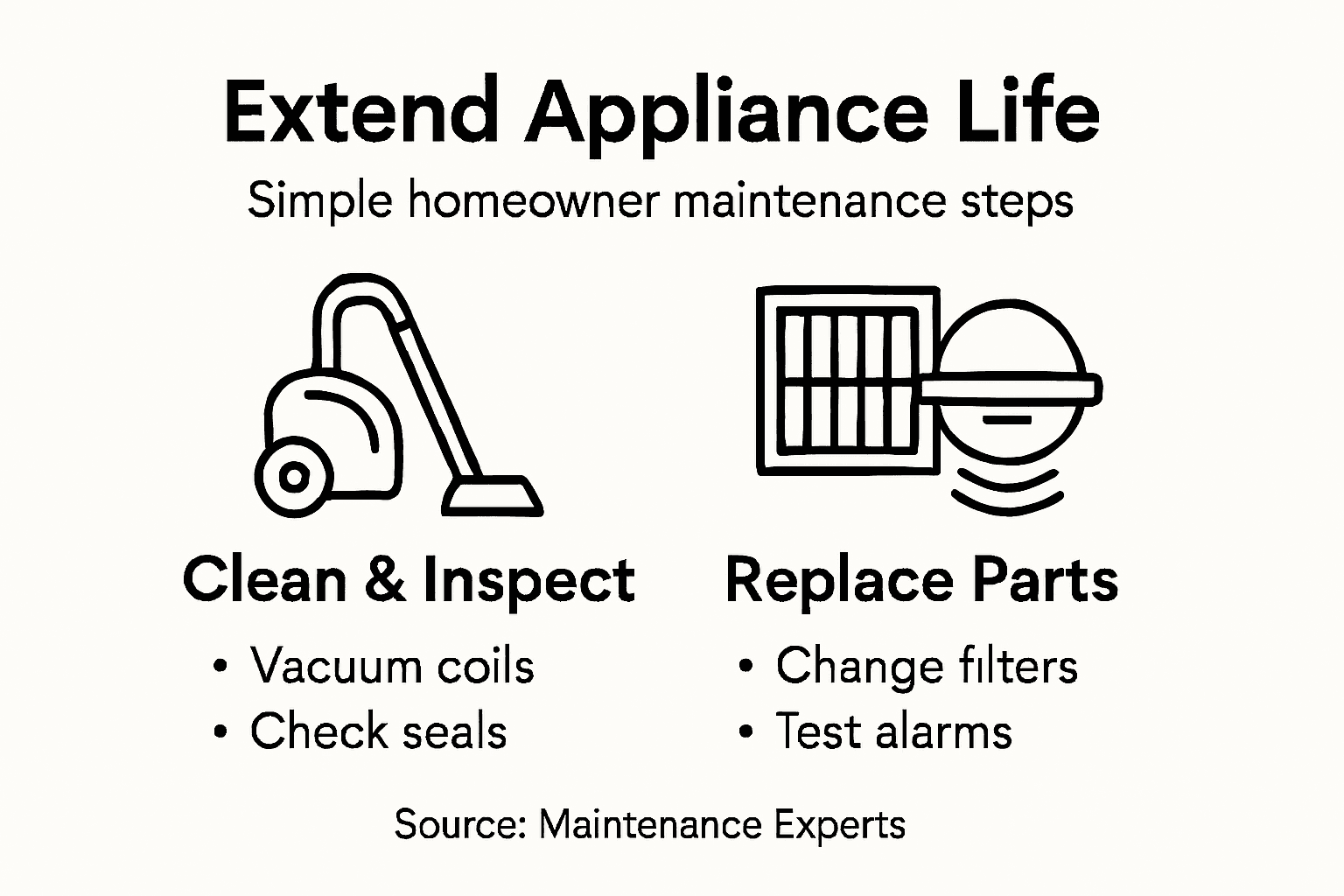
Here’s a summary of common maintenance tasks and their potential benefits for popular home appliances:
| Appliance Type | Maintenance Task | Frequency | Potential Benefit |
|---|---|---|---|
| Refrigerator | Clean coils, replace filter | Every 6 months | Improved cooling, energy savings |
| Dishwasher | Clean filter, inspect seals | Monthly | Reduced clogs, longer lifespan |
| Oven | Remove residue, check gasket | Quarterly | Safer operation, even heating |
| HVAC System | Replace filter, check ducts | Every 3 months | Better air quality, lower bills |
| Water Purifier | Swap filters, sanitize unit | Manufacturer’s schedule | Healthier water, fewer repairs |
Step 4: Verify Performance and Functionality
Ensuring your home appliances operate at peak performance requires systematic performance verification and functional testing. By regularly checking your appliances, you can detect potential issues early and prevent unexpected breakdowns that could disrupt your daily routine.
The National Fire Protection Association recommends preventive maintenance for electrical equipment through comprehensive testing and documentation. Performance verification involves several key diagnostic strategies:
- Listen for unusual sounds during appliance operation
- Check temperature consistency in cooling and heating appliances
- Monitor energy consumption using dedicated meters
- Inspect electrical connections for signs of wear
Detailed performance testing should include:
- Run each appliance through complete operational cycle
- Measure actual performance against manufacturer specifications
- Compare current performance with original baseline metrics
- Document any observable changes or irregularities
Performance testing can predict 80% of potential appliance failures before they occur.
Professional maintenance experts emphasize the importance of tracking performance metrics over time. Small variations can indicate emerging issues that might require preventative intervention.
Pro tip: Create a digital logbook to record performance test results, helping you track your appliances’ health systematically.
Compare professional vs. DIY appliance maintenance approaches:
| Approach | Typical Cost | Required Expertise | Key Benefit |
|---|---|---|---|
| Professional | $80-$200/service | Licensed technician | Thorough, risk-free inspection |
| DIY Maintenance | Minimal to moderate | Basic handyman skills | Cost savings, flexible schedule |
Step 5: Schedule Routine Maintenance Checks
Establishing a systematic approach to appliance maintenance helps prevent unexpected breakdowns and extends the overall lifespan of your household equipment. Creating a comprehensive maintenance schedule ensures your appliances remain in peak operating condition throughout the year.
The Schedule Template recommends developing structured maintenance intervals tailored to each appliance’s specific requirements. Your maintenance schedule should encompass different timeframes:
- Daily quick checks for basic functionality
- Weekly visual inspections of critical components
- Monthly detailed examinations of complex systems
- Quarterly performance evaluations
- Annual professional maintenance service
Critical maintenance scheduling steps include:
- Compile a complete inventory of home appliances
- Review manufacturer recommended maintenance guidelines
- Create a digital or physical tracking system
- Set calendar reminders for each maintenance task
- Document all maintenance activities
Consistent maintenance can reduce unexpected repair costs by up to 65%.
Professional maintenance experts recommend tracking each appliance’s performance history to anticipate potential issues before they escalate. Detailed record-keeping helps identify patterns and predict potential future maintenance needs.
Pro tip: Utilize smartphone apps or digital calendars to automate maintenance tracking and send proactive service reminders.
Protect Your Home Appliances with Trusted Expert Care
Your appliance lifespan depends on regular assessment, cleaning, timely part replacements, and thorough performance checks as highlighted in the Appliance Lifespan Extension Guide for Homeowners. Neglecting these critical steps can lead to costly repairs, inconvenient breakdowns, and safety risks in your home. Achieving consistent maintenance and reliable performance requires professional support you can trust.

Don’t let unexpected appliance failures disrupt your daily life or drain your wallet. At MDTech Services, our licensed technicians specialize in residential appliance repair and installation across Orange County and Los Angeles County. Whether you need expert refrigerator repairs, HVAC system tune-ups, or appliance conversions from LP to natural gas, we offer dependable solutions designed to extend your appliances’ useful life. Schedule your maintenance or repair service today at MDTech Services and secure peace of mind with responsive, safety-focused care tailored for homeowners.
Frequently Asked Questions
How can I assess the condition of my home appliances?
To assess the condition of your home appliances, start by conducting a visual and functional inspection. Look for unusual noises, visible wear, and performance inconsistencies, and check energy consumption. Schedule a professional inspection if you notice significant issues.
What cleaning steps should I follow for my home appliances?
Begin by unplugging electrical devices before cleaning. Use appropriate tools for each appliance, clean removable parts separately, and inspect for any wear or damage during the process. Regular cleaning can prevent issues and extend the life of your appliances by reducing debris buildup.
How often should I replace worn parts and filters in my appliances?
Replace worn parts and filters based on the appliance type: Refrigerators every 6 months, HVAC filters every 3-6 months, and dishwashers monthly for cleaning. Keep a visual reminder or digital calendar to track these replacements and avoid performance issues.
What performance checks should I conduct to ensure my appliances are functioning well?
To verify performance, listen for unusual sounds, check temperature consistency, and monitor energy usage. Run each appliance through its full operational cycle and compare its performance with the manufacturer’s specifications to identify any changes.
How can I create a maintenance schedule for my appliances?
Compile a complete inventory of your appliances and review their maintenance guidelines. Create a digital or physical tracking system to set calendar reminders for quick checks, monthly inspections, and annual professional services. Regular scheduling can prevent unexpected repairs and extend appliance lifespan.
Recommended
- How to Improve Appliance Lifespan for Homeowners Easily
- How to Reduce Appliance Downtime for Faster Repairs
- 7-Step Appliance Replacement Checklist for Homeowners
- Why Update Outdated Appliances: Benefits for Homeowners
- Water Management Blog | LeakSense
- Konserwacja ekspresu do kawy – jakie czynności należy wykonać?