
TL;DR:
- Resetting a furnace involves cutting power to clear faults and restart the system, which most homeowners can do safely.
- Persistent lockouts or failed restarts require professional diagnosis to prevent safety hazards like cracked heat exchangers or carbon monoxide leaks.
Resetting a furnace is defined as cutting power to the unit to clear a fault or lockout that has stopped normal heating operation. Most homeowners can perform this procedure without professional help, and basic power-cycle resets resolve the majority of soft lockouts that cause a furnace to shut down. The industry term for this process is a “hard reset” or “power-cycle reset,” and it works by allowing the control board to discharge and restart fresh. Safety is the first priority: never attempt any reset if you smell gas or see smoke. This guide walks you through how to reset furnace systems of all types, step by step.
What you need before attempting a furnace reset
Gathering the right tools before you start saves time and keeps you safe. A furnace reset is a low-risk task when you prepare correctly, but skipping the checklist can turn a simple fix into a bigger problem.
Tools and safety gear
- Screwdriver (flathead and Phillips): needed to access the furnace cabinet or control panel
- Flashlight: helps you read LED blink codes and inspect the interior without straining your eyes
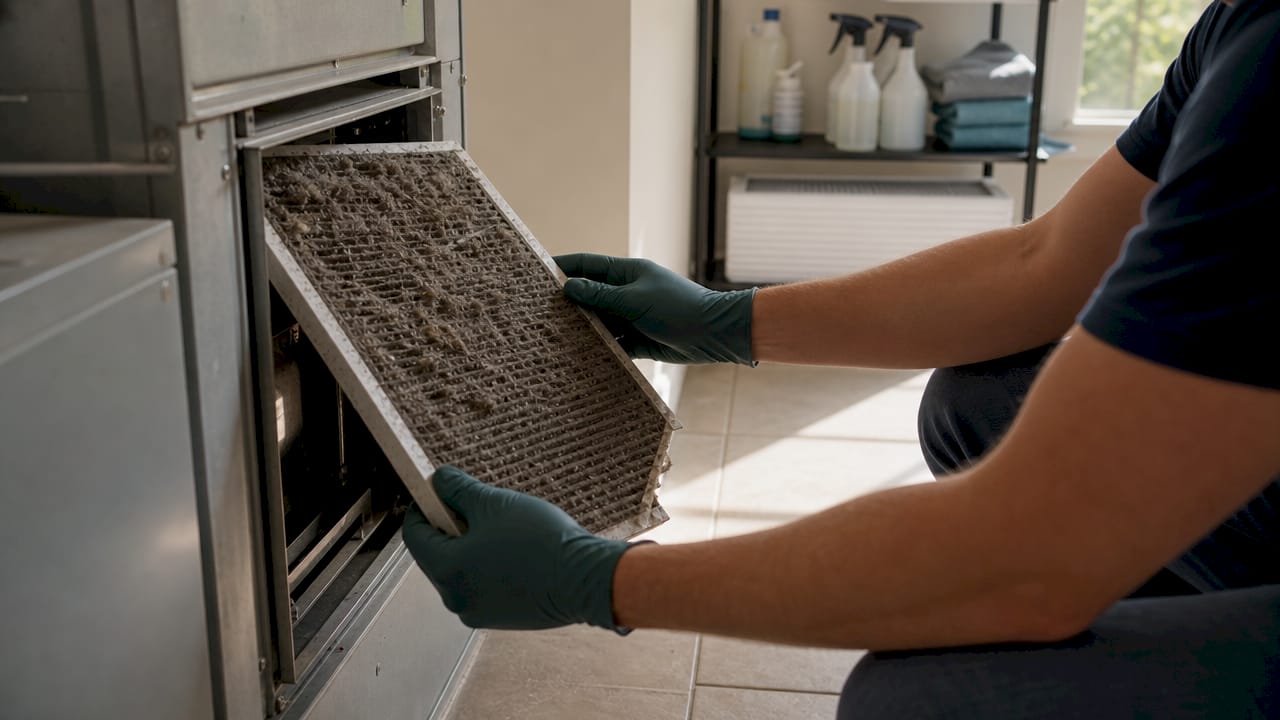
- Replacement air filter: dirty air filters are the leading cause of high-limit switch trips, so have a fresh one ready
- Emery cloth: used to gently clean a dirty flame sensor if the furnace fails to ignite after reset
- Gloves and safety glasses: protect your hands and eyes when working near electrical components
Prerequisite checks
Before you touch the furnace, verify these conditions:
- No gas odors: if you smell gas anywhere in the home, do not proceed. Leave immediately and call 911 or your gas utility.
- Thermostat settings: confirm the thermostat is set to “Heat” and the temperature is above the current room temperature
- CO detector status: your carbon monoxide detector must be functional before and after any reset
- Breaker location: identify the furnace circuit breaker in your electrical panel before you start
- Power switch location: most furnaces have a wall switch near the unit that looks like a light switch
Pro Tip: Check your furnace filter first. A clogged filter is the single most common reason a furnace trips its high-limit switch and locks out. Replacing it before the reset often prevents an immediate repeat lockout.
How to reset furnace systems: gas, electric, and oil
The reset gas furnace procedure differs slightly from electric and oil systems, but the core logic is the same: cut power, wait, restore power, and observe the startup sequence.
General power-cycle reset (gas and electric furnaces)
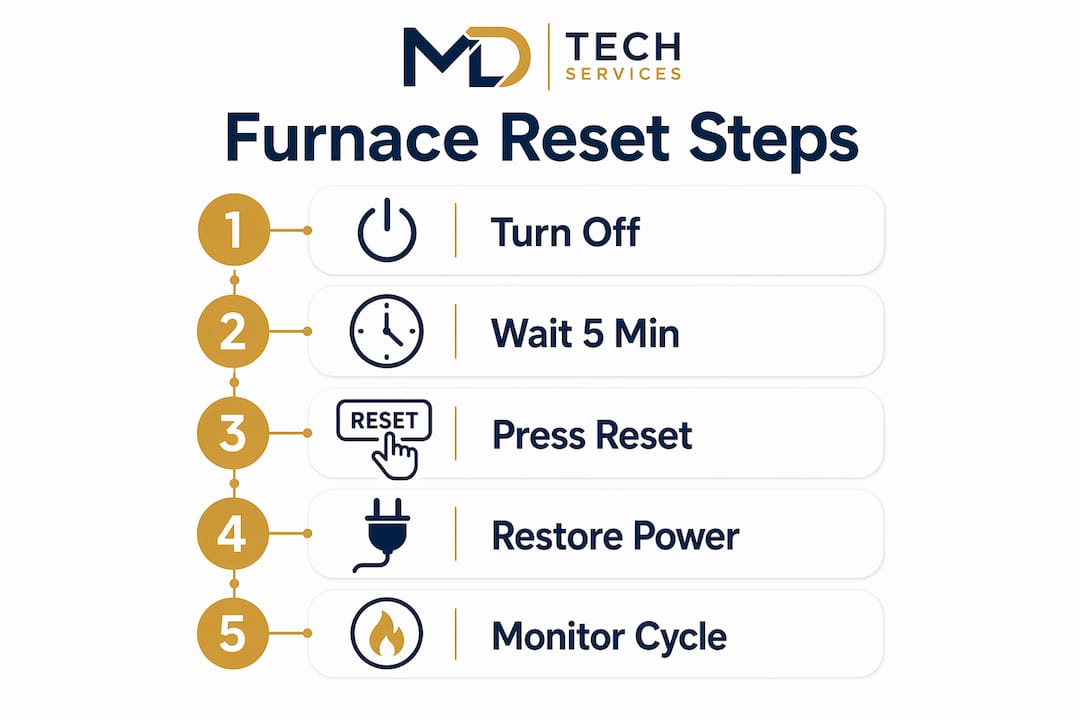
Most gas and electric furnaces lack a dedicated master reset button. The power cycle acts as the reset. Follow these steps in order:
- Turn the thermostat off. Set it to “Off” completely, not just lower the temperature.
- Switch off the furnace power switch. This is the wall switch near the unit, usually labeled “Furnace.”
- Turn off the circuit breaker. Locate the furnace breaker in your electrical panel and flip it to “Off.”
- Wait 1–5 minutes. This downtime allows capacitors and the control board to fully discharge. Shorter waits may not clear the fault.
- Replace the air filter if it looks gray or clogged. Do this while the power is off.
- Restore the breaker, then the furnace power switch.
- Set the thermostat to “Heat” and raise the temperature 5 degrees above room temperature.
- Listen and observe. You should hear the inducer fan start, then the igniter glow, then the burners fire within 30–90 seconds.
Resetting an oil furnace
Oil furnaces use a red reset button on the primary control box, usually mounted on or near the burner assembly.
| Step | Action | Key caution |
|---|---|---|
| 1 | Locate the red reset button on the primary control | It is typically red and clearly labeled |
| 2 | Press it once firmly | Press once only — repeated presses flood the combustion chamber with fuel |
| 3 | Wait for ignition | Listen for the burner to fire within 30 seconds |
| 4 | If it does not fire, call a technician | Do not press the button again |
Pressing the oil furnace reset button more than once risks a dangerous buildup of unburned fuel, which can cause a puff-back explosion. One press is the rule, without exception.
Resetting rollout and high-limit switches
Some gas furnaces have a manual rollout switch or high-limit switch with a small red or white button on the component itself. You can press this button to reset it, but only after you have identified and fixed the cause. The rollout switch trips when flames escape the combustion chamber, which signals a serious problem like a cracked heat exchanger or blocked flue. Resetting it without fixing the root cause puts your household at risk of carbon monoxide poisoning.
Pro Tip: After restoring power, stand near the furnace for the first full heating cycle. If the unit shuts off before the house reaches temperature, the fault is still active and a technician should inspect it before you try again.
What to do when your furnace does not restart after a reset
A reset that does not restore heating points to a fault deeper than a simple lockout. These furnace troubleshooting tips help you identify the problem before calling for help.
Read the LED blink codes
Modern furnaces use LED blink codes on the control board to communicate specific faults. The control board is visible through the small sight glass on the furnace cabinet door. Count the number of flashes in a sequence, then match the pattern to the legend printed on the inside of the cabinet door. Common codes include faults for pressure switch failure, flame sensor errors, and ignition lockout. Reading the code before calling a technician saves time and helps you describe the problem accurately.
Check these common causes
- Clogged filter: replace it and try the reset again if you did not do so the first time
- Closed or blocked vents: walk through the home and confirm all supply and return vents are open and unobstructed
- Tripped breaker that keeps tripping: a breaker that trips again immediately after reset signals a wiring or motor fault, not a simple lockout
- Unusual noises: banging, squealing, or rattling during startup indicate mechanical problems that a reset will not fix
- Short cycling: if the furnace fires and shuts off within a few minutes repeatedly, the high-limit switch is tripping again, usually from restricted airflow
A tripped furnace is often a protective response to a serious underlying issue, not just a control board glitch. Resetting without addressing the root cause can mask dangerous failures like a cracked heat exchanger, which allows carbon monoxide to enter living spaces.
Avoid pressing the reset button or cycling the breaker more than once on a persistent lockout. Repeated resets can cause severe equipment damage, including cracked heat exchangers. If the furnace does not run normally after one reset, contact a licensed HVAC technician. You can review a full HVAC troubleshooting process to understand what a technician will check during a service call.
Safety precautions and mistakes to avoid
Safety errors during a furnace reset can cause fires, carbon monoxide poisoning, or permanent equipment damage. These are the rules that protect your home and your family.
- Never bypass safety switches or door interlocks. These components exist to stop the furnace when conditions are unsafe. Taping down a door interlock or jumping a pressure switch to force the unit to run is dangerous and voids most warranties.
- Do not press the oil furnace reset button more than once. Unburned fuel accumulates in the combustion chamber with each press. The result can be a violent puff-back when ignition finally occurs.
- Evacuate immediately if you smell gas or CO. If gas odor or smoke is detected, leave the home, leave the door open, and call 911 and your gas utility from outside. Do not flip any switches or use your phone inside the home.
- Do not ignore a breaker that keeps tripping. A breaker that trips repeatedly after reset is protecting you from a wiring fault or failed motor. Forcing it back on risks an electrical fire.
- Keep smoke and CO detectors functional at all times. Test them monthly and replace batteries at least once a year.
Carbon monoxide is odorless and colorless, which makes a working CO detector non-negotiable in any home with a gas or oil furnace. The U.S. Consumer Product Safety Commission recommends installing CO detectors on every level of the home, including outside sleeping areas. Annual maintenance, according to industry guidance, reduces lockout risk by 80%. That single statistic makes the case for scheduling a professional tune-up every year, not just when something goes wrong.
For routine upkeep between service calls, the HVAC maintenance tips from Mdtechservices cover filter schedules, vent checks, and seasonal prep that reduce the chance of a lockout happening in the first place.
Key Takeaways
A single power-cycle reset, combined with a fresh air filter, resolves most furnace lockouts without professional service, but persistent faults always require a licensed technician.
| Point | Details |
|---|---|
| Power-cycle is the standard reset | Turn off the thermostat, breaker, and furnace switch, wait 1–5 minutes, then restore power in order. |
| Replace the filter first | Dirty filters cause most high-limit switch trips; always swap the filter before or during a reset. |
| Oil furnace reset button: one press only | Pressing more than once floods the combustion chamber and risks a dangerous puff-back. |
| Read LED blink codes | The control board’s blink pattern identifies the specific fault before you call a technician. |
| Persistent lockouts need a professional | Repeated resets without a fix can crack the heat exchanger and allow carbon monoxide into the home. |
What I’ve learned from years of furnace calls
Homeowners consistently underestimate two things: how often a dirty filter causes a lockout, and how dangerous it is to keep pressing reset when a furnace refuses to stay on. At Mdtechservices, we see both mistakes regularly, and both are avoidable.
The most common misconception is that a furnace reset is a repair. It is not. A reset clears a fault signal so the unit can attempt to run again. If the underlying condition that triggered the lockout is still present, the furnace will lock out again, sometimes within minutes. Treating the reset as a repair delays the real fix and, in the case of a cracked heat exchanger or failed rollout switch, creates a genuine safety hazard.
Learning to read your furnace’s LED blink codes is one of the most practical skills a homeowner can develop. It takes two minutes and gives you real information instead of guesswork. When you call a technician and can say “the board is flashing three times, pausing, then flashing twice,” the diagnosis starts faster and the repair costs less.
Routine filter replacement, on a schedule of every 1–3 months depending on your household, prevents the majority of lockouts we respond to. That one habit, combined with an annual professional tune-up, keeps most furnaces running without incident through an entire heating season. When a fault does appear, do the reset once, observe the result, and call for help if the problem repeats. That is the right balance between confident DIY care and knowing when to step back.
— MDTECH
Professional furnace help when a reset is not enough
When a reset does not solve the problem, the fault is beyond what a power cycle can fix.

Mdtechservices provides licensed HVAC repair and appliance service across Orange County and Los Angeles County, California. Our technicians diagnose control board faults, heat exchanger cracks, ignition failures, and rollout switch trips with the tools and experience to fix them correctly the first time. If your furnace keeps locking out, do not wait for a cold night to force the issue. Visit our HVAC repair guide to understand what a professional inspection covers, or go directly to our appliance repair services page to schedule a visit. Reliable heat is not a luxury. Let us help you keep it running safely.
FAQ
How do I reset my furnace step by step?
Turn the thermostat off, switch off the furnace power switch, and flip the circuit breaker to “Off.” Wait 1–5 minutes, restore the breaker and power switch, then set the thermostat back to “Heat.”
Where is the furnace reset button located?
Most gas and electric furnaces do not have a dedicated reset button. The power switch on the wall near the unit and the circuit breaker serve as the reset. Oil furnaces have a red reset button on the primary control box near the burner.
Why is my furnace not working after a reset?
A furnace that fails to restart after one reset likely has an active fault such as a clogged filter, failed flame sensor, pressure switch error, or cracked heat exchanger. Read the LED blink code on the control board and call a licensed technician if the lockout repeats.
How many times can I press the furnace reset button?
Press the reset button or cycle the breaker once only. Repeated resets on a persistent fault can damage the heat exchanger, and on oil furnaces, multiple presses risk a dangerous fuel buildup and puff-back.
When should I call a professional instead of resetting the furnace myself?
Call a licensed HVAC technician if the furnace locks out again after one reset, if you smell gas or detect CO, if the breaker keeps tripping, or if you hear unusual noises during startup. These signs point to faults that a reset cannot fix.